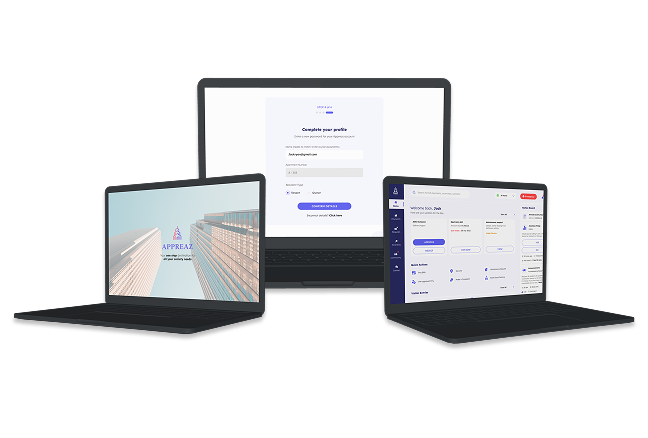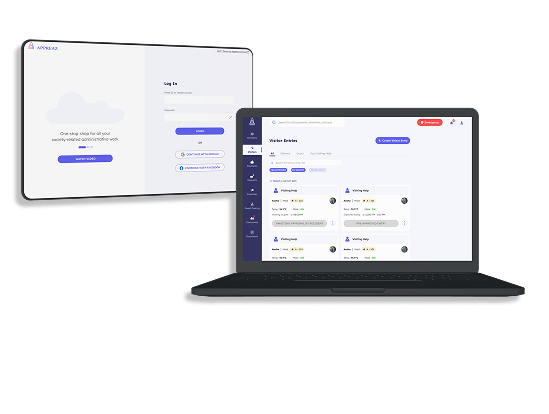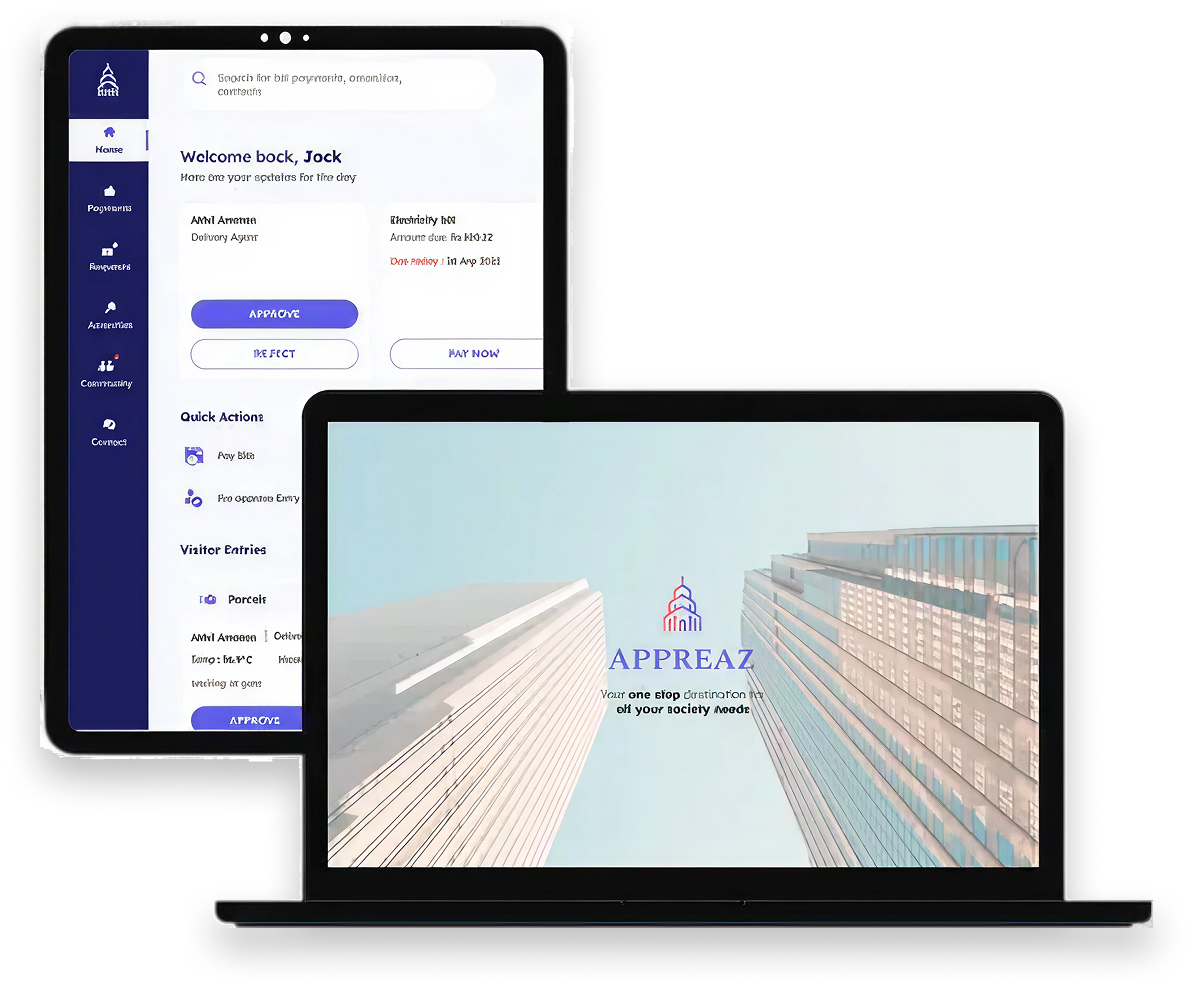

We built Appreaz as a proper end-to-end platform, not just a booking tool bolted onto an existing system, but a full app ecosystem covering visitor access, amenity bookings, and utility payments for residential societies in the UK.
Instead of cramming every feature into one confusing app, we built three separate apps, one for residents, one for security guards, one for admins, each doing exactly what its user needs and nothing more.
Took what used to be a paper register at the gate and a spreadsheet for bills, and turned both into real-time, app-based workflows.
Appreaz is a UK-based society management platform built for one simple reason: managing a residential community shouldn’t mean chasing people down for bill payments or writing visitor names into a logbook that nobody ever reads again.
Residents use it to book amenities, pay their utility bills, and see who’s coming through the gate. Security guards use it to log visitors and deliveries in seconds, not minutes. Admins use it to run the whole society without being stuck at a front desk all day.
We built all three apps from the ground up because the old way, one overworked front-desk system trying to serve everyone, just doesn’t hold up once a society grows past a certain size.

Someone shows up at the gate, the guard writes their name down, calls the resident, waits for confirmation, and the person waiting outside just stands there. Multiply that by fifty visitors a day, and you’ve got a real bottleneck.

Most residents have no idea that a delivery has arrived or that a guest is waiting downstairs until someone physically knocks on their door.

Utility billing in many societies still relies on paper notices, WhatsApp reminders, and someone in the admin office manually tracking who’s paid and who hasn’t.

Without a system, booking the clubhouse or the tennis court usually comes down to whoever calls the office first, which causes more arguments than it solves.
Before writing a line of code, we sat down and mapped out the real day-to-day flow, how a visitor gets in, how a bill gets paid, how an amenity gets booked, for three completely different types of users.
Rather than force residents, guards, and admins to squeeze into the same interface, we designed each app around what that specific person actually needs to do in under 30 seconds.
Since visitor check-in was the biggest daily pain point, this was built and tested early, with real-time logging, instant resident notification, and no paper involved.
Amenity booking and bill payment were built so residents could handle everything themselves, without calling the office for things that shouldn’t require a phone call.
The admin app pulls everything together, visitor logs, billing status, amenity schedules, so society management stops being a full-time babysitting job.
We tested the whole system with real check-in scenarios and billing cycles before rolling it out, so the 40% drop in check-in time wasn’t a lucky number; it held up in practice.
The whole point was to stop residents from having to chase information down.
The guard app exists to make one job faster: knowing who’s allowed in.

The whole point was to stop residents from having to chase information down.

The guard app exists to make one job faster: knowing who’s allowed in.

Admins finally get a bird’s-eye view instead of running around putting out fires.
The security guard app cut check-in time nearly in half by moving logging from paper to a real-time digital process.
Centralizing visitor, amenity, and billing workflows meant the front desk stopped being the bottleneck for every single request.
Once residents could book amenities and pay bills themselves, satisfaction jumped, turns out people just want control over their own time.
Residents stopped being the last to know when a delivery or guest showed up; notifications now happen the moment it matters.
It gets rid of the manual, paper-based chaos of running a residential society; visitor logging, amenity booking, and bill payments all move into one digital system instead of living across logbooks, phone calls, and spreadsheets.
Because a resident, a security guard, and an admin need completely different things from the same system. Cramming all three into one interface usually just makes it worse for everyone.
Residential societies in the UK that are tired of running day-to-day operations through phone calls, paper registers, and manual bill collection.
A guard logs the visitor in the app, the resident gets notified instantly, and they can approve or deny entry right from their phone, no more waiting on a phone call to go through.
Yes, utility bill payment is built directly into the resident app, so there’s no need for paper notices or manual follow-up from the admin office.
Yes, centralizing visitor logs, billing, and amenity scheduling means admins aren’t manually coordinating things that the app now handles on its own.
Roughly 40% faster, mostly because the guard isn’t manually writing details and waiting for a phone call to confirm entry.
Yes, centralizing visitor logs, billing, and amenity scheduling means admins aren’t manually coordinating things that the app now handles on its own.
Appreaz didn’t need another all-in-one app that tries to do everything for everyone; it needed three apps that each did one thing really well. Residents got control over their own bookings and bills. Guards got a faster way to log visitors. Admins got visibility they never had before. The result: check-in times cut by 40%, resident satisfaction sitting at 90%, and a society that finally runs on something better than paper and phone calls.
Top B2B Companies in 2024
Top Mobile App Development Company
Top Flutter App Development Company
Top Mobile App Developers 2024
Quality Management System
Process Maturity Assessment (Third-Party)
Top Mobile App Developers 2024
All Rights Reserved.


Trusted by 600+ Companies Worldwide