
Almost every business today uses mobile apps to connect with customers. From local restaurants to global banks, companies use apps to deliver services, improve customer experiences, and support daily operations.
Before hiring a development team, however, it is important to understand what is mobile app development, what the process involves, and what to expect from a development partner.
This guide explains mobile app development in simple terms. It covers the development process, mobile app development services, outsourcing options, the difference between Flutter and React Native, development costs, and common mistakes to avoid.
What Is Mobile App Development?
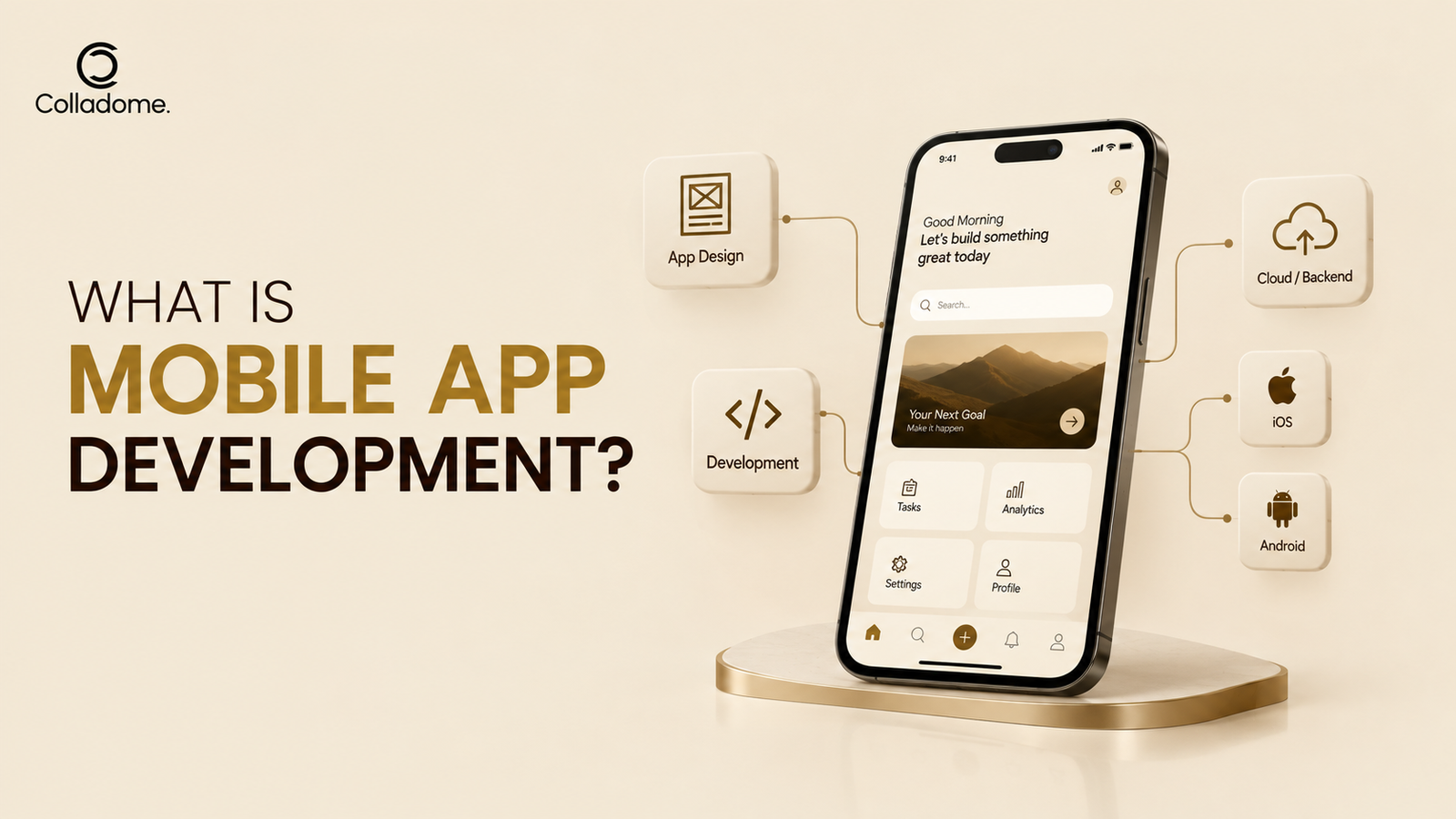
Mobile app development is the process of creating software applications for mobile devices such as smartphones and tablets. It includes every stage of an app project, from planning and design to coding, testing, deployment, and ongoing maintenance.
Unlike websites, mobile apps are designed to work with a device’s operating system. This allows them to use features such as:
- Push notifications
- Camera access
- GPS and location services
- Device storage
- Offline functionality
- Biometric authentication
These features can make mobile apps more integrated into users’ daily activities than mobile websites.
Mobile app development generally follows three approaches:
Native App Development
Native development creates an app specifically for one operating system. Developers use the programming languages and tools designed for iOS or Android.
This approach can provide strong performance and access to platform-specific features. However, businesses that need both iOS and Android apps may need separate development efforts.
Cross-Platform App Development
Cross-platform development uses a shared codebase to create apps for multiple platforms. Frameworks such as Flutter and React Native can reduce duplicate development work.
This approach can help businesses save development time while maintaining apps for both iOS and Android.
Hybrid App Development
Hybrid development combines web technologies with a native application shell. It can be faster to develop for some use cases, but it may not provide the same level of performance or platform integration as native or modern cross-platform development.
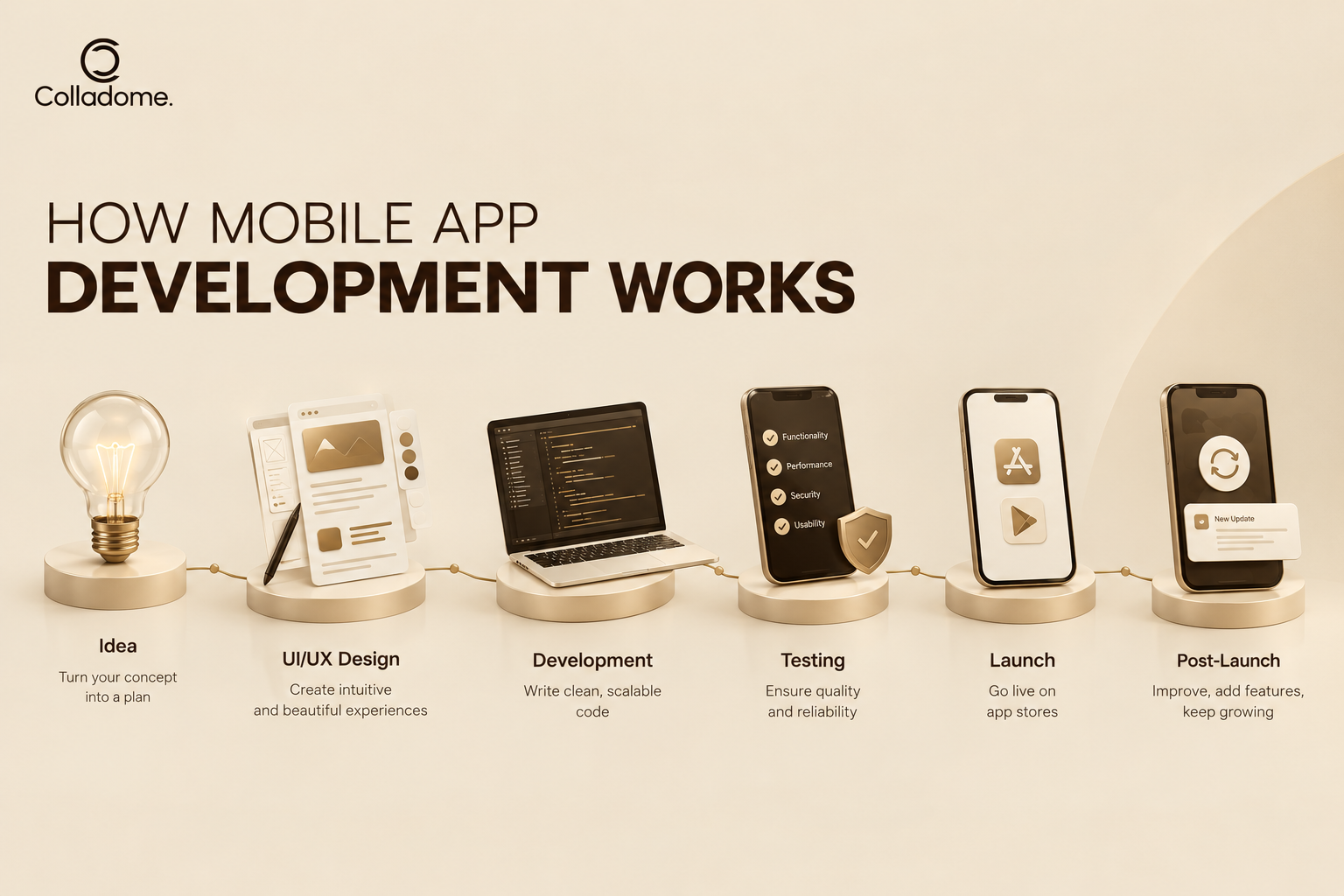
How Does Mobile App Development Work?
A professional mobile app project usually follows several stages. Each stage helps reduce development risks and ensures that the final product supports the business goal.
1. Discovery and Planning
The process starts by defining the business objective, target users, core features, and project requirements.
At this stage, the development team may also research competitors, identify technical requirements, and determine which platforms the app should support.
2. UI/UX Design
The design stage focuses on how users will interact with the application.
Designers create wireframes and visual designs to map the user journey. They also consider navigation, accessibility, usability, branding, and different screen sizes.
A clear UI/UX design can make the application easier to understand and use.
3. App Development
Developers then turn the approved designs into a working application.
Depending on the project requirements, the team may use native development or a cross-platform framework such as Flutter or React Native.
Backend development may also take place during this stage. The backend allows the app to communicate with databases, APIs, payment systems, authentication services, and other platforms.
4. Testing and Quality Assurance
Testing helps identify problems before the application reaches users.
QA teams can test the app for:
- Functional errors
- Performance issues
- Security vulnerabilities
- Compatibility across devices
- Screen-size issues
- Navigation problems
- API and integration errors
Testing across different devices and operating systems is especially important for mobile applications.
5. App Store Deployment
Once testing is complete, the application can be prepared for publication on platforms such as the Apple App Store and Google Play Store.
The process can include preparing app descriptions, screenshots, privacy information, technical requirements, and other store assets.
6. Maintenance and Updates
Mobile app development does not end after launch.
Apps require regular updates to address bugs, support operating system changes, improve security, and introduce new features. User feedback can also help businesses decide which improvements to make next.
What Do Mobile App Development Services Include?
When businesses look for mobile app development services, they usually need more than coding.
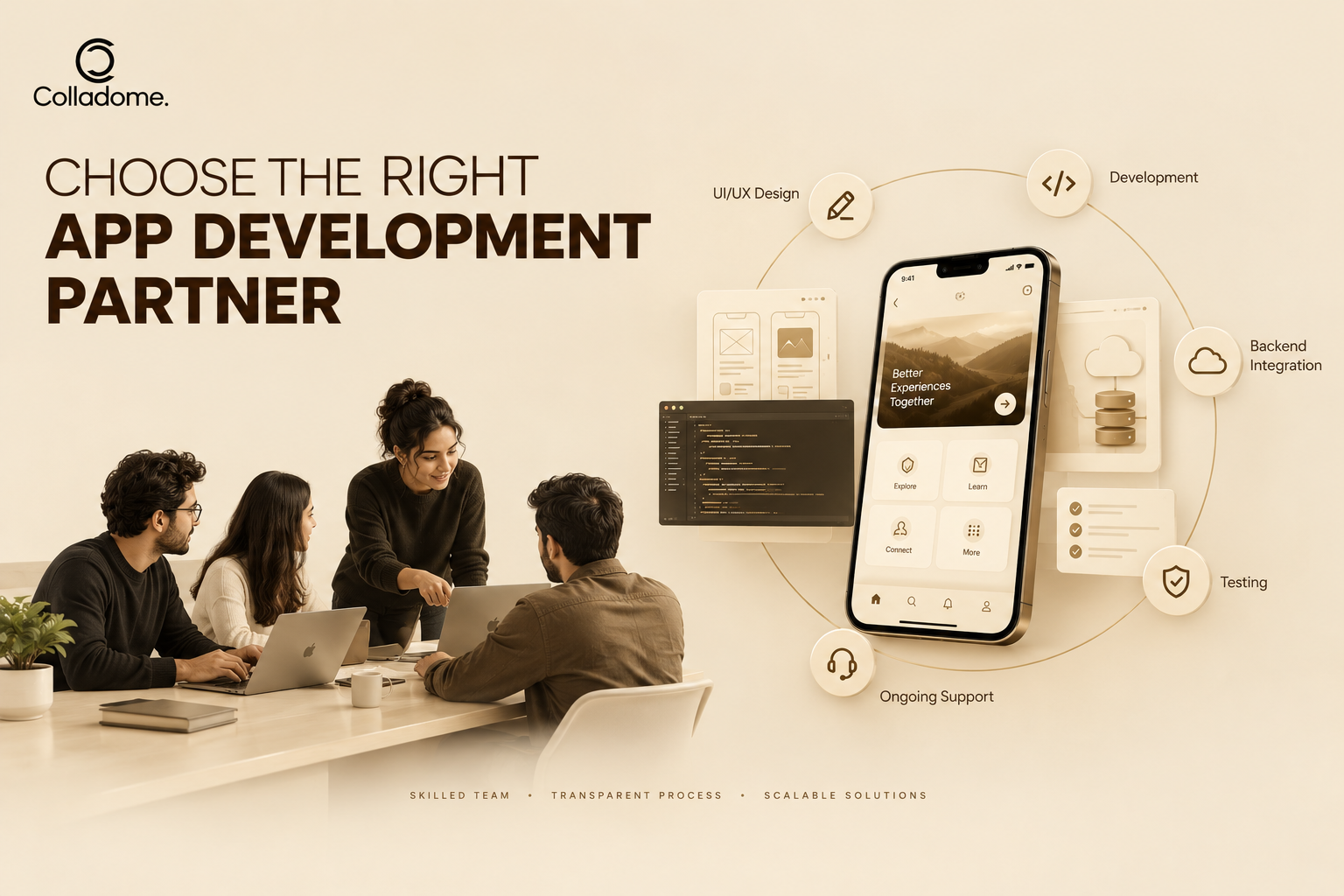
A complete service offering can include:
- App strategy and consulting
- Business and technical requirement analysis
- UI/UX design
- Native app development
- Cross-platform app development
- Backend development
- API integration
- Database development
- Payment gateway integration
- Quality assurance and testing
- App store submission support
- Post-launch maintenance
- Feature enhancements
Choosing a provider that handles the complete development lifecycle can simplify project management and reduce the need to coordinate multiple vendors.
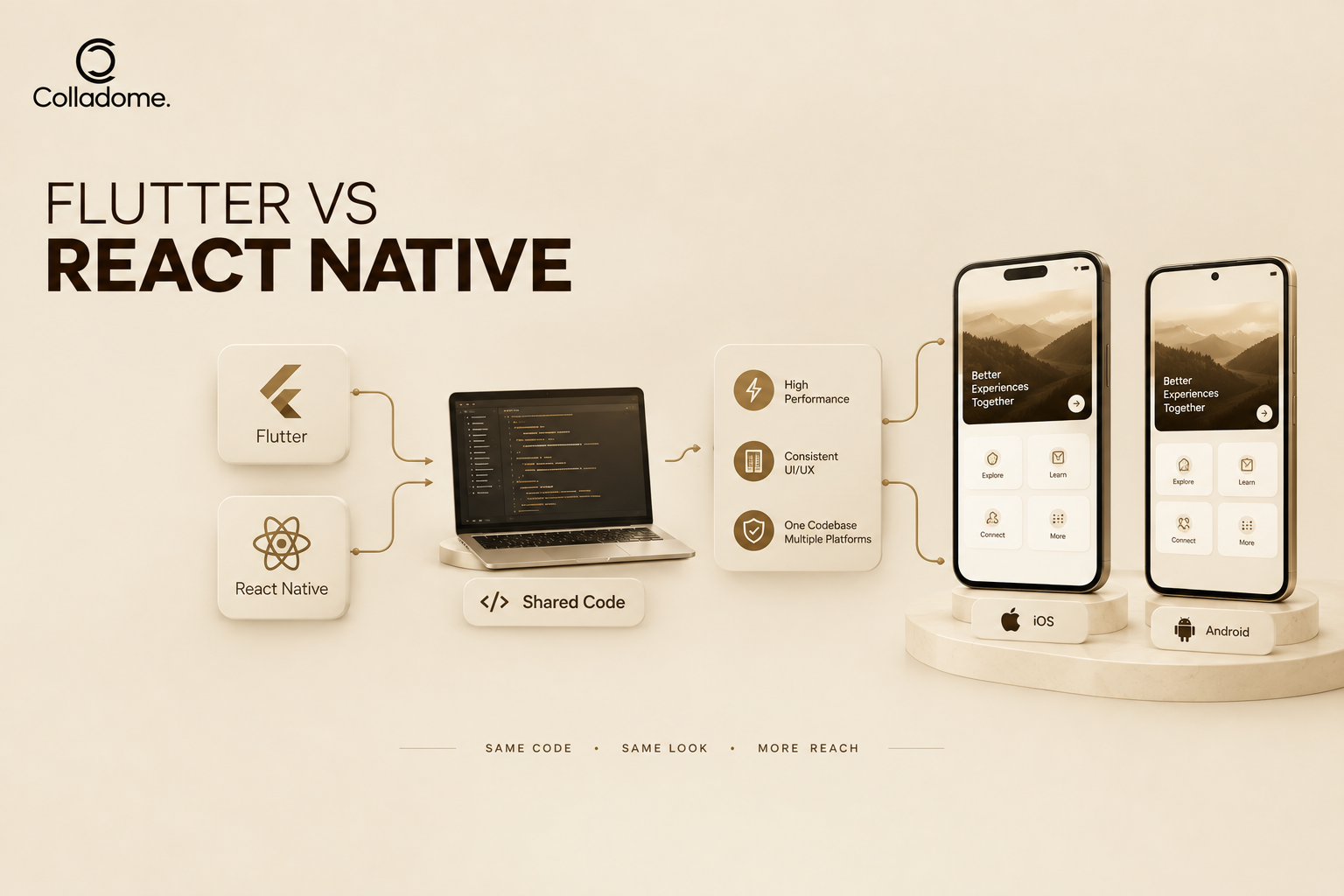
Flutter vs React Native: Which Should You Choose?
Flutter vs React Native is a common discussion when businesses consider cross-platform app development.
Both frameworks allow developers to create applications for iOS and Android from a shared codebase. However, they use different technologies and approaches.
| Factor | Flutter | React Native |
|---|---|---|
| Programming language | Dart | JavaScript |
| Development approach | Cross-platform | Cross-platform |
| UI consistency | Highly consistent across platforms | Uses native components more extensively |
| Learning curve | Moderate for developers new to Dart | Easier for teams familiar with JavaScript |
| Suitable for | Custom and highly consistent interfaces | Teams with JavaScript expertise and web development experience |
Neither framework is automatically the right choice for every project.
Flutter can be suitable for businesses that need a highly consistent interface across platforms. React Native can work well for teams with existing JavaScript expertise or projects that benefit from sharing knowledge with web development teams.
The right choice depends on factors such as:
- Required features
- Existing technical skills
- Project timeline
- Performance requirements
- UI requirements
- Long-term maintenance
- Third-party integrations
A development partner should evaluate these factors before recommending a framework.
Should You Build In-House or Outsource Mobile App Development?
Businesses often need to decide whether to build an internal team or outsource mobile app development.
Both approaches have different requirements.
Building an In-House Development Team
An in-house team provides direct control over development and day-to-day communication. It can be useful for larger organizations that plan to build and maintain multiple applications over the long term.
However, building an internal team requires hiring and managing developers, designers, QA specialists, project managers, and other technical professionals.
It also creates ongoing employee, infrastructure, and management costs.
Outsourcing Mobile App Development
When businesses outsource mobile app development, they work with an external development company or dedicated team.
Outsourcing can provide access to experienced developers without requiring the business to build a complete internal team.
Potential benefits include:
- Access to specialized expertise
- Faster project initiation
- Flexible team sizes
- Experience across different industries
- Reduced internal hiring requirements
- Access to designers, developers, and QA professionals under one team
However, outsourcing requires clear communication and project management. Businesses should define requirements, milestones, responsibilities, communication processes, and support expectations before development begins.
How to Choose a Mobile App Development Company in India
India is a major destination for outsourced technology development. Businesses evaluating a mobile app development company in India should look beyond pricing when comparing providers.
Here are several factors to consider.
Review the Company’s Portfolio
Look for live and published applications rather than relying only on design concepts.
A portfolio can help you understand the company’s experience with different industries, platforms, technologies, and app types.
Check Technical Expertise
Confirm whether the company has experience with the technology your project requires.
For example, if you are considering Flutter or React Native, ask about the team’s previous projects with those frameworks.
Evaluate UI/UX Capabilities
A technically functional app can still struggle if users find it confusing.
Ask about the company’s design process, user research, wireframing, prototyping, and usability testing approach.
Understand Communication Processes
Clear communication helps keep requirements and expectations aligned.
Ask how often you will receive project updates, which communication tools the team uses, and who will be responsible for project coordination.
Compare Pricing and Milestones
Do not compare development quotes based only on the final price.
Instead, ask providers to explain what the quote includes and divide the project into clear milestones.
Check Post-Launch Support
Ask what happens after the application goes live.
A reliable development partner should clearly explain its approach to bug fixes, operating system updates, maintenance, security updates, and future feature development.
How Much Does Mobile App Development Cost?
The cost of mobile app development can vary significantly because every project has a different scope.
A simple application with a few screens and limited functionality usually requires less development work than a complex application with a backend, third-party integrations, real-time features, or AI capabilities.
Several factors can influence the total cost.
App Complexity
A basic informational or utility application may require fewer resources than an application with complex workflows, multiple user roles, and advanced functionality.
Number of Features
Features such as user accounts, payments, maps, messaging, notifications, analytics, and real-time communication can increase development requirements.
Backend Requirements
Applications that need databases, APIs, authentication, cloud infrastructure, or complex business logic require additional backend development.
Platform Selection
Building separate native applications for iOS and Android can require more development resources than using a cross-platform approach.
The choice between Flutter and React Native can also influence development requirements depending on the team’s expertise and project needs.
Integrations
Third-party integrations can add development and testing requirements. Examples include:
- Payment gateways
- Maps and location services
- CRM systems
- ERP systems
- Analytics platforms
- Social login
- Communication APIs
Security and Scalability
Enterprise applications may require additional security controls, infrastructure, compliance measures, and scalability planning.
Instead of asking for a flat price without providing requirements, businesses should prepare a detailed feature list and request a phase-wise estimate.
A mobile app development company in India or another development provider can then provide a clearer breakdown covering design, development, testing, deployment, and maintenance.
Common Mobile App Development Mistakes to Avoid
Even a strong app idea can face problems when the development process lacks proper planning.
Here are some common mistakes businesses should avoid.
Building Without Understanding Users
Businesses sometimes develop features without first understanding what their target users actually need.
Market research and user feedback can help prioritize features and reduce unnecessary development work.
Choosing Technology Based on Trends
A popular framework is not automatically the right framework for every application.
Technology selection should depend on the project’s functionality, performance requirements, development expertise, budget, and long-term maintenance needs.
Rushing the Design Stage
Skipping proper UI/UX planning can result in an application that works technically but feels difficult to use.
Wireframes, prototypes, and usability testing can help identify problems before development is complete.
Ignoring Testing
Testing only at the end of development can make defects more expensive to fix.
Continuous testing throughout development can help identify functional, performance, compatibility, and security issues earlier.
Forgetting Post-Launch Maintenance
Operating systems, devices, security requirements, and user expectations continue to change.
Without regular maintenance, an application can become outdated and difficult to support.
How Do You Know If Your Business Is Ready for a Mobile App?
Not every business needs to start development immediately.
Before contacting a provider of mobile app development services, make sure you can answer a few important questions.
Do You Have a Clear Problem to Solve?
Start with a specific business or customer problem.
Instead of simply deciding that your business needs an app, identify what the application should improve or solve.
Do You Understand Your Target Users?
Define who will use the application and what they need from it.
Understanding the target audience can help you prioritize features and create a more relevant user experience.
Have You Defined the Core Features?
Create a list of essential features before adding optional functionality.
A focused first version can help businesses validate the idea before investing in additional features.
Do You Have a Realistic Budget?
Your budget should reflect the actual scope of the application.
Consider design, development, testing, deployment, infrastructure, and post-launch maintenance when planning the budget.
Have You Defined Success?
Decide how you will measure the application’s performance after launch.
Depending on the business model, success could be measured through:
- Downloads
- Active users
- Customer engagement
- Revenue
- Conversion rates
- Retention
- Customer satisfaction
Answering these questions before development can make the discovery and planning stage more efficient.
Final Thoughts
Understanding what is mobile app development is an important first step before investing in an application.
A successful mobile app requires more than writing code. It involves planning, UI/UX design, development, testing, deployment, and continuous maintenance.
Businesses also need to make several important decisions, including whether to build in-house or outsource mobile app development, which development approach to use, and whether Flutter or React Native is appropriate for the project.
By defining the business goal, understanding users, prioritizing features, and choosing an experienced development partner, businesses can create a mobile application that is easier to launch, maintain, and improve over time.