
Modern enterprise operations stall when cross-functional handoffs rely on manual data entry and brittle application connections. For expanding SMEs, operational efficiency deteriorates as departmental silos multiply. Deploying strategic custom AI software development eliminates these structural constraints, allowing leadership teams to scale transaction throughput while containing operational headcount.
The Hidden Operational Tax: Why Conventional Automation Fails Scaling SMEs
Traditional process management relies on static point-to-point connections and conventional robotic process automation (RPA). While effective for deterministic, repetitive actions, these systems fail when processing unstructured data formats such as non-standard supplier invoices, customer email requests, or variable contract agreements. According to research published by Gartner, over 80% of enterprise data remains unstructured, leaving rule-based scripts unable to interpret routine operational variations.
When an unexpected data schema enters an off-the-shelf integration pipeline, the workflow fails, creating costly operational backlogs. Scaling enterprises frequently patch these vulnerabilities by purchasing additional point software solutions. This approach increases subscription overhead and expands technical debt without resolving fundamental process friction. Manual reconciliation returns, pulling key personnel away from strategic initiatives to manage low-value administrative tasks.
Architectural Shift: How AI Workflow Automation Replaces Fragile Integrations
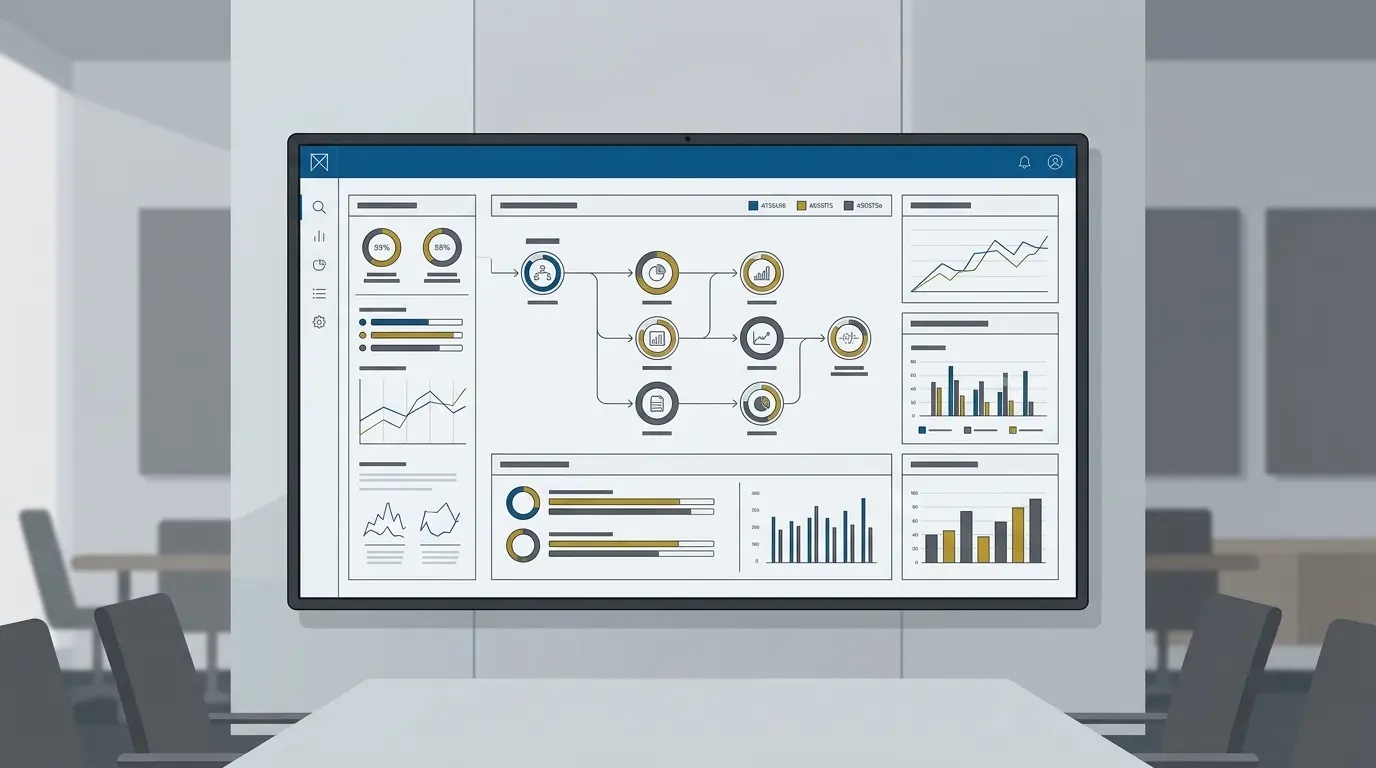
Intelligent process orchestration replaces brittle scripts by positioning machine learning models directly alongside transactional enterprise databases. Rather than simply routing static records between software interfaces, intelligent pipelines ingest multi-source documents, normalize varied inputs, evaluate business context, and execute multi-stage approvals automatically. This structural shift transforms automated systems from passive message brokers into resilient operational engines.
By coupling custom web applications with enterprise data layers, organizations bypass the rigid limitations of off-the-shelf SaaS connectors. Engineering proprietary logic gives organizations strict control over their security guardrails, role-based access configurations, and system uptime. The result is an immediate expansion in operational throughput and margins, allowing mid-market firms to operate with enterprise-grade capability without corresponding overhead increases.
Strategic Implementation Pillars: From Assessment to Execution
Deploying automated infrastructure demands a disciplined methodology to ensure capital investments generate immediate operational returns. Organizations successfully scaling intelligent operations execute across three structured pillars:
- AI Readiness Assessment and Process Mining: Problem: Automating unoptimised or flawed workflows amplifies processing errors across enterprise databases. Solution: Technical audits map departmental data dependencies, identify process friction, and clean underlying schemas prior to engineering. Outcome: A verified architectural blueprint that guarantees automation delivers immediate operational velocity.
- Custom Enterprise Integration and Data Governance: Problem: Connecting public artificial intelligence models to operational systems creates severe data governance and intellectual property risks. Solution: Engineering private inference engines and custom middleware secured through strict role-based access control (RBAC). Outcome: Controlled system orchestration with zero proprietary data exposure and complete compliance oversight.
- Closed-Loop Human-in-the-Loop Execution: Problem: Granting absolute autonomy to automated decision engines risks unmonitored edge-case failures. Solution: Establishing programmatic confidence thresholds that trigger human verification whenever input anomalies occur. Outcome: Flawless operational throughput with self-improving algorithmic accuracy over continuous production cycles.
Core Architectural Layers of Enterprise Workflow Automation
Dynamic Ingestion and Multimodal Extraction
Enterprise workflows ingest unstructured PDFs, scanned bills of lading, and emails without manual tagging. Multimodal models convert raw inputs into structured database entries in seconds. Eliminating manual data transcription shortens ingest cycles from days to minutes, reducing processing overhead by up to 70%.
Context-Aware Decision Engines
Private vector databases and domain-tuned models evaluate business context rather than basic keywords. The architecture classifies requests, assesses contractual parameters, and routes items to destination systems autonomously. This contextual awareness ensures complex operational pathways complete accurately without manual staff reviews.
Deterministic Governance and Audit Trails
Enterprise deployments enforce strict role-based access control and immutable transaction logs across every automated transaction. Cryptographic audit trails track data provenance, decision confidence, and execution timestamps. This rigorous governance structure guarantees complete regulatory compliance and transparent operational accountability across all workflows.
Evaluating Commercial Strategy: Custom Engineering vs. SaaS Platforms
Total Cost of Ownership and Licencing Scalability
Off-the-shelf automation platforms charge escalating per-execution fees that punish enterprise volume growth. High-throughput operations face unpredictable operational expenses that erode operational margins. In contrast, owned custom enterprise software architectures establish stable overhead costs and deliver superior long-term return on investment.
Vendor Lock-in and Proprietary IP Retention
Third-party automation vendors maintain proprietary control over business logic, limiting customization and introducing external dependency risks. Building dedicated enterprise pipelines secures all algorithmic logic and workflows as balance-sheet assets. This strategic independence enhances company enterprise value and protects competitive intellectual property.
Strategic Service Alignment: AI Consulting vs Digital Transformation Consulting
Organizations must distinguish targeted systems engineering from broad managerial overhauls. Evaluating AI consulting vs digital transformation consulting helps leaders select focused technical execution over lengthy organizational restructuring. Targeted engineering engagements resolve explicit operational bottlenecks quickly to generate rapid, capital-efficient returns.
Mitigating Enterprise Risks in Automated Workflows
Data Leakage and Secure Network Boundaries
Zero-trust security frameworks isolate sensitive corporate records from third-party model providers. Private local deployments and enterprise-grade virtual private clouds prevent proprietary data from entering public training corpuses. This comprehensive isolation safeguards sensitive client information and organizational intelligence from external vulnerability.
Handling Latency and Mission-Critical Fallbacks
Mission-critical operations require deterministic fail-safes when third-party cloud infrastructure faces latency spikes or network outages. Asynchronous queue architectures and local microservice fallbacks keep essential business transactions operational during disruptions. These engineering redundancies maintain uninterrupted operational throughput across high-volume production environments.
Continuous Drift Monitoring and Retraining Frameworks
Operational data patterns shift naturally over multi-year business cycles, degrading model performance if left unmonitored. Continuous telemetry tracking flags output drift and shifts in baseline distributions before operational errors materialize. Automated evaluation pipelines retrain model components systematically to ensure consistent inference reliability.
Strategic Evaluation: Off-the-Shelf SaaS vs. Custom AI Workflow Automation
| Evaluation Criteria | Off-the-Shelf Automation (Generic SaaS Platforms) | Custom Enterprise AI Workflow Automation |
|---|---|---|
| Architectural Flexibility & Custom Logic | Restricted to pre-configured vendor connectors; brittle edge-case management. | Engineered to exact operational logic, custom relational schemas, and dynamic business rules. |
| Data Security, Privacy & RBAC Guardrails | Shared multi-tenant cloud storage; risks exposure through third-party platform endpoints. | Isolated single-tenant architecture, zero-retention private models, and strict RBAC controls. |
| Long-Term TCO at Enterprise Volume | Escalating variable costs; per-seat and per-task pricing punishes operational scale. | Fixed operational engineering investment; zero per-operation platform licensing penalties. |
| Integration with Legacy ERP / Databases | Requires costly third-party wrapper APIs; high latency and frequent connection failures. | Native integration directly with proprietary databases, on-premises systems, and ERPs. |
| Proprietary Intellectual Property Ownership | Third-party vendor owns the underlying execution code and hosting platform. | Organization maintains 100% ownership of source code, models, and custom data assets. |
High-volume enterprises capture return on investment faster through owned custom software assets, avoiding punitive subscription escalation while tailoring mission-critical processes to unique industry operations.
High-Impact Vertical Applications: Transforming Industry Operations
Enterprise automation generates its greatest commercial value when applied directly to complex vertical operational environments where legacy databases fail to talk to customer touchpoints.
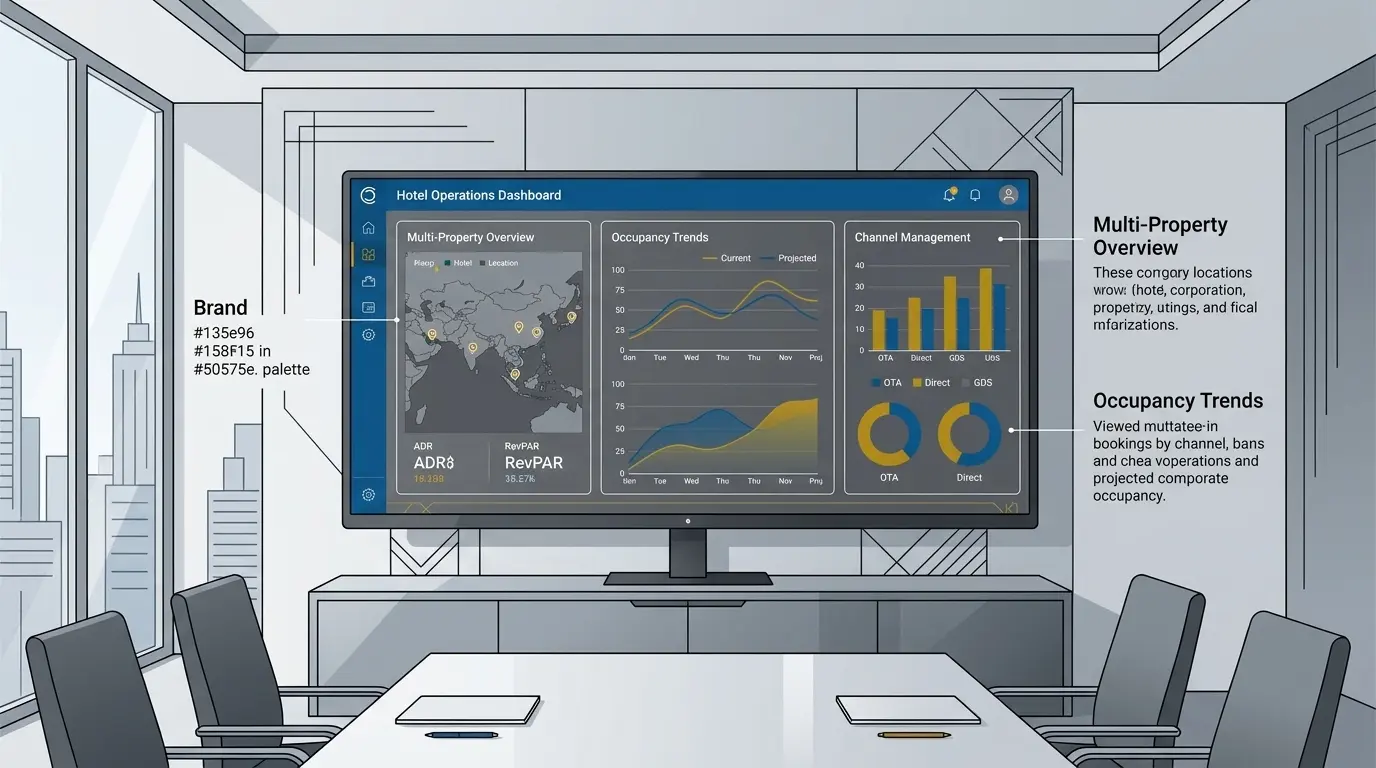
Hospitality Operations and Multi-Property Management: Running a multi-property hospitality brand requires continuous synchronization across central reservation engines, front-desk staffing, and housekeeping schedules. Deploying specialized custom hotel management software with native workflow automation bridges property management systems (PMS) directly with dynamic booking channels. The automated pipeline ingests reservation modifications, updates room inventory across all global channels in real time, and dispatches dynamic service tasks to on-site housekeeping teams. Manual scheduling conflicts drop to zero, operational overhead falls, and guest response times accelerate from hours to seconds.
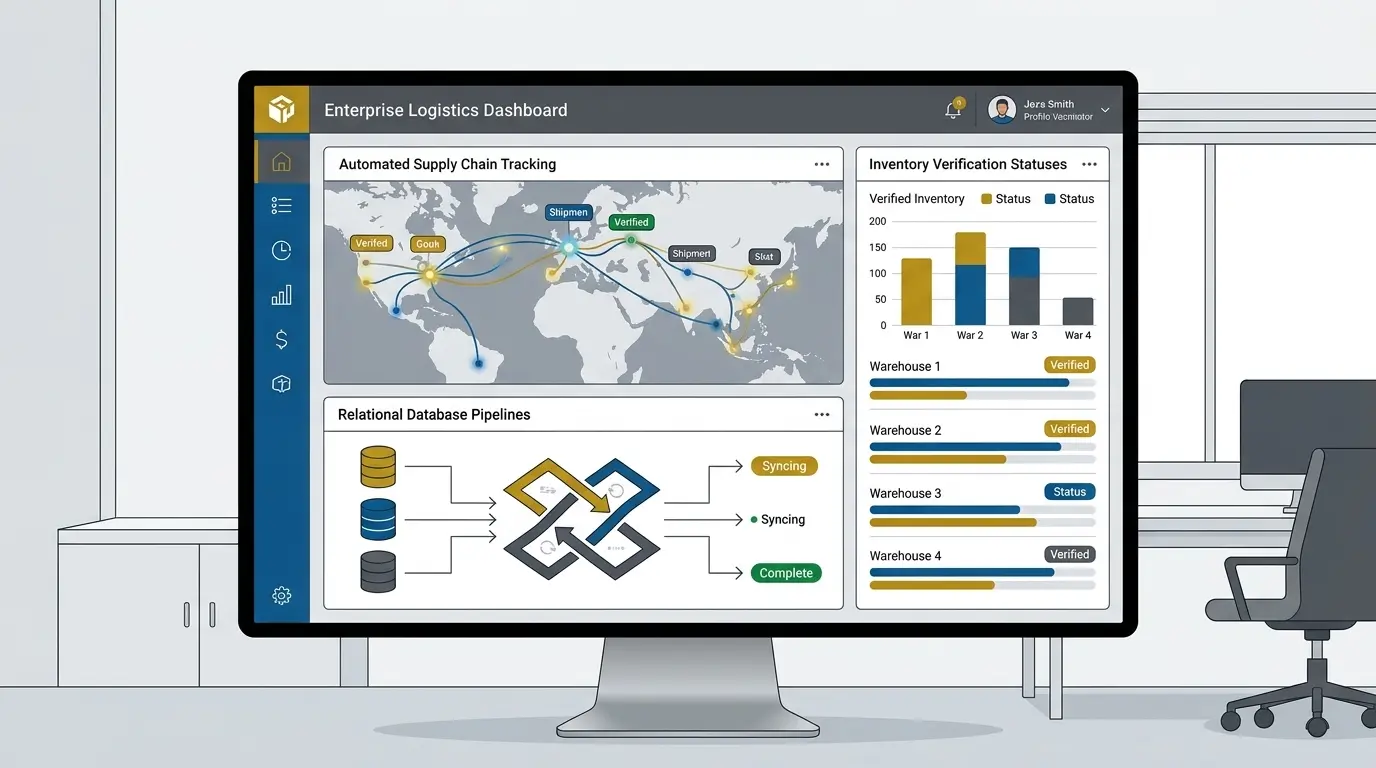
Industrial Manufacturing and Enterprise Logistics: Modern industrial supply chains depend on flawless data flows between warehouse floors, procurement teams, and external suppliers. Intelligent workflow pipelines automate three-way invoice matching by extracting line items from supplier bills of lading, cross-referencing enterprise resource planning (ERP) purchase orders, and validating inventory delivery tallies. The system flags variances, updates ledger balances, and releases payments autonomously, eliminating logistics bottlenecks and reducing administrative costs across supply networks.
Assessing Organizational Readiness for Workflow Automation
Enterprises evaluating automated infrastructure require an empirical baseline before committing engineering capital. A structured AI readiness assessment pinpoints operational debt, documents legacy dependencies, and calculates projected operational returns. Engaging in strategic software consulting services enables leadership teams to de-risk implementation and establish an architectural foundation that supports long-term commercial scale.
Eliminating Operational Constraints: Building the Autonomous Enterprise
Sustained enterprise growth requires replacing fragile, manual handoffs with dedicated, intelligent operational architectures. Relying on disconnected point tools and manual data entry imposes an unsustainable tax on modern businesses. Intelligent automation removes this fundamental business constraint, transforming routine processes into reliable, self-optimizing assets that drive long-term resilience.
Achieving this operational advantage requires moving beyond generic, off-the-shelf platforms toward enterprise architectures engineered for your unique operational requirements. Colladome partners with ambitious founders, CXOs, and operations heads to build custom enterprise web applications and intelligent data pipelines. Let us build the next standard of operational efficiency together.