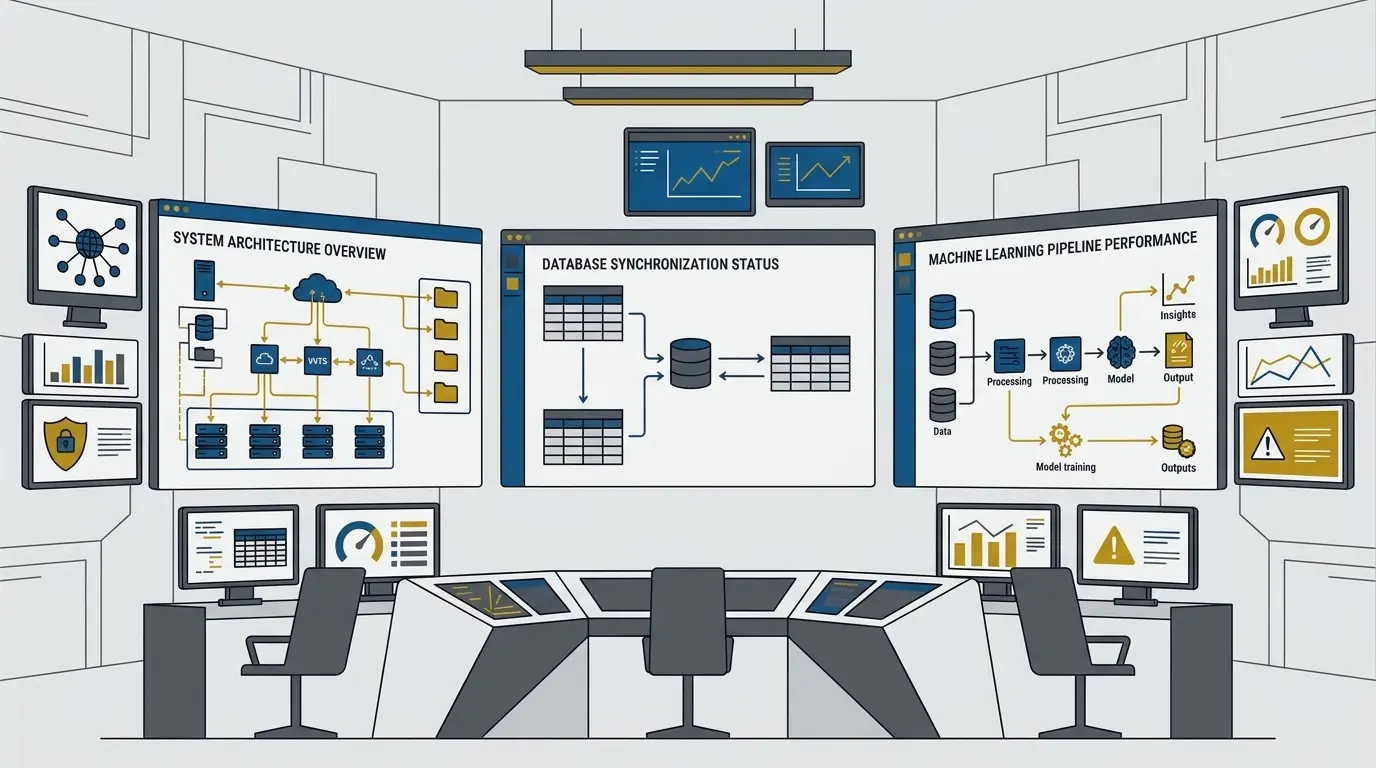

AI digital transformation is the strategic engineering of artificial intelligence into an enterprise’s core operational logic, databases, and software workflows. Rather than adopting disparate automated tools, true AI transformation replaces rigid manual bottlenecks with adaptive, data-driven systems. This operational evolution enables mid-market enterprises and growing firms to scale throughput without linearly multiplying payroll overhead.
The Operational Friction: Why Conventional Digitisation Fails Growing Enterprises
Conventional digitisation projects frequently disappoint mid-market leadership. Transitioning spreadsheets into standalone SaaS tools merely digitises friction, creating disconnected software islands. Leaders across logistics, manufacturing, and hospitality discover that commercial cloud tools introduce restrictive vendor lock-in, recurring licensing bloat, and rigid interfaces. Most importantly, these platforms fail to eliminate manual operational constraints because they cannot synchronize bi-directionally with legacy enterprise systems.
When software silos proliferate, operational data fragments. Off-the-shelf subscriptions rarely provide the precise role-based access control (RBAC) required for cross-departmental governance. A formal AI readiness assessment typically exposes this reality: manual re-entry between tools consumes valuable engineering and administrative hours. According to research from McKinsey & Company, companies rewiring their operational architecture achieve twice the revenue growth of peers deploying surface-level point solutions.
Defining AI Digital Transformation: Removing Enterprise Constraints Through Custom Engineering
True AI digital transformation removes operational constraints by pairing proprietary databases with dedicated machine learning pipelines. Colladome engineers custom enterprise software architectures that connect operational databases directly to modern predictive engines. Rather than wrapping consumer chatbots around internal documents, bespoke development embeds deterministic logic, contextual reasoning, and real-time validation into your day-to-day enterprise software.
Many business leaders ask fundamental questions such as how does generative AI work within an enterprise environment. The core operational mechanism relies on vector embeddings, semantic retrieval pipelines, and private inference endpoints. By decoupling enterprise workflows from public platforms, custom development guarantees operational privacy, removes recurring seat fees, and secures proprietary trade secrets inside private cloud virtual perimeters.
The Four-Stage Strategic Framework for AI Transformation
Successful enterprise modernization demands an incremental execution structure. Through systematic deployment, organizations eliminate technical risk and protect invested capital:
- AI Readiness Assessment & Technical Audit: Evaluating legacy databases, assessing data hygiene, and identifying security vulnerabilities to prevent systemic enterprise data leakage before introducing model pipelines.
- Bespoke Workflow Architecture & RBAC Design: Designing custom enterprise web applications featuring granular, role-based access control, strict schema validations, and isolated server environments.
- Targeted AI Implementation & Legacy Integration: Deploying specialized predictive models and retrieval-augmented generation pipelines that interface directly with operational ERP and CRM databases via high-performance APIs.
- Continuous Optimization & Scaled Automation: Instituting automated drift detection, model evaluation loops, and workflow observability to free operational capital for strategic commercial expansion.
Core Architecture Requirements for Enterprise AI Systems
Unified Data Pipelines and Legacy Database Synchronization
Fragmented databases starve intelligent systems. Custom extract, transform, load (ETL) pipelines continuously cleanse and synchronize unstructured operational data with production SQL and NoSQL engines. Real-time legacy synchronization reduces analytical query latency from days to milliseconds, empowering executive teams to execute operational adjustments instantly.
Role-Based Access Control and Enterprise Security
Modern enterprise governance requires strict cryptographic data isolation. Custom RBAC architectures restrict model inference access according to clearance levels, tenant tenancy, and departmental parameters. Enforcing rigid data loss prevention protocols prevents internal leaks and secures enterprise client trust across every transactional touchpoint.
Custom Middleware and API Integration Layers
Fragile third-party webhooks fail under enterprise workloads. Custom middleware integration layers bridge modern neural architectures directly into existing ERPs, property management software, and inventory engines. This bespoke connectivity eliminates middle-tier licensing expenses while maintaining uninterrupted platform uptime across distributed operating units.
Strategic Domains Driving Measurable Enterprise AI ROI
Predictive Operational Analytics for Resource Planning
Deploying specialized time-series forecasting models eliminates supply imbalances across inventory-heavy operations. These algorithmic engines evaluate historical order velocity, material availability, and demand anomalies. Enterprises deploying predictive resource scheduling routinely achieve double-digit reductions in working capital holding costs.
Intelligent Process Automation in Back-Office Workflows
Manual invoice processing, unstructured document indexing, and procurement parsing drag down operational margins. Through business process automation with AI, cognitive processing pipelines extract, validate, and commit transactional records directly into core ledgers, reducing back-office administrative hours by over 40%.
AI-Powered Customer Engagement and Support Engines
Context-aware conversational agents linked to secure internal CRM databases resolve high-frequency customer inquiries instantly without human intervention. By ingesting client purchase histories and contextual preferences, these custom engines deliver instantaneous resolution, lowering operational support ticketing costs while raising enterprise account retention rates.
Governance, Compliance, and Risk Elimination Frameworks
Proprietary IP and Model Isolation Protocols
Routing sensitive enterprise records through commercial third-party cloud APIs poses severe intellectual property risks. Bespoke AI digital transformation deploys isolated open-weight or proprietary models on private cloud infrastructures. This architectural boundary preserves proprietary algorithms, trade secrets, and organizational valuation.
Continuous Monitoring and Model Drift Governance
Model performance naturally degrades as market distributions shift over time. Production-grade transformation incorporates automated data drift detection, precision validation loops, and metric alerts. Continuous programmatic verification guarantees analytical accuracy, consistent reliability, and dependable enterprise decision support across evolving business cycles.
Audit Readiness and Regulatory Alignment
Evolving regional compliance mandates demand transparent, explainable data handling practices. Tailored automated logging captures model inputs, context references, and output confidence scoring in real time. Rigorous logging maintains audit readiness, simplifying regulatory reporting across domestic and international markets while avoiding steep compliance penalties.
Strategic Comparison: Off-The-Shelf SaaS vs. Bespoke AI Digital Transformation
| Evaluation Dimension | Generic Off-The-Shelf AI Software | Custom AI Digital Transformation (Colladome) |
|---|---|---|
| Architecture & IP Ownership | Vendor lock-in with closed, shared multi-tenant models | Full proprietary codebase and intellectual property ownership |
| Legacy System Integration | Restricted to brittle third-party webhooks and generic APIs | Direct, high-performance integration with custom ERPs and databases |
| Data Privacy & Security | Shared infrastructure carrying recurring data leakage risks | Dedicated private environments with strict role-based access control |
| Operational Adaptability | Rigid operational structures forcing manual workflow compromises | Engineered specifically around proprietary business workflows |
| Long-Term Financial Impact | Compounding subscription seat licenses and scaling surcharges | Fixed capital expenditure building long-term operational margin |
Mid-market organizations inevitably reach an architectural inflection point where off-the-shelf software subscriptions create unsustainable operational debt. Custom enterprise engineering permanently eliminates recurring per-user fees, delivering resilient digital assets designed to scale efficiently alongside long-term enterprise growth.
Applied AI Transformation: Real-World Industry Execution
Implementing targeted intelligence fundamentally alters operational economics across diverse market sectors by replacing manual administrative friction with deterministic software execution:
- Hospitality & Multi-Property Hotel Operations: Implementing unified custom hotel management software integrates predictive occupancy models with dynamic rate adjustment engines. The system reconciles reservations against operational overhead, automatically coordinating housekeeping routes and vendor inventory without human supervision.
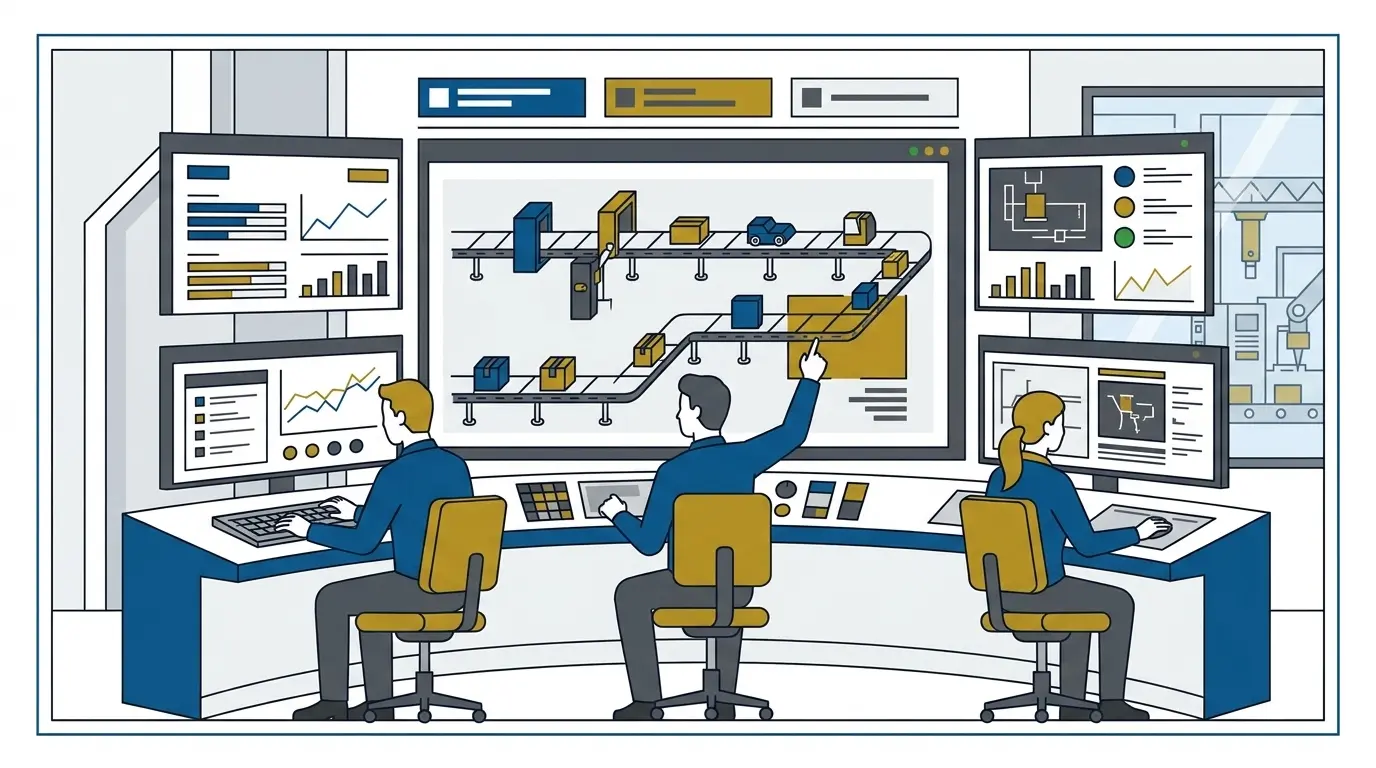
- Manufacturing & Industrial Supply Chains: Combining computer vision at production inspection lines with predictive maintenance telemetry prevents catastrophic equipment downtime. Machine learning models continuously cross-reference supplier material shipments against quality standards, reconciling discrepancies before inventory reaches assembly floors.
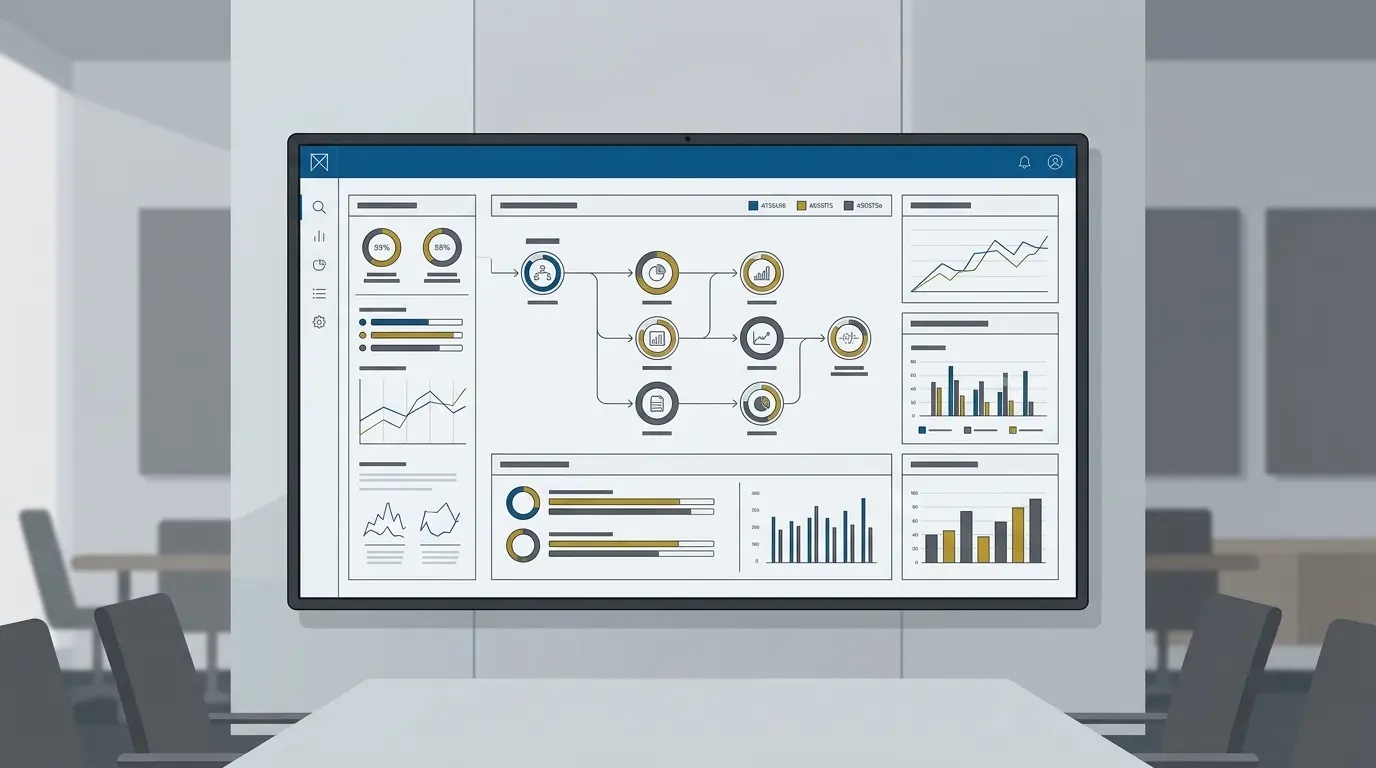
- Interactive Displays & EdTech Hardware: Custom interactive flat panel (IFP) and smart board software development integrates low-latency touch driver protocols, on-device handwriting recognition, and automated meeting synthesis, turning physical conference room panels into intelligent corporate knowledge engines.
Evaluating Strategic Readiness for Custom AI Integration
Founders, CXOs, and operational leaders evaluating capital allocations for 2026 must establish clear technical baselines before committing engineering resources. An initial AI readiness assessment identifies systemic database debt, quantifies manual workflow bottlenecks, and verifies software integration viability. This structured consultation provides executive leadership with unambiguous technical scoping, risk-weighted timelines, and measurable financial return models before writing a single line of production code.
Capitalising on AI Digital Transformation: Building the Enterprise Future
Modern enterprise modernization demands far more than basic cloud hosting or disconnected software subscriptions. True market leadership requires custom software engineering that turns proprietary data into automated operational leverage. By decoupling daily execution from manual administrative limits, bespoke platforms deliver lasting margin expansion and defensible intellectual property.
Colladome partners with ambitious founders and business leaders to engineer high-performance digital ecosystems, enterprise web platforms, and tailored intelligence layers. Let’s make the next big thing together!