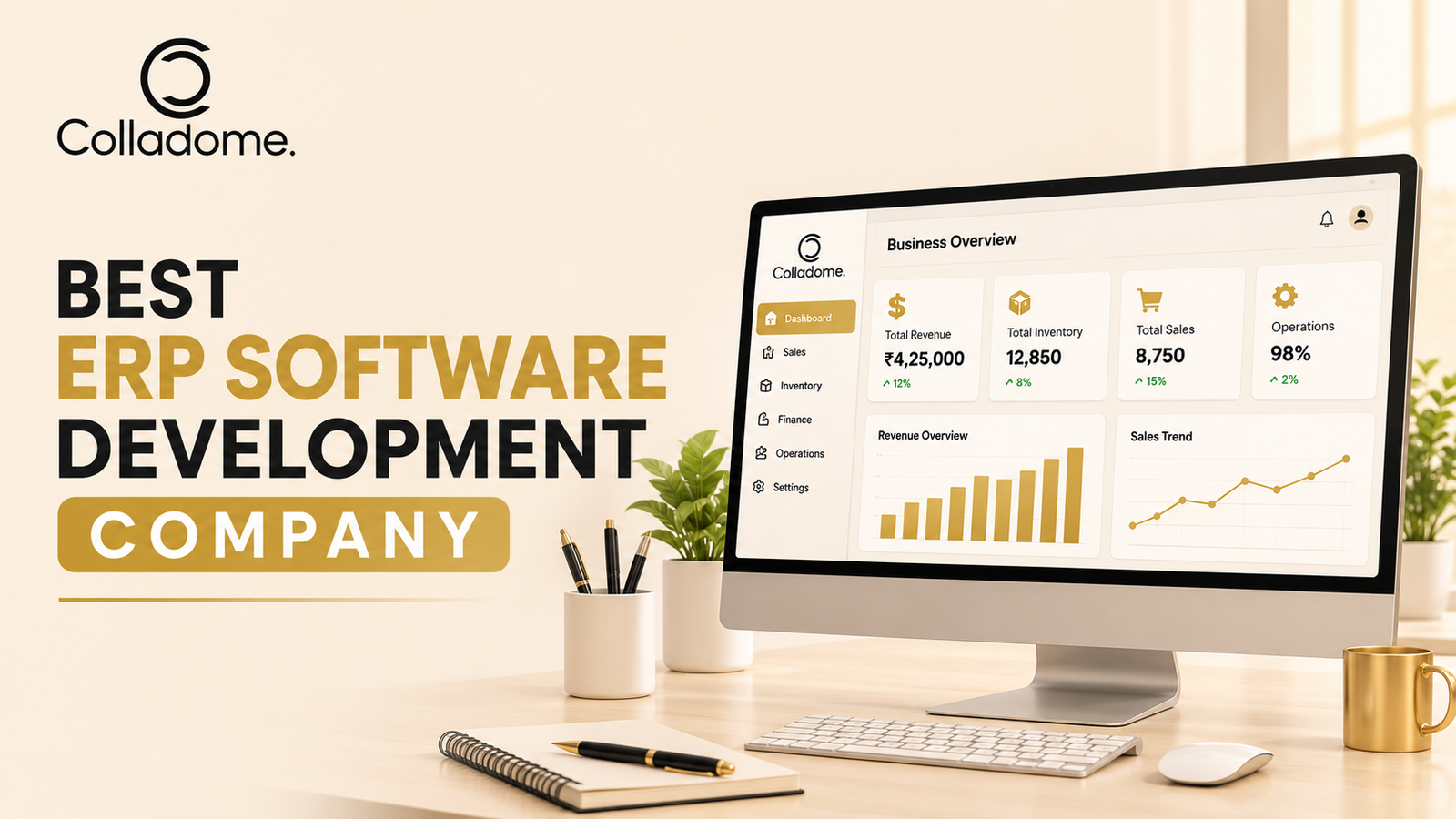

An ERP system touches almost every part of a business: finance, inventory, purchasing, production, sales, and people. When it works, teams share one accurate view of the business. When it does not, employees go back to spreadsheets and the investment is wasted. Very often the difference comes down to the company that builds and implements it.
This guide helps you find the best ERP software development company for your needs. It explains what a good ERP software development company actually does, how to compare top ERP software development companies, when custom ERP software development makes sense, and what to expect from ERP software development cost in India.
What Does an ERP Software Development Company Do?
An ERP software development company designs, builds, integrates, and supports enterprise resource planning systems. Some build fully custom platforms from scratch. Others customize and extend existing ERP frameworks. Many do both, depending on what the client needs.
The work goes well beyond coding. It starts with understanding how your business really operates, including the approvals, exceptions, and workarounds that never appear in official process documents. The team then designs the modules you need, builds the database and workflows, connects the ERP to other systems, migrates your existing data, tests thoroughly, trains your people, and supports the system after launch.
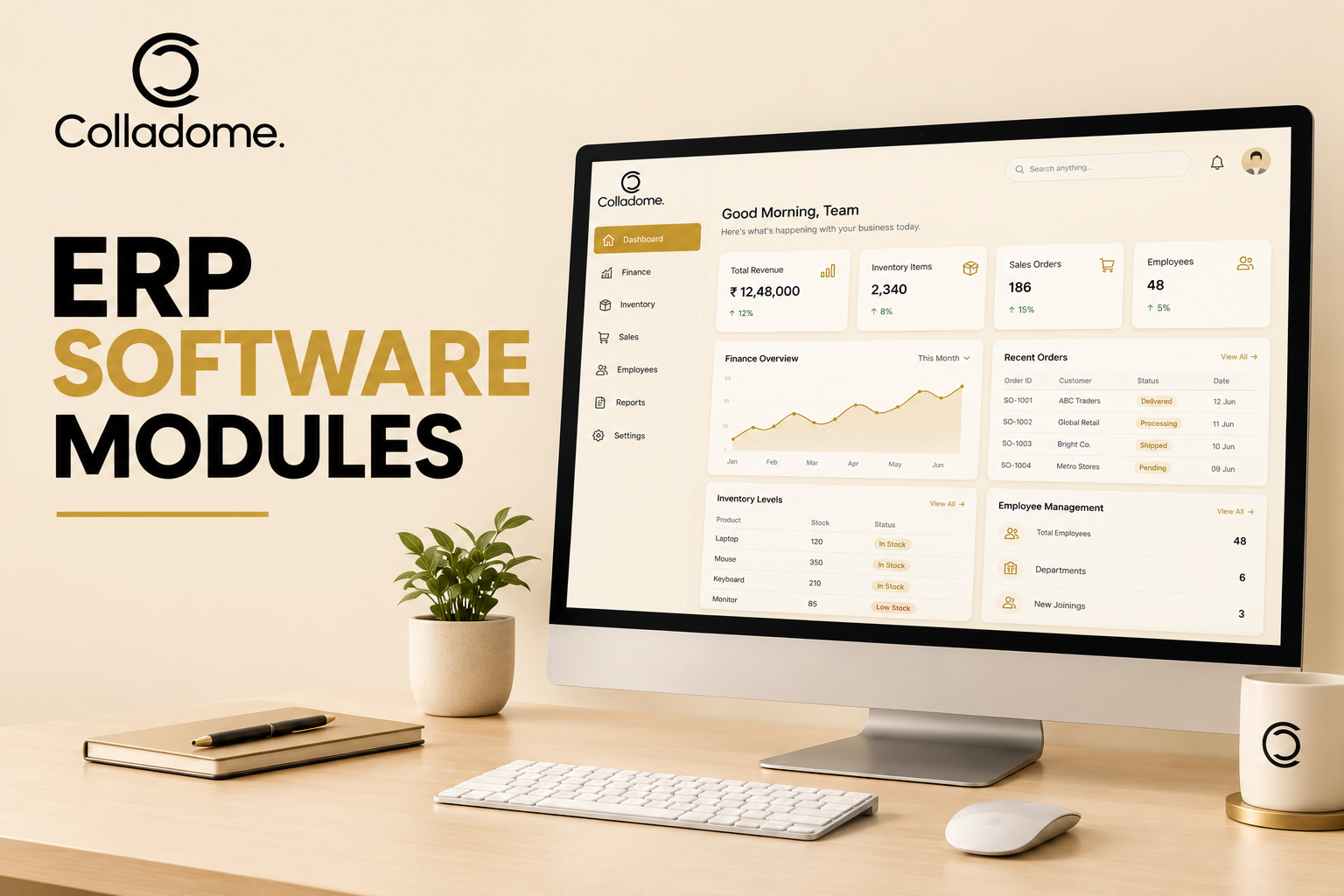
Common modules include finance and accounting, inventory and warehouse management, procurement, sales and CRM, human resources and payroll, manufacturing and production planning, project management, and reporting and analytics. A good company helps you decide which modules to launch first and which can follow later, since trying to do everything at once is a common cause of failed ERP projects.
Why the Choice of Company Matters So Much
ERP projects are different from most software projects. They affect many departments at once, they replace systems people use every day, and they hold critical business data. A weak provider can cause delays, budget overruns, data errors, and low adoption by staff.
Because an ERP is meant to run for years, the relationship does not end at launch. You will need updates, new modules, integrations, and support as your business changes. That makes long-term reliability, documentation, and communication just as important as technical skill.
How to Identify the Best ERP Software Development Company
No single company is best for every business. The best ERP software development company for you is the one whose experience, approach, and working style match your industry and goals. The table below gives you a practical way to compare candidates.
| What to Evaluate | What a Strong Company Shows |
| ERP experience | Live ERP systems in production, with references you can contact |
| Industry knowledge | Past work in your sector, such as manufacturing, distribution, retail, or services |
| Discovery process | A structured analysis of your workflows before any design or pricing |
| Data migration skill | A clear plan for moving, cleaning, and validating existing data |
| Integration ability | Experience connecting ERP with accounting, e-commerce, CRM, and other tools |
| Training and adoption | Staff training, documentation, and a rollout plan, not just software delivery |
| Support after launch | Defined response times, maintenance terms, and a path for future modules |
| Client feedback | Verified reviews on independent platforms such as Clutch or Google |
Beyond the table, pay attention to how a company handles the early conversations. Strong providers ask detailed questions about your processes, challenge unclear requirements, and propose a phased rollout. A company that agrees to everything and quotes immediately may not understand the complexity ahead.
Comparing Top ERP Software Development Companies
When you review top ERP software development companies, marketing claims tend to look alike, so focus on evidence you can check.
Ask for case studies that describe the business problem, the solution, and measurable results, such as shorter reporting time, fewer stock errors, or faster order processing. Speak with at least one past client about how the project handled surprises, since every ERP project has them. Check how long the company has supported its clients after launch, as long relationships are a good sign of dependable support.
Look closely at the team you will actually work with, including the project manager, the lead developer, and the business analyst. Ask about their approach to testing and to security, particularly role-based access, audit trails, and data backups. Finally, compare proposals on scope and phases instead of only on the total, so that you are weighing like with like.
When Custom ERP Software Development Makes Sense
Ready-made ERP products work well for many businesses, especially those with standard processes. But some companies find that off-the-shelf software forces them to change how they work, or requires costly add-ons and workarounds.
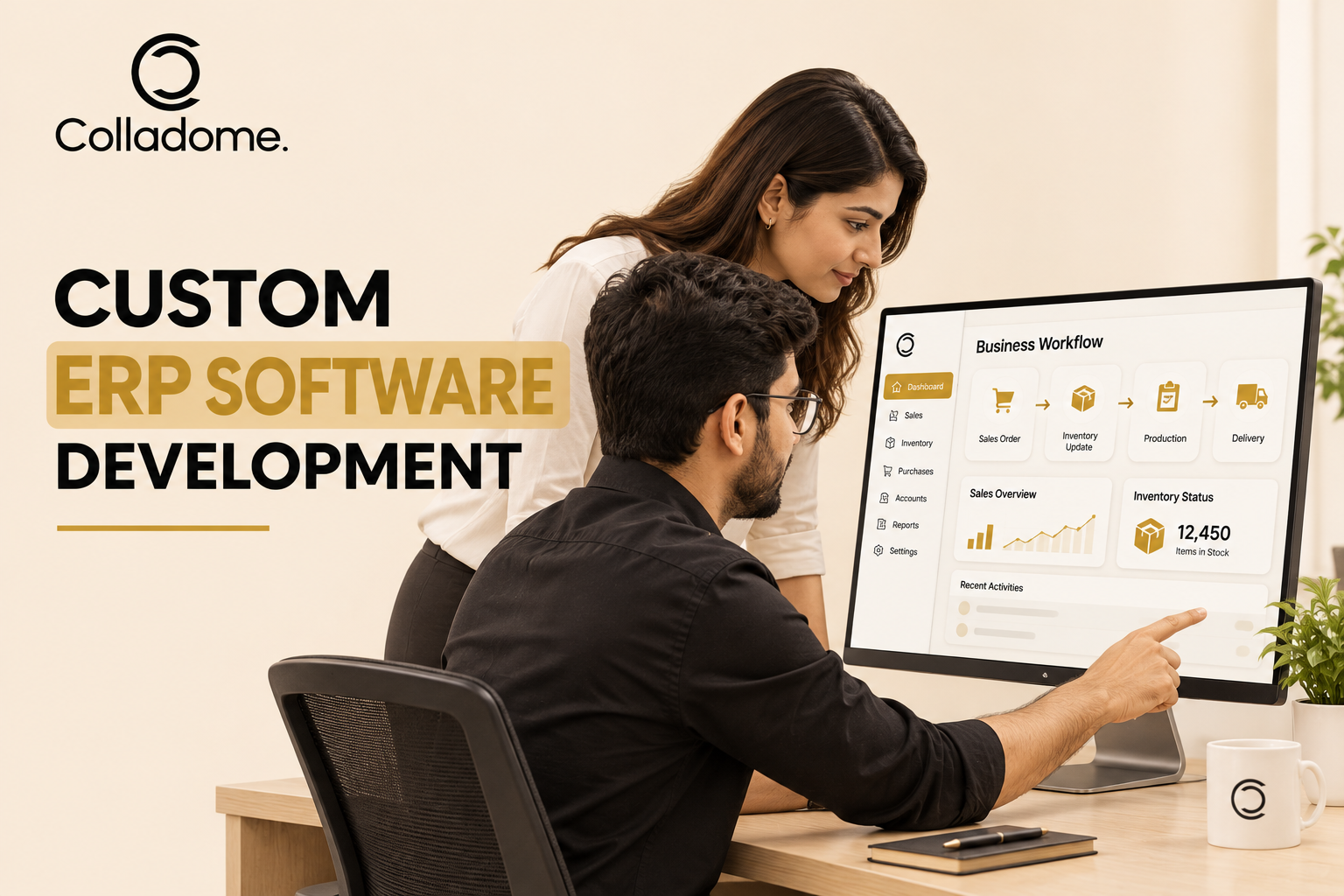
Custom ERP software development builds the system around your real workflows. It tends to make sense when your processes are unusual or are a source of competitive advantage, when you need to integrate with specific machines, legacy systems, or partner platforms, when licensing costs for large user counts become heavy, or when you want full control over features and the roadmap.
Custom development has trade-offs. It typically takes longer and needs a higher upfront investment than adopting a packaged product. It also relies on your development partner for support, which is why choosing a reliable company matters so much. A sensible middle path for many businesses is to start with the most critical modules and expand over time, so value arrives early and risk stays manageable.
Understanding ERP Software Development Cost in India
ERP software development cost in India is generally lower than in the US, UK, or Australia. The savings come from a large pool of experienced engineers and analysts, lower operating costs, and competitive pricing among agencies. This is one reason many international companies work with Indian teams for ERP projects.
No responsible company can quote a firm price without understanding your scope, but several factors shape the final figure. The number of modules is the biggest one, since a system covering finance, inventory, production, and HR is far larger than one covering a single function. The complexity of your workflows and business rules matters, as do the number of users and roles.
Integrations with existing software, machines, or partner systems add effort. Data migration can be simple or very demanding, depending on the quality and volume of your existing records. Security, compliance, and reporting requirements influence the design. Mobile access, multi-location support, and multi-language or multi-currency features add scope. And the level of training and ongoing support you want affects the long-term budget.
To compare proposals fairly, ask for a phase-by-phase breakdown covering discovery, design, development, data migration, testing, training, and support. Be cautious about a low quote that leaves out migration, training, or support, since these are exactly the areas where ERP projects tend to run over budget.
What a Typical ERP Rollout Looks Like
Knowing the usual sequence helps you spot unrealistic proposals. The first phase is discovery, where the team documents your processes, interviews department heads, and defines which modules go live first. Design and prototyping follow, with screens and workflows reviewed by the people who will use them daily.
Development and integration come next, usually delivered module by module so you can test real functionality early. Data migration runs in parallel, with trial imports and checks before the final transfer. A pilot, often with one department or location, then exposes practical issues at low risk. After training, the system goes live in stages, and the first weeks are supported closely. Each stage should have clear deliverables and sign-offs, so you always know where the project stands.
Questions to Ask Before You Sign
A focused conversation can reveal a lot. Ask how the company plans to understand your processes before designing anything. Ask how they handle changes in scope during the project, and how those changes affect time and cost. Ask who will own the source code and documentation at the end. Ask how they approach data migration and what checks they use to confirm accuracy.
Ask what the rollout plan looks like, including whether they recommend a phased approach. Ask what training your staff will receive. And ask what support is available after launch, including response times for urgent issues. Clear, specific answers are a strong sign of a mature process.
Red Flags to Watch For
Be wary of a company that quotes a fixed price and timeline without a discovery phase. Treat prices far below all other proposals with suspicion. Watch for a portfolio of generic software with no real ERP deployments, for reluctance to provide references, and for vague answers about data migration and training. Unwillingness to put code ownership and documentation in the contract is another warning sign.
Common Mistakes in ERP Projects
Several mistakes appear again and again. Trying to launch every module at once strains the team and raises risk. Copying every old process into the new system, instead of improving the ones that are inefficient, wastes the opportunity. Underestimating data migration leads to errors that surface after launch. Skipping staff training results in a system that employees quietly avoid. And treating the ERP as finished at go-live ignores the changes your business will keep making.
Final Thoughts
Choosing the best ERP software development company is one of the most important decisions in an ERP project. The right partner understands your business first, builds in phases, migrates data carefully, trains your people, and supports the system for years.
Whether you are comparing an ERP software development company, reviewing top ERP software development companies, considering custom ERP software development, or planning around ERP software development cost in India, start with a clear picture of your processes and goals. The company worth hiring will want to understand them before it names a price.