
Every business with an online presence needs a reliable website. Visitors expect pages to load quickly, buttons to work, and forms to submit without errors. Before hiring a team or setting a budget, businesses should understand how websites work and what affects project costs.
This guide explains the basics, the development process, and the services businesses can expect. It also covers custom solutions and pricing in India. These insights can help you plan your project and compare quotes with confidence.
What Is Web Development?
Web development covers the creation, improvement, and maintenance of websites and web applications. It includes the visual elements visitors see and the code, databases, and servers that make everything work.
The process involves two main areas.
Frontend development focuses on the parts visitors see and interact with. Developers use HTML, CSS, and JavaScript to create layouts, buttons, forms, and interactive features.
Backend development handles the server, database, and application logic. It processes information, manages user accounts, and delivers dynamic content.
Full-stack developers work across both areas. They can build user interfaces and connect them to the systems that power a website.
Projects may also include security improvements, performance optimization, website maintenance, and third-party integrations. These integrations connect websites with payment gateways, customer relationship management (CRM) platforms, and marketing tools.
Businesses that need more advanced digital solutions can also explore custom software development services to build applications around their specific workflows.
The Development Process: From Planning to Launch
Most projects follow a series of stages. The exact process depends on the site’s size, features, and business goals.
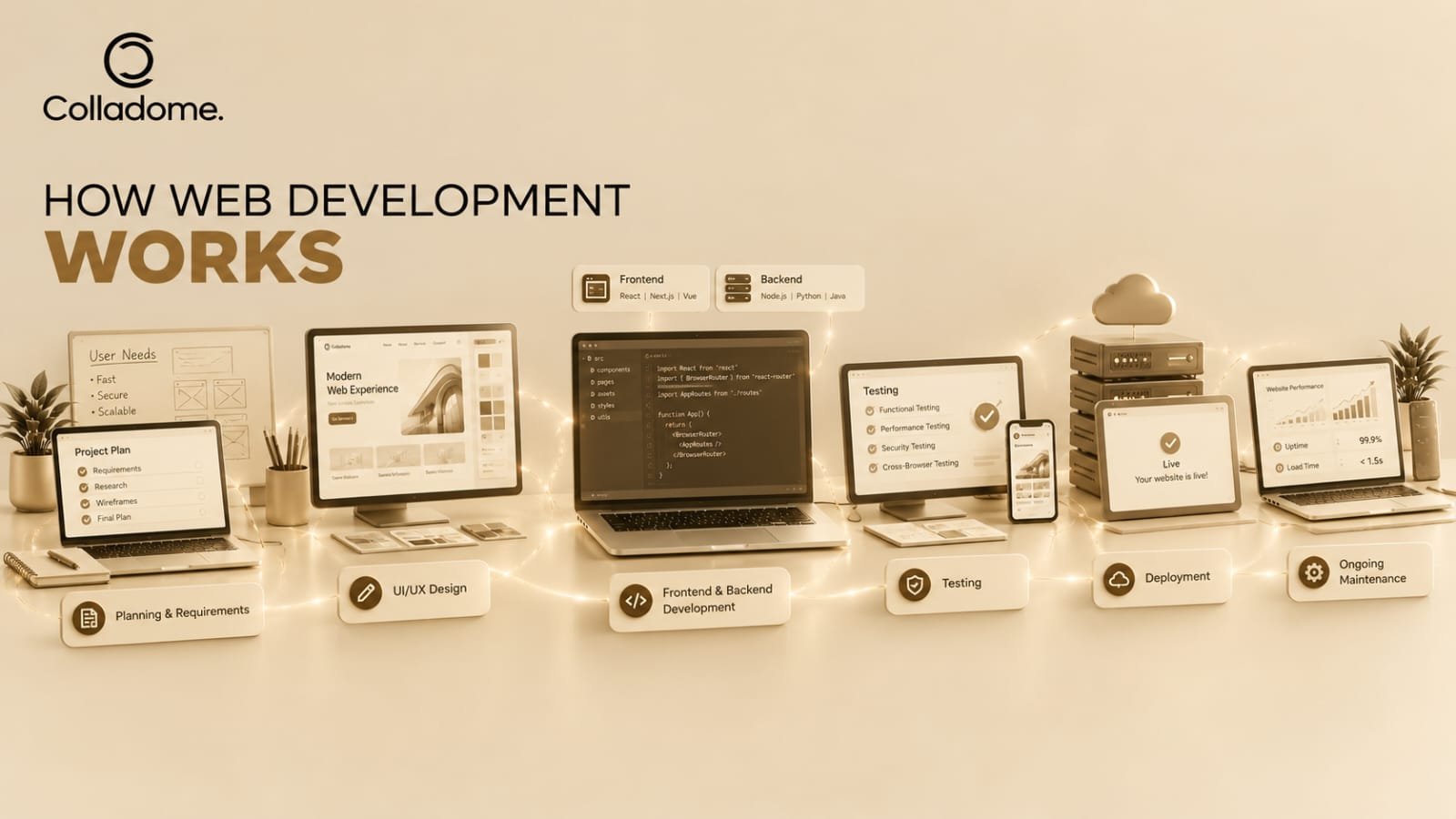
1. Planning and requirements
The team identifies the website’s purpose, target audience, and essential features. Clear requirements help prevent unnecessary changes later.
2. UI/UX design
Designers create wireframes and visual layouts. These designs show how visitors will navigate the website and interact with its features.
3. Development
Developers build the interface and connect it to the backend. They also configure databases and integrations when the project requires them.
For projects that need mobile access, businesses can also consider mobile app development solutions to extend their digital services beyond the website.
4. Testing and quality assurance
The team checks functionality, speed, security, and compatibility across browsers and devices. Thorough testing helps identify problems before launch.
Businesses can strengthen this process with software testing and QA services that help identify bugs and improve product reliability.
5. Deployment and maintenance
The team publishes the website on a live server. After launch, regular updates, security patches, and performance checks help keep it reliable.
Skipping planning or testing can create expensive problems. Fixing issues before launch usually takes less time than correcting them after visitors start using the website.
Services Businesses Should Expect
A complete project often involves more than writing code. Businesses should understand which services their provider includes in the proposal.
Typical services include:
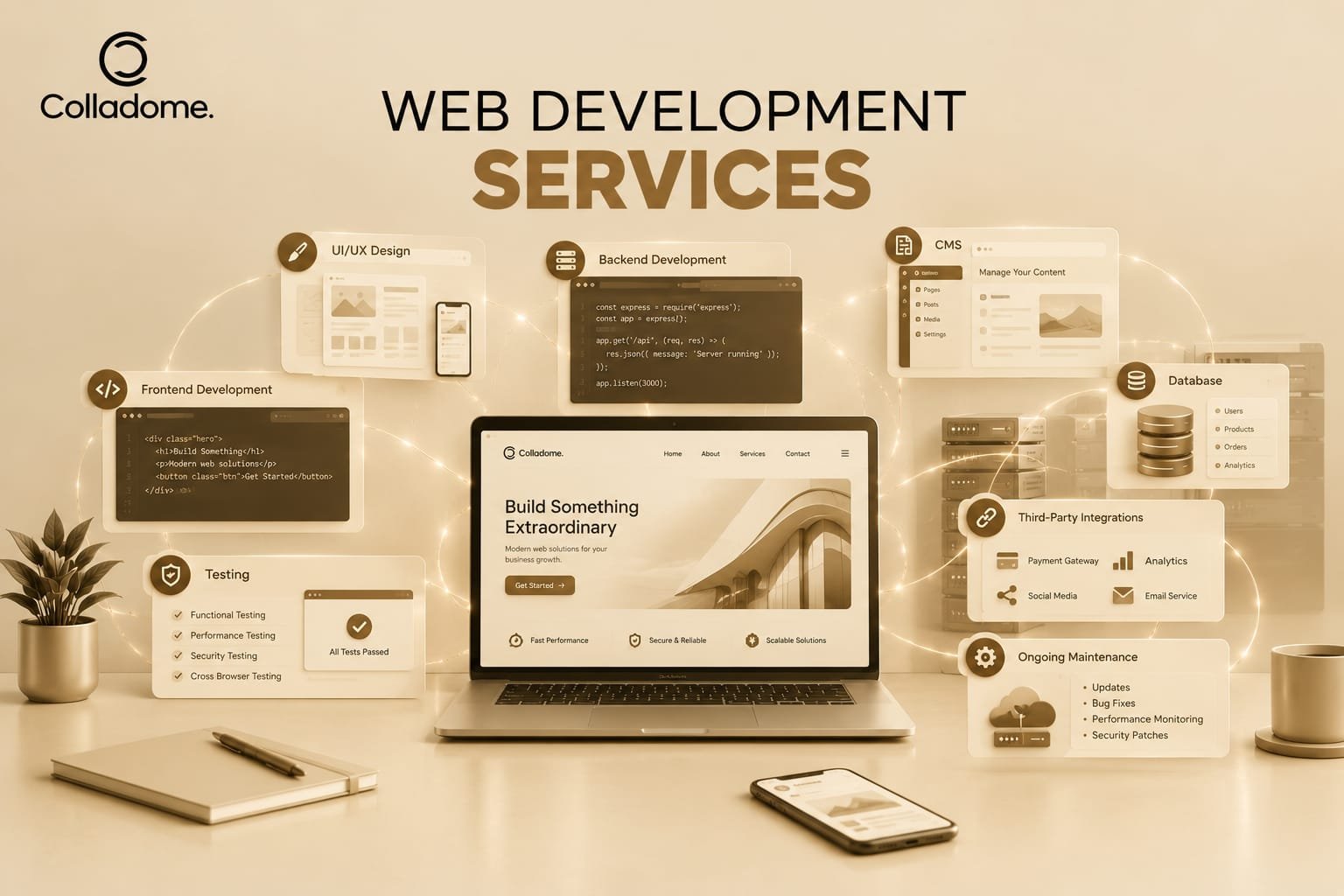
- Strategy and planning: Define project goals, requirements, and priorities.
- UI/UX design: Create clear layouts that support usability and conversions.
- Frontend and backend development: Build the interface and the functionality behind it.
- Content management setup: Allow teams to update website content without changing code.
- Third-party integrations: Connect payment systems, CRM platforms, and analytics tools.
- Quality assurance: Test features, browser compatibility, and performance.
- Ongoing support: Address bugs, apply updates, and monitor website performance.
Some businesses also require IT consulting services to select suitable technologies, plan infrastructure, and align their digital projects with business goals.
Some providers offer only development, while others manage the entire project. Review the scope carefully before signing an agreement.
Businesses that overlook testing or maintenance may face additional expenses later. A clear service agreement helps everyone understand their responsibilities.
When Does a Custom Solution Make Sense?
Custom development means building a website or web application around a business’s specific requirements. Instead of relying entirely on a pre-built theme, developers create features that match the intended workflow.
This approach works well when standard tools cannot meet a company’s needs. Examples include a specialized booking system, a product configurator, custom user permissions, or integrations with internal business software.
Custom solutions give businesses greater control over functionality, design, and future improvements. Developers can also build the architecture around expected growth instead of adding unnecessary features from a generic template.
However, custom projects often require more time and a larger initial investment. A website builder or well-configured theme may work perfectly for a business with straightforward requirements.
The right choice depends on your goals, budget, and technical needs. Choose a tailored solution when existing tools cannot support your workflows or long-term plans.
Understanding Project Pricing
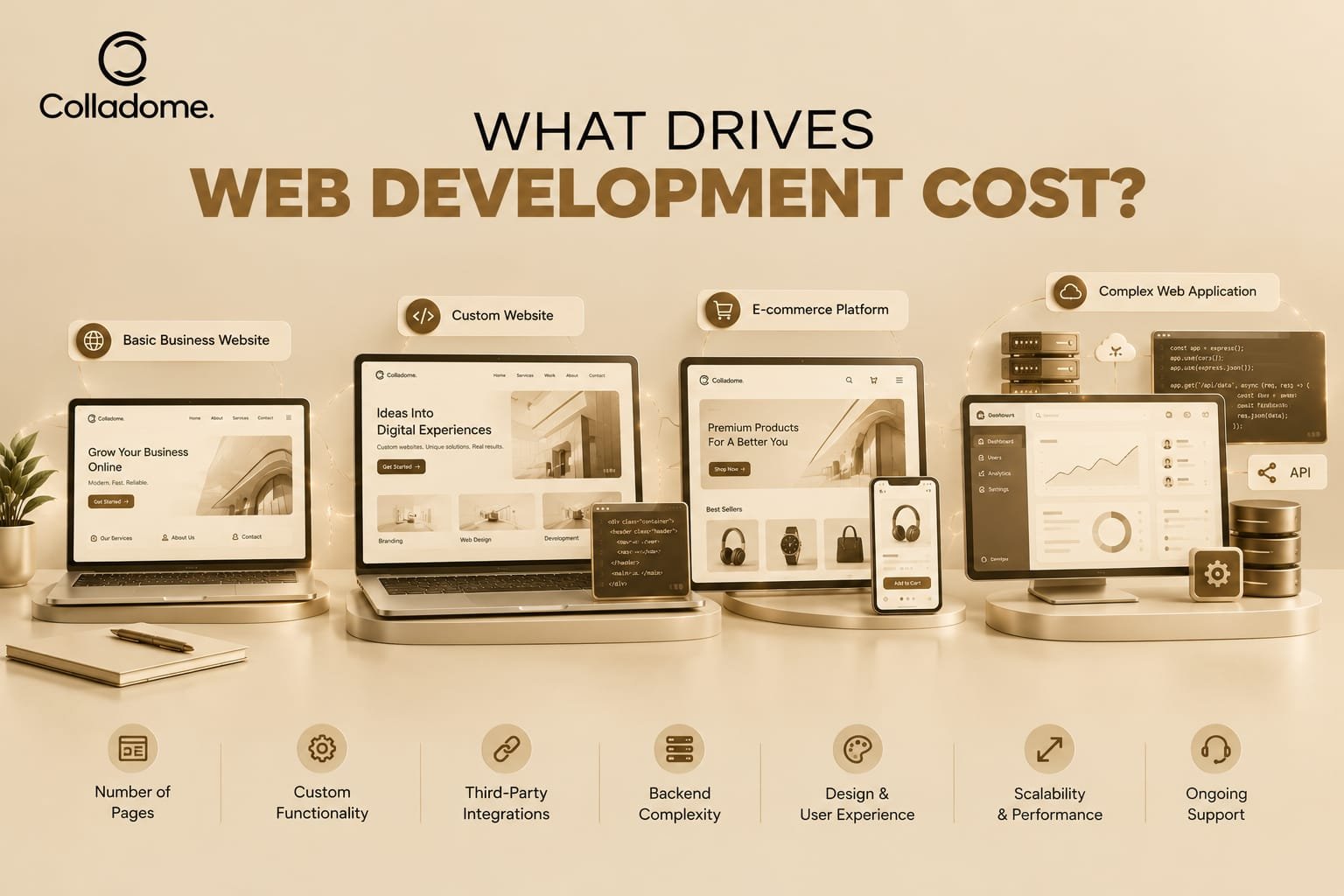
Project costs vary according to scope, functionality, design, and technical complexity. The following table compares common project types and their relative costs.
| Website type | Typical features | Relative cost |
|---|---|---|
| Basic business website | 5–8 pages, template-based design, responsive layout | Lower |
| Custom-designed website | Unique layouts and moderate custom features | Moderate |
| E-commerce website | Product catalog, payments, inventory management | Moderate to high |
| Web application | Custom logic, user accounts, database-driven features | High |
| Enterprise platform | Complex integrations, advanced security, scalability requirements | Highest |
Several factors determine where a project falls within these ranges:
- The number of pages and custom interface components.
- The complexity of business logic and database requirements.
- The number of third-party integrations.
- The choice between a template and a custom design.
- The level of security, testing, and maintenance required.
Share a detailed feature list with potential providers and request a phased quote. This approach makes proposals easier to compare than flat prices without a clear scope.
How Much Does a Website Cost in India?
India attracts businesses looking for skilled development teams at competitive prices. Lower operating costs and a large talent pool can make projects more affordable than comparable work in some Western markets.
However, pricing still depends on the project’s requirements. A basic business website usually needs fewer resources than an e-commerce platform or a database-driven application.
Before selecting a provider, evaluate more than the quoted price. Consider these factors:
- Portfolio: Review live projects and check whether their quality meets your expectations.
- Communication: Confirm how the team manages updates, meetings, and time-zone differences.
- Pricing transparency: Request a breakdown of costs by project phase.
- Technical expertise: Check the team’s experience with your required features and integrations.
- Post-launch support: Confirm the scope of maintenance, bug fixes, and security updates.
Businesses planning larger digital projects can also review ERP software development services when they need to connect business processes, manage data, and improve operational efficiency.
A lower quote does not always mean better value. Compare the deliverables, timelines, technical approach, and support terms before making your decision.
How to Know You’re Ready to Start
Not every business idea needs immediate development. Starting without clear requirements can increase costs and delay delivery.
Before contacting a provider, check whether you can answer these questions:
- What should the website achieve? It might generate leads, sell products, or support existing customers.
- Who will use it? Identify your audience and understand its main needs.
- Which features matter most? Separate essential functionality from optional improvements.
- What budget can you allocate? Set a realistic range based on your requirements.
- How will you measure success? Choose relevant metrics, such as leads, sales, traffic, or conversions.
Clear answers help the team prioritize features and estimate costs more accurately. They also reduce unnecessary changes during development.
Mistakes That Can Increase Project Costs
Even a capable team can struggle when a project lacks direction. Avoid these common mistakes to protect your budget and timeline.
Starting without a clear plan: Unclear requirements often lead to repeated design changes and additional development work. Define the project scope before coding begins.
Choosing a provider based only on price: An unusually low quote may exclude important features, testing, or maintenance. Review the provider’s experience and deliverables before making a decision.
Ignoring mobile users: A website that performs poorly on phones can frustrate visitors and reduce conversions. Test the layout and functionality across different screen sizes.
Overlooking maintenance: Software needs regular updates and security checks. Include ongoing support in your project plan.
Skipping quality assurance: Test every important feature before launch. Early testing helps catch errors before they affect customers.
An experienced team can help you avoid these problems through clear planning, structured testing, and consistent communication.
Final Thoughts
Understanding what is web development goes beyond knowing that it means “building websites.” It involves a structured process spanning design, frontend and backend development, and testing, along with a clear understanding of when custom web development is worth the investment and what realistically drives web development cost, whether you’re comparing local providers or web development cost in India.
Whether you’re evaluating web development services, exploring whether custom web development is the right fit for your business, or comparing web development cost across different markets including web development cost in India, the strongest results consistently come from defining your requirements clearly before choosing a technology approach or a provider.