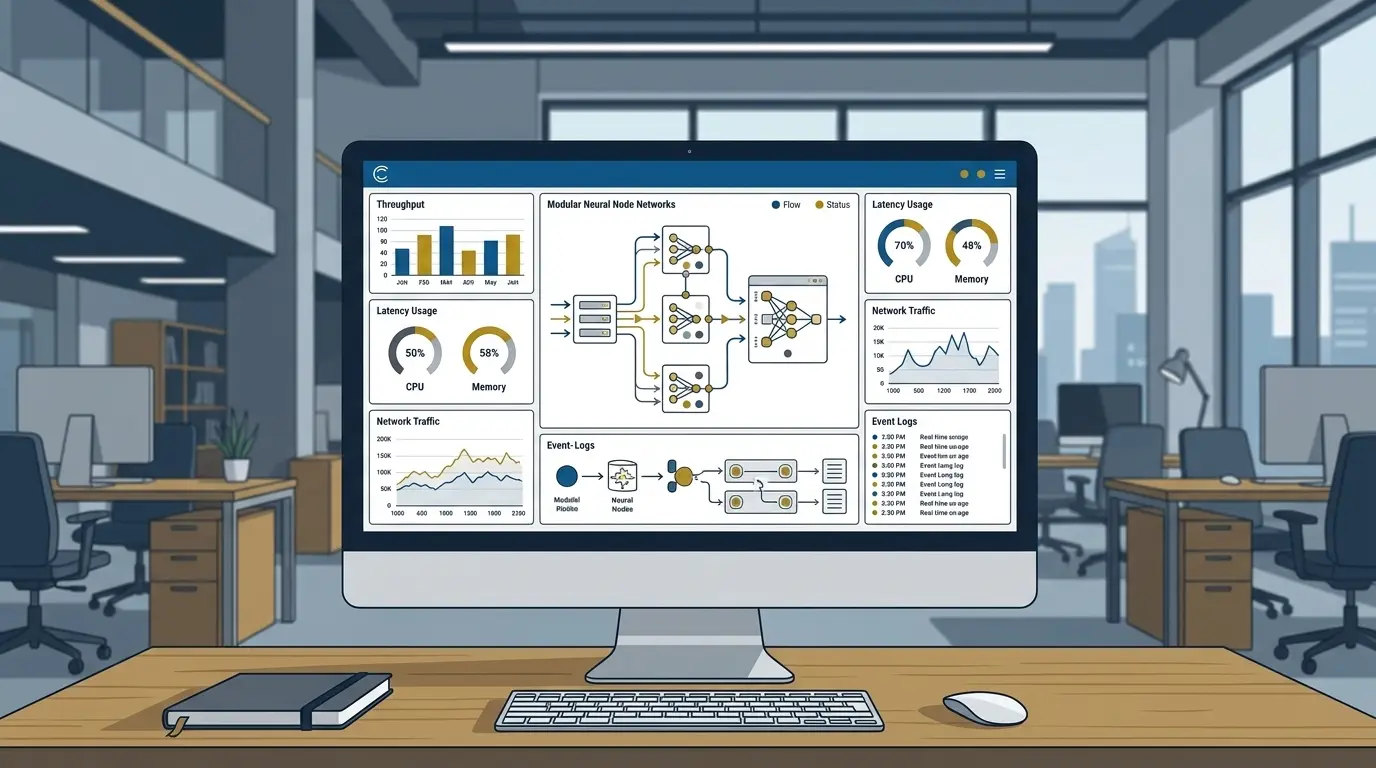

AI development is the disciplined engineering process of designing, training, evaluating, and integrating machine learning models into functional enterprise software. Unlike static software systems that execute rigid, deterministic rules, artificial intelligence systems process complex data inputs to generate probabilistic predictions, automate unstructured decisions, and continuously optimize business processes over time.
For enterprise leaders, founders, and operations heads managing modern small and medium enterprises (SMEs), knowing what is AI development clarifies how to move past speculative generative chat tools toward structured operational intelligence. True engineering combines robust data pipelines, specialized model architectures, secure application programming interfaces (APIs), and continuous validation to eliminate operational friction across core workflows.
Operational Bottlenecks: Why Off-the-Shelf Tools Fail Growing Enterprises
Commercial off-the-shelf software and public artificial intelligence portals introduce steep operational bottlenecks as enterprises scale. These generic web applications rely on shared server tenancy and rigid, predefined workflows. When an enterprise attempts to process proprietary customer records, manufacturing schedules, or hotel occupancy data through standard subscription portals, security vulnerabilities quickly emerge. The absence of granular role-based access control (RBAC) creates acute data security risks, while strict rate-limiting throttles routine business automation.
Furthermore, standard tools operate within isolated vendor ecosystems. They cannot synchronize bi-directionally with on-premises relational databases, enterprise resource planning platforms, or bespoke property management systems (PMS). This architectural friction prevents growing firms from building autonomous workflows. When proprietary logic lives inside spreadsheets and disparate systems, generic third-party tools fail to deliver meaningful efficiency gains.
Demystifying the Engineering: What AI Development Entails
At an enterprise scale, what is AI development comes down to end-to-end systems architecture. Engineering intelligent software requires establishing clean data ingestion pipelines, managing high-throughput extract-transform-load (ETL) routines, and preparing domain-specific weights. Rather than simply connecting to public conversational interfaces, production teams build sovereign intelligence directly into custom enterprise software.
This discipline differs significantly from basic cloud integrations. While executing a targeted custom AI development strategy involves writing bespoke logic to address precise enterprise bottlenecks, teams must also maintain clarity around broader computational definitions. Looking at AI vs machine learning explained in production systems reveals that machine learning serves as the algorithmic engine inside the broader software container. Modern artificial intelligence development ensures these algorithms communicate with operational databases reliably while preserving institutional data privacy.
The Core Phases of Enterprise AI Implementation
- Phase 1: AI Readiness Assessment and Data Auditing | Problem: Dirty, unstructured data spread across fragmented corporate departments. | Solution: An exhaustive enterprise data pipeline audit that cleans historical records, establishes schemas, and configures role-based access controls. | Outcome: A verified data baseline ready for algorithmic training and continuous synchronization.
- Phase 2: Architecture and Model Selection | Problem: Inefficient model sizing that causes bloated cloud hosting overhead and excessive latency. | Solution: Selecting task-focused open-weight models or fine-tuned compact architectures tailored directly to domain operations. | Outcome: Optimized computational costs paired with high operational inference speeds.
- Phase 3: Legacy Database Integration | Problem: Isolated data silos between production environments and operational business software. | Solution: Developing custom API middleware and secure endpoints connecting algorithmic outputs directly to operational databases. | Outcome: Complete enterprise workflow integration that synchronizes business logic across core departments.
- Phase 4: Production Deployment and Monitoring | Problem: Silent model drift and degrading inferential accuracy caused by evolving market conditions. | Solution: Implementing continuous deployment pipelines with automated regression monitoring and drift telemetry. | Outcome: Predictable, long-term operational efficiency that consistently protects margins.
Core Architecture Components in Modern AI Systems
Data Ingestion and Automated Cleansing Pipelines
Enterprise data pipelines extract raw information from transaction tables, logistics logs, and customer interfaces. Automated cleansing removes noise, handles null records, and standardizes formats before validation. This automated hygiene eliminates manual administrative work and ensures models process reliable signals.
Domain-Trained Model Layer
Rather than deploying broad, generic prompts, an enterprise architecture incorporates targeted model weights trained on proprietary operational history. According to engineering benchmarks published by organizations like NIST Information Technology Laboratory, domain-specific evaluation frameworks significantly mitigate hallucination and data leakage risks. This layer directly resolves specific operational challenges.
Enterprise Middleware and Secure API Gateways
Intelligent models require robust middleware to communicate safely with corporate infrastructure. Secure API gateways enforce role-based access control protocols, audit queries, and mask sensitive customer records. This infrastructure prevents data leakage while allowing core systems to consume model outputs securely.
Strategic Business Value of Custom AI Engineering
Eliminating Redundant Operational Overhead
Automated inferential systems eliminate repetitive operational constraints across daily tasks. Custom algorithmic processing reduces human verification time across document review, claims approvals, and complex inventory adjustments. This efficiency lets SMEs scale transactions without proportional headcount additions.
Accelerating Data-Driven Decision Velocity
Modern enterprise leaders require rapid situational awareness to manage volatile markets. Tailored algorithmic models analyze live operational signals across inventory levels, guest check-ins, or manufacturing output in real time. This immediate synthesis empowers executives to execute strategic decisions faster and with higher operational certainty.
Safeguarding Proprietary Intellectual Property
Sovereign enterprise implementations keep proprietary training data completely contained within isolated corporate infrastructure. By avoiding multi-tenant public tools, businesses maintain complete control of algorithms, database records, and trade secrets. This architectural isolation builds lasting enterprise equity and fulfills compliance mandates.
Critical Governance and Infrastructure Prerequisites
Rigorous AI Readiness and Tech Audits
Before writing production logic, engineering teams conduct comprehensive technical audits to evaluate legacy system health. This assessment verifies API maturity, storage throughput, and data integrity. Addressing architectural debt early prevents costly operational delays during live deployment.
Scalable Cloud and Edge Compute Infrastructure
Intelligent operations demand predictable compute resources. Engineering teams balance elastic cloud clusters with local edge nodes to optimize inferential throughput and minimize network latency. This disciplined resource orchestration maintains rapid response times while avoiding sudden hosting budget spikes.
Ongoing Maintenance and Drift Prevention
Production environments undergo continuous behavioral drift as real-world trends shift. Long-term system governance requires automated telemetry scripts that track validation accuracy, response times, and output distribution. Continuous validation keeps models aligned with daily business realities year after year.
Strategic Comparison: Generic AI Tools vs. Custom Enterprise AI Development
| Evaluation Metric | Generic SaaS AI Tools | Custom Enterprise AI Development | Business Impact |
|---|---|---|---|
| Data Governance and IP Ownership | Public multi-tenant infrastructure with third-party data processing risks. | Fully private, sovereign database architecture owned by the enterprise. | Zero data leakage risk and protected proprietary enterprise equity. |
| System Integration | Isolated standalone dashboards requiring manual data entry and export. | Native API middleware linking models directly to ERP and PMS platforms. | Total operational synchronization that removes manual administrative bottlenecks. |
| Scalability and Latency | Restricted by public API rate limits, server queues, and unpredictable downtime. | Dedicated, rightsized compute resources engineered for low-latency workloads. | Reliable, high-speed execution even during peak operational volume. |
| Adaptability to Custom Workflows | Rigid, generalized prompts with poor contextual adaptation for edge cases. | Tailored model weights and deterministic fallback rules matching exact workflows. | High inferential accuracy aligned with specific operational demands. |
| Cost Structure Over 3 Years | Escalating recurring per-seat fees that grow expensive as staff scale. | Capitalized initial investment with predictable, low marginal run costs. | Lower total cost of ownership and higher capital ROI across operational life. |

Applied AI Development: Enterprise Use Cases Across Core Verticals
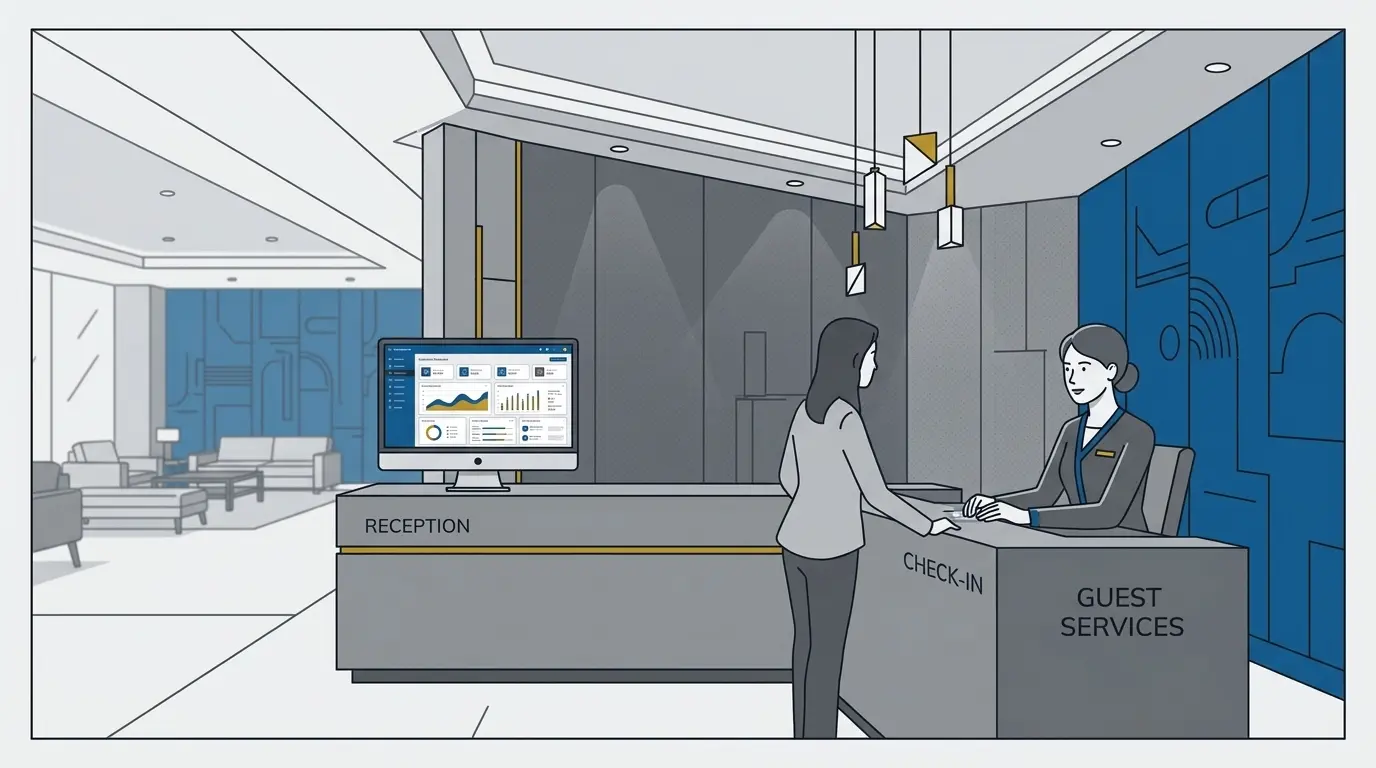
- Hospitality and Hotel Operations: Custom automation connects property management databases directly with dynamic pricing algorithms. Rather than relying on static rate sheets, the system evaluates real-time regional events, booking pace, and room inventory to adjust rack rates instantly. Integrating this operational intelligence via bespoke hotel automation software development boosts revenue per available room (RevPAR) while removing manual front-desk overhead.
- Smart Collaboration and Hardware Systems: Interactive flat panels (IFP) and digital whiteboards demand ultra-low latency response times. Custom computer vision pipelines and on-device handwriting recognition engines process physical touch inputs into digitized vector shapes in milliseconds. This responsive software-hardware integration creates intuitive collaborative workspaces for education and corporate meeting environments.
- SME Supply Chain and Manufacturing: Tailored machine learning algorithms query real-time production floors, logistics tracking APIs, and legacy supplier records. The intelligent engine forecasts localized material shortages and initiates reorders automatically before production lines experience downtime. This direct business process automation with AI eliminates costly inventory stockouts and stabilizes operational supply chains.
Evaluating the Feasibility of AI Within Your Enterprise Architecture
Founders and technology directors evaluating new initiatives must evaluate their foundational digital infrastructure before authoring code. A comprehensive readiness review identifies whether current databases, network throughput, and authentication protocols can support autonomous intelligence. Working alongside an experienced AI development agency allows SMEs to run rapid architectural feasibility audits, identify clear cost-saving targets, and neutralize security liabilities prior to full-scale engineering investments.
Conclusion: Building Scalable Enterprise Intelligence
Understanding what is AI development establishes a clear path from speculative hype to measurable business performance. By treating artificial intelligence as a rigorous software engineering discipline, growing SMEs can systematically eliminate manual constraints, safeguard proprietary records, and enhance operational decision-making. Colladome partners with ambitious founders and operational executives to build reliable, high-performance enterprise platforms. Let’s make the next big thing together!