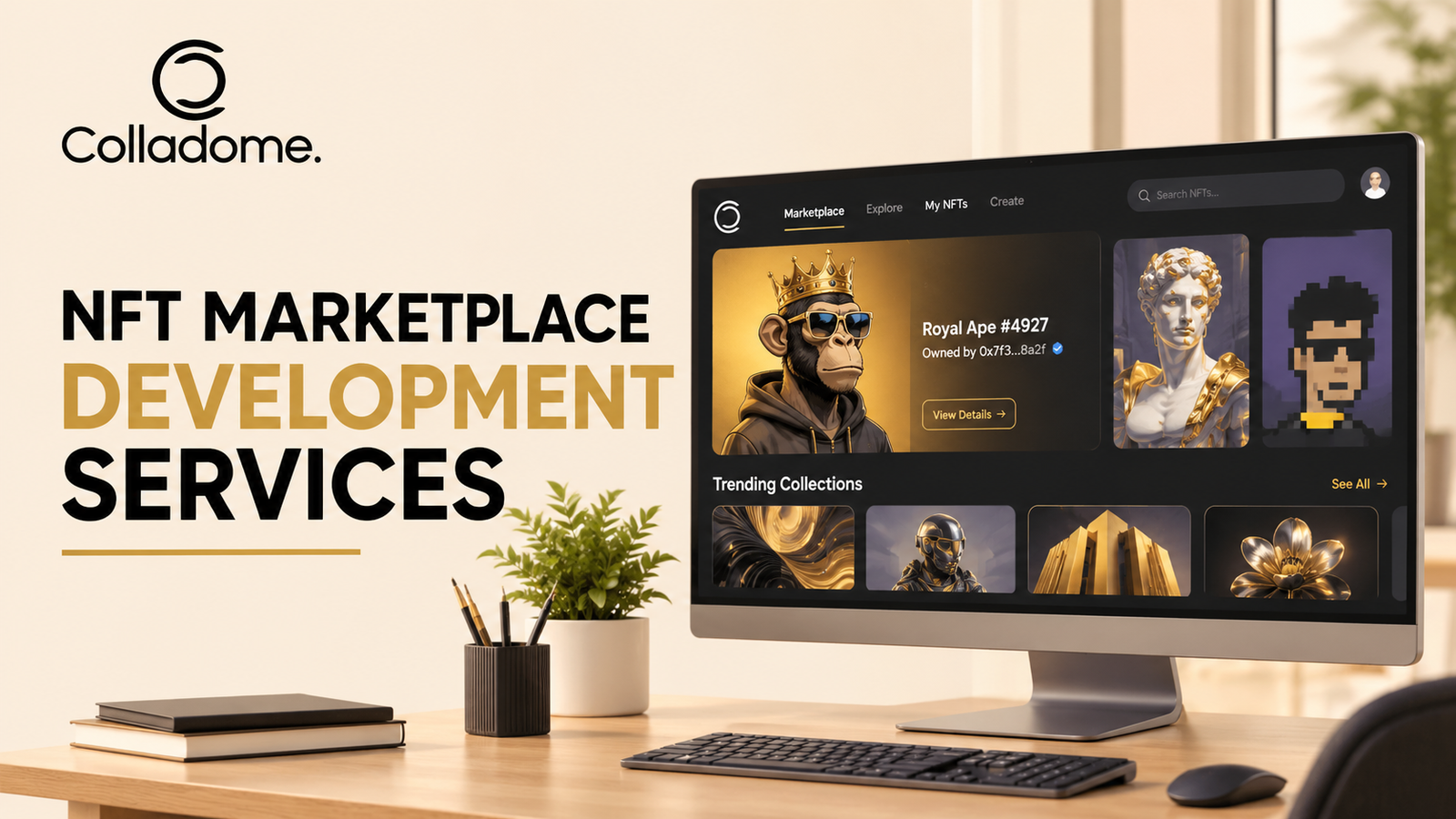

An NFT marketplace is a website or app where people create, list, buy, sell, and trade non-fungible tokens, which are unique digital items recorded on a blockchain. The idea sounds simple. Building one that is secure, easy to use, and legally sound is not.
This guide explains what NFT marketplace development services include, how an NFT marketplace development company works, how to find the best NFT marketplace development company for your plan, when custom NFT marketplace development makes sense, and what to check before you hire NFT marketplace development developers.
What Is an NFT Marketplace?
An NFT, or non-fungible token, is a digital record on a blockchain that proves ownership of a unique item. That item can be digital art, music, a game asset, a ticket, a membership pass, or a certificate. Unlike a regular file, which anyone can copy, the token records who owns the original.
An NFT marketplace is the platform where these tokens are traded. Creators upload and list their work, buyers browse and bid or buy, and the platform records each transaction on the blockchain. Many marketplaces also let creators earn a royalty each time their item is resold, which is set in the token’s smart contract.
Marketplaces differ in focus. Some are open platforms for many kinds of items. Others serve a single niche, such as game items, music, event tickets, or a particular brand’s community. The more specific the audience, the clearer the product tends to be.
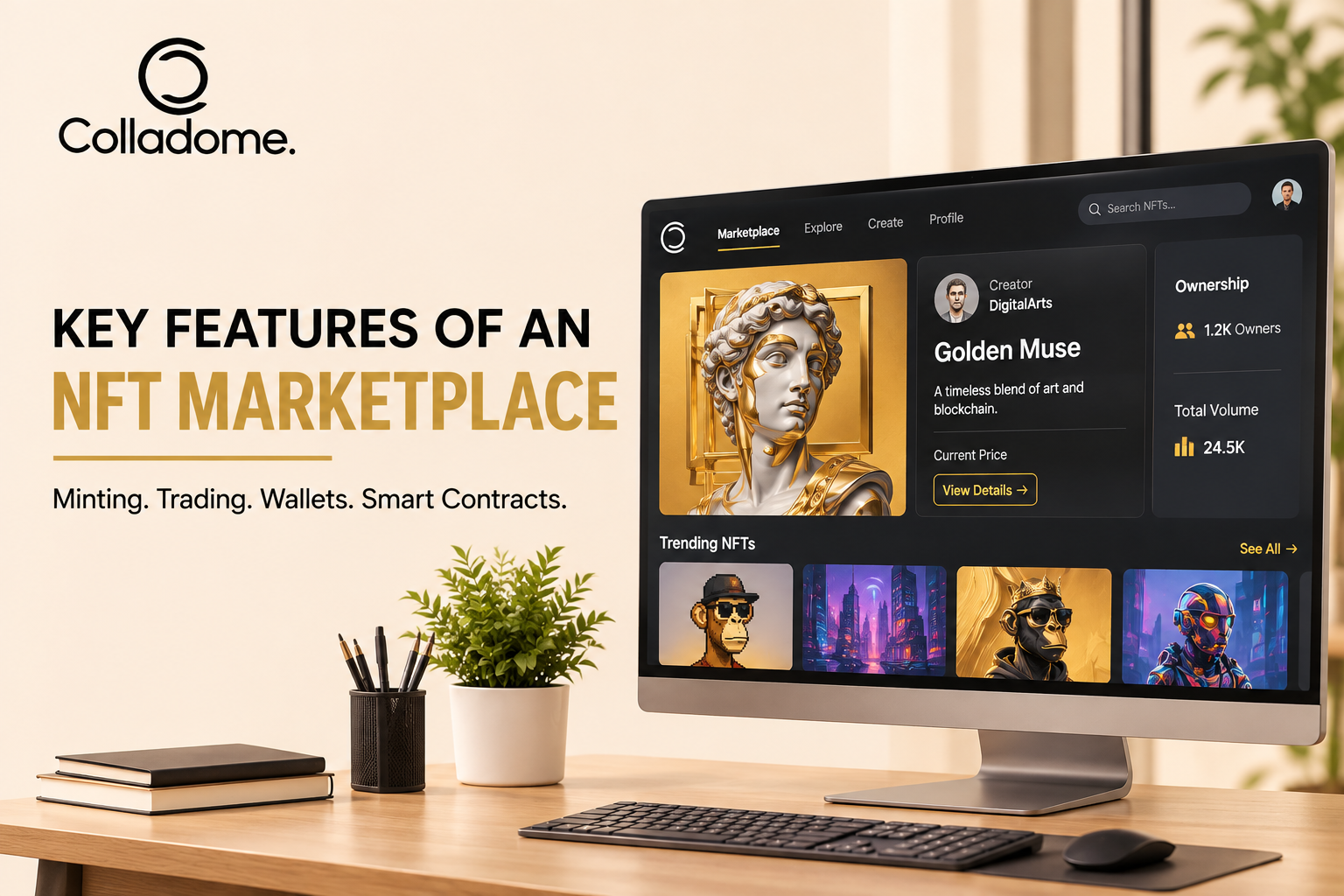
Key Features of an NFT Marketplace
A good marketplace feels simple on the surface, with a lot of careful engineering behind it. Common features include the following.
Storefront and browsing – Pages that show collections and individual items, with search, filters, and categories so visitors can find what they want.
Wallet connection – Users connect a crypto wallet to log in, buy, and receive items, instead of using a traditional username and password alone.
Minting – A tool that lets creators turn a file into an NFT, either one at a time or in batches.
Listing and pricing options – Fixed price sales, auctions, and offers, so sellers can choose how to sell.
Smart contracts – The blockchain code that handles ownership transfers, payments, and creator royalties.
Payments – Support for cryptocurrency and, in some cases, card or other payment methods to make buying easier for new users.
User profiles and collections – Pages that show a creator’s or collector’s items, history, and activity.
Admin panel – Tools for the platform owner to manage users, listings, fees, and reports.
Security and verification – Protections against fraud, fake listings, and copied work, plus identity or collection verification where needed.
What Do NFT Marketplace Development Services Include?
NFT marketplace development services cover the full journey from idea to a working, supported platform. A complete offering usually includes the following.
Consulting and discovery define your audience, the type of items you will trade, your revenue model, and which blockchain suits your goals. Design covers the user experience and visual style, with emphasis on making wallets and transactions understandable to new users. Smart contract development creates the contracts for minting, sales, auctions, and royalties.
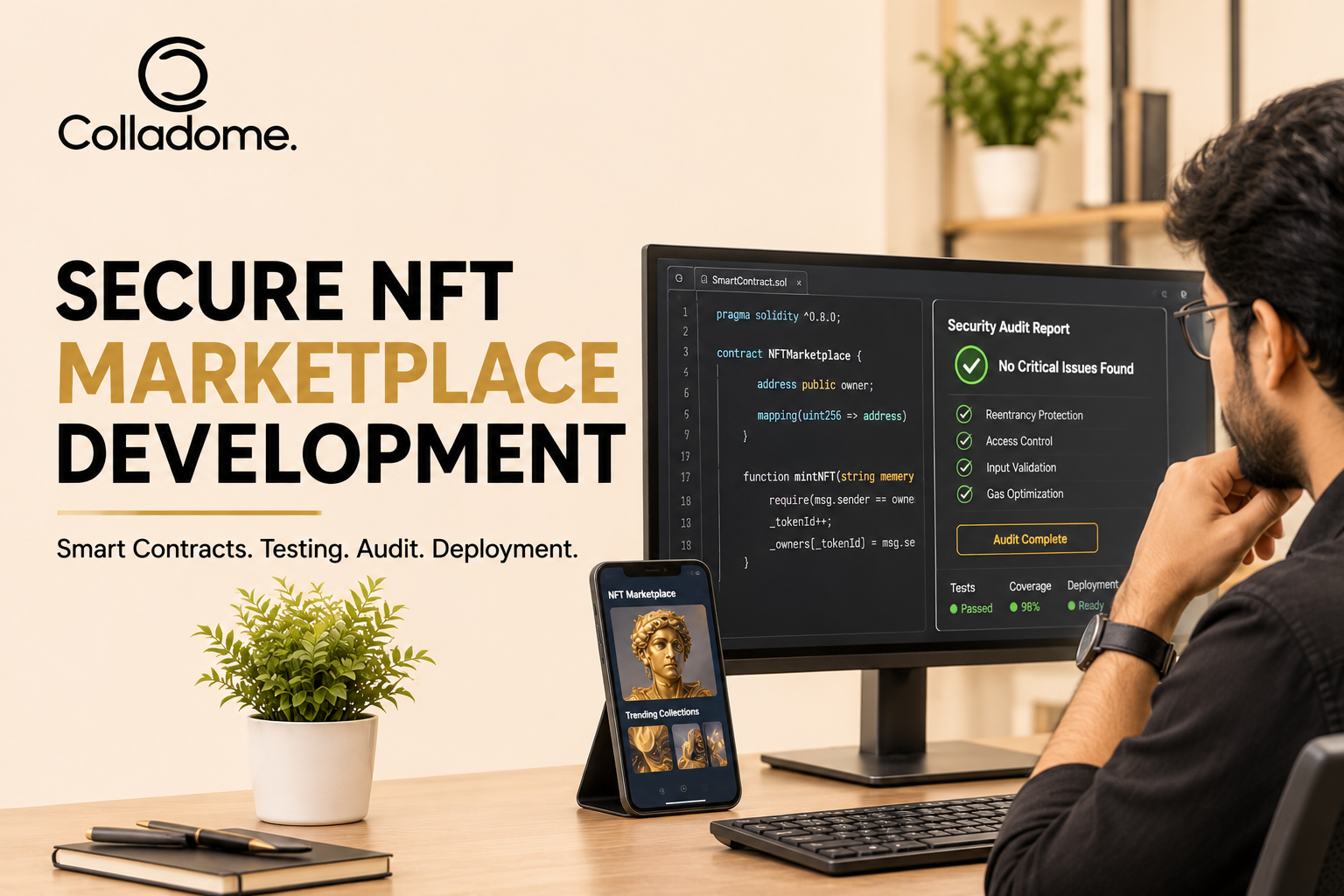
Frontend and backend development build the marketplace itself, including search, user accounts, listings, and the admin panel. Blockchain integration connects the platform to the chosen network and to wallets. Payment integration supports the ways your users want to pay. Security testing and smart contract audits check for weaknesses before launch. Deployment puts the platform live. And maintenance and support keep it updated as networks, wallets, and standards change.
If a proposal covers only the website and leaves out smart contract testing or security review, it is not a full service. Errors in a smart contract can be hard or impossible to fix after launch, so this part deserves extra attention.
Choosing a Blockchain
One of the first decisions is which blockchain to build on. The choice affects transaction fees, speed, the size of the user community, and the tools available. Some networks are widely used and have a large audience but can have higher fees at busy times. Others are faster and cheaper but have smaller communities. Some are built for specific uses, such as games.
There is no single correct answer. A good development partner helps you compare options against your goals, such as the audience you want to reach, the cost of each transaction, and the wallets your users already have. Some marketplaces support more than one network, which gives users choice but adds development effort.
How an NFT Marketplace Development Company Works
An NFT marketplace development company brings together skills that are hard to find in one person: blockchain and smart contract engineers, frontend and backend developers, UX designers, security testers, and project managers.
A typical project starts with discovery, where the team clarifies your idea, audience, features, and budget. Design follows, with wireframes and screens you can review. Development then proceeds in stages, with smart contracts and the platform built and tested on a test network before anything goes live. Security review and testing come next. After launch, the team monitors the platform and supports updates.
Companies also offer different ways of working. Some build a complete platform for a fixed price. Others work on time and material when the scope is still changing. Some provide ready-made marketplace frameworks that can be customized to launch faster, while others build everything from scratch. A good company explains which approach suits your plan.
How to Identify the Best NFT Marketplace Development Company
No company is best for every project. The best NFT marketplace development company for you matches your goals, budget, and technical needs. The table below gives you a practical way to compare candidates.
| What to Evaluate | What a Strong Company Shows |
| Live projects | Working marketplaces or blockchain products you can visit and test |
| Smart contract skill | Clear approach to writing, testing, and auditing contracts |
| Blockchain range | Experience with the networks and wallets your audience uses |
| Security practices | Independent audits, testing on test networks, and secure coding habits |
| Design and usability | Interfaces that make wallets and transactions easy for beginners |
| Process and communication | Clear milestones, regular demos, and a named contact |
| Contract and ownership | Written terms on code, smart contracts, and source files |
| After-launch support | Defined maintenance and updates as networks and wallets change |
| Client feedback | Verified reviews on independent platforms such as Clutch or Google |
Beyond the table, notice how a company talks about risk. Strong teams explain what can go wrong, including security and regulatory issues, and do not promise guaranteed profits or sales. Be cautious about any company that does.
When Custom NFT Marketplace Development Makes Sense
Some businesses start with a ready-made marketplace template or framework, which can be faster and cheaper. That is a reasonable way to test an idea. But many businesses need more, and custom NFT marketplace development is built for them.
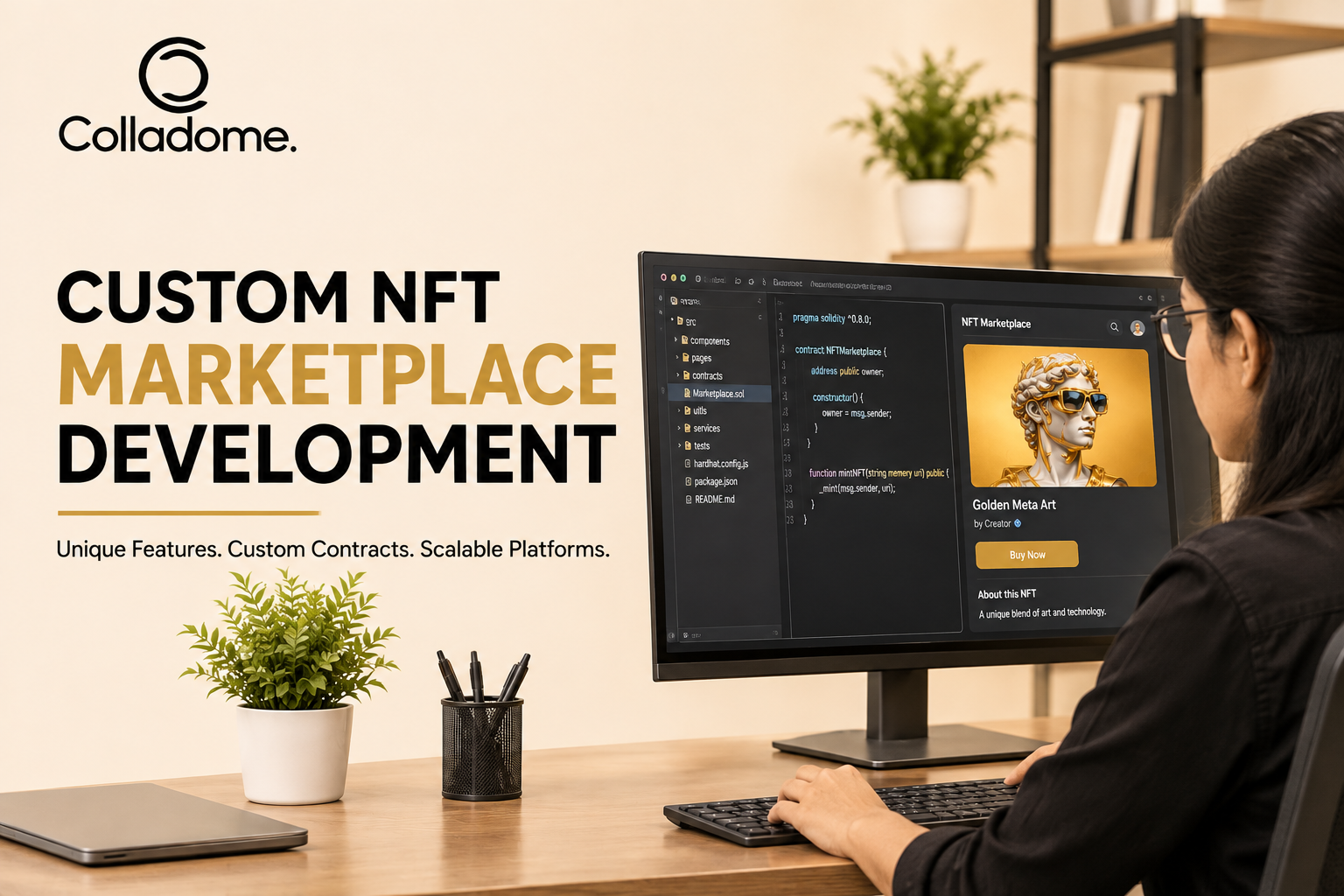
Custom development means the platform is designed around your plan. It makes sense when you want unique features, such as special auction formats, gaming integrations, or membership benefits tied to ownership. It also suits businesses that want a distinctive brand experience, need to connect with existing systems, require specific compliance steps, or expect large traffic and need strong performance.
A custom build gives you full control over the code, the features, and the roadmap, and it avoids the limits of a template. The trade-off is a higher upfront cost and a longer timeline. Many teams manage this by launching a focused first version and adding features based on real user behavior.
What to Know Before You Hire NFT Marketplace Development Developers
Some businesses prefer to hire NFT marketplace development developers directly instead of commissioning a finished project. This can work well when you have ongoing development needs or want people embedded in your team.
You can hire in-house, use freelancers, or hire dedicated developers through a company. In-house hiring gives control but takes time, and blockchain specialists can be difficult to find. Freelancers can be flexible for small tasks but vary in availability and quality. Dedicated developers through a company give you skilled people who work as part of your team, with the company handling recruitment and replacements.
Whichever route you choose, test for real skills. Ask to see live work and which parts the developer personally built. Check experience with smart contract security, since mistakes can be costly. Ask how they test and audit contracts. Agree on communication, working hours, and reporting. And make sure the contract confirms that you own the code and smart contracts.
What Affects NFT Marketplace Development Cost?
Cost depends mainly on scope. The number of features is the biggest factor, since a simple marketplace is far smaller than one with auctions, multiple blockchains, and advanced admin tools. Custom design and smart contract complexity add effort. Security audits are an important cost that should not be skipped. The number of supported networks and payment methods affects integration work.
Whether you use a ready-made framework or build from scratch changes cost and timeline. And ongoing hosting, maintenance, and support add to the long-term budget. To get useful quotes, share a clear description of your audience and features, and ask for a phase-by-phase breakdown covering discovery, design, development, audit, launch, and support.
Risks and Responsibilities to Plan For
NFT marketplaces carry real risks that a good partner helps you manage. Smart contract bugs can lead to lost funds, so testing and independent audits matter. Fraud, such as fake listings or copied artwork, needs moderation and verification tools. Regulations around digital assets, payments, and consumer protection differ by country and keep changing, so take professional legal advice for your market before launch. Market interest in NFTs also rises and falls, so avoid plans that depend on guaranteed demand.
Common Mistakes to Avoid
A few mistakes appear again and again. Building before defining an audience and a clear reason for people to use the marketplace leads to an empty platform. Skipping security audits risks costly bugs. Choosing a blockchain without checking where your users are limits reach. Making wallet and payment steps confusing drives new users away. Ignoring legal advice creates exposure. And treating launch as the end overlooks the moderation, marketing, and updates a marketplace needs to grow.
Final Thoughts
Good NFT marketplace development services combine a clear audience, careful smart contract work, a simple user experience, strong security, and support after launch. The marketplaces that last are usually the ones built around real users and clear value, not hype.
Whether you are comparing an NFT marketplace development company, looking for the best NFT marketplace development company, considering custom NFT marketplace development, or planning to hire NFT marketplace development developers, start with your audience and your plan. The partner worth choosing will help you test that plan before it names a price.