
The Enterprise Bottleneck: Why Off-the-Shelf AI Wrappers Fail SME Operations
Off-the-shelf software tools and generic foundation API wrappers regularly fail standard enterprise benchmarks. Mid-market operators encounter severe operational friction when consumer-facing interfaces hallucinate during customer-facing interactions or break when parsing legacy relational data schemas. When software cannot guarantee deterministic execution, human teams must audit every output, cancelling out anticipated labour efficiencies and adding hidden overhead.
Furthermore, relying on public cloud endpoints creates unpredictable monthly token expenditures alongside grave intellectual property concerns. The lack of granular role-based access control (RBAC) across third-party tools risks leaking proprietary operational records. Without sovereign data boundaries, business leaders risk non-compliance under regional privacy mandates. Navigating these vulnerabilities requires transitioning from rented SaaS layers to custom enterprise software development tailored specifically to company workflows.
The Architectural Shift: Purpose-Built Generative AI Systems for 2026
Purpose-built generative architectures now dismantle these operational barriers through custom engineering. Rather than transmitting sensitive data across unvetted networks, technical teams combine Retrieval-Augmented Generation (RAG) with compact, fine-tuned models running inside private infrastructure. This approach ensures total data provenance and deterministic reliability across daily transactions.
By combining domain-specific small language models with targeted programmatic rules, enterprises eliminate recurring subscription bloat and protect digital assets. Purpose-built architectures interface cleanly with proprietary data warehouses, automating business logic without exposing internal trade secrets. High-growth organisations pursue this level of generative AI development services to unite isolated data silos into structured, self-orchestrating business platforms.
Core Vectors Defining Generative AI Development Trends 2026
Technical leadership must navigate four primary engineering vectors that separate modern custom implementations from first-generation prototypes:
- Autonomous Agentic Workflows
Problem: Fragmented point utilities demand continuous manual prompt iterations and fragmented oversight from staff.
Solution: Multi-agent runtime choreographies embedded inside bespoke enterprise web applications.
Outcome: Drastic compression of business cycle duration and autonomous resolution across multi-tiered workflows. - Small Language Model (SLM) Specialisation
Problem: Runaway compute expenditures, network latency, and unnecessary architectural weight tied to generalised foundation models.
Solution: Dedicated SLMs fine-tuned exclusively on private operational records and hosted locally or in private VPCs.
Outcome: Highly predictable hosting budgets and sub-second deterministic inference response times. - Enterprise-Grade Data Governance and RBAC
Problem: Accidental proprietary data leakage and compliance vulnerabilities caused by querying unpartitioned vector stores.
Solution: Strict zero-trust security postures and context-aware role-based access enforcement prior to vector retrieval.
Outcome: Complete information isolation, verifiable audit trails, and eliminated corporate exposure risks. - Hardware-Software Co-Design and Edge Deployment
Problem: Operational downtime and productivity stalls triggered by erratic internet bandwidth and external API service outages.
Solution: On-device neural compute runtimes calibrated directly for local enterprise terminals and interactive flat panels.
Outcome: Zero-latency user execution and unbroken business continuity independent of broad public web networks.
Emergence of Autonomous Multi-Agent Systems in Enterprise Software
Transitioning from Single Prompts to Autonomous Choreography
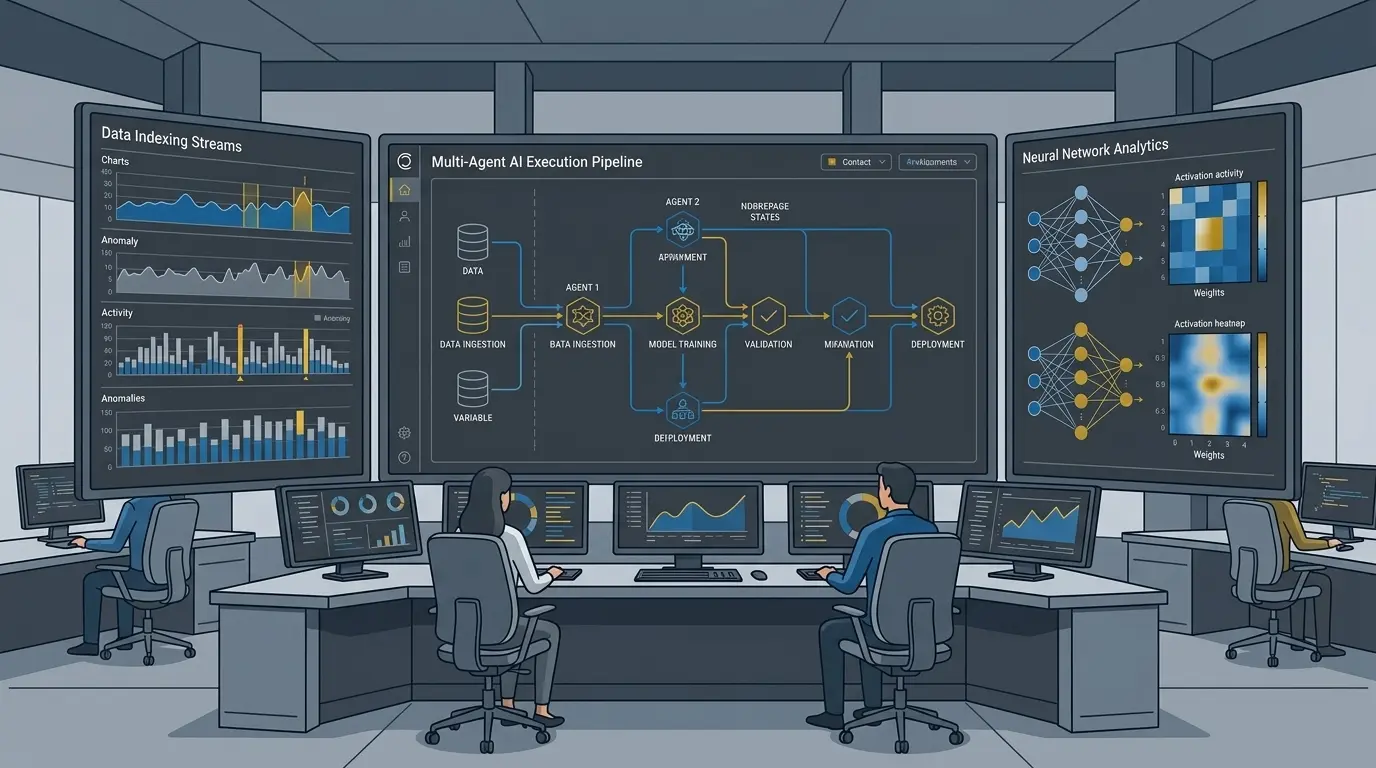
First-generation AI tools demanded continuous human guidance for every subtask. In 2026, autonomous agent architectures break complex corporate tasks into modular objectives, delegating steps between specialized agents across internal systems. In manufacturing and logistics ecosystems, software agents autonomously cross-check supplier manifests, confirm current inventory levels, and process billing variances without manual intervention.
Deterministic Output Control and Business Logic Alignment
Enterprise platforms cannot tolerate stochastic drift or hallucinated parameters in mission-critical environments. Modern agentic stacks deploy strict programmatic middleware that checks every model response against hardcoded validation rules before returning data to the application layer. This operational barrier preserves business integrity, ensuring operational decisions strictly match regulatory rules and internal compliance playbooks.
Bridging Legacy Systems with Agentic Orchestration
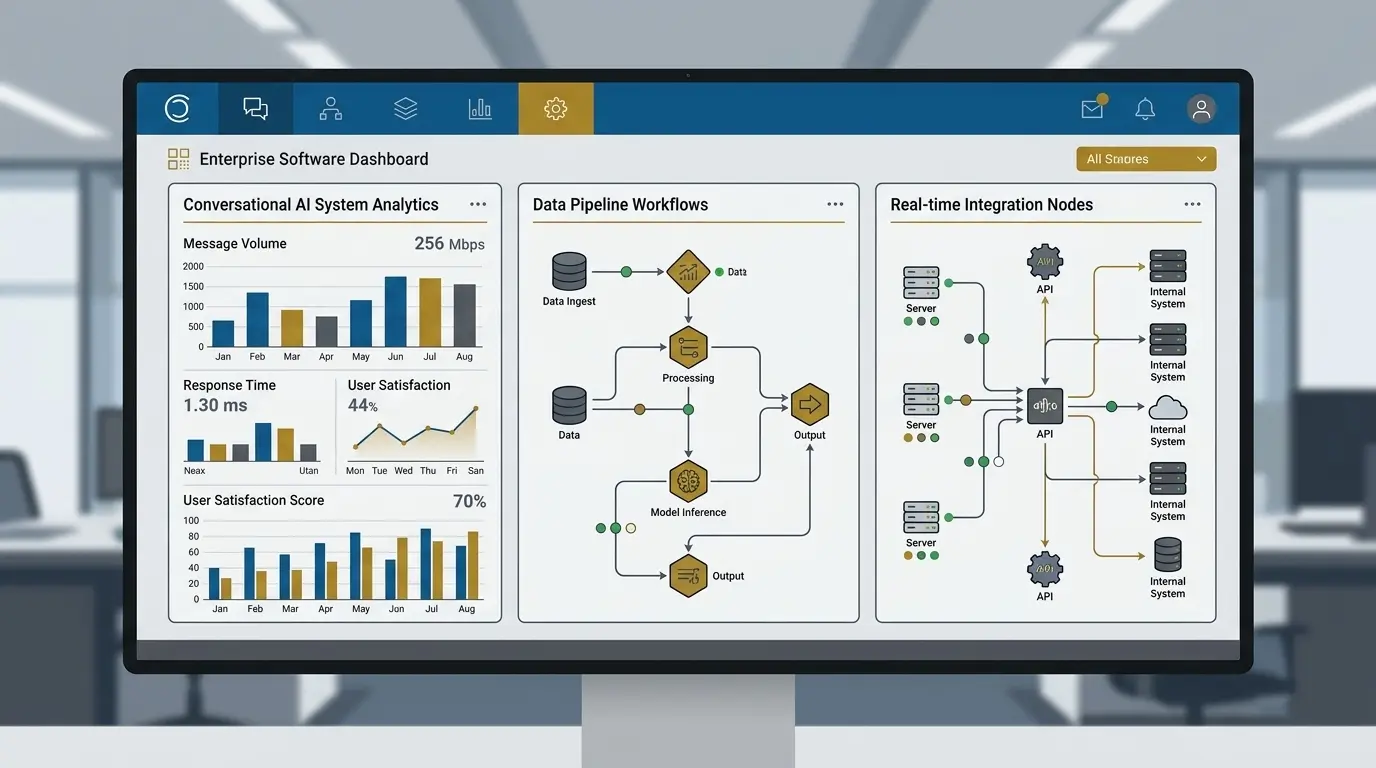
Replacing mature core infrastructure is rarely feasible for growing enterprises. Agentic orchestration bypasses legacy friction by establishing reliable API middleware between dynamic models and core legacy enterprise databases. Whether interacting with an enterprise ERP or a legacy SQL system, agentic pipelines transform unstructured instructions into strictly typed queries, preserving stability across your enterprise software solutions.
Domain-Specific Small Language Models (SLMs) vs Heavyweight LLMs
Operational Economics: Eliminating Variable Inference Budgets
Large commercial LLMs impose variable, volume-dependent token billing that strains enterprise operating margins as transaction volumes increase. By contrast, specialized SLMs provide bounded compute requirements, running efficiently on smaller dedicated cloud instances. According to research published by Cornell University’s arXiv repository, domain-tuned compact parameter models routinely match or outperform generalised mega-models on specialized benchmarks while drastically reducing operational compute costs.
Private Data Training Without External API Exposure
Enterprise data remains an organisation’s most defensible competitive asset. Leveraging open-weights SLMs allows engineering teams to fine-tune systems on confidential proprietary workflows entirely within an isolated virtual cloud. Training inside private infrastructure removes external telemetry collection, preventing customer proprietary records from ever entering public foundation datasets.
Sub-Second Response Latency for Real-Time SME Operations
Lightweight model architectures with targeted parameter profiles generate decisive latency advantages over massive general models. In high-frequency operational environments—such as dispatch centres or hotel check-in desks—sub-second response speeds are mandatory. Targeted models eliminate deep computational lag, driving instantaneous data parsing across consumer-facing web tools and internal portals alike.
AI Engineering Governance: Security, RBAC, and Auditability in 2026
Role-Based Access Control Across Vector Retrievals
Standard vector stores inadvertently merge data boundaries unless explicitly engineered with isolation rules. Modern vector indexing protocols mandate granular data classification attributes at the database layer. Consequently, querying personnel only retrieve document embeddings matched to their verified network credentials, preventing operational leaks across internal departments.
Comprehensive Audit Trails for Regulatory Compliance
Deploying automated software agents requires end-to-end operational visibility. Enterprise platforms log model inputs, retrieval origins, and programmatic evaluations in non-repudiable audit logs. When governance boards or auditors demand an accounting of an automated business determination, technical managers extract full chronological chains of context in seconds.
Mitigating Proprietary Knowledge Leakage
Securing enterprise software systems requires strict, defensive gateway layers between internal users and generative backends. Modern runtime stacks sanitise outbound payloads, stripping personally identifiable data (PII) before model analysis begins. Whether evaluating the top generative AI development companies or seeking affordable generative AI development services, verify that prospective engineering vendors enforce these precise security boundaries within their standard build pipelines.
Strategic Shift: 2024 Generative Prototypes vs 2026 Enterprise Deployments
Understanding these developmental advancements enables leadership teams to contrast legacy implementations with mature production systems:
| Strategic Dimension | Traditional Approach (2023–2024) | Modern Enterprise Approach (2026) | Business Impact for Decision-Makers |
|---|---|---|---|
| Architectural Foundation | Generic, centralized third-party model APIs | Fine-tuned domain SLMs coupled with modular RAG | Predictable latency, zero vendor platform lock-in |
| Data Security & Governance | Unauthenticated public web interfaces | Isolated infrastructure with enforced RBAC rules | Absolute IP insulation, full compliance readiness |
| Workflow Autonomy | Isolated human conversational exchanges | Orchestrated multi-agent autonomous execution | Drastic compression of repetitive operational cycles |
| Cost Predictability | Volatile, uncapped token expenses | Fixed hosting footprints on controlled infrastructure | Preserved profit margins during volume surges |
| Application Integration | Disconnected, third-party standalone chatbots | Bespoke enterprise web applications and ERP flows | Unified data records, automated business logic |
Real-World Operational Impact Across Core Industry Sectors
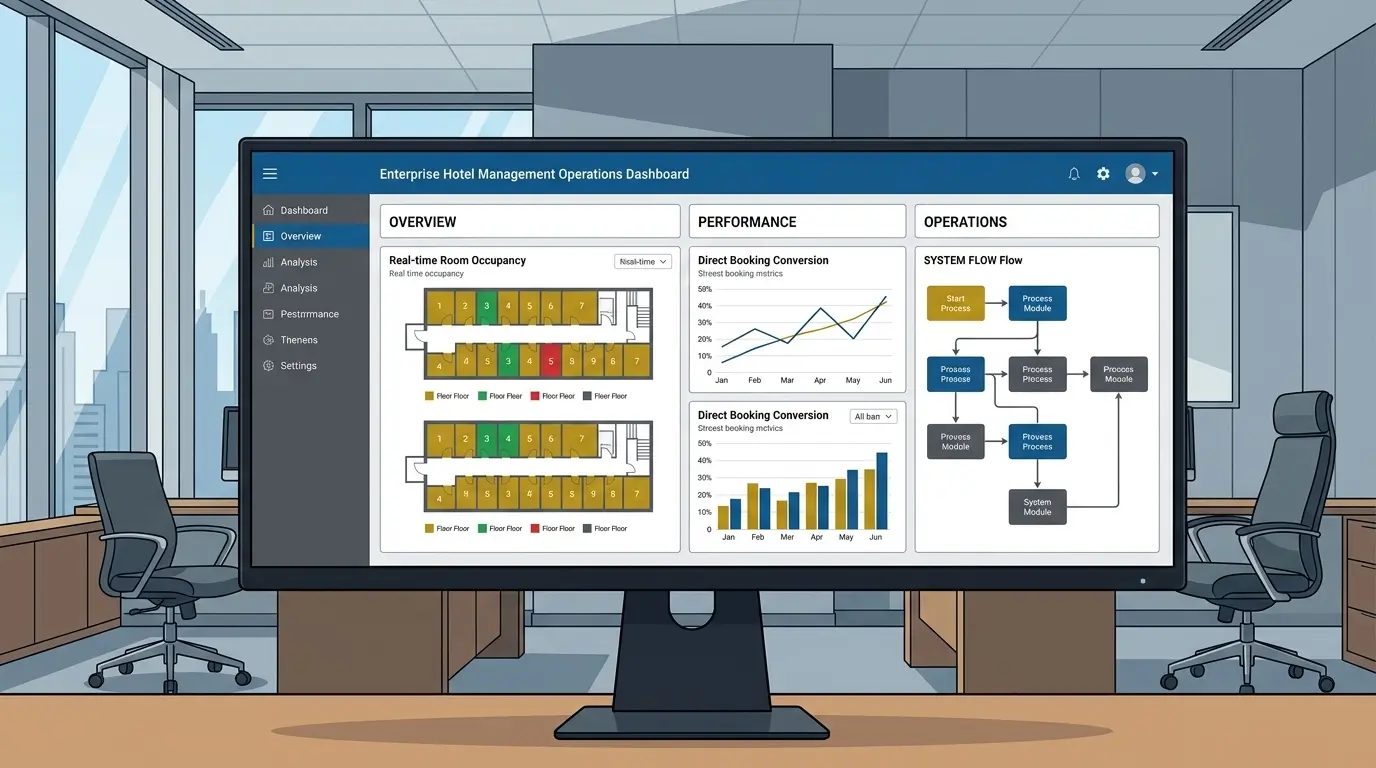
Hospitality & Hotel Operations: Bespoke generative systems eliminate routine administrative strain by connecting directly to property management systems (PMS) and reservations databases. Automated agents analyse market demands in real time to rebalance room rates, communicate with arriving international travelers across several languages, and instantly reconcile nightly folios. Technical operators looking to eliminate hotel front-desk logjams leverage custom automation to streamline operations through unified hotel management software development.
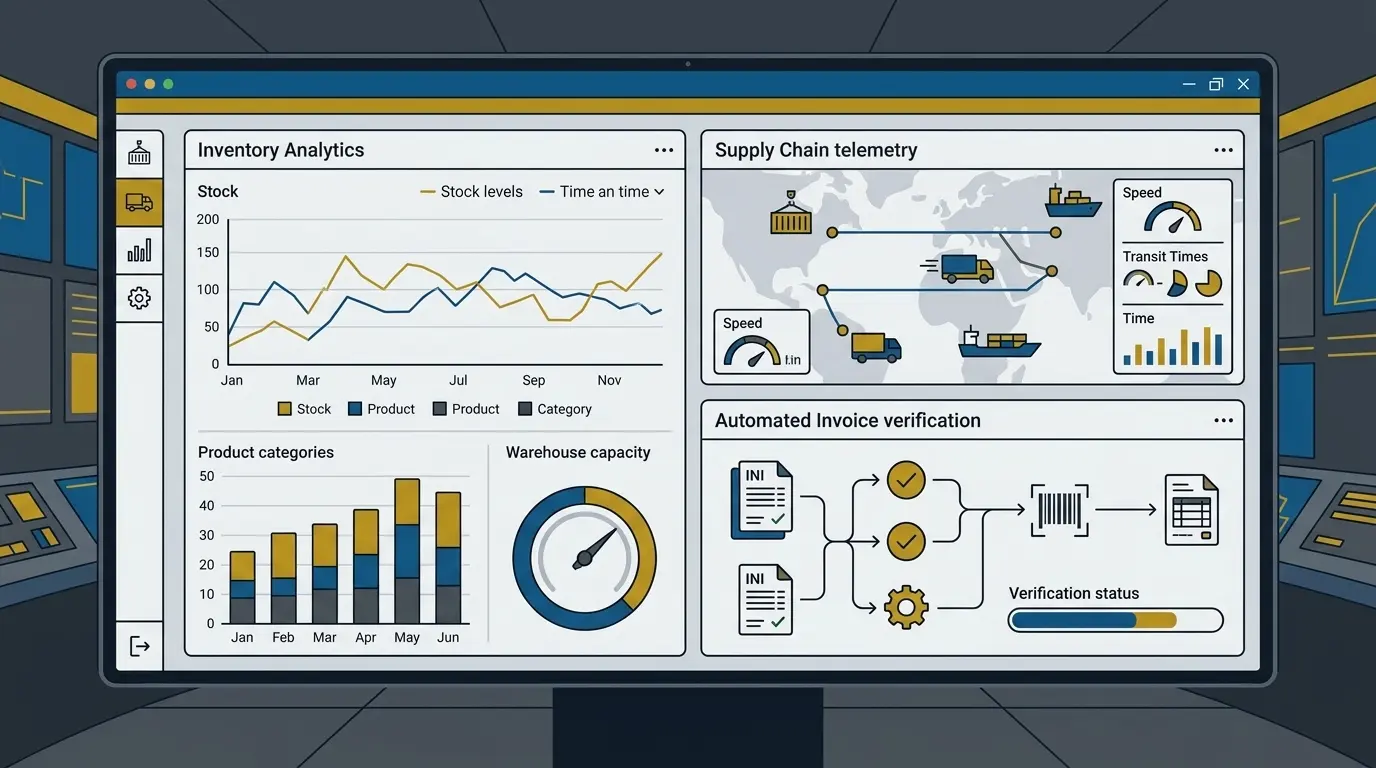
Manufacturing & SME Supply Chains: In manufacturing facilities, agentic networks oversee supplier telemetry, verify raw materials inventories, and balance bill-of-lading documents against ERP work orders. When material shipments face supply-line delays, autonomous agents flag operational risks, query alternate suppliers, and present revised assembly plans to facility heads, averting production stoppages.
Interactive Collaboration & IFP Hardware Environments: On interactive flat panels (IFP) and corporate smart boards, localized edge models support effortless collaborative planning. Custom firmware interfaces transcribe technical working groups locally, compile visual drawings into formal system designs, and assign tasks into engineering task managers. Integrating edge models directly into enterprise hardware removes operational constraints during collaborative sessions.
Aligning Enterprise Infrastructure with Upcoming AI Horizons
Organisations evaluating this operational pivot must evaluate existing data sanitation, integration surfaces, and security frameworks before allocating large capital reserves. Pursuing a structured readiness audit guarantees engineering budgets go toward removing high-impact operational friction instead of creating fragile software shells. Partnering with technical experts for initial system reviews clarifies architectural trade-offs, charting a dependable path to production-ready enterprise software.
Strategic Takeaways: Capitalising on Generative AI Development Trends 2026
Succeeding in the modern enterprise landscape requires leaving experimental chatbots behind in favor of deterministic custom systems. As this strategic guide highlights, the core generative AI development trends 2026 focus entirely on operational autonomy, specialized model efficiency, and deep legacy data synchronization. Businesses that eliminate operational barriers with custom software preserve intellectual property and build enduring market advantage.
Achieving scalable efficiency requires an engineering partner skilled in transforming complex operational challenges into dependable digital systems. Technical leadership can build custom architectures that deliver measurable, long-term ROI across the organization. Let’s make the next big thing together!