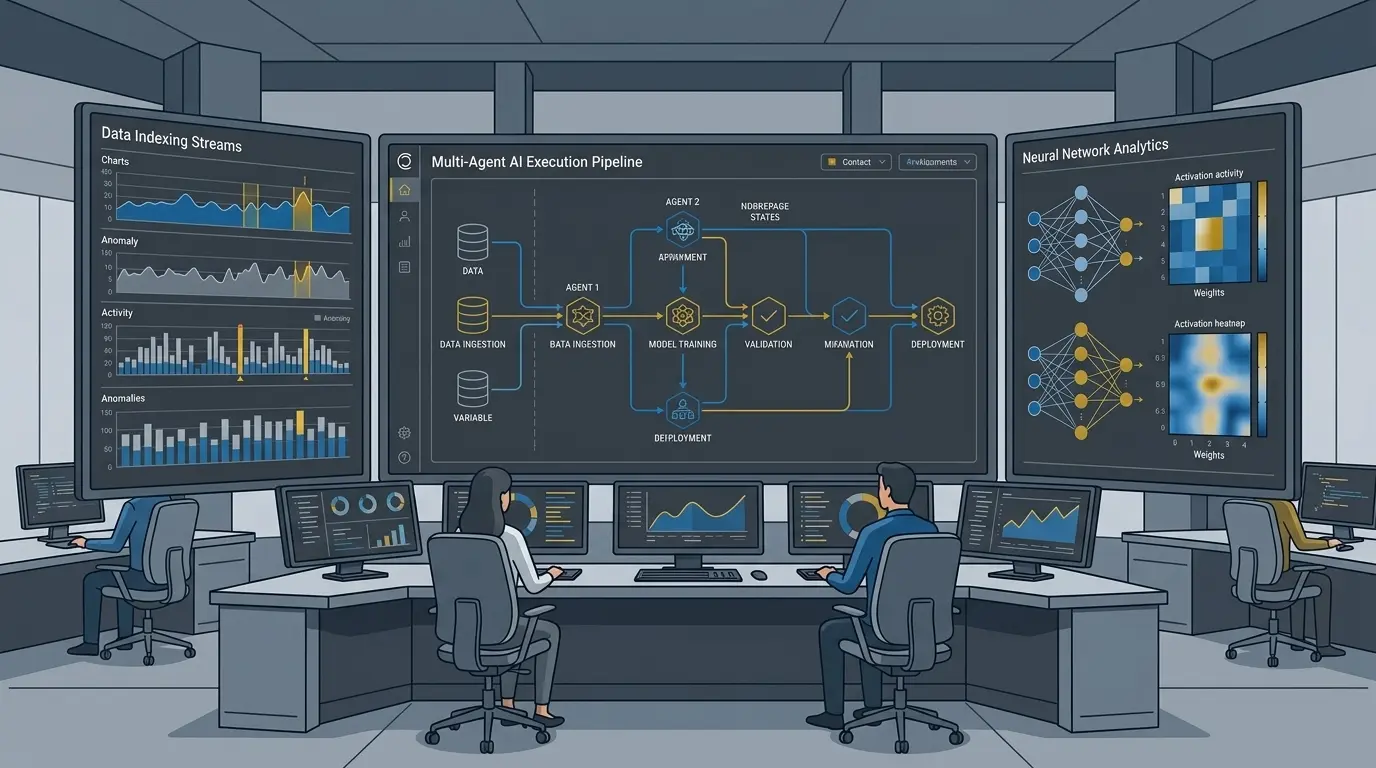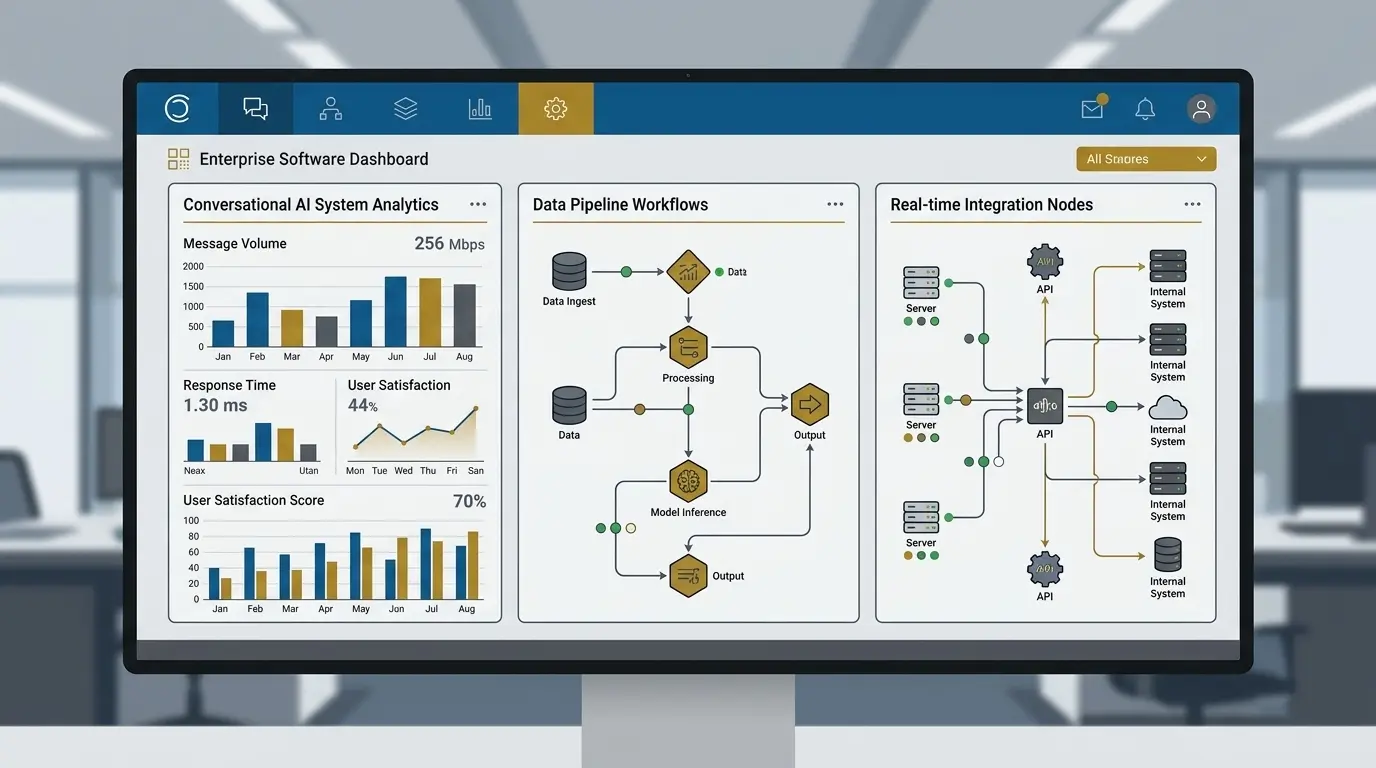

AI chatbot development is the engineering discipline of designing, training, and deploying autonomous conversational software that interfaces with core enterprise systems to execute business tasks. Unlike basic scripted widgets, enterprise conversational systems leverage large language models, retrieval-augmented generation (RAG), and deterministic application programming interfaces (APIs) to interpret unstructured queries, preserve historical context, and execute secure multi-step transactions without human intervention.
The Hidden Operational Tax of Legacy Support and Scripted Bots
Scaling enterprises often face severe operational friction when relying on manual service teams and legacy decision-tree bots. Traditional rule-based bots force users into rigid conversational pathways. When a customer inquiry diverges from the script, the system fails, creating context loss across customer relationship management (CRM) records and frustrating high-value clients.
This structural failure drives escalating payroll expenses. Skilled support agents spend significant working hours resolving repetitive Tier-1 tickets instead of managing high-value account escalations. Furthermore, unintegrated chat scripts create dangerous security blind spots. Legacy tools lack real-time data redaction and role-based access control, exposing corporate repositories to data leakage. These manual bottlenecks limit operational throughput and cap enterprise growth.
Custom Conversational Architectures: Transforming Bottlenecks into Autonomous Workflows
Engineering bespoke conversational AI solutions transforms operational liabilities into autonomous workflows. Modern enterprise chatbot software development shifts conversational tech from passive text responders into deterministic execution engines. By pairing custom natural language processing pipelines with retrieval-augmented generation, businesses eliminate guesswork and factual inaccuracies.
These architectures communicate directly with back-end enterprise resource planning (ERP) databases, transactional ledgers, and property management systems (PMS) via robust API middleware. Implementing generative AI chatbot integration with strict role-based access controls guarantees that sensitive corporate IP remains isolated within private cloud environments. Routine inquiries convert instantly into automated workflows, securing 24/7 transactional availability while removing operational constraints for growing SMEs.
Core Phases of Enterprise AI Chatbot Implementation
Building high-yield conversational systems requires an iterative engineering framework. Organizations deploying custom chatbot development services navigate four structured implementation stages to ensure operational stability:
- Data Ingestion and Sanitization: Fragmented corporate documentation causes severe operational disconnects. Engineers construct a secure retrieval-augmented generation pipeline to vectorize internal knowledge bases, ensuring single-source-of-truth accuracy and zero data hallucinations.
- Enterprise System Integration: Isolated databases prevent autonomous execution. Technical teams integrate REST APIs and microservices middleware to link conversational models with legacy systems, enabling end-to-end transactional execution like order processing and booking updates.
- Security and Governance Hardening: Regulatory non-compliance and data leaks expose organizations to massive liabilities. Developers establish role-based access control (RBAC), private vector stores, and automated PII masking pipelines to enforce rigorous data sovereignty.
- Continuous Evaluation and Metric Audits: Stagnant response logic degrades interaction quality over time. Organizations deploy reinforcement learning workflows and latency audits to monitor system performance, compounding operational efficiency as conversation volumes scale.
Architectural Foundations of Enterprise Conversational Systems
Retrieval-Augmented Generation (RAG) Infrastructure
Enterprise systems depend on factual precision. Custom RAG pipelines link vector databases such as Pinecone or Milvus with high-performance LLMs. By retrieving verified context from internal repositories before generating an answer, conversational architectures prevent factual drift and supply auditable citations.
Deterministic Guardrails and Safety Boundaries
Open-ended language generation introduces business risk. Engineering deterministic guardrails through frameworks like NeMo Guardrails forces conversational agents to evaluate intent against strict operational parameters. If a query strays outside approved business domains, the system executes predefined fallback protocols rather than generating unverified assumptions.
Enterprise Identity and Access Management
Conversational platforms must respect organizational boundaries. Integrating bots with corporate identity providers via OAuth 2.0, SAML, and Active Directory ensures conversational agents only expose data authorized for the specific user’s permission tier. This prevents horizontal data leakage across departmental roles.
Measurable Financial and Operational Metrics
According to research by Gartner, conversational AI implementations reduce contact centre agent labor costs by billions globally, highlighting the economic necessity of production-grade automation.
Support Ticket Deflection and Labor Reallocation
Deploying automated intent routing deflects up to 70% of inbound Tier-1 inquiries within weeks of production. Offloading basic troubleshooting, password resets, and status requests frees human support specialists to focus entirely on complex relationship management, stabilizing labor overhead during expansion.
Direct Revenue Acceleration via Assisted Inquiries
Context-aware conversational agents identify commercial buyer intent in real time. By retrieving real-time stock levels, personalized pricing matrices, and technical documentation, the system qualifies inbound leads instantly, shortening enterprise sales cycles and boosting conversion velocity across digital touchpoints.
Zero-Latency Response Across Peak Cycles
Traffic spikes routinely overwhelm traditional operational teams. Bespoke conversational architectures scale horizontally across containerized cloud environments, processing thousands of concurrent interactions with sub-second response latencies. This architectural scalability protects customer experience metrics without requiring seasonal hiring surges.
Security, Compliance, and Data Sovereignty
On-Premises and Isolated Private Cloud Deployment
Protecting intellectual property requires deliberate infrastructure planning. Enterprises routinely deploy language models inside isolated Virtual Private Clouds (VPCs) on AWS or Azure, or on bare-metal internal hardware. This architecture guarantees that third-party foundational model providers never utilize proprietary corporate data for model training.
Automated PII Masking and Data Redaction
Compliance standards such as GDPR, HIPAA, and India’s DPDP Act demand strict handling of sensitive data. Ingestion middleware parses incoming message tokens to automatically redact personally identifiable information (PII) like phone numbers, national IDs, and payment details before the text enters model memory buffers.
Audit Logging and Explainable Decision Trails
Enterprise governance mandates accountability for automated decisions. Custom platforms maintain structured dialogue logging that documents every input vector, retrieved context chunk, and executed API call. These immutable decision trails supply the visibility required for internal quality reviews and external compliance audits.
Strategic Evaluation: Off-the-Shelf SaaS Chatbots vs. Bespoke AI Chatbot Development
Selecting between pre-packaged chat subscription tools and bespoke engineering directly impacts an enterprise’s long-term technical resilience. The following matrix illustrates key trade-offs across core operational vectors:
| Operational Vector | Standard SaaS Chatbots | Custom Enterprise AI Bots | Enterprise Risk Profile | Business Impact |
|---|---|---|---|---|
| Data Privacy & IP Control | Multi-tenant cloud; potential model retention risks | Isolated VPC or on-prem; zero retention guarantees | High data exposure with public vendor tools | Protects proprietary trade secrets and client confidentiality |
| Legacy System Integration | Generic webhooks; shallow third-party plugins | Bespoke REST/gRPC API and ERP middleware connectors | Fragile data sync and rigid workflow silos | Enables end-to-end transactional autonomous execution |
| Hallucination Mitigation | Limited prompt customization; no guardrails | Custom RAG pipeline with deterministic safety boundaries | Reputational damage via unchecked false answers | Maintains enterprise-grade factual precision across interactions |
| Tenant Architecture | Shared infrastructure; rate limits on peak traffic | Dedicated infrastructure with elastic autoscaling | Service throttles during sudden traffic spikes | Guarantees consistent sub-second response latencies |
| Total Cost of Ownership | Recurring user seats and per-conversation fees | Upfront development asset with fixed infrastructure | Escalating operational expense as volumes scale | Delivers compounding operational ROI as enterprise expands |
Applied Conversational Intelligence Across High-Stakes Industries
Across the hospitality sector, conversational platforms redefine guest lifecycle management. Rather than forcing guests to queue at the front desk, intelligent agents handle room selection, contactless check-ins, dining reservations, and maintenance requests. By integrating conversational systems directly into custom hotel management software, operators synchronize housekeeping updates and guest preferences with central PMS engines, eliminating operational bottlenecks.
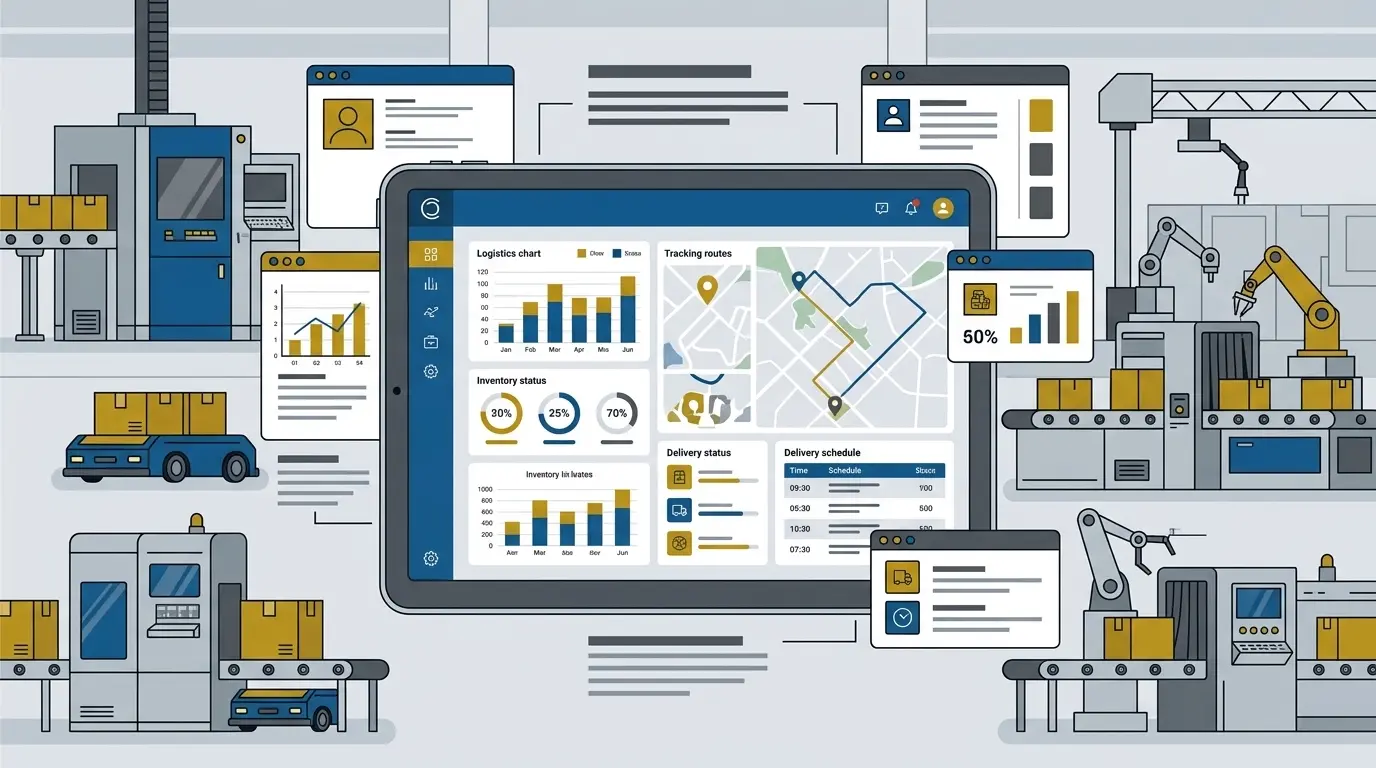
In industrial manufacturing, conversational AI transforms shop-floor logistics and supply chain oversight. Operations supervisors query conversational interfaces to retrieve real-time equipment telemetry, check inventory levels across regional warehouses, and initiate automated parts restocking workflows. Connecting language models to internal ERP software development pipelines removes documentation delays and mitigates costly production line downtime.
Within B2B SaaS and financial services, conversational agents streamline client onboarding and compliance verification. Conversational workflows guide new users through identity checks, explain complex financial service terms, and automatically flag account discrepancies for audit teams. This structured transactional orchestration reduces account setup errors, accelerate user time-to-value, and establishes strict compliance adherence.
Navigating Conversational AI Readiness for Modern Organizations
Modern organizations evaluating conversational automation must treat deployment as a core infrastructure milestone rather than a marketing experiment. Moving past pre-built SaaS widgets requires technical readiness, structured corporate databases, and clean integration touchpoints. Decision-makers must balance immediate integration agility with long-term data sovereignty. Implementing successful conversational automation begins with a technical audit of current data flows, security frameworks, and API endpoints. When engineering leaders prioritize custom architecture over surface-level features, they eliminate systemic bottlenecks and build resilient operational foundations designed for continuous scale.
Building Strategic Resilience Through Custom AI Engineering
Transitioning from reactive support operations to proactive, autonomous business execution requires technical foresight. Thoughtful AI chatbot development eliminates operational overhead, safeguards proprietary enterprise intelligence, and unlocks scalable capacity across critical business functions. As market demands accelerate, organizations relying on disconnected manual workflows risk falling behind automated competitors. Colladome partners with ambitious founders, CXOs, and operational leaders to design, build, and deploy production-grade software that removes systemic constraints. Let’s make the next big thing together!