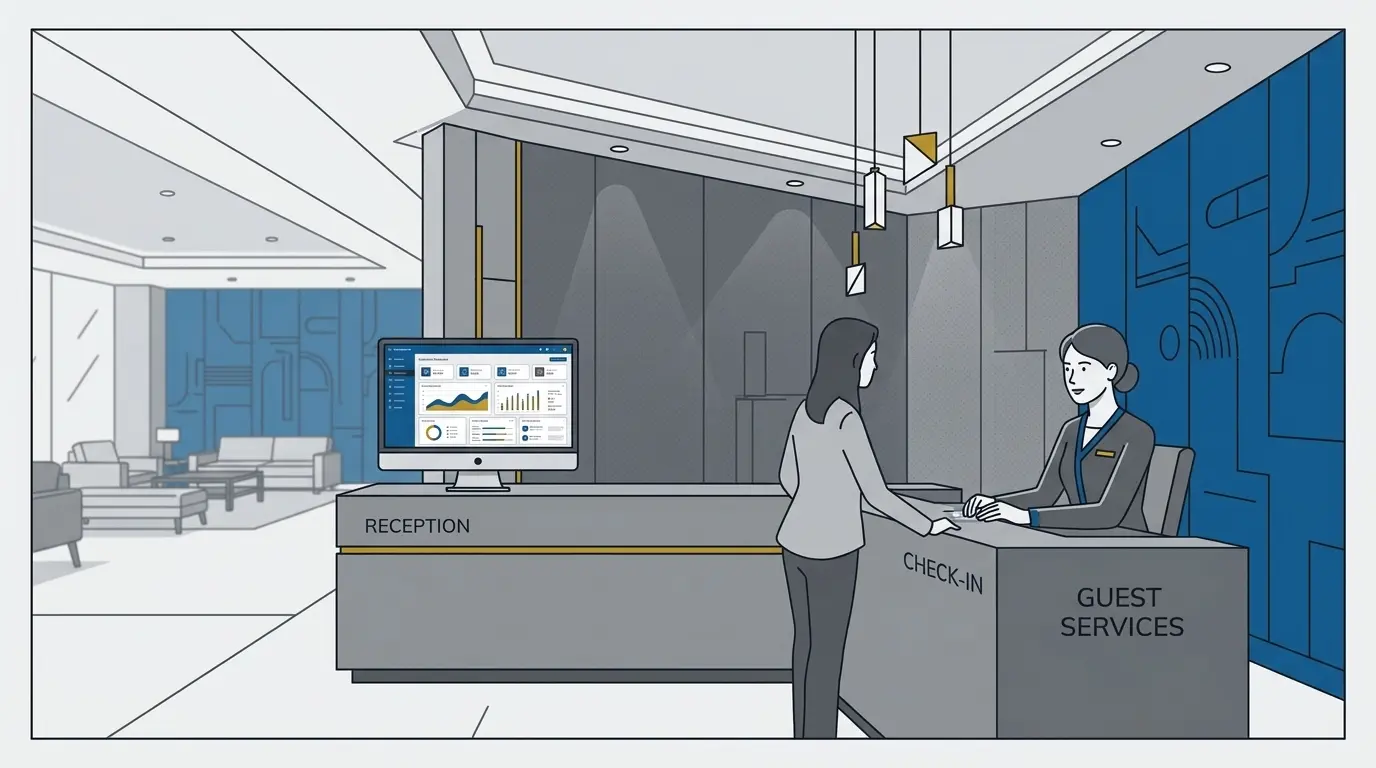

Hotel front desk software development is the engineering of dedicated enterprise web applications that automate guest reception, inventory distribution, folio accounting, and physical property integrations into a unified terminal console. Instead of relying on generic SaaS frameworks that restrict operational logic, custom development establishes an infrastructure tailored to the specific operational workflows of modern hospitality enterprises.
Running an expanding hotel property requires coordinated execution across physical and digital touchpoints. From keycard encoding to real-time reservation allocation across global booking channels, bespoke front-of-house platforms eliminate systemic bottlenecks, lower transaction overheads, and give property owners complete ownership over their core data.
The Operational Cost of Legacy Front Desk Infrastructure
Legacy front desk systems impose severe operational constraints on scaling hospitality groups. Outdated on-premise systems and rigid cloud platforms maintain fragmented data silos between reception desks, housekeeping crews, and central reservation channels. When reception staff spend minutes manually validating IDs, keying credit card folios, and updating physical room directories, guest queues swell during peak arrival windows. This operational latency damages guest satisfaction and dampens valuable ancillary upsell opportunities.
From an enterprise financial perspective, off-the-shelf software models extract recurring licensing costs that scale aggressively with room counts. Rigid configurations restrict connectivity with modern IoT room sensors, custom payment gateways, and fiscal printers. For growing hospitality SMEs, these technical limitations compromise operational margins, increase turnover among desk personnel, and introduce dangerous reconciliation discrepancies across enterprise ledgers.
Engineered Efficiency: Bespoke Hotel Front Desk Software Development
Custom hotel front desk software development delivers unified technical control across front-of-house operations. By engineering a centralised property management console, enterprise developers eliminate disconnected spreadsheets and fractured third-party middleware. The bespoke platform functions as an operational core, bridging central reservation engines, digital keycard terminals, housekeeping modules, and enterprise finance ledgers.
Tailored development enables hotel brands to implement native business logic, including automated night audits, complex split-billing protocols, and predictive room cleaning schedules. Replacing perpetual SaaS seat subscriptions with an owned, custom enterprise web application decreases total cost of ownership over multi-year horizons. As property operators explore custom hotel management software for hotels, dedicated architecture ensures high performance, minimal downtime, and frictionless operational scale.
Core Implementation Framework for Front Desk Modernization
Engineering a dependable hospitality platform requires a structured modernization framework addressing key operational pain points:
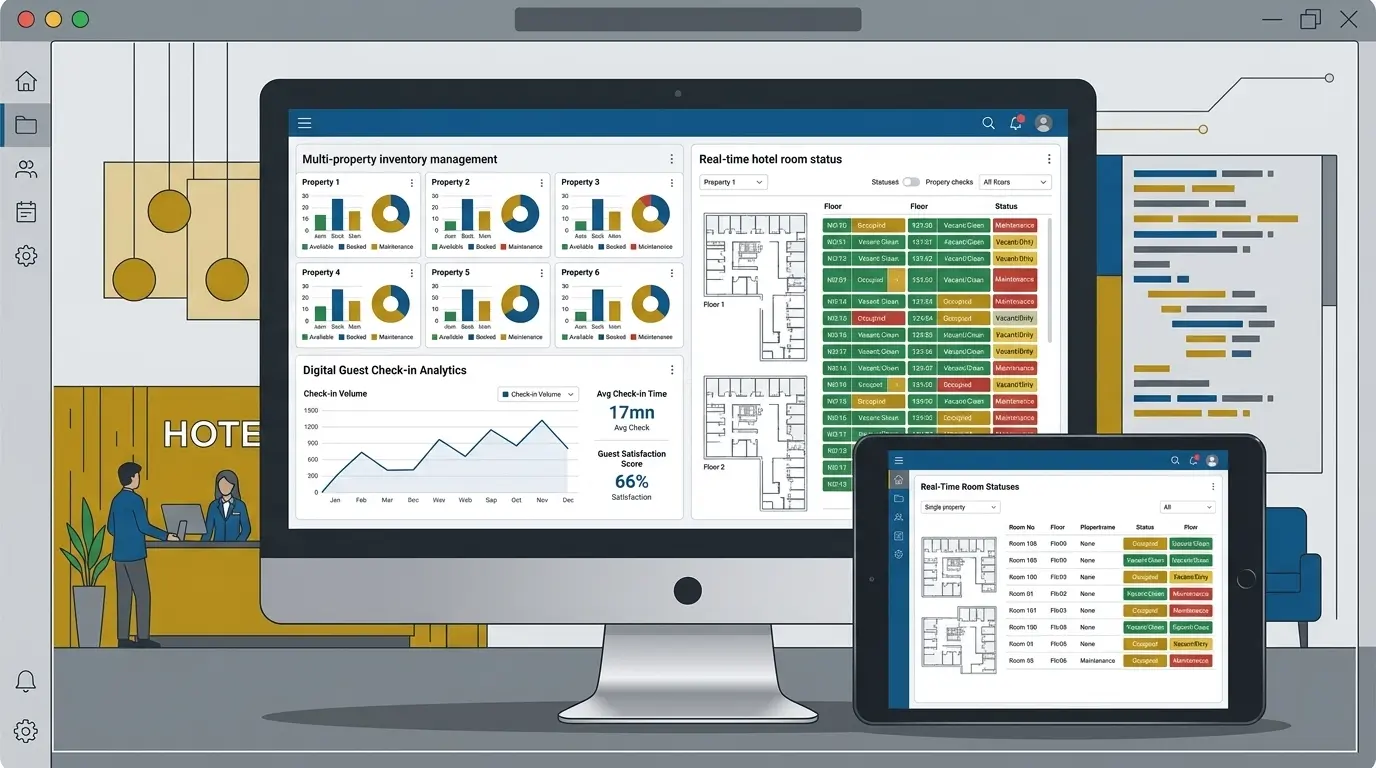
- Operational Latency at Guest Check-in: Problem: Lengthy queues form during peak check-in windows due to manual document capture and physical key distribution. Solution: Integrate automated optical character recognition (OCR) for identification documents alongside programmatic RFID and BLE keycard dispenser APIs. Outcome: Average check-in processing duration drops below 60 seconds per guest.
- Disjointed Billing and Folio Reconciliation: Problem: Discrepancies between restaurant POS systems, spa tabs, room rates, and incidental fees delay checkout verifications. Solution: Build a real-time event-driven billing service that synchronises charges instantly to an aggregated guest ledger. Outcome: Incidentals reconcile immediately, eliminating billing leakage and accounting overhead.
- Data Desynchronisation with Channel Managers: Problem: Inventory lag between online travel agencies (OTAs) and reception consoles causes inadvertent double bookings. Solution: Construct high-throughput bidirectional Webhook engines capable of sub-second availability updates, as detailed in our analysis of hotel PMS vs channel manager integrations. Outcome: Zero inventory collisions across all connected booking channels.
- Fragmented Housekeeping Communications: Problem: Front desk agents lack real-time visibility into room inspection states, causing awkward arrival delays. Solution: Establish a live WebSocket status feed linking reception consoles directly with mobile housekeeping portals. Outcome: Rooms turnover rapidly and assign dynamically the instant inspectors confirm readiness.
Architectural Modules Essential for Modern Front Desk Operations
Real-Time Reservation and Room Inventory Engine
The reservation core relies on transactional database structures that lock inventory during checkout interactions. High-performance caching layers process sub-second room assignment queries, dynamically rebalancing inventory clusters across multiple room classes. This architectural rigor prevents inventory collision across concurrent booking sessions and guarantees uninterrupted front desk operational continuity.
Automated Guest Check-In and Keycard Integrations
Modern check-in workflows require direct hardware integration. Custom drivers connect the front desk web dashboard directly to networked RFID encoders and digital Bluetooth locks. Standardised protocols like Assa Abloy or Dormakaba allow reception teams or self-service kiosks to dispense access credentials instantly without manual credential management.
Unified Multi-Folio Billing and Payment Gateways
Folio engines must manage complex fiscal splits between enterprise accounts, corporate group balances, and individual guest cards. Integrating PCI-DSS compliant payment gateways, such as Stripe, enables automated pre-authorisations, recurring incidental balance checks, and instant digital invoicing without holding raw cardholder data on local property servers.
Technical Considerations: Security, Scalability, and System Integrations
Role-Based Access Control and Sensitive Data Protection
Enterprise platforms protect guest personally identifiable information (PII) using AES-256 field-level encryption and strict role-based access control (RBAC). Front desk receptionists, night auditors, and general managers access strictly scoped user permissions, creating auditable activity trails across every record modification, rate override, and refund execution.
Legacy Hardware Protocols and Peripheral Compatibility
Deploying software across physical properties requires native compatibility with existing serial and USB peripherals. Custom microservices translate web commands into raw communication data for fiscal receipt printers, passport flatbed scanners, and local PBX phone systems, removing the need to replace operational property hardware.
High-Throughput API Interoperability with Channel Managers
Channel connections require dependable, message-queued webhook architectures built to handle high throughput during seasonal booking surges. By maintaining reliable queues and automated retry mechanisms, front desk systems sustain 99.99% operational uptime and keep global room availability accurate across distributed booking nodes.
Strategic Build Economics: Evaluating Custom Development vs SaaS
Eliminating Per-Room-Per-Month SaaS Licensing Fees
Commercial SaaS providers levy compounding monthly fees per room alongside steep charges for add-on integration tiers. Custom software development converts unending operational subscription overhead into an owned enterprise capital asset, generating substantial cumulative cost savings for properties scaling past 50 keys.
Retaining Proprietary Data Ownership and Custom Workflows
Third-party platforms trap valuable guest behavioral histories within closed databases, restricting data exports and custom analytics. Developing proprietary front desk platforms preserves complete data sovereignty, allowing hospitality businesses to extract predictive operational insights, customize loyalty algorithms, and build enterprise equity.
Tailoring Architecture for Multi-Property Portfolio Growth
Standard software packages struggle with the diverse operational requirements of multi-asset operators. A tailored, multi-tenant database structure allows centralized group management while providing individual properties with unique operational parameters, an approach refined when engaging an experienced hotel software development company India.
Evaluating Hospitality Infrastructure: Commercial SaaS vs Custom Front Desk Software Development
| Evaluation Vector | Off-The-Shelf SaaS Platforms | Custom Front Desk Software (Colladome Approach) | Operational Impact | Strategic Winner |
|---|---|---|---|---|
| Total Cost of Ownership (3-Year Horizon) | Compounding per-room subscription fees with rising tiers | Predictable one-time engineering investment plus basic hosting | Significant operational expenditure reduction over multi-year asset lifecycles | Custom Front Desk Software |
| Workflow Flexibility & Hardware Compatibility | Rigid modules; limited peripheral and keycard driver support | Engineered bridges for proprietary RFID, IFP boards, and PBX systems | Eliminates front desk hardware replacement costs and manual workarounds | Custom Front Desk Software |
| Channel Manager & Third-Party Integration Depth | Restricted API endpoints, rate limits, and middleware fees | Native, bi-directional webhook engines with event-driven execution | Prevents overbookings and removes third-party sync subscription costs | Custom Front Desk Software |
| Data Sovereignty & Guest Privacy Control | Guest profiles stored in third-party vendor multi-tenant silos | Isolated enterprise databases with proprietary security governance | Ensures full compliance with regional data privacy mandates | Custom Front Desk Software |
| Scalability Across Multi-Property Portfolios | Standardised dashboards unable to accommodate multi-brand logic | Multi-tenant architecture configured for distinct property operations | Centralises executive oversight across distributed properties | Custom Front Desk Software |
Operational Scenarios: Deploying Custom Front Desk Architecture
Bespoke software deployments solve distinct operational bottlenecks across diverse hospitality categories. Implementing tailored architecture removes specific systemic friction points:
Multi-Property Boutique Chains: Operating boutique properties across multiple geographic locations often introduces fragmented inventory tracking. Deploying centralized custom hotel front desk software development unifies reservation queues, cutting guest arrival check-in times by 65%. Consolidated reporting consoles aggregate operational performance without intermediary aggregator delays, streamlining corporate ledger reconciliations.
High-Volume Commercial & Business Hotels: Business properties experience severe desk congestion during morning checkout and evening check-in rushes. Custom integrations connecting self-service kiosks, corporate direct-billing engines, and live room inspection modules process incoming arrivals efficiently. This automation saves substantial staff labour hours each week and captures ancillary corporate revenues that off-the-shelf software packages regularly drop.
Navigating the Technical Feasibility of Hospitality Automation
Decision-makers evaluating hotel front desk software development must weigh architectural maintenance against business autonomy. Engineering modern front desk software requires analyzing existing infrastructure, evaluating network latency at physical properties, and auditing peripheral hardware compatibility. Colladome serves as a dedicated custom enterprise web application engineering firm, helping hospitality operators navigate complex technological evolutions through structured consultations, architectural roadmaps, and legacy PMS modernizations. Partnering with seasoned software engineers ensures your front-of-house platform aligns directly with your organization’s long-term commercial goals.
Securing Operational Independence Through Custom Engineering
Modern hospitality demands agile, connected, and reliable technology. Legacy software platforms hinder operational responsiveness and impose escalating subscription costs on growing enterprises. Custom hotel front desk software development provides hospitality operators with complete operational control, robust data ownership, and responsive front-of-house workflows that elevate the guest experience. By eliminating software constraints, forward-looking hotels secure their market edge and build enduring commercial value. Let’s make the next big thing together! Connect with our engineering strategists to schedule a tailored system architecture consultation.