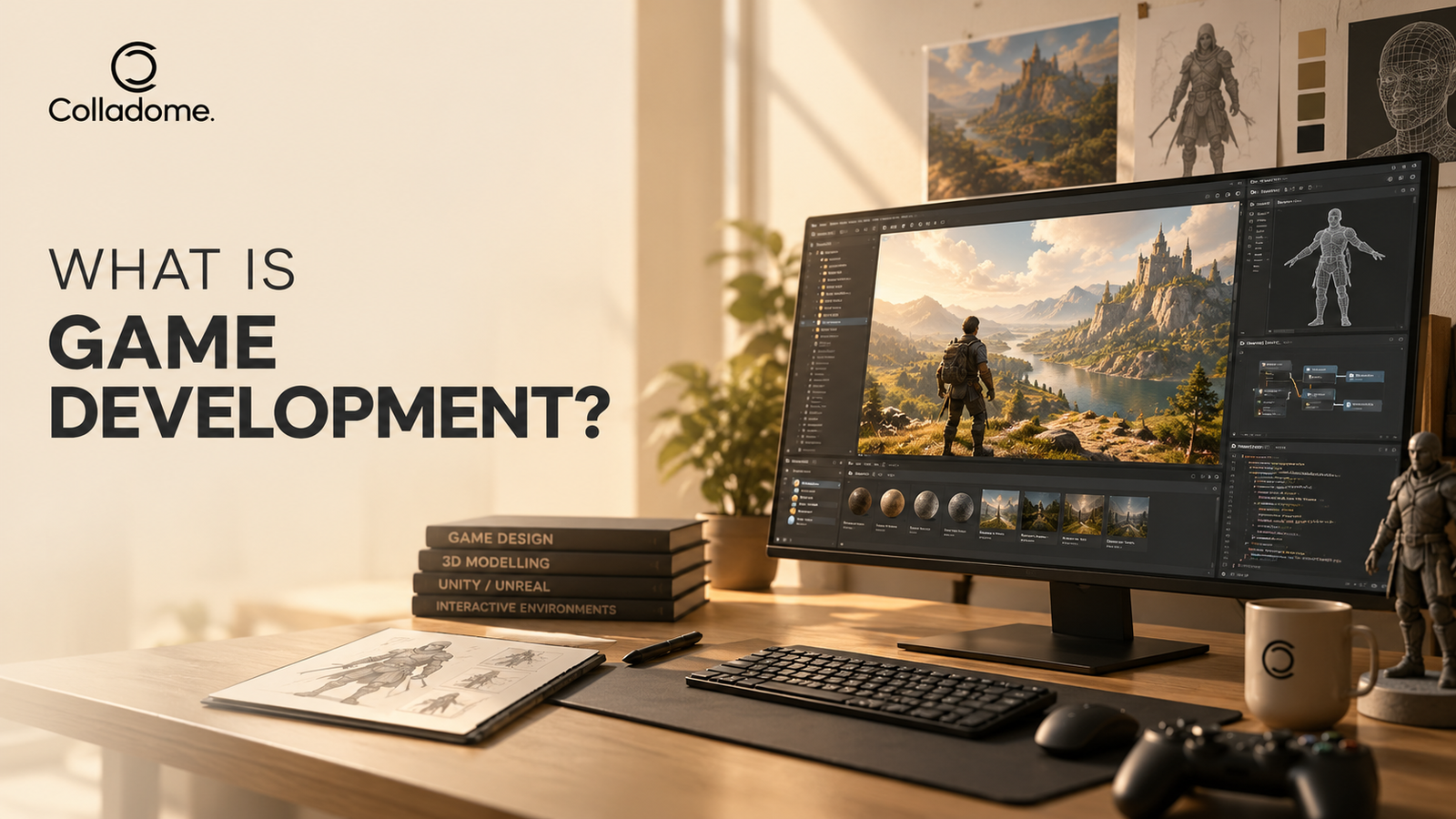

Games are no longer just a form of entertainment. They are a massive global industry, and they are also used for training, education, marketing, and customer engagement. Before hiring a team or setting a budget, it helps to understand what is game development actually, how a game goes from idea to launch, and what separates a smooth project from an expensive one.
This guide breaks the topic down in plain language, explains what a complete set of game development services typically includes, covers how to choose a game development company, shows what to look for in the best game development company, and explains why a game development company in India is a popular option for studios and startups worldwide.
What Is Game Development?
Game development is the process of designing, building, testing, and releasing video games for platforms such as mobile phones, PCs, consoles, web browsers, and virtual or augmented reality devices. It combines creative work, such as story, art, and sound, with technical work, such as programming, physics, and server infrastructure.
Unlike regular software, a game has to be fun as well as functional. A banking app can succeed by being accurate and secure, but a game also has to hold a player’s attention, feel responsive, and give them a reason to come back. That is why game development depends heavily on design thinking and constant playtesting, not just clean code.
Game development generally falls into a few broad categories. Mobile games are built for iOS and Android and often rely on short sessions and in-app purchases. PC and console games target higher-end hardware and usually offer deeper, longer experiences. Browser-based games run directly in a web browser with no download needed. And AR and VR games create immersive experiences using headsets or camera-based technology. The 2D versus 3D choice cuts across all of these and affects art style, cost, and development time significantly.
How Game Development Actually Works
Every game project moves through a similar set of stages, whether it is a small mobile puzzle game or a large multiplayer title.
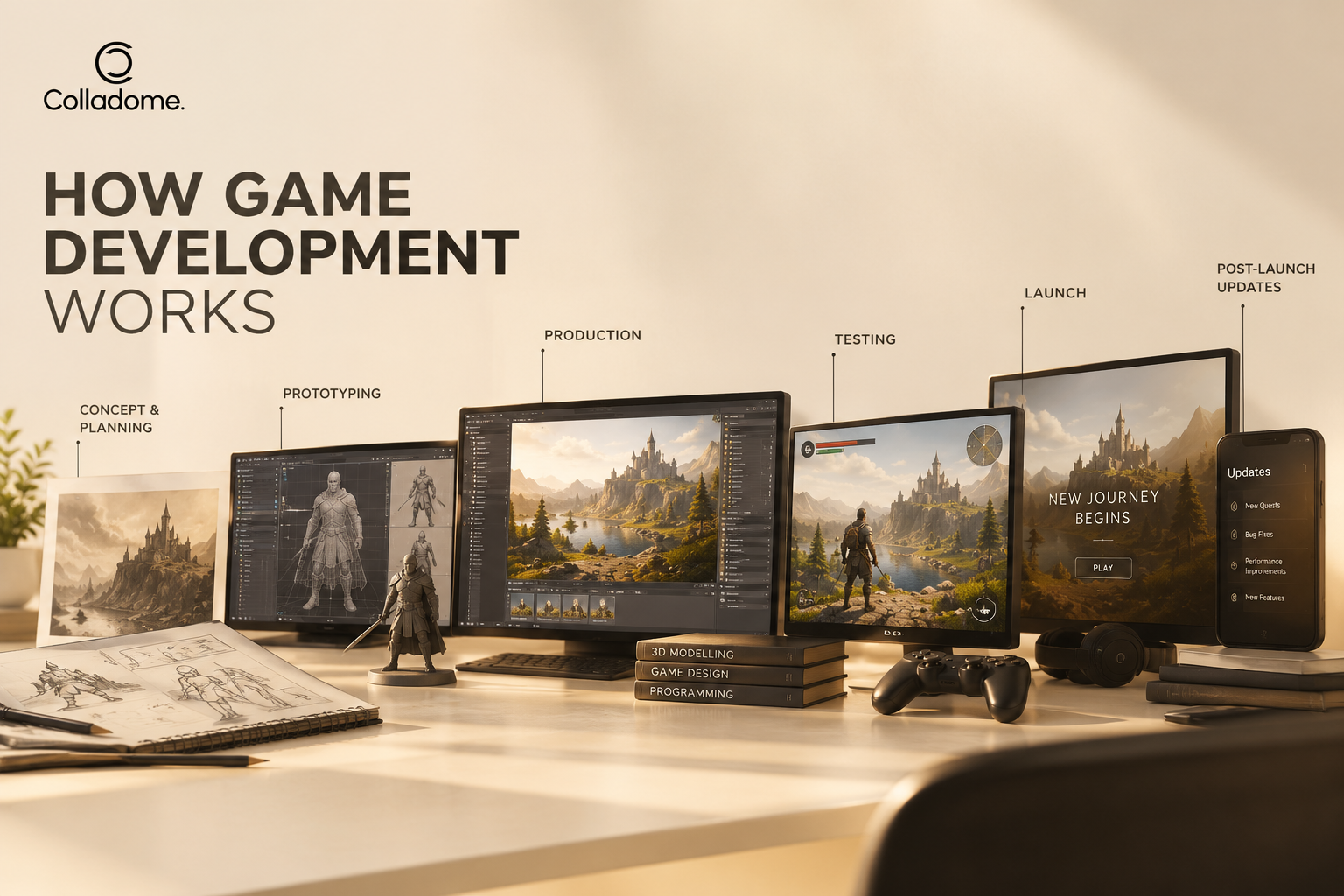
It begins with concept and planning, where the core idea, target audience, platform, and main gameplay loop are defined. This is followed by pre-production, where the game design document is written, early prototypes are built, and the team tests whether the core idea is actually fun before investing heavily. Production comes next, covering programming, art, animation, level design, sound, and backend systems. Most games are built using engines such as Unity or Unreal Engine, which provide ready-made tools for graphics, physics, and cross-platform publishing.
Testing runs throughout and intensifies near the end, covering bugs, balance, performance, and how the game behaves on different devices. Finally, the game is launched on its target stores or platforms, and a live operations phase begins, with updates, new content, bug fixes, and community support keeping players engaged over time.
Skipping or rushing pre-production is one of the most common reasons games run over budget, since discovering that the core mechanic is not fun halfway through production is far more expensive than finding out during prototyping.
What’s Included in Game Development Services
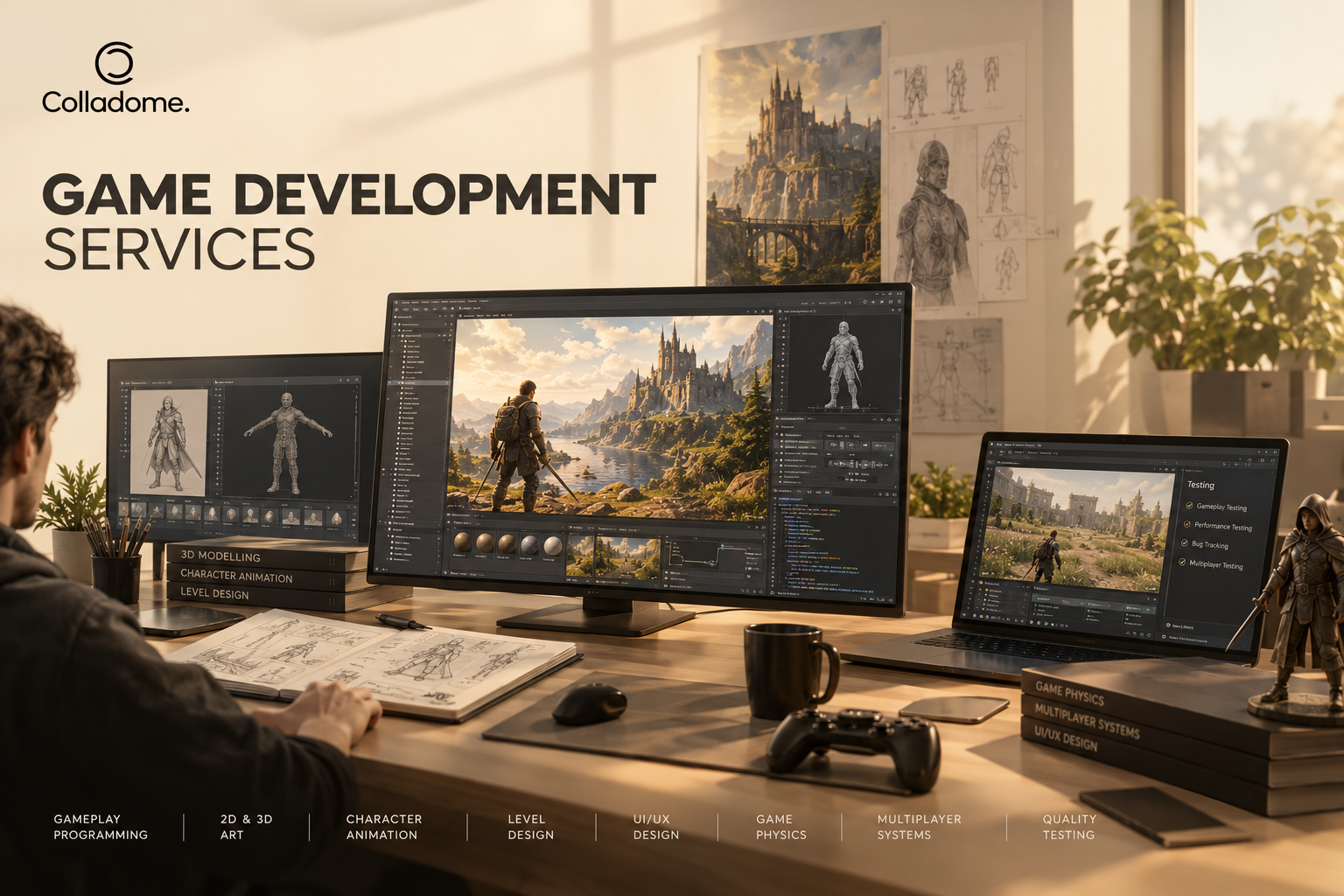
When businesses look into game development services, they are usually looking for more than just programmers. A complete service offering typically covers game design and concept development. Teams plan the mechanics, progression, and monetization carefully. They then create 2D and 3D art, design characters, develop animations, and build the user interface.
It also generally includes programming and engine work, covering gameplay systems, physics, artificial intelligence for characters, and multiplayer features where needed. Backend development is often part of the package as well, handling player accounts, leaderboards, in-game stores, and data storage. Quality assurance and playtesting across many devices are essential before launch, along with publishing support for app stores and platforms. Finally, reliable providers offer post-launch maintenance and live operations support, since a game that stops getting updates tends to lose its audience quickly.
Studios that only receive the coding portion of this list, without design, testing, or live support, often end up with a game that works technically but fails to keep players.
How to Choose a Game Development Company
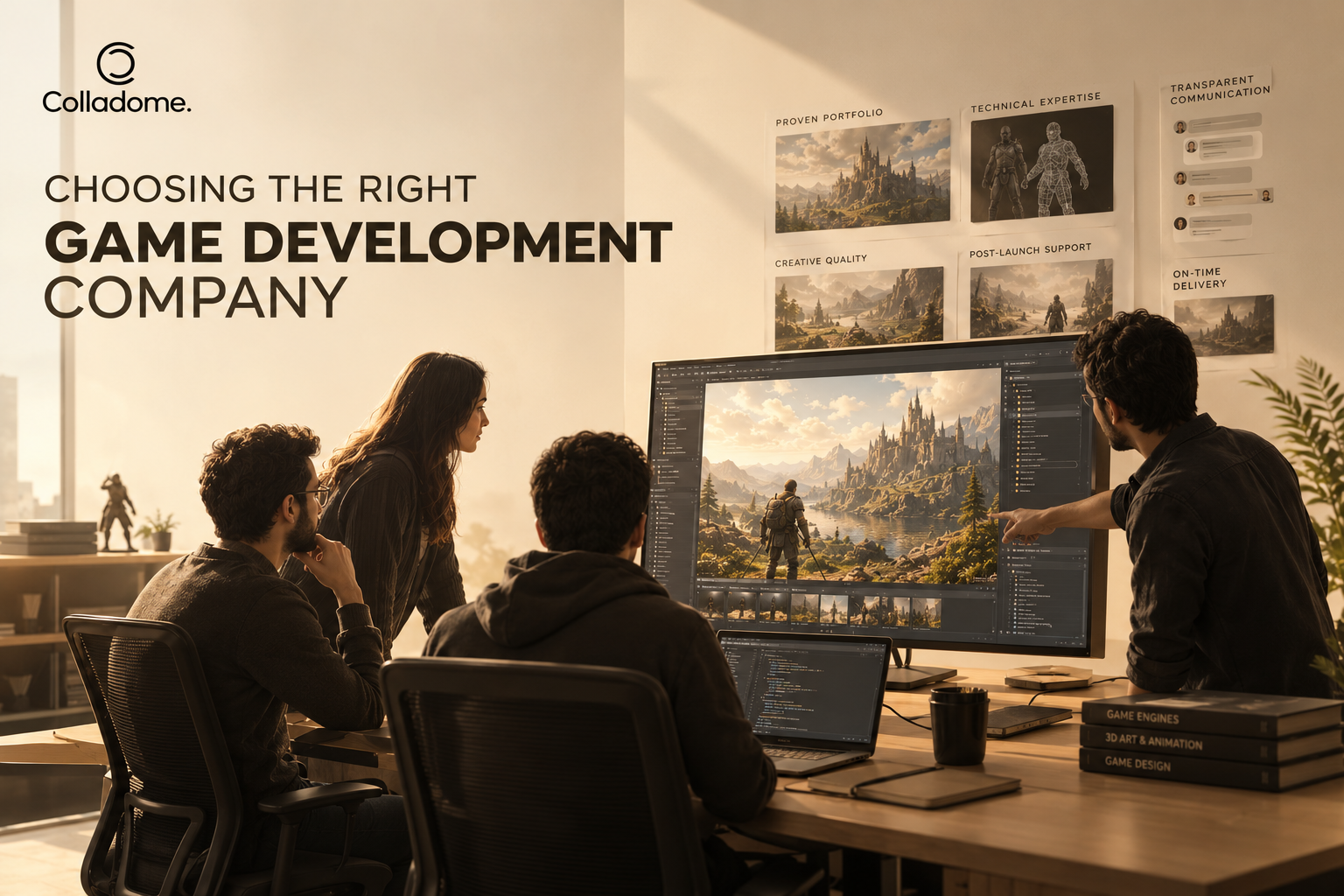
Not every studio that builds games is the right fit for every project, so it helps to approach the search with a clear checklist. When evaluating a game development company, start by looking at what they have actually shipped. Playable, published games matter far more than concept art or pitch decks, so try downloading or playing a few of their titles yourself.
Check whether they have experience with your target platform and genre, since building a hyper-casual mobile game is a very different skill from building a multiplayer PC title. Ask which engines they work with and why, and listen for whether the answer is based on your project’s needs rather than habit. Understand how they handle communication, including how often you will see builds and how feedback is incorporated. And confirm what post-launch support looks like, since bugs and balance issues always surface once real players arrive.
What Makes the Best Game Development Company
Identifying the best game development company is not about finding the biggest studio. It is about finding the right match for your genre, platform, budget, and timeline.
| Evaluation Criteria | What to Look For |
| Published portfolio | Playable, live games across relevant genres and platforms |
| Engine expertise | Strong experience with Unity, Unreal, or the engine your project needs |
| Art and design quality | Consistent visual style and thoughtful gameplay design |
| Process transparency | Regular builds, clear milestones, and structured feedback loops |
| Post-launch support | Updates, bug fixes, and live operations after release |
| Client reviews | Verified feedback on platforms like Clutch or Google |
A studio that performs well across all of these areas is generally a safer partner than one that excels in a single area, such as impressive art, but lacks process discipline or post-launch support.
Why Choose a Game Development Company in India
India has become one of the most established destinations for outsourced game development. A game development company in India typically offers a large pool of skilled programmers, 2D and 3D artists, and animators, along with competitive pricing compared with studios in North America or Western Europe.
The cost advantage comes from lower operating costs and strong competition among studios, which keeps quality high and pricing reasonable. Many Indian studios develop mobile, PC, and AR/VR projects for international clients. They also work with distributed teams and manage global release schedules.
That said, the lowest quote should not be the deciding factor. When comparing studios, look for a verifiable portfolio of released games, clear time-zone-friendly communication, transparent pricing broken down by phase, defined milestones, and a plan for post-launch support. Make sure the contract clearly states that you own the intellectual property, including the game and all its assets, once the project is complete.
Should You Build In-House or Outsource Game Development?
This is one of the first strategic decisions in any game project, and it affects cost, speed, and control. Building an in-house team gives you direct oversight and deep institutional knowledge, but it requires hiring programmers, artists, designers, and testers, along with the overhead of managing them. This approach tends to make sense for companies planning a long-term, multi-game roadmap.
For most startups and businesses building one or two games, working with an outside studio is more practical. It gives access to an already assembled team, shortens the time to start, and brings experience from earlier projects. The trade-off is that clear communication and well-defined milestones matter even more, which is exactly why choosing the right studio matters more than the outsourcing decision itself.
Common Mistakes to Avoid in Game Development
Even with a capable team, a few mistakes show up again and again. Teams sometimes try to build an overly ambitious game as their first project, which stretches budget and timeline. Others skip early prototyping and discover too late that the core gameplay is not engaging. Underestimating the importance of monetization design can leave a good game unable to earn revenue. Poor performance optimization on lower-end devices can quietly cost a mobile game a large share of its potential audience. And treating launch as the finish line, rather than the start of live operations, often means a game fades within months.
Working with an experienced provider of game development services generally helps avoid these issues, since a mature process is built around catching them early rather than fixing them after release.
Final Thoughts
Understanding what is game development goes beyond knowing that it means “making games.” It involves a structured process, a clear choice of platform and engine, and the right decision on whether to build in-house or partner with a studio.
Whether you are comparing game development services, evaluating a game development company, searching for the best game development company for your genre, or considering a game development company in India, the strongest results come from partners who understand that a great game is built on strong design, steady testing, and long-term support.