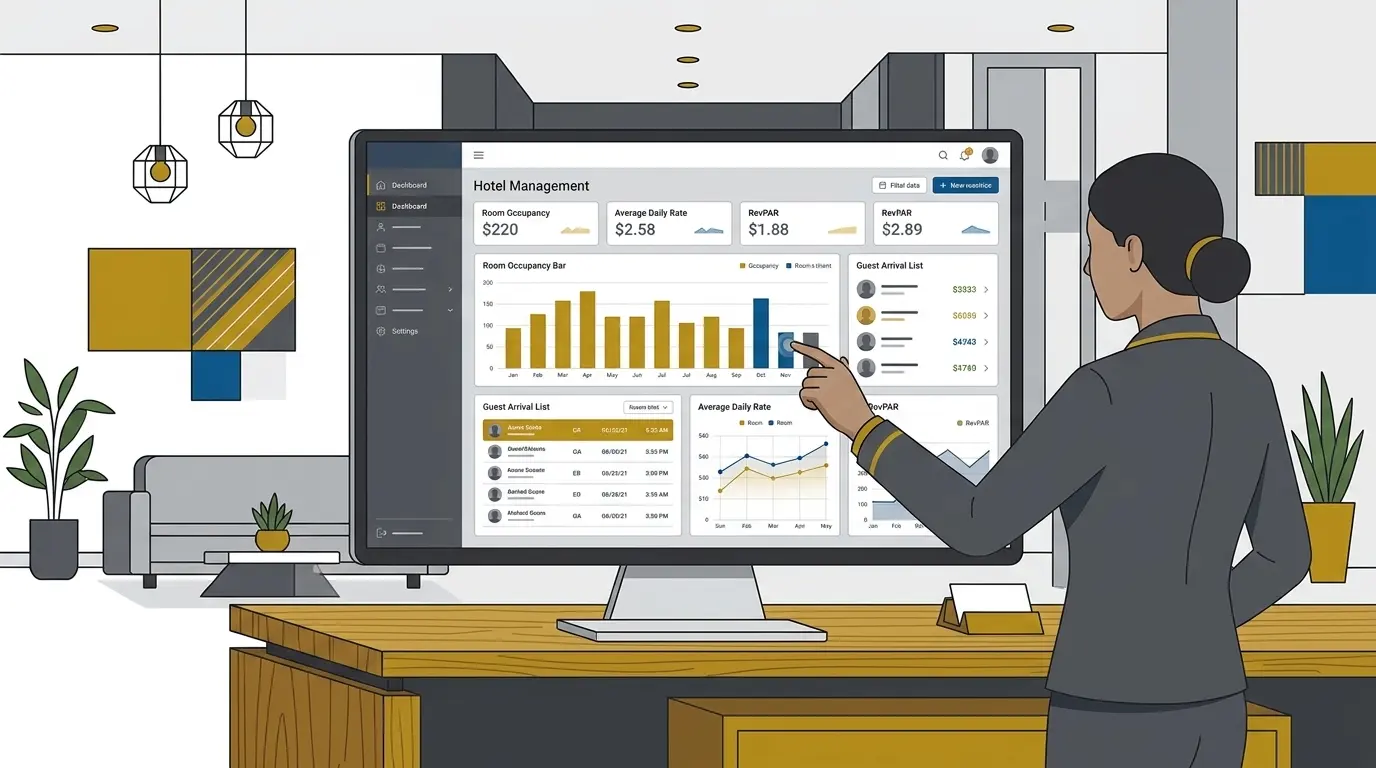

A hotel management software implementation guide provides an operational and technical framework for deploying property management systems, automating front-office workflows, and consolidating distributed hospitality databases. Executed effectively, it transitions a hotel group from manual operational bottlenecks to unified real-time inventory synchronization across multi-channel booking engines with zero operational downtime.
The Operational Bottlenecks of Legacy Hospitality Systems
Multi-property hotel groups frequently face severe structural fragmentation across their point-of-sale terminals, central reservation engines, and central accounting ledgers. Legacy hospitality architectures isolate front-desk interactions from back-office procurement, creating operational data silos that degrade guest service delivery. According to research from the Hospitality Net industry benchmarks, fragmented administrative tools inflate manual reconciliation overhead by upwards of 30% per billing cycle.
Generic SaaS plugins often fail expanding mid-market hospitality brands. Rigid API limits restrict multi-property consolidation, while per-room subscription fees drive compounding software licensing expenses without delivering dedicated database control. Furthermore, off-the-shelf tooling provides negligible support for proprietary workflows or in-room hardware, resulting in delayed guest check-in cycles, room inventory discrepancies, and severe audit leakages across departments.
Custom Hospitality Architecture as an Operational Foundation
Transitioning to custom enterprise hospitality software eliminates vendor lock-in and structural bottlenecks. Tailored engineering bridges independent operational nodes into a cohesive digital ecosystem, giving hospitality leaders full data sovereignty. When organisations deploy a bespoke enterprise platform, engineering teams build modular interfaces directly matching the property’s operational structure.
Through custom hotel management software development, hospitality groups establish low-latency pipelines between reservations, housekeeping modules, and financial platforms. In parallel, custom hotel ERP development consolidates enterprise reporting and multi-unit purchasing into one database. Modern cloud-based hotel management software eliminates repetitive manual tasks, protects operational continuity, and secures high-concurrency channel transactions during peak seasonal occupancy.
5-Phase Implementation Framework for Enterprise Hotel Systems
Executing an enterprise rollout requires a disciplined strategy designed to protect live reservation channels. This operational execution framework maps systemic risks directly to technical remediation:
- Architecture Audit and Requirement Scoping: Problem: Unknown architectural debt in legacy stacks causes mid-deployment failures. → Solution: Conduct a complete API and network audit to validate legacy integrations before development. → Outcome: Clear technical blueprints and verified latency parameters for custom hospitality software development.
- Secure Data Migration and Schema Mapping: Problem: Corrupted guest transaction histories and lost folios during database cutover. → Solution: Run automated extract, transform, and load (ETL) scripts paired with strict database validation rules. → Outcome: Flawless transfer of historical guest folios, profiles, and forward reservations.
- Multi-Channel API and Hardware Integration: Problem: Channel desynchronisation leading to double bookings and dropped point-of-sale transactions. → Solution: Deploy bidirectional webhook connectors and verified touch-panel protocols. → Outcome: Zero-latency synchronization across room channels, payment hardware, and front-desk devices.
- Role-Based Access Deployment and Staff Enablement: Problem: Internal operational friction and sensitive credential exposure across departments. → Solution: Configure granular access control profiles paired with workflow-specific interactive training. → Outcome: High front-office operational velocity with enterprise-level security compliance.
- Phased Go-Live and Parallel Testing: Problem: Systemic operational outages and lost check-ins during immediate platform cutover. → Solution: Run legacy platforms in parallel for 72 hours alongside failover verification tests. → Outcome: Validated financial reconciliation and verified transaction reliability with zero operational downtime.
Pre-Implementation Audits and Architectural Planning
Technical Stack Audit and Infrastructure Readiness
Before writing platform code, engineers evaluate local network capacity, firewall policies, and legacy server throughput. Successful deployments require robust API endpoints capable of processing sub-second webhook triggers from external reservation channels. Technical architects audit property network topologies to confirm edge hardware supports continuous cloud synchronization without latency spikes during occupancy surges.
Scope Validation Against Feature Checklists
Operations teams must carefully benchmark software functional requirements against a validated hotel management software features checklist. Validating operational requirements early prevents feature creep while identifying core business needs across front-desk execution, billing, and housekeeping. This structural boundary ensures the development team focuses directly on features that accelerate room turnover and financial reconciliation.
Data Sanitisation and Entity Mapping
Legacy hospitality databases frequently contain redundant reservation entities, outdated contact information, and unstructured payment folios. Database specialists execute comprehensive data cleansing workflows to eliminate orphan records and standardise guest historical entities. Mapping clean source tables into modern relational database schemas ensures transactional integrity before importing live production assets.
Core Engineering and System Integration Mechanics
Hotel PMS and Central Reservation Engine Alignment
Synchronising property systems requires establishing stable bidirectional API protocols with global distribution channels and online travel agencies. System integrators build resilient middleware to distribute updated inventory allocations simultaneously to all partners. When evaluating platforms, teams often analyse hotel PMS vs channel manager architectural requirements to ensure direct booking updates reflect instantly across all touchpoints.
Point of Sale and Enterprise ERP Unification
Consolidating food, beverage, and amenities billing directly into central property ledgers eliminates lost receipts. Bespoke ERP integration links dining terminals, banquet scheduling tools, and central room folios in real time. This automated ledger reconciliation provides finance departments with exact margin tracking and automated inventory replenishments across multi-site hospitality venues.
Smart Display and In-Room Hardware Integration
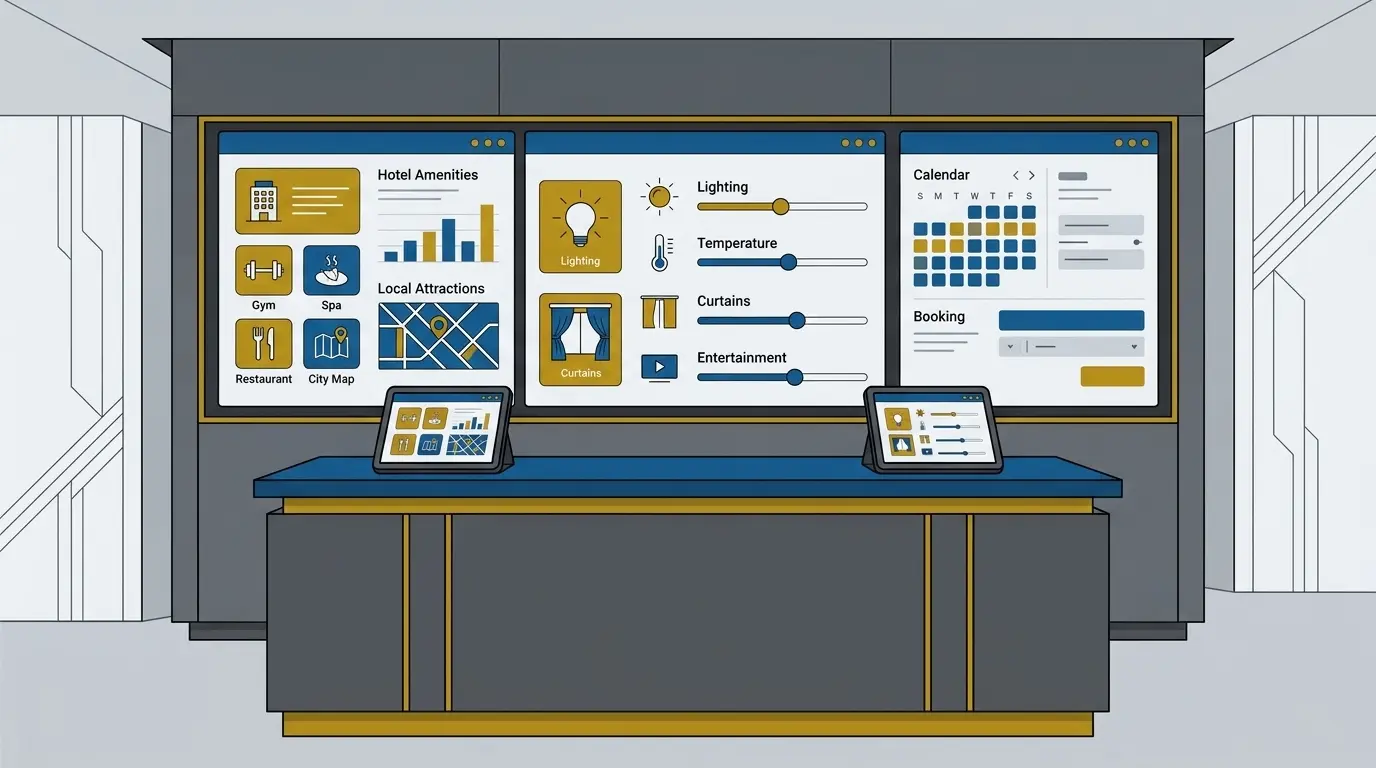
Modern luxury and commercial properties require deep connectivity with hardware devices, including smart boards, keyless door locks, and interactive panels. Custom engineering teams write proprietary hardware drivers to link front-desk consoles with in-room automation hubs. This hardware-software interface enables digital room assignments, interactive conference room scheduling, and centralized energy management without requiring disconnected third-party controller applications.
Deployment Governance, Security, and Cutover Protocol
Role-Based Access Control and Compliance Frameworks
Protecting guest identities and payment records requires enterprise security measures built into the software architecture. Engineers enforce strict role-based access control, ensuring front-desk clerks, room attendants, and accountants only view data relevant to their specific tasks. Systems must follow strict PCI-DSS tokenisation for stored payment cards while maintaining encrypted records that adhere to regional data privacy regulations.
Parallel Running Strategy and Failover Verification
To avoid unexpected system downtime during deployment, properties employ a dual-execution strategy for several business cycles. Front-office clerks process active check-ins on both platforms simultaneously, confirming room balances and billing ledgers match to the penny. Automated failover mechanisms guarantee immediate rollback to legacy systems should any unexpected data routing issue emerge.
Departmental Workflow Enablement and Metric Benchmarking
Platform adoption hinges on hands-on team enablement tailored to daily hospitality operations. Department leads measure efficiency gains using clear metrics, evaluating front-desk check-in speeds, night audit completion times, and housekeeping turnaround rates. Real-time metric reporting confirms the deployment improves staff efficiency and elevates guest satisfaction.
Comparing SaaS Platforms With Custom Hospitality Software
Selecting the right technical framework shapes your hotel group’s operating costs, scalability, and workflow independence. The following decision matrix compares standard commercial software with custom enterprise systems:
| Operational Parameter | Off-The-Shelf SaaS Platforms | Custom Enterprise Architecture | Strategic Business Outcome |
|---|---|---|---|
| Data Ownership & Governance | Vendor holds database; access restricted to basic exported reports. | Full sovereign data ownership with direct querying across internal databases. | Eliminates security vendor dependencies and enables proprietary analytics. |
| Channel & Hardware Integration | Limited to pre-approved generic APIs; zero interactive display compatibility. | Bespoke REST/gRPC endpoints connected to in-room smart boards and hardware. | Unified hardware control accelerates guest services and room management. |
| Scaling Cost Structure | Compounding subscription charges calculated per room, per property monthly. | Owned software intellectual property without recurring room license costs. | Substantially reduces total cost of ownership as property portfolio expands. |
| Custom Workflow Automation | Standardized, rigid operational procedures that force manual workarounds. | Tailored automation scripts aligned to unique property operating standards. | Removes administrative bottlenecks and lowers front-desk processing times. |
| Legacy System Interoperability | Requires costly proprietary middleware; incompatible with bespoke ERP tools. | Engineered backward-compatibility with established property management databases. | Preserves historical reservation integrity while migrating without downtime. |
Operational Impact: Industry Deployment Scenarios
Deploying a custom platform removes operational constraints for both independent chains and large resort complexes. For boutique multi-property chains, deploying unified property management tools eliminates distributed room inventory discrepancies. Automated room availability updates prevent double-bookings across third-party booking sites, keeping room allocations completely synchronized across all locations.
In full-service luxury resorts, uniting dining terminals, spa scheduling, and interactive smart displays into one cloud system cut operational latency by 35%. Staff process guest billing directly from mobile tablets, while in-room interactive flat panels (IFP) let guests order room service and control amenities without contacting the front desk. This unified workflow removes operational delays, accelerates property turnover, and creates transparent financial tracking for management.
De-risking Your Enterprise Implementation
Property owners and technology directors must balance rapid deployment timelines against continuous vendor licensing fees. Transitioning to dedicated enterprise software represents an enduring infrastructure investment that requires disciplined execution. Poorly scoped rollouts introduce operational friction, but structured engineering strategies systematically address these risks through controlled staging environments.
Hospitality leaders can explore Colladome’s architectural consultation as an exploratory pathway. Dedicated engineering advisors audit existing software setups, identify hidden operational bottlenecks, and plan modular rollout stages that safeguard live property operations throughout the implementation process.
Building a Resilient Hospitality Infrastructure
A structured technical execution plan is the essential foundation for running modern hospitality operations. By taking complete ownership of your reservation systems and operational data, properties eliminate administrative bottlenecks and deliver consistently excellent guest experiences. High-concurrency room booking engines, automated housekeeping management, and unified dining ledgers empower teams to scale property operations with confidence.
Deploying custom enterprise software gives your organization the technical agility needed to outperform competitors and sustain long-term business growth. Let’s make the next big thing together! Connect with our engineering strategists to evaluate your custom software roadmap.