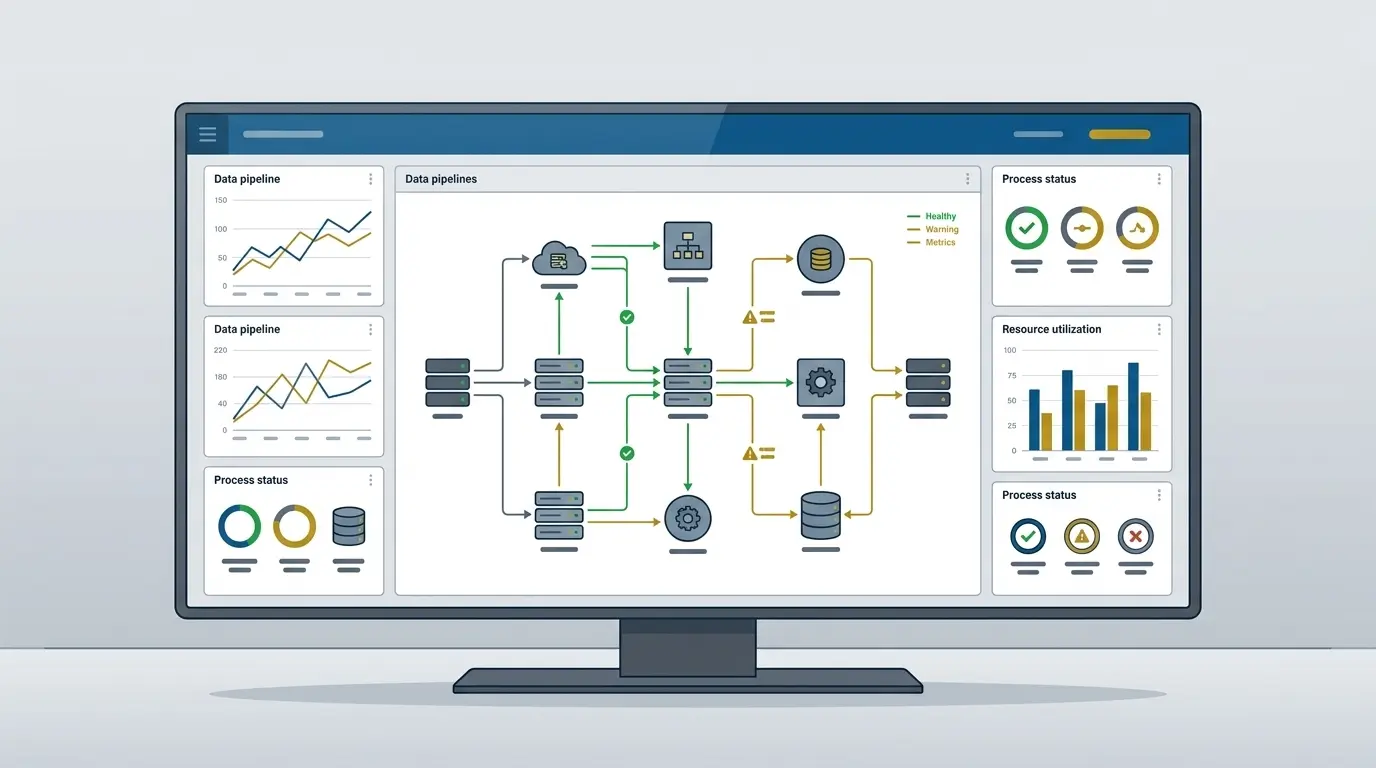

AI automation for businesses refers to integrating machine learning models, autonomous logic loops, and custom application programming interfaces into core corporate workflows to execute complex decisions, parse unstructured data, and manage transactions without repetitive human intervention. Unlike basic programmatic macros that follow static if-then rules, enterprise automated intelligence continuously adapts to operational variations, coordinates legacy infrastructure, and eliminates manual bottlenecks across critical administrative and productive functions.
Operational Bottlenecks: The Cost of Fragmented Enterprise Workflows
Modern enterprises face structural margin compression driven by fragmented software ecosystems and high operational latency. Disconnected databases, unstructured communication across departments, and manual data reconciliation create operational constraints that restrict mid-market growth. According to operational research published by McKinsey & Company, automating repeatable operational processes routinely recovers up to 20 percent of enterprise frontline capacity while eliminating high-cost human error.
Conventional point solutions fail because they introduce legacy software limitations without resolving core data fragmentation. When operational heads purchase disjointed off-the-shelf software tools to bridge immediate operational gaps, they inevitably introduce subscription bloat and severe administrative coordination drag. Manual process inefficiency accumulates as frontline teams spend billable hours re-entering purchase records, balancing cross-platform bookings, or manually reviewing regulatory filings. Scalable organizations eliminate these friction points by architecting integrated, intelligent data pipelines directly into their core applications.
Bespoke AI Automation: Removing Architectural Constraints for Scalable Growth
Strategic deployment of custom software removes structural business constraints by transforming fragmented operational steps into unified, event-driven loops. Deploying custom AI automation for businesses bridges transactional databases with specialized analytical models, allowing direct processing of unstructured invoices, guest profiles, or manufacturing orders. This engineering methodology establishes complete data sovereignty, preventing enterprise intelligence from leaking into public foundational models.
By deploying a custom enterprise web application equipped with fine-grained role-based access control (RBAC), organizations align algorithmic actions directly with proprietary business rules. Rather than altering core business operations to match rigid off-the-shelf software, custom intelligent workflows adapt around operational reality. This architectural approach delivers deterministic reliability, ensuring auditability across every automated pipeline while protecting proprietary institutional knowledge.
Core Implementation Pillars of Enterprise AI Automation
Engineering autonomous business systems requires a systematic pipeline that translates raw organizational data into audited, multi-system operational actions across enterprise environments.
- Data Extraction: Unstructured documents drain operational capacity across departments. Engineering optical entity extraction pipelines and parsing algorithms converts unstructured PDF invoices and records into structured database records with an 80 percent reduction in turnaround time.
- System Interoperability: Siloed legacy enterprise resource planning platforms block transactional visibility. Custom middleware and automated API synchronization enable bi-directional data flow, establishing real-time decision accuracy across cross-functional operations.
- Decision Triage: Operational escalations overwhelm management layers. Automated threshold-based classification models categorize support requests and transactional approvals, routing critical issues instantly while resolving routine operational tasks.
- Implementation Strategy: Organizations require dedicated AI implementation consulting before engineering custom models, ensuring business intelligence engineering aligns directly with operational priorities and high-value workflows.
Strategic Domains for Intelligent Business Automation
Deploying AI automation for businesses delivers immediate capacity gains when applied to transactional domains that experience high administrative volume and clear decision logic.
Algorithmic Inventory and Supply Chain Triage
Enterprise supply networks experience significant capital loss from dead stock and unexpected stockouts. Algorithmic inventory systems analyze supplier lead timelines, sensor metrics, and historical transaction volume to execute predictive reordering. Automated continuous balancing across fulfillment hubs removes operational constraints, lowering capital lockup while ensuring production schedules maintain constant throughput without manual inventory counting.
Automated Financial Reconciliation and Invoicing
Manual invoice validation and reconciliation workflows routinely cause margin leakage and payment errors. Custom cognitive pipelines match purchase orders against bank ledgers and commercial billing statements automatically. The system validates tax compliance, extracts line items, flags mathematical anomalies, and processes vendor disbursements, establishing continuous cash flow visibility while removing repetitive reconciliation labor.
Autonomous Multi-Channel Customer Interaction
Fragmented customer communications degrade operational response rates and skew sales records. Autonomous conversational interfaces process customer requests across digital channels, resolving transactional queries instantly while populating CRM databases. The software triages complex commercial requirements to qualified personnel, sustaining continuous responsiveness, capturing operational context, and maximizing commercial conversions without adding administrative headcount.
Technical Governance, Security, and Compliance Standards
Robust enterprise automation demands enterprise-grade governance frameworks to guarantee business continuity, data protection, and adherence to strict regulatory statutes.
Role-Based Access Control and Data Partitioning
Enterprise data security requires strict data partitioning. Automated backend systems enforce granular role-based access controls, ensuring algorithms only process data authorized for specific operational tiers. This structural boundary protects sensitive operational data, preserves client confidentiality, and prevents unauthorized cross-departmental exposure across distributed relational data environments.
Zero Data Retention and Leakage Safeguards
Deploying automated software within private endpoints prevents proprietary operational logic from escaping into multi-tenant public environments. Enterprise pipelines enforce zero data retention policies alongside deterministic sanitization steps, preventing corporate IP leakage. This architectural containment preserves regulatory compliance while neutralizing risks associated with non-deterministic model outputs.
Audit Trails and Model Observability
Autonomous processes require continuous oversight to guarantee operational precision. Custom engineering integrates immutable logging for every algorithmic action, displaying raw inputs, processing confidence scores, and system outcomes. Built-in human-in-the-loop triggers automatically route uncertain decisions to senior management, ensuring total transparency and simplified compliance validation.
Measuring Commercial ROI and Operational Capacity Gains
Tracking the commercial viability of automated software requires measuring structural capacity expansion, operational error reduction, and unit margin preservation over time.
Labor Hours Reclaimed and Throughput Scaling
Automating mechanical processing cycles enables organizations to scale operational volume without increasing internal personnel. Frontline teams pivot from administrative coordination toward revenue-generating initiatives. Operational throughput doubles across key service pipelines, enabling enterprises to expand market reach while preserving flat operational overhead.
Reduction of High-Cost Processing Errors
Human operational mistakes in invoice parsing, billing schedules, and inventory tracking cause substantial enterprise revenue leaks. Custom software systems process high-frequency operational transactions with algorithmic precision, eliminating billing discrepancies, avoiding regulatory non-compliance penalties, and protecting operating profit across complex fulfillment lifecycles.
Sustained Operating Margin Improvements
Deploying custom automation flattens operational cost curves as transaction volume grows. Standard manual processes exhibit linear cost growth relative to business expansion. Custom algorithmic systems decouple business growth from operational payroll expansion, reducing marginal transaction costs and systematically protecting corporate operating margins over multi-year cycles.
Evaluating Implementation Approaches: Off-the-Shelf SaaS vs. Bespoke AI Automation
Enterprise leaders evaluating operational modernization must weigh the trade-offs between recurring SaaS licensing models and specialized custom software engineering.
| Evaluation Dimension | Off-the-Shelf SaaS Tools | Custom Enterprise AI Automation | Operational Impact | Strategic Advantage |
|---|---|---|---|---|
| System Integration & Legacy ERP Support | Rigid pre-built connectors; requires manual workarounds for custom tables. | Engineered API gateways that interface with proprietary enterprise databases. | Eliminates manual synchronization and fragmented operational records. | Complete workflow interoperability without changing core databases. |
| Data Privacy & RBAC Enforcement | Shared multi-tenant clouds; potential data exposure in public updates. | Single-tenant private deployment; strict role-based access control. | Prevents corporate data leakage and meets rigorous compliance audits. | Absolute data sovereignty and intellectual property security. |
| Long-Term Cost & Licensing Dynamics | Recurring per-seat subscription penalties that escalate as headcount grows. | Capital asset investment with fixed maintenance costs and zero seat fees. | Eliminates licensing drag during rapid company expansion phases. | Predictable long-term total cost of ownership (TCO) profile. |
| Workflow Customization & Flexibility | Locked functional pathways; forces processes into vendor limitations. | Tailored software architecture reflecting exact organizational processes. | Removes architectural friction across complex business operations. | Precise execution of unique competitive operational workflows. |
| Competitive Differentiation | Identical functionality accessible to all direct industry competitors. | Proprietary automated logic exclusive to enterprise operations. | Accelerates processing speed beyond standard market capabilities. | Defensible technology barrier against industry competitors. |
Vertical Applications: Measurable Automation Outcomes in Practice
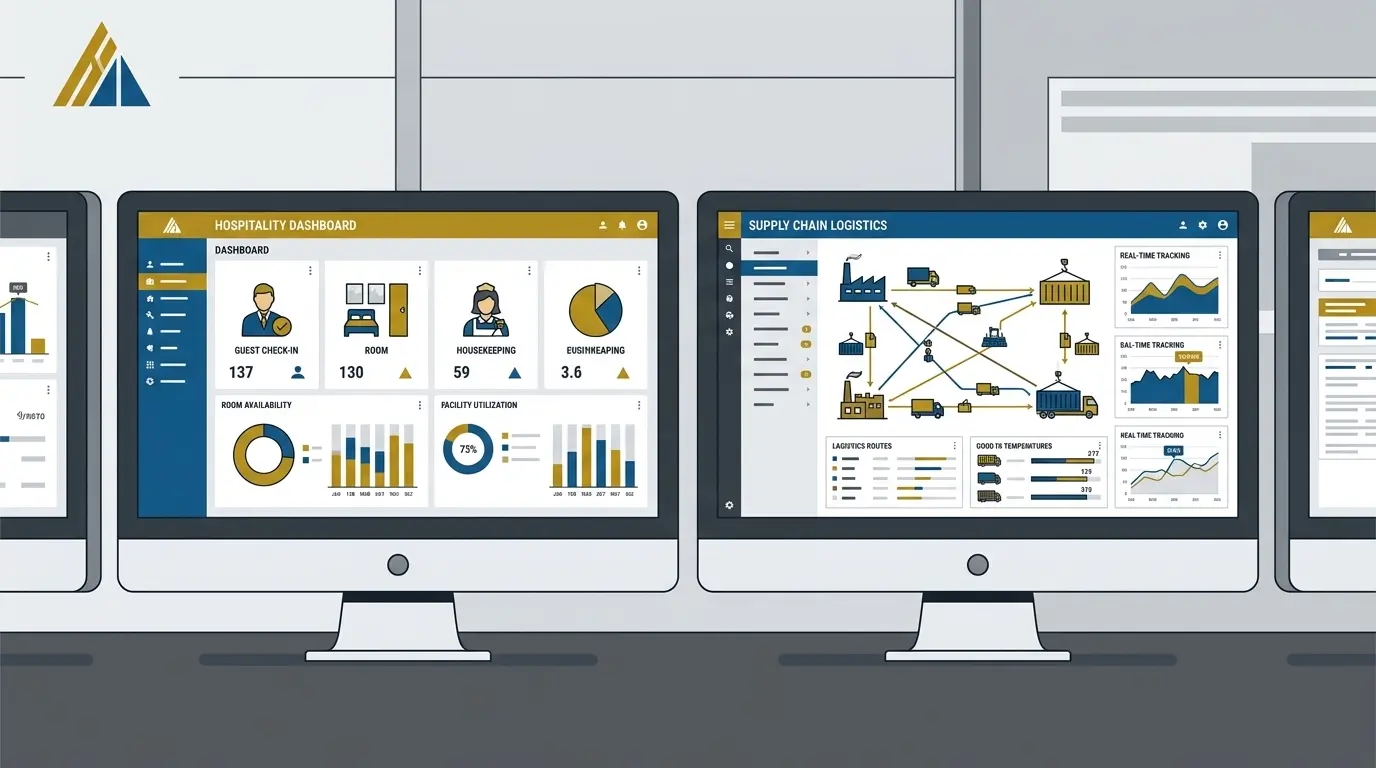
Implementing targeted automated architecture produces concrete operational returns across specific operational domains. In multi-property hotel management, bespoke middleware integrates the property management platform, real-time channel engines, and housekeeping schedules. When an inventory event occurs, the system balances room allocations across distribution channels, dispatches mobile task updates to housekeeping, and finalizes guest check-in accounts automatically. This automated orchestration eliminates front-desk manual logging, prevents channel booking conflicts, and slashes guest registration wait times by 65 percent.
In industrial manufacturing and regional distribution environments, custom automated scheduling engines streamline complex production cycles. Algorithmic software reads real-time bill-of-materials manifests against automated factory floor sensors to forecast resource depletion. The platform automatically triggers purchase orders through legacy ERP connections when warehouse raw materials breach critical operational thresholds. This automated cycle completely eliminates manual inventory reporting and prevents assembly line downtime.
Strategic Frameworks for Leadership Evaluating Automation
Decision-makers evaluating automated systems must first baseline operational throughput across core business units before committing engineering capital. Enterprises exploring bespoke architecture examine process bottlenecks, identify manual data entry loops, and document current software licensing overhead. Conducting this foundational assessment prevents misdirected investments and uncovers immediate operational quick-wins.
Executive teams must view custom software development not merely as an IT modernization project, but as an enduring capital asset that delivers compounding enterprise value. Scoping custom software integrations safeguards existing capital and uncovers immediate operational improvements. By systematically removing organizational constraints through targeted technical planning, leaders ensure software investments translate directly into resilient market advantages, heightened margins, and sustainable operational scalability.
Architecting the Autonomous SME: Next Steps for Leaders
Sustained operational scalability requires eliminating the manual friction that constrains modern enterprises. Deploying resilient AI automation for businesses requires targeted engineering, strict data governance, and custom architectures mapped precisely to proprietary business logic. Organizations that transition away from fragmented subscription software toward unified, proprietary automated systems secure enduring margin resilience and operational superiority. Let’s make the next big thing together! Connect with our engineering directors at Colladome to audit your current system architecture, eliminate critical operational bottlenecks, and execute a high-impact automation roadmap.