
The Operational Bottlenecks Stifling Enterprise Scale
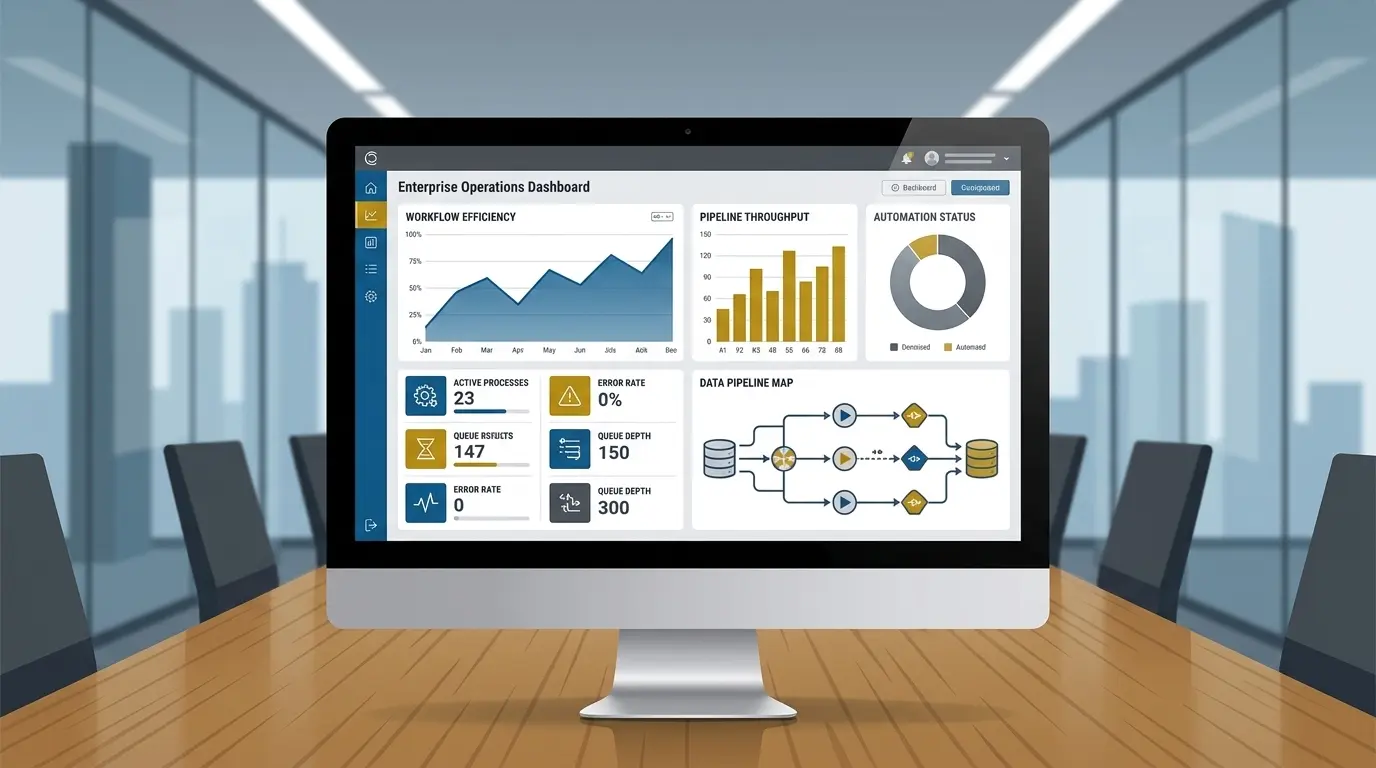
Modern small and medium enterprises face severe operational drag caused by siloed legacy databases, redundant manual reconciliation, and reactive decision-making. As business transaction volumes expand, leadership teams discover that handling linear growth requires unsustainable, proportional headcount expansion. Relying on human intervention for operational data flows creates structural delays, increases error rates, and limits overall throughput.
Standard commercial off-the-shelf software fails to resolve these architectural constraints. Generic SaaS platforms impose rigid feature roadmaps, prohibit direct access to underlying database schemas, and trigger compounding per-seat licence fees. Without deep synchronization with proprietary systems, off-the-shelf tools create additional digital fragmentation, locking operations into persistent business constraints rather than enabling scalable execution.
Custom AI Architecture as an Operational Evolution
Bespoke enterprise engineering positions artificial intelligence not as an experimental layer, but as foundational operational infrastructure. Custom algorithmic pipelines connect directly to proprietary enterprise data warehouses, enterprise resource planning systems, and transactional backends. This architectural cohesion removes operational friction by automating high-volume administrative tasks, inventory forecasting, and real-time reconciliation without altering core business rules.
By investing in ai development services, mid-market organizations target specific operational pain points rather than adopting superficial automation features. Custom machine learning architectures process company data within secure enterprise boundaries, ensuring that predictive algorithms evolve alongside internal workflows and generate compounding enterprise value over multi-year operational cycles.
Strategic Outcomes of Enterprise AI Adoption
Integrating targeted intelligence into enterprise workflows delivers concrete, measurable operational outcomes across critical business functions:
- Labor-Intensive Data Processing: Fragmented reporting across isolated business units delays executive visibility. Engineered machine learning ingestion pipelines automate document parsing and database updates, unlocking real-time operational reporting and reducing analytics cycle times by over 40%.
- Predictive Asset Maintenance: Unplanned operational equipment downtime damages operating margins in asset-heavy environments. Sensor telemetry algorithms continuously track hardware vitals to schedule pre-emptive servicing, prolonging asset lifecycles and protecting capital reserves.
- Customer Experience Latency: Protracted support queues lower retention rates and increase client churn. Context-aware conversational pipelines connect to central CRM records, delivering instantaneous multi-tier resolution and improving team throughput.
- Strategic Resource Allocation: Senior engineering and administrative talent often remain trapped in mundane validation routines. Implementing intelligent process automation through custom erp software development services reroutes core personnel toward revenue-generating initiatives.
Direct Commercial Advantages of Tailored AI
Sustainable Margin Expansion Through Workflow Automation
Automating business logic directly reduces the marginal cost per transaction. Custom neural networks process inventory movements, contract reviews, and invoice matching without proportional operational expenditure. This decoupling of workload from overhead protects operating margins against inflationary pressures and competitive price erosion.
Unlocking Proprietary Value via Custom Internal Models
Training private machine learning models on internal operational history constructs an unassailable competitive advantage. Public commercial algorithms access only general knowledge pools. Bespoke enterprise architectures turn unique internal customer transactions, production logs, and supply records into defensible commercial IP that competitors cannot replicate.
Accelerated Go-to-Market for New Software Offerings
Modular artificial intelligence engines enable software engineering teams to deploy vertical digital services with speed. By relying on custom internal predictive APIs, development teams launch localized features and customized user flows rapidly, maintaining market leadership ahead of competitors tethered to static application architectures.
Core Technical Pillars of Custom AI Integration
Robust Role-Based Access Control and Data Security
Enterprise data security demands strict isolation of internal assets from public model training datasets. Custom deployments enforce granular role-based access control (RBAC), end-to-end payload encryption, and automated data masking. This approach prevents sensitive intellectual property leaks while maintaining full regulatory compliance across regional jurisdictions.
Legacy ERP and Database Interoperability
Custom algorithmic architectures connect directly to existing transactional databases via optimized middleware APIs. Organizations avoid costly rip-and-replace transformations by augmenting legacy SQL systems with machine learning endpoints. For an architectural blueprint on structural modernisation, review our step by step roadmap to implement ai driven digital transformation in your business.
Deterministic Output Governance and Auditability
Eliminating model hallucination requires structured retrieval-augmented generation (RAG) and strict semantic validation guardrails. Production enterprise architectures log query origins, model inferences, and algorithmic confidence metrics. This traceability ensures that every automated recommendation remains compliant, deterministic, and subject to internal operational audit requirements.
Strategic Alignment: AI Implementation vs. SaaS Tooling
Total Cost of Ownership Optimization
Off-the-shelf software tools rely on compounding seat-based subscription models that escalate alongside corporate headcounts. Bespoke software engineering structures compute budgets around fixed cloud hardware resources. This predictability stabilizes operational IT expenditure as data volumes expand across business units.
Complete Intellectual Property Ownership
Relying on external SaaS systems leaves organizations with zero technological equity. Custom algorithmic systems remain capitalized balance-sheet assets. Owning algorithmic models, custom middleware, and proprietary training weights substantially enhances institutional valuation during capital events and market positioning.
Custom Architectural Flexibility
Standard subscription software forces growing enterprises to change their internal workflows to match vendor system limitations. Custom software architectures adapt strictly to proprietary organizational mechanics. This flexibility ensures operational efficiency without introducing artificial procedural bottlenecks.
Strategic Comparison: Off-the-Shelf SaaS vs. Bespoke AI Development
Evaluating enterprise technology requires balancing short-term deployment convenience against long-term operational resilience and asset ownership:
| Evaluation Dimension | Commercial Off-the-Shelf SaaS | Custom Enterprise AI Development | Business Impact for SMEs |
|---|---|---|---|
| Data Sovereignty & Security | Multi-tenant public infrastructure with shared model training risks | Isolated private deployment with granular role-based access controls | Guarantees complete regulatory compliance and protects proprietary records |
| System Interoperability | Restricted API connectors and rigid vendor webhooks | Native integration with legacy SQL databases and internal ERPs | Eliminates operational data silos without disruptive infrastructure overhauls |
| Long-Term Scalability & TCO | Compounding seat-based licensing fees that penalize growth | Fixed asset investment with predictable, low-margin compute costs | Stabilizes annual IT expenditure as organizational headcounts expand |
| IP Ownership & Enterprise Value | Zero technological equity; vendor maintains core platform value | Fully owned models, weights, and logic registered as corporate assets | Significantly drives balance-sheet enterprise valuation |
| Process Adaptation | Forces internal teams to modify proven operating procedures | Architected directly around unique competitive operational workflows | Preserves specialized strategic advantages without compromise |
Enterprise AI Applications Across High-Impact Verticals
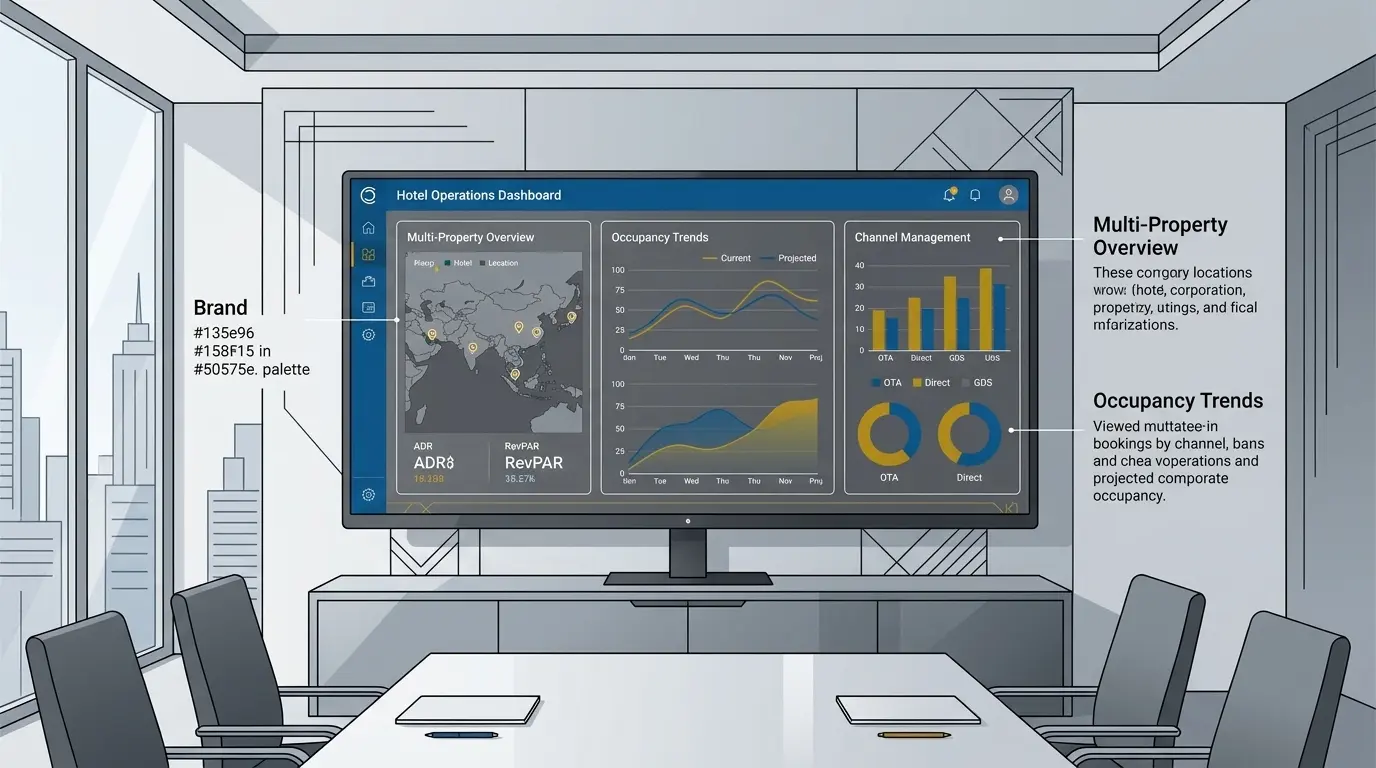
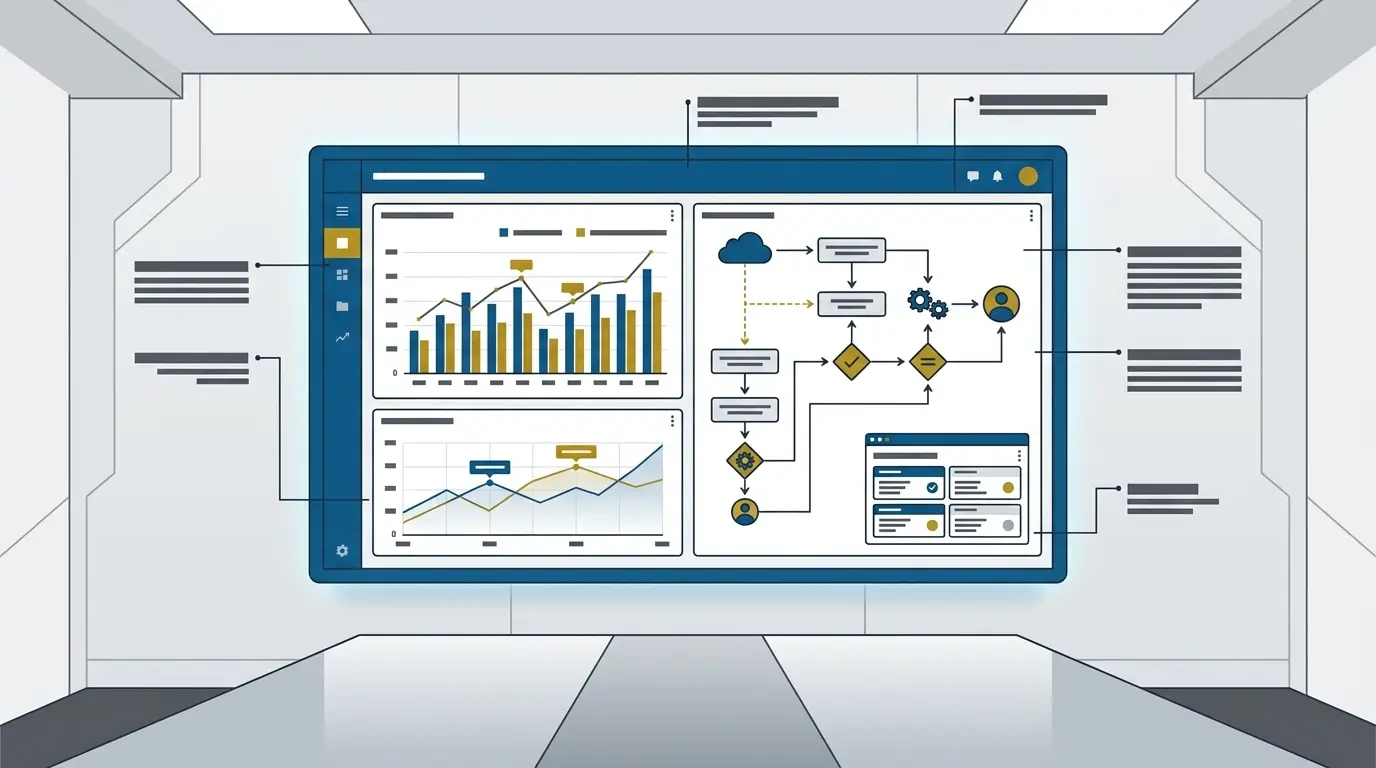
In hospitality, bespoke machine learning platforms transform operations by synchronizing room rates against real-time demand patterns, historical booking curves, and local market fluctuations. Beyond dynamic revenue optimization, hotels integrate custom automation into back-of-house procurement pipelines to eliminate food waste and reduce supplier costs. Operators evaluating infrastructure benefits can explore custom hotel management software for hotels to understand how tailored automation removes persistent manual booking bottlenecks.
Within manufacturing and supply chain environments, automated computer vision models inspect assembly lines in real time, detecting micro-defects faster than manual human review. According to comprehensive data from McKinsey & Company’s research on global artificial intelligence adoption, operational leaders deploying predictive maintenance and automated quality control achieve sustained double-digit reductions in downtime and material losses.
For interactive display and enterprise collaboration hardware, integrating edge-AI models into interactive flat panels (IFPs) and smart boards changes executive workflows. On-device algorithms automatically transcribe multi-party meetings, extract actionable board decisions, and synchronize whiteboard inputs directly with internal enterprise project management systems, eliminating manual meeting documentation.
Navigating the Next Phases of AI Adoption
Recognizing the operational benefits of machine learning represents the first stage of enterprise modernization. Business leaders must next determine the most effective execution pathway. This requires evaluating whether to engage an AI development consultant for preliminary architectural discovery or strategically outsource AI development to specialized engineering groups equipped to manage complex legacy integrations. Understanding how to choose a AI development company with verified security and data engineering capabilities ensures long-term return on capital. Colladome provides structured technical readiness audits and architectural assessments, helping growing organizations design resilient, custom enterprise web applications aligned with long-term commercial goals.
Building a Sustainable Competitive Advantage Through AI
Developing bespoke intelligent software is an operational imperative that removes legacy growth bottlenecks. Enterprises that treat intelligent engineering as a core operational discipline eliminate repetitive administrative friction, protect strategic internal data, and achieve high capital efficiency.
Organizations ready to modernize their operational foundations are invited to consult with experienced technical strategists. Conducting an operational systems audit identifies high-impact automation targets and establishes a clear path toward sustainable enterprise scale. Let’s make the next big thing together!