

Social media has become one of the most accessible ways for businesses to reach customers, build trust, and increase brand visibility. However, simply posting content occasionally does not guarantee meaningful results.
Understanding the benefits of social media marketing helps businesses turn social media activity into a structured marketing channel. With the right strategy, businesses can increase engagement, generate leads, drive website traffic, and build stronger customer relationships.
This guide explains the key benefits of social media marketing, what social media marketing services include, and how to choose a suitable social media marketing company for your business. 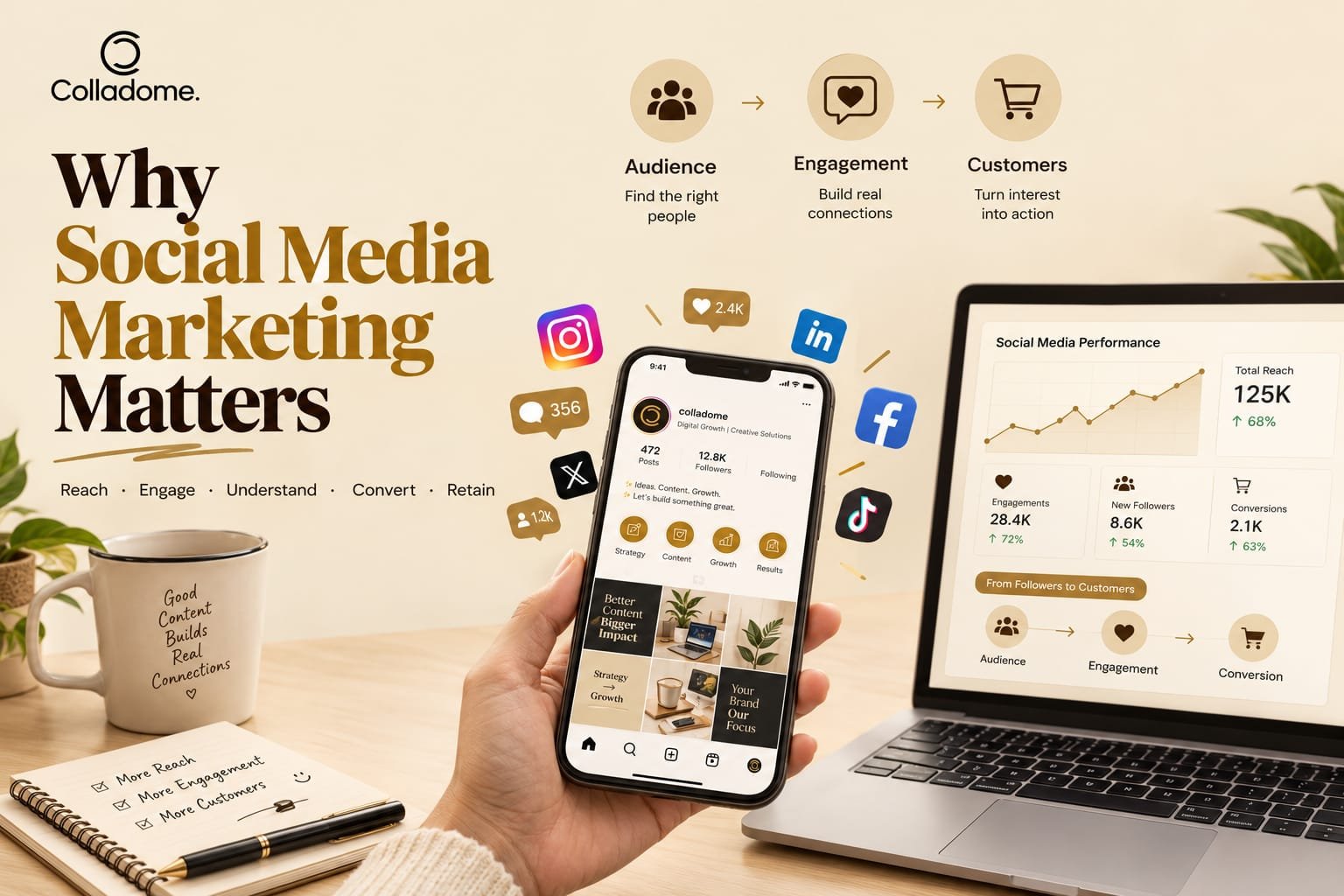
What Is Social Media Marketing?
Social media marketing is the practice of using platforms such as Instagram, Facebook, LinkedIn, X, and TikTok to promote a business and connect with its target audience.
It involves more than publishing regular posts. A complete social media strategy can include:
- Content creation
- Audience research
- Community management
- Paid social media advertising
- Social media strategy
- Performance tracking
- Analytics and reporting
Unlike traditional advertising, social media allows businesses to communicate directly with their audience. Customers can comment, ask questions, share content, and provide feedback.
This two-way communication can help businesses understand their customers and build stronger relationships over time.
Key Benefits of Social Media Marketing
The benefits of social media marketing extend beyond increasing followers. When managed strategically, social media can support several areas of business growth.
1. Increased Brand Visibility
Social media gives businesses an opportunity to reach new audiences and increase brand awareness.
A useful or engaging post can be shared by followers and reach people outside the business’s existing audience. Consistent content can also help keep a brand visible to potential customers.
2. Direct Customer Engagement
Social media provides businesses with a direct way to communicate with customers.
Comments, messages, mentions, and shares allow businesses to answer questions, address concerns, and participate in conversations. Regular interaction can help create stronger customer relationships.
3. Cost-Effective Marketing
Social media can provide businesses with a flexible marketing channel.
Businesses can create organic content without paying for every impression. Paid campaigns can also be targeted based on factors such as location, interests, demographics, and user behavior.
This allows businesses to adjust campaigns according to their available budget and objectives.
4. Better Understanding of Your Audience
Social media platforms provide analytics that can reveal useful information about audience behavior.
Businesses can monitor metrics such as:
- Engagement
- Reach
- Clicks
- Audience demographics
- Content performance
- Website traffic
These insights can help businesses understand which topics and formats generate the most interest.
5. More Website Traffic and Leads
Social media can direct users to a company’s website, landing pages, product pages, or contact forms.
Businesses can use calls to action, links, lead-generation campaigns, and promotional content to move users from social platforms to owned digital channels.
With proper tracking, businesses can measure how social media contributes to website visits and lead generation.
6. Stronger Brand Loyalty
Consistent communication can help businesses maintain relationships with existing customers.
Sharing useful content, responding to customers, and communicating the brand’s values can create a more recognizable and trustworthy presence.
Over time, satisfied customers may also recommend the business to others or share its content.
7. Real-Time Customer Feedback
Social media gives businesses access to immediate customer reactions.
Comments, messages, reviews, and discussions can reveal how people respond to a product, service, campaign, or announcement.
Businesses can use this feedback to identify areas that need improvement and respond more quickly to customer concerns.
8. Competitive Advantage
An active social media presence can help businesses remain visible within competitive markets.
Businesses can monitor competitors, identify content trends, and understand what audiences are discussing.
This information can help marketers refine their own content and communication strategies.
9. Support for SEO and Online Visibility
Social media activity is not the same as traditional search engine optimization. However, social platforms can contribute to broader online visibility.
For example, social content can generate referral traffic, increase brand awareness, and encourage people to search for a business or its products directly.
These activities can support an overall digital marketing strategy.
10. Measurable Marketing Results
One of the important benefits of social media marketing is the ability to track campaign performance.
Businesses can monitor metrics such as:
- Reach
- Impressions
- Engagement rate
- Website clicks
- Leads
- Conversions
- Advertising performance
Tracking these metrics helps businesses understand what is working and where their strategy needs improvement.
What Do Social Media Marketing Services Include?
When businesses invest in social media marketing services, they usually need more than scheduled posts.
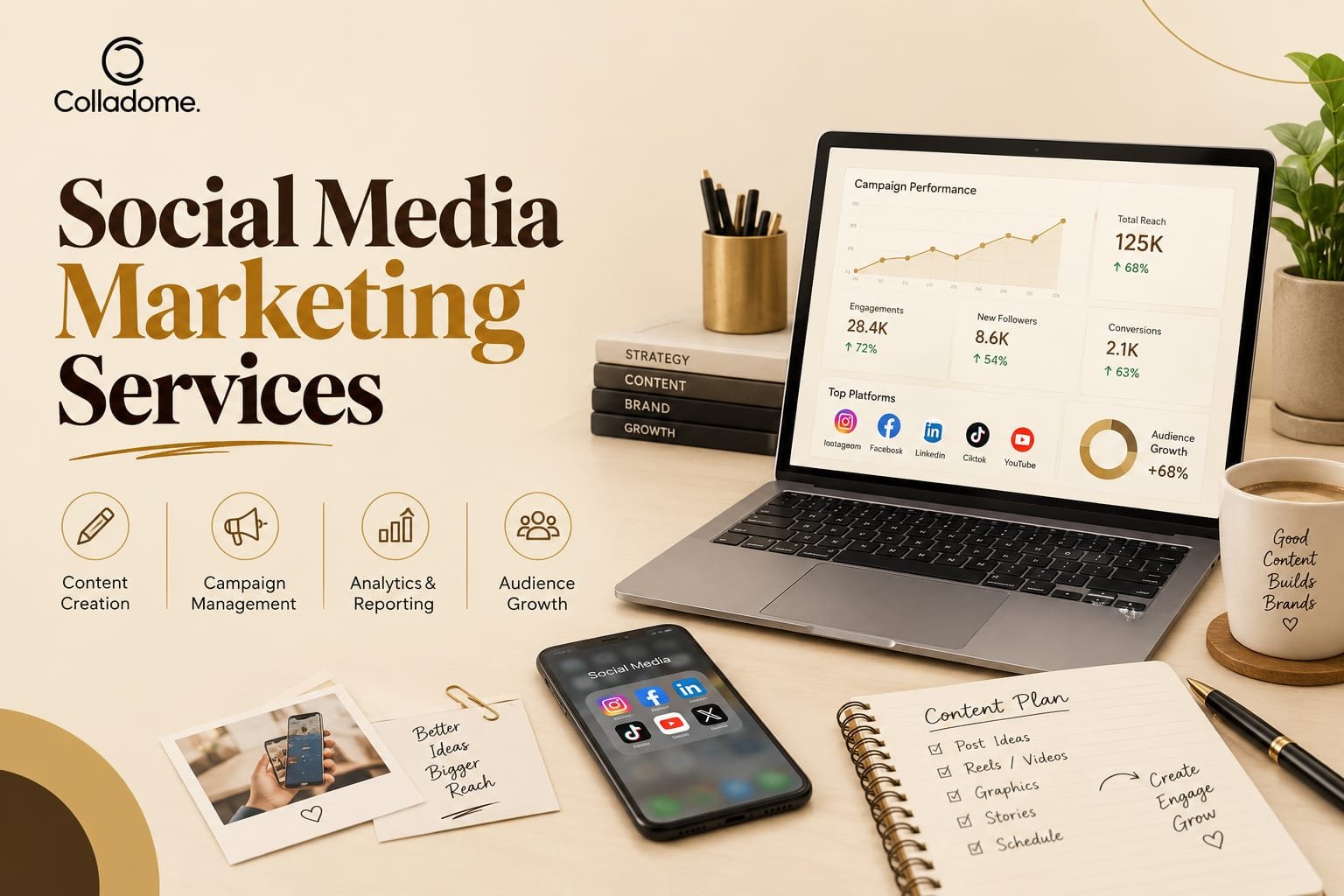
A complete service may include the following:
Social Media Strategy
The process begins with understanding the business, target audience, competitors, goals, and preferred platforms.
A strategy provides direction for content creation and campaign management.
Content Creation
Content teams can create:
- Social media graphics
- Short-form videos
- Captions
- Carousels
- Promotional posts
- Educational content
- Brand-focused content
The content should match the platform and the audience using it.
Community Management
Community management involves responding to comments, messages, mentions, and other audience interactions.
This helps businesses maintain communication with their followers and respond to customer questions.
Paid Social Media Advertising
Paid campaigns can help businesses reach specific audiences based on factors such as location, interests, demographics, and online behavior.
Campaign performance can then be monitored and optimized based on the selected objectives.
Analytics and Reporting
Reporting helps businesses understand how their social media activity is performing.
A useful report should connect social media metrics with business objectives rather than focusing only on follower growth.
How to Choose a Social Media Marketing Company
Choosing a social media marketing company requires more than looking at the number of followers an agency has.
Consider the following factors before making a decision.
Relevant Industry Experience
Look for a company that understands your industry and target audience.
Relevant experience can make it easier for an agency to understand your customers, competitors, and content requirements.
Proven Client Work
Review previous campaigns, case studies, and client examples.
Look for measurable information where available, such as engagement growth, website traffic, lead generation, or conversion results.
Transparent Reporting
Ask how the company measures performance.
A good reporting process should cover meaningful metrics such as engagement, traffic, leads, and conversions where applicable.
Clear Deliverables
Before signing a contract, confirm exactly what the service includes.
This may include the number of posts, content formats, platforms, advertising management, community management, reporting, and strategy meetings.
Content Approval Process
Businesses should understand how content will be reviewed before publication.
A clear approval process helps ensure that posts remain consistent with the company’s brand, messaging, and communication standards.
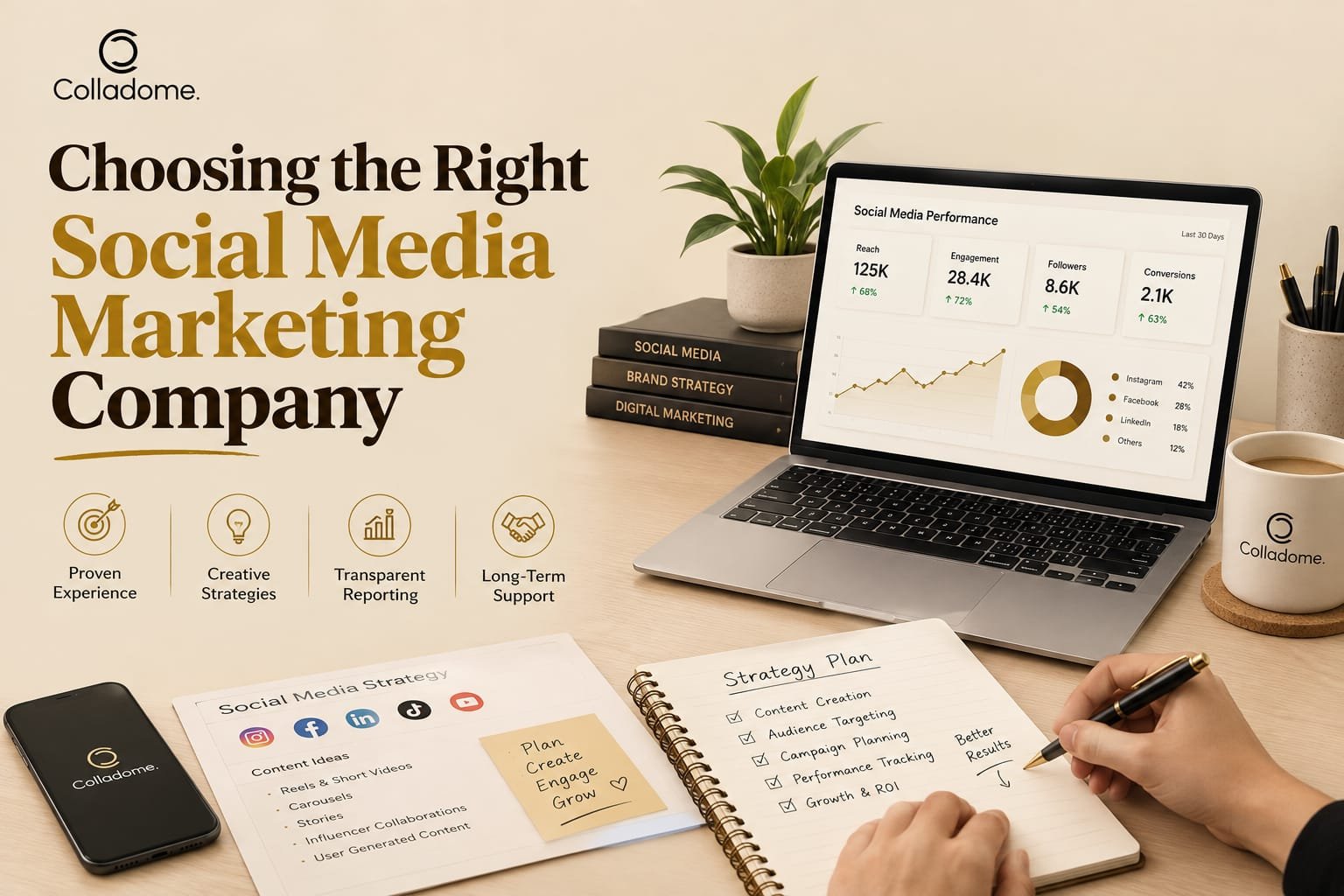
What Makes the Best Social Media Marketing Company?
The best social media marketing company for one business may not be the right fit for another.
Instead of choosing an agency based only on its size or popularity, businesses should consider how well its services match their goals, budget, audience, and industry.
| Evaluation Criteria | What to Look For |
|---|---|
| Strategic approach | A strategy based on your business goals and target audience |
| Content quality | Consistent, relevant, and on-brand content |
| Platform expertise | Experience with platforms relevant to your audience |
| Reporting | Clear metrics connected to business objectives |
| Client experience | Relevant testimonials, reviews, and case studies |
| Communication | Clear processes for updates, feedback, and approvals |
| Pricing | Transparent pricing and clearly defined deliverables |
The right agency should be able to explain why a particular strategy is suitable for your business instead of offering the same approach to every client.
How to Evaluate Top Social Media Marketing Companies
When researching top social media marketing companies, do not rely only on claims made on an agency’s website.
Review third-party sources such as Google Reviews and industry review platforms. You can also ask agencies for relevant case studies and examples of previous campaigns.
Consider asking:
- What results did the campaign achieve?
- Which platforms were used?
- What was the campaign duration?
- Which metrics were tracked?
- What was the original business objective?
- How was the strategy adjusted during the campaign?
Looking at these details can give you a clearer understanding of an agency’s approach.
Which Social Media Platforms Should Your Business Use?
Every business does not need to maintain an active presence on every social media platform.
The right platforms depend on your audience, industry, content format, and marketing goals.
Instagram and TikTok
These platforms can be useful for brands that rely heavily on visual content and short-form videos.
They can support awareness, product discovery, and audience engagement.
LinkedIn can be particularly relevant for B2B companies, professional services, recruiters, and businesses targeting decision-makers.
Content can focus on industry insights, expertise, company updates, and professional education.
Facebook can support community engagement, local business visibility, advertising, and communication with established audiences.
X
X can be useful for businesses that need to share real-time updates, participate in industry conversations, or provide customer support.
Instead of trying to maintain every platform, businesses can begin with the channels where their target audience is most active.
Common Social Media Marketing Mistakes to Avoid
Understanding the benefits of social media marketing is only the first step. Businesses also need to avoid common mistakes that can limit results.
Posting Inconsistently
Irregular posting can make it difficult to maintain audience engagement.
A realistic content schedule can help businesses maintain consistency.
Focusing Only on Followers
A large follower count does not always indicate marketing success.
Businesses should also monitor engagement, website traffic, leads, conversions, and other relevant metrics.
Ignoring Comments and Messages
Social media is designed for interaction.
Ignoring customer questions or messages can reduce engagement and negatively affect the customer experience.
Using the Same Content Everywhere
Each platform has its own audience, content formats, and communication style.
Adapting content for each platform can make the overall strategy more effective.
Failing to Track Results
Without regular reporting, businesses may not know which campaigns or content types are generating results.
Tracking relevant metrics makes it easier to improve the strategy over time.
Final Thoughts
The benefits of social media marketing go beyond simply maintaining a presence online.
A well-planned strategy can help businesses increase brand visibility, communicate directly with customers, generate website traffic, understand their audience, and measure marketing performance.
Whether you are considering social media marketing services, comparing different agencies, or looking for a social media marketing company, start by defining your business goals and target audience.
Then evaluate potential partners based on their strategy, relevant experience, reporting process, content quality, and clearly defined deliverables.
The right approach can turn social media from an occasional posting activity into a measurable part of your broader digital marketing strategy.