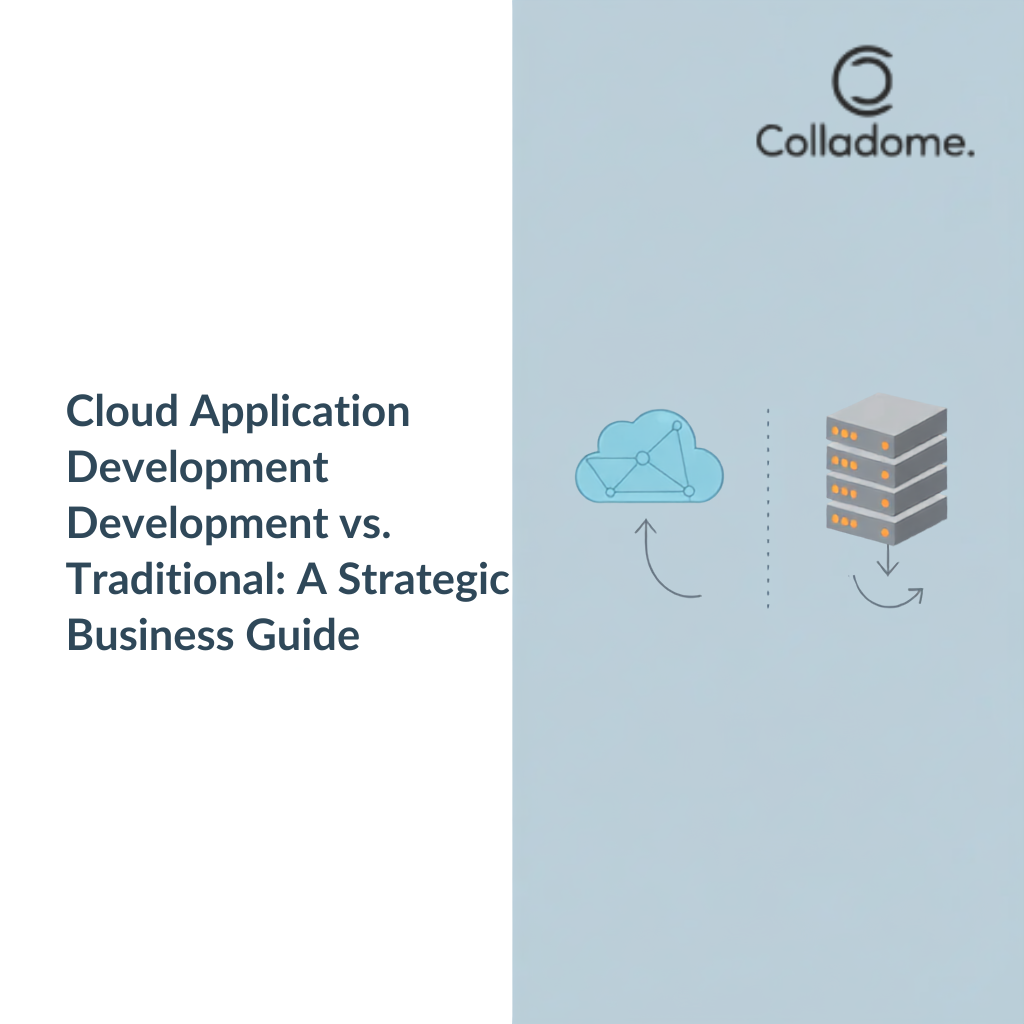
Unlocking Agility: Cloud Application Development vs. Traditional Approaches for Modern Businesses
Many modern businesses grapple with the limitations of legacy systems, hindering their ability to innovate rapidly and scale effectively. The critical decision often boils down to custom software development vs ready-made solutions. This challenge necessitates a strategic examination of cloud application development vs traditional approaches. Embracing a robust digital transformation requires understanding which methodology best supports sustained business agility. A well-executed modernization strategy can unlock unparalleled efficiency, accelerate growth, and secure a significant competitive edge in today’s dynamic market.
The Modern Business Dilemma: Why Traditional Approaches Fall Short
Founders, CXOs, and decision-makers frequently grapple with the limitations of traditional application development. Relying on legacy systems and rigid on-premise infrastructure creates significant operational bottlenecks. These outdated methods are inherently inflexible, struggling to adapt to rapidly evolving market demands. The pain points are clear: high upfront capital expenditure for hardware and licenses, coupled with painfully slow deployment cycles that delay market entry and innovation. Furthermore, the burdensome maintenance of these systems siphons valuable resources, diverting focus from strategic growth initiatives. Their inherent limitations in scalability mean businesses often hit a ceiling, unable to expand operations or handle increased user loads without massive, disruptive overhauls. This directly impacts business agility and severely compromises competitive standing in today’s dynamic digital landscape. Modern challenges require modern solutions, not a continued reliance on antiquated frameworks that impede progress.
Embracing the Future: How Cloud Application Development Delivers Strategic Advantage
Embracing the future means recognizing that traditional approaches often fall short. The solution lies in strategic cloud application development, a powerful catalyst for digital transformation. This modern paradigm directly addresses previous pain points by offering unparalleled benefits. Businesses gain enhanced scalability, ensuring applications effortlessly grow with demand. Cost-effectiveness is achieved through optimized resource utilization, moving from CapEx to OpEx models. Furthermore, cloud platforms facilitate faster deployment and continuous innovation, allowing companies to adapt rapidly to market changes. The inherent flexibility of cloud solutions empowers agile operations and fosters genuine business innovation. For small and medium enterprises seeking sustainable growth and a decisive competitive edge, investing in scalable solutions delivered via the cloud is not just an option, but a critical strategic imperative.
Navigating the Shift: Key Considerations for Cloud vs. Traditional Applications
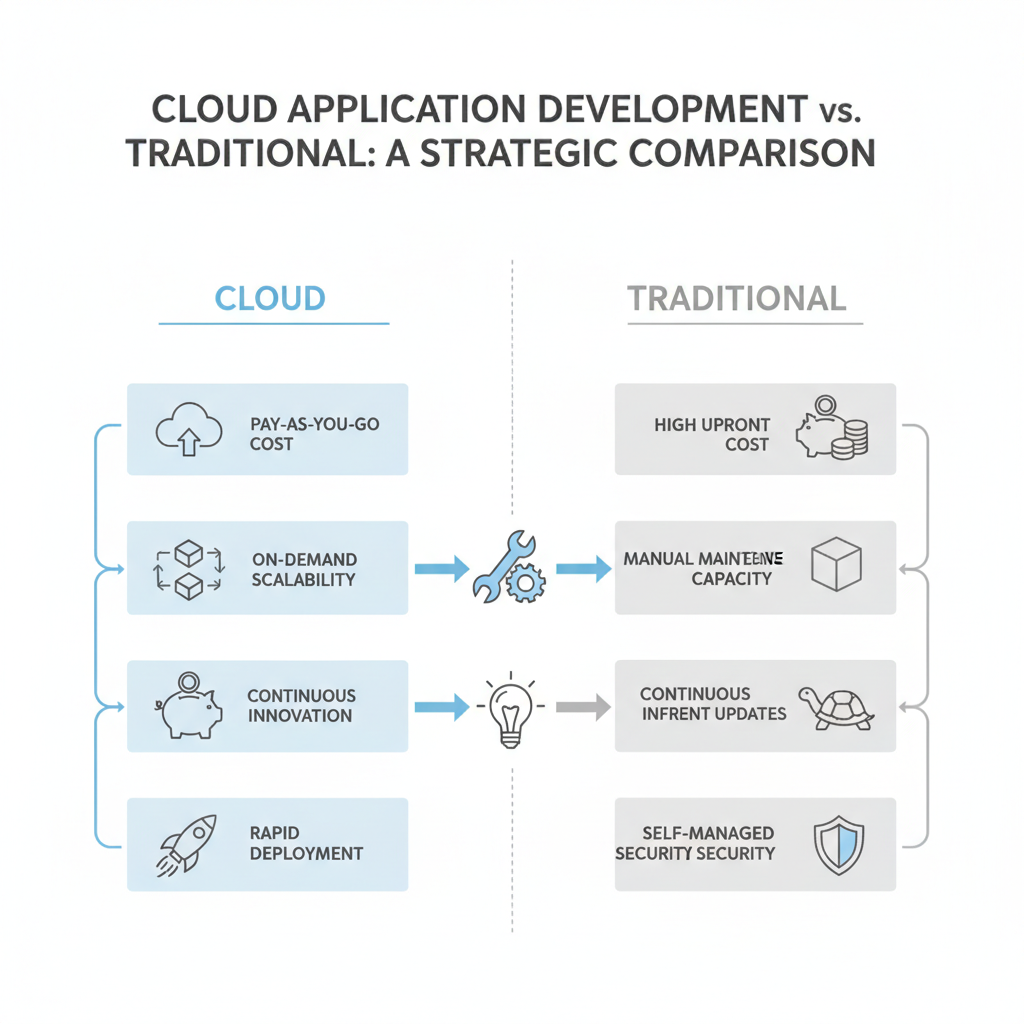
- Scalability & Growth: Traditional systems often impose rigid limits on expansion, leading to either expensive over-provisioning or critical capacity shortages. Cloud platforms, conversely, offer on-demand scaling and elasticity, dynamically adjusting resources to meet actual needs. This enables businesses to effortlessly handle fluctuating demands and support rapid user growth without requiring a costly infrastructure re-architecture, a core benefit of scalable innovation.
- Cost Efficiency: The inherent challenge with traditional software lies in its high upfront Capital Expenditure (CAPEX) for hardware, licenses, and setup. Cloud adoption smartly shifts this to an Operational Expenditure (OPEX) model, leveraging pay-as-you-go services. This fundamental change results in a significantly reduced Total Cost of Ownership (TCO), improved cash flow management, and predictable budgeting, making the choice between cloud vs traditional software financially advantageous.
- Deployment Speed & Innovation: Traditional development cycles are notoriously slow, often burdened by manual provisioning and extensive testing phases. Cloud environments fundamentally accelerate this process, facilitating rapid deployment through continuous integration/delivery (CI/CD) pipelines and automated infrastructure. The outcome is a faster time-to-market for new features, enabling quicker responses to market changes and a more agile application modernization strategy.
- Maintenance & Updates: Managing traditional IT infrastructure demands substantial manual effort for ongoing maintenance, patching, and software updates, diverting valuable internal resources. Cloud providers alleviate this burden by automatically managing the underlying infrastructure, security, and updates. This frees IT teams to focus on strategic initiatives and core business activities, rather than operational overhead, highlighting a key advantage of modern software development.
- Security & Compliance: Traditional setups frequently depend on limited in-house expertise and resources for maintaining robust security and compliance. Cloud platforms, however, offer enterprise-grade security features, built-in compliance frameworks, and dedicated expert teams. This ensures enhanced data protection, superior disaster recovery capabilities, and streamlined adherence to regulatory standards, underscoring the vital benefits of cloud applications for data privacy.
- Global Reach & Performance: Expanding traditional applications globally is complex and costly, often necessitating physical infrastructure in new regions. Cloud providers offer extensive global data center networks and content delivery networks (CDNs), allowing applications to be deployed closer to users worldwide. This significantly improves application performance, reduces latency for international users, and facilitates seamless global market expansion, a critical differentiator in the cloud vs traditional software debate.
Deep Dive: The Pillars of Cloud Application Development
Enhanced Scalability & Flexibility:
Cloud applications dynamically adjust to fluctuating business demands, ensuring uninterrupted service during peak loads. This agility supports rapid business growth without costly infrastructure overhauls, allowing SMEs to seize opportunities. Leveraging platforms for custom software development means your solution scales with you, directly impacting revenue by preventing downtime and improving customer satisfaction.
Optimized Cost Structures:
Cloud shifts IT spending from capital expenditure (CAPEX) to predictable operational expenditure (OPEX). Pay-as-you-go models eliminate large upfront investments in hardware and maintenance, significantly reducing financial risk for SMEs. This allows for efficient resource allocation, improving budget predictability and freeing capital for other strategic initiatives, directly enhancing profitability.
Accelerated Time-to-Market:
Cloud environments enable rapid prototyping, development, and deployment of new features and products. This agility helps SMEs quickly respond to market changes and customer feedback. Achieving faster time-to-market means gaining a significant competitive edge and realizing quicker returns on investment, crucial for sustained revenue growth. This is a core benefit of modern SaaS development.
Robust Security & Compliance:
Major cloud providers invest heavily in advanced security infrastructure, data encryption, and compliance certifications (e.g., ISO, GDPR). These robust measures often exceed what individual SMEs can achieve in-house. This enhances data protection, mitigates cyber risks, and provides regulatory peace of mind, safeguarding business reputation and avoiding costly penalties.
Seamless Integration & Innovation:
Cloud applications readily integrate with other services, APIs, and emerging technologies like AI/ML, fostering a connected ecosystem. This ease of integration allows SMEs to future-proof their operations and expand business capabilities rapidly. It enables the adoption of enterprise software solutions that drive innovation and create new revenue streams.
The Enduring Realities of Traditional Application Development
High Upfront Investment:
Traditional development demands substantial capital outlay for purchasing servers, software licenses, and setting up physical infrastructure. This significant initial expenditure can strain SME budgets, diverting funds from growth initiatives. The slower return on investment and higher financial risk can impede overall business expansion and agility.
Maintenance & Operational Overhead:
Managing traditional systems involves continuous, resource-intensive tasks such as manual updates, patching, hardware maintenance, and dedicated IT staff. This ongoing operational overhead increases costs, consumes valuable internal resources, and distracts from core business activities, impacting overall operational efficiency and profitability.
Limited Scalability & Rigidity:
Scaling traditional applications up or down is a complex, time-consuming, and often expensive process. This rigidity can lead to either costly over-provisioning or performance bottlenecks during peak demand. SMEs risk missing crucial market opportunities and experiencing system instability, directly affecting customer experience and revenue.
Slower Innovation Cycles:
The lengthy development, testing, and deployment processes inherent in traditional environments significantly hinder rapid iteration and response to market demands. This sluggishness can result in business stagnation and a loss of competitive advantage. SMEs struggle to innovate quickly, impacting their ability to capture new markets and drive revenue growth. This often necessitates custom software development with agile methodologies.
Choosing Your Path: Strategic Considerations for SMEs
Assessing Business Needs & Growth Projections:
SMEs must thoroughly analyze their current and future requirements, including anticipated growth and functional needs. Aligning the application development choice with long-term strategic goals ensures a future-proof investment that supports sustained expansion. This prevents costly reworks and ensures the technology actively contributes to revenue growth and market leadership.
Evaluating Existing Infrastructure & Legacy Systems:
A comprehensive assessment of current IT infrastructure and any legacy system modernization needs is crucial. This determines compatibility and informs a strategic cloud migration strategy, minimizing disruption. A smooth transition ensures business continuity and leverages existing assets effectively, preventing operational inefficiencies and unexpected costs.
Understanding Security & Compliance Requirements:
SMEs must identify all relevant industry-specific regulations and data governance standards. Choosing an application environment that inherently meets these requirements is paramount for risk mitigation and legal adherence. This proactive approach safeguards customer data, protects the company’s reputation, and avoids severe financial penalties.
Budget Allocation & Total Cost of Ownership (TCO):
A thorough financial analysis, comparing both initial capital outlay and ongoing operational costs, is essential. This TCO perspective reveals the true economic impact of each development approach. Informed financial decisions optimize spending, ensuring maximum value from IT investments and directly contributing to overall profitability.
| Feature | Cloud Application Development | Traditional Application Development |
|---|---|---|
| Scalability | Scale up/down on demand, quickly. | Limited, expensive, time-consuming to expand. |
| Cost Model | Pay-as-you-go, operational expense (OpEx). | Large upfront investment, capital expense (CapEx). |
| Deployment Speed | Rapid, automated, continuous delivery. | Slower, manual, complex setup processes. |
| Maintenance & Updates | Vendor managed, automatic updates. | In-house team, manual effort, high overhead. |
| Innovation & Flexibility | Access to latest tech, agile development. | Slower technology adoption, less adaptable. |
| Security & Compliance | Shared responsibility, robust provider security. | Full in-house responsibility, costly compliance. |
| Accessibility | Anywhere, anytime, internet access required. | Limited to internal network or VPN. |
| Resource Management | Automated provisioning, efficient utilization. | Manual allocation, potential over/under-provisioning. |
Real-World Impact: Where Cloud Applications Drive Business Success
In today’s dynamic market, leveraging cloud application development is not just an advantage—it’s a necessity for sustained growth and competitive edge. Businesses that embrace bespoke custom software solutions often overcome traditional limitations, achieving unprecedented efficiency and user engagement. Colladome empowers enterprises to navigate this digital transformation, crafting scalable, secure, and high-performing cloud-native applications tailored to specific operational needs.
Scenario 1: Revolutionizing Hospitality Operations
Consider a multi-property hotel chain struggling with disparate legacy systems, leading to booking conflicts and fragmented guest data. By implementing a cloud-based hospitality software solution, they centralize real-time booking, streamline check-ins, and manage guest preferences across all locations. This custom software solution significantly enhances operational efficiency, boosts guest satisfaction through personalized services, and ultimately drives increased revenue by optimizing room allocation and pricing strategies.
Scenario 2: Driving Decisions with AI Intelligence
A mid-sized manufacturing firm faced challenges with unpredictable demand and inefficient supply chains. Through Colladome’s expertise in AI development services, they deployed cloud-based AI/ML models for predictive analytics. This AI transformation enables data-driven decisions on inventory, production schedules, and market trends. The result is improved operational efficiency, reduced waste, and a significant competitive advantage through proactive strategic planning.
Scenario 3: Enhancing Digital Collaboration in Education
Educational institutions and remote teams often grapple with effective real-time collaboration. A cloud-hosted interactive whiteboard application provides a seamless environment for shared learning and project work. This EdTech solution allows users to collaborate, annotate, and share content from any device, anywhere. It fosters improved collaboration, enhances learning experiences with dynamic content, and dramatically increases productivity for both students and remote professionals, acting as a vital digital collaboration tool.
Making the Strategic Choice for Your Business Growth
Businesses exploring sustainable growth understand that strategic technology choices are paramount. Decision-makers evaluating bespoke solutions over generic options recognize the long-term value in truly aligning technology with vision. As a leading custom software development company, Colladome excels in crafting cloud-native solutions. Our cloud strategy consulting ensures robust architecture, delivering unparalleled scalability and security. From custom hotel management software to advanced AI solutions and interactive whiteboard platforms, we are your trusted digital transformation partners. Our tailored approach empowers businesses to gain a significant competitive edge. If you’re seeking a partner to craft bespoke cloud-native solutions that align perfectly with your unique objectives, explore how Colladome can propel your growth.
The Future is Cloud-Native: Partnering for Innovation
The shift towards cloud application development is no longer an option but a strategic imperative for businesses aiming to thrive in the modern digital landscape. As we’ve explored, the advantages of cloud application development vs traditional methods are profound, offering unparalleled scalability, cost-efficiency, and rapid deployment cycles. Embracing cloud-native solutions empowers organizations with the agility to respond swiftly to market changes, the efficiency to optimize operations, and the innovation capacity to deliver groundbreaking products and services. Colladome stands as your trusted partner, offering expert cloud application development services and bespoke software solutions tailored to your unique needs. We are dedicated digital transformation partners, guiding you through this transformative journey. Ready to explore how cloud application development can revolutionize your business? Contact Colladome for a tailored consultation to align our expertise with your unique vision and unlock your full potential.