
The Operational Friction of Fragmented Hospitality Tech Stacks
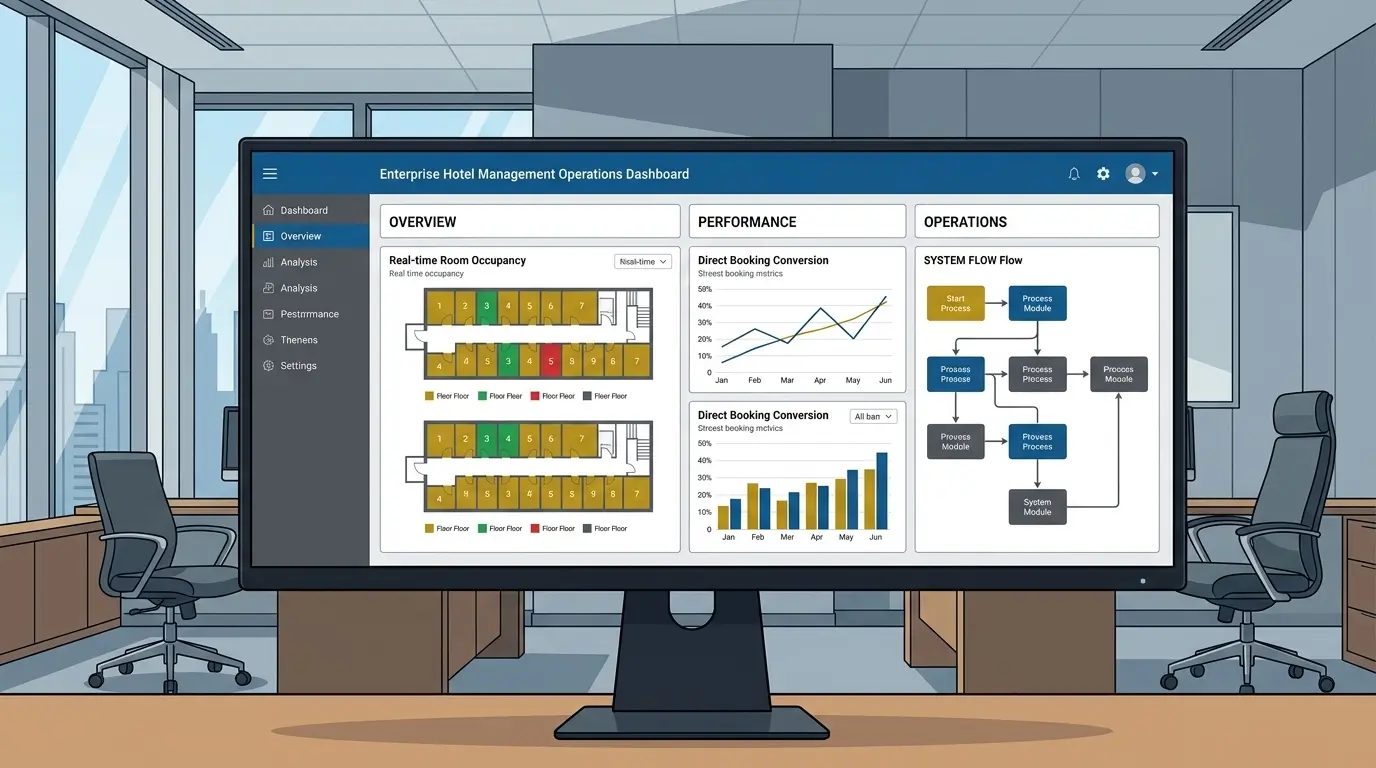
Running a modern hotel involves much more than accepting reservations and assigning rooms; custom automation removes manual operational constraints. Standard multi-property operations often rely on fragmented software subscriptions patched together across front desk terminals, independent booking engines, and off-the-shelf channel managers. This disconnected approach introduces severe operational bottlenecks.
Data silos between front desk operations and revenue engines create rate parity errors and latency in room availability synchronization across online travel agencies (OTAs). Furthermore, recurring licensing fees create permanent overhead costs that scale upward with every room added to a portfolio.
Off-the-shelf software rarely provides the flexible API extensibility required to connect customized hotel workflows, leading to inventory double-bookings, delayed housekeeping updates, and compromised revenue performance.
Custom Hospitality Engineering: Unifying PMS, ERP, and Automation
Bespoke software engineering acts as the direct replacement for fragile SaaS stacks by consolidating disparate hotel operations into a resilient web architecture. Engineering a custom enterprise web application centralizes reservation tracking, guest profile history, automated housekeeping dispatch, and dynamic pricing rules within a single operational command centre. The strategic contrast between custom hotel management software vs off-the-shelf PMS platforms highlights significant operational advantages: full architectural ownership, zero vendor lock-in, and the total elimination of recurring booking commissions. By investing in dedicated ERP software development, hotel operators eliminate third-party data middleware, achieve sub-second OTA synchronisation, and construct scalable guest experiences tailored to their exact operational processes.
Phases of Hotel Management System Development: Execution Framework
Engineering enterprise hospitality software demands an orderly execution roadmap that directly ties technical milestones to operational objectives. Colladome structures hotel management system development across four structured delivery stages:
- Domain Modelling and Discovery
Operational Constraint: Misaligned workflows between property front desk operations, back-office accounting, and multi-channel booking logic.
Engineering Strategy: Deep technical audits to map business domain models, transactional boundaries, entity relationships, and role-based operational permissions.
Commercial Return: Crystal-clear software specifications that eliminate structural scope creep and protect capital investment. - Core Engine and Channel Manager API Integration
Operational Constraint: Inventory sync latency across OTAs resulting in costly overbooking incidents and rate display discrepancies.
Engineering Strategy: Constructing a high-throughput transaction controller with bi-directional API connectors adhering to OpenTravel Alliance specifications.
Commercial Return: Real-time automated distribution across global distribution systems (GDS) with zero inventory conflict. - Hardware, IFP, and Smart Room Automation Integration
Operational Constraint: Disconnected room amenities, physical keycard failures, and manual conference room display management.
>Engineering Strategy: Integrating low-latency IoT controllers for keyless digital access and linking interactive flat panel (IFP) touch displays to central property dashboards.
Commercial Return: Accelerated guest check-in velocity and real-time utility monitoring that directly reduces property operating costs. - Production Rollout, Security Audits, and Staff Onboarding
Operational Constraint: Data vulnerabilities during legacy PMS migration, security risks, and prolonged staff retraining curves.
Engineering Strategy: Executing end-to-end data sanitisation, PCI-DSS compliance audits, robust penetration testing, and modular, intuitive user workflows.
Commercial Return: Seamless property transition with zero operational downtime and immediate workforce software adoption.
Essential Architectural Modules in Custom Hotel Software
Enterprise hospitality software requires purpose-built modules that execute critical business operations without latency.
Centralized Reservation and Direct Booking Engine
Direct reservation architecture enables properties to capture commission-free bookings directly through branded digital channels. Engineered with instant room-locking mechanisms, this module reserves room inventory during checkout, preventing inventory discrepancies. Direct integration with payment gateways safeguards transactions, allowing operators to capture higher profit margins compared to third-party travel distribution channels.
Automated Housekeeping and Facilities Logistics
Housekeeping operations dictate room turnover rates and overall guest satisfaction. Custom automated dispatch engines monitor room checkouts in real time, automatically routing cleaning assignments to housekeeping personnel based on room priority and floor location. Sensor data verifies room readiness immediately, accelerating guest check-in velocity and eliminating phone tag between desk staff and cleaning teams.
Smart Room and IFP Hardware Integration
Modern properties rely heavily on connected digital touchpoints across suites and corporate conference spaces. Tailored integration links in-room IoT controllers and Interactive Flat Panel (IFP) displays directly to the primary property management system. This configuration allows automated room climate control upon check-in, keyless digital mobile entry, and centralized content management across meeting spaces.
Enterprise Data Security, Auditing, and Compliance
Hospitality platforms process sensitive customer records and financial data, necessitating rigorous security protocols that adhere to international regulatory standards.
PCI-DSS and Tokenized Payment Processing
Enterprise hotel systems must protect payment card details from unauthorized access and data exfiltration. Custom software achieves this compliance by routing financial operations through secure tokenization layers, as outlined by the PCI Security Standards Council. Payment card information never touches property databases in raw formats, drastically reducing audit burdens and eliminating business data liability.
Role-Based Access Control and Audit Logging
Internal operational governance requires strict segmentation of employee data privileges. Enterprise architecture enforces granular Role-Based Access Control (RBAC), restricting system permissions according to staff responsibilities. Comprehensive tamper-evident audit logs record every reservation adjustment, rate override, and billing correction, curbing internal operational discrepancies and securing accountability across shifts.
Data Sovereignty and Multi-Tenant Isolation
Multi-property chains spanning international regions face distinct data residency regulations such as the GDPR. Bespoke software architectures utilize multi-tenant database partitioning and regional cloud deployment rules. This structural design isolates property records, guaranteeing full adherence to local data privacy mandates while maintaining unified portfolio-level analytics for executive management.
Development Economics: Cost, Timelines, and ROI Drivers
Investing in custom hotel software balances initial development costs against recurring long-term operational savings.
Modular MVP vs Enterprise Suite Deployment
Founders and enterprise operators optimize capital expenditure by phasing development through modular deployment models. Constructing an initial Minimum Viable Product (MVP)—focusing on central reservations, front desk workflows, and direct billing—establishes operational viability in 12 to 16 weeks. Secondary operational modules, including predictive revenue forecasting and complex hardware integrations, deploy in subsequent engineering sprints.
Eliminating Perpetual SaaS Subscription Tax
Commercial SaaS PMS platforms impose recurring subscription fees, per-room surcharges, and costly marketplace integration taxes. In contrast, custom hotel management system development requires an upfront capital investment that caps multi-year total cost of ownership. Properties eliminate recurring licensing fees, amortize development costs over three to five years, and expand gross operating profit margins across portfolios.
AI-Driven Dynamic Pricing and Margin Maximization
Algorithmic yield management maximizes Revenue Per Available Room (RevPAR) by calculating live market demand, historical property trends, and local competitor rates. Integrating purpose-built predictive models enables automated rate modifications across direct and OTA channels. This automated pricing optimization captures maximum guest booking value during peak demand cycles while maintaining steady base occupancy during off-peak periods.
Evaluation Matrix: Custom Hotel Management Software Development vs. Commercial Off-the-Shelf PMS
| Evaluation Criterion | Custom Built Architecture (Colladome Approach) | Standard Commercial PMS Platforms |
|---|---|---|
| Tech Stack Customization & Extensibility | Fully bespoke modular architecture; zero limitations on API connections or integrations. | Rigid vendor ecosystems with restricted APIs and gated third-party app stores. |
| Long-Term Total Cost of Ownership (TCO) | One-time engineering capital expenditure; operational infrastructure costs stay flat as room counts grow. | Compounding annual licensing fees, per-room charges, and transaction cut commissions. |
| Proprietary Data Ownership & Security | Total database ownership, enterprise RBAC, and sovereign cloud infrastructure deployments. | Multi-tenant vendor servers, potential data sharing, and rigid data export limits. |
| Third-Party Hardware & IFP Integration | Direct low-latency drivers for smart boards, IoT switches, and custom keyless lock hardware. | Restricted hardware compatibility matrices requiring certified proprietary vendor accessories. |
| Custom Workflow Alignment | Engineered to mirror exact front desk, housekeeping, and enterprise accounting processes. | Forces internal teams to adapt operational procedures to match rigid software templates. |
Selecting custom software engineering over generic off-the-shelf subscriptions empowers operators to transform digital infrastructure into a defensible asset. Custom software eliminates recurring SaaS bloat, provides unrestricted architectural control, and scales reliably across multi-property hotel portfolios.
Operational Implementations Across Hospitality Verticals
Hospitality organizations maintain vastly different operational requirements depending on asset profile, guest expectations, and transaction volume. Custom hotel management system development addresses these distinct operational realities through tailored system features:
- Independent Boutique Hotel Chains: Boutique operators require elevated guest personalization and friction-free direct booking flows. Bespoke PMS architecture tracks unique guest preferences, consolidates historical stay profiles, and integrates smooth direct booking checkout flows that bypass costly third-party OTAs, raising direct booking revenue by over 30%.
- Large Multi-Property Resorts: Sprawling resort assets manage complex operations involving diverse amenities, conference centres, spa facilities, and multiple dining outlets. Tailored ERP integrations unify disparate billing channels onto a single guest folio, sync real-time resource allocations, and centralize back-office bookkeeping across all resort properties.
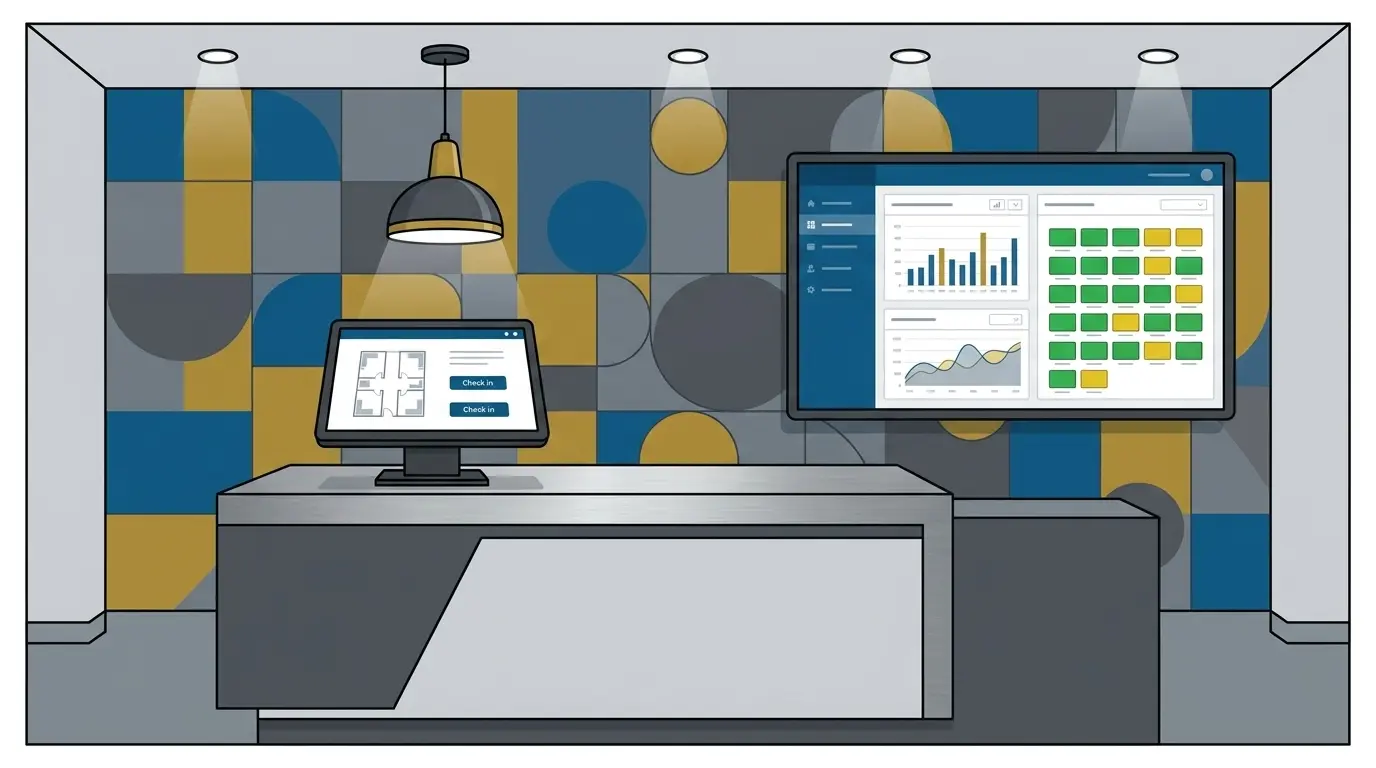
- Tech-Enabled Apart-Hotels: Modern urban apart-hotels operate on lean staffing models that require automated guest interactions. Custom software connects remote access controls, self-service digital check-in flows, and Interactive Flat Panel (IFP) displays to automate guest communication, cutting front-desk operational overhead by up to 45%.
Strategic Evaluation for Hospitality Decision-Makers
Founders, Chief Executive Officers, and operations heads evaluating custom hotel management system development must assess whether their current software stack supports long-term commercial goals. Outdated legacy tools and fragmented subscription platforms frequently constrain operational agility, limit proprietary data capture, and reduce bottom-line profitability.
Colladome provides specialized technical consulting, enterprise AI readiness audits, and custom software scoping to help hospitality brands evaluate digital transition roadmaps. Partnering with dedicated technical architects allows businesses to eliminate SaaS subscription debt, unify critical operations, and construct resilient, high-performing hospitality systems.
Building the Foundation for Resilient Hospitality Operations
Relying on restrictive, off-the-shelf hospitality platforms creates technical debt that erodes operational efficiency over time. Modern hospitality enterprises demand flexible digital solutions that adapt to complex operational realities rather than forcing teams into rigid workflows. Bespoke hotel management system development gives operators full ownership of their data assets. It unifies workflows and offers the flexibility to scale across global properties. By replacing disconnected subscription software with tailored enterprise web applications, hoteliers can protect profit margins. They can also improve guest satisfaction and build long-term business value. Let’s make the next big thing together!