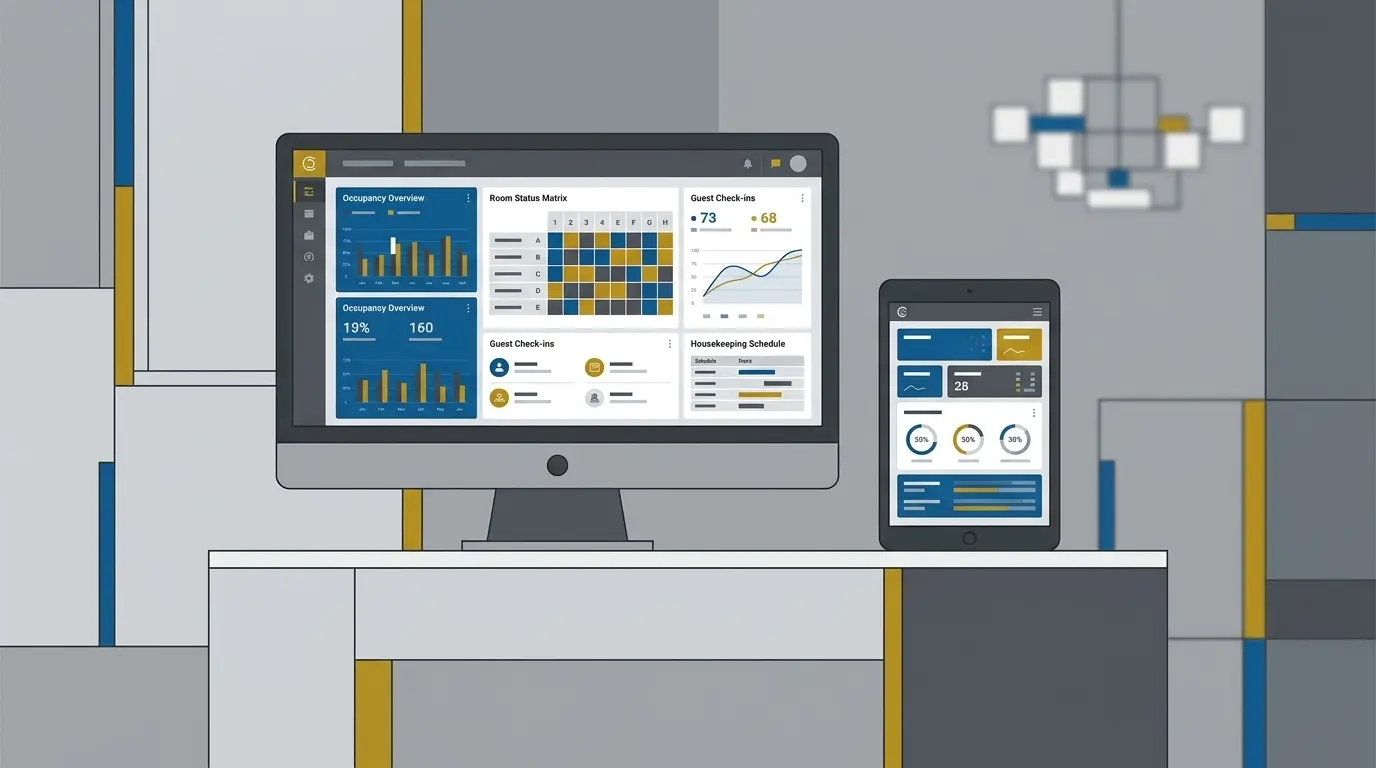

The Operational Friction of Off-the-Shelf Hospitality Systems
Commercial hospitality platforms introduce structural friction as portfolios expand. Generic SaaS products charge operators licensing models tied to room volume or transaction throughput, turning operational expansion into an escalating software expense. According to industry analyses by Hospitality Net, integration debt and disconnected systems remain among the largest drivers of guest service delays in modern accommodation operations.
Technical constraints appear when connecting legacy property management tools to modern distribution channels. Standard off-the-shelf software depends on brittle middleware, leading to data synchronization lag between housekeeping terminals and front-desk stations. This latency causes room status mismatches, overbooking incidents, and front-desk bottlenecks. Relying on generic tools forces properties into rigid workflows, making custom pricing, specialized guest services, and rapid staffing adjustments difficult to sustain.
Custom Architecture: Removing Manual Bottlenecks Across Hotel Operations
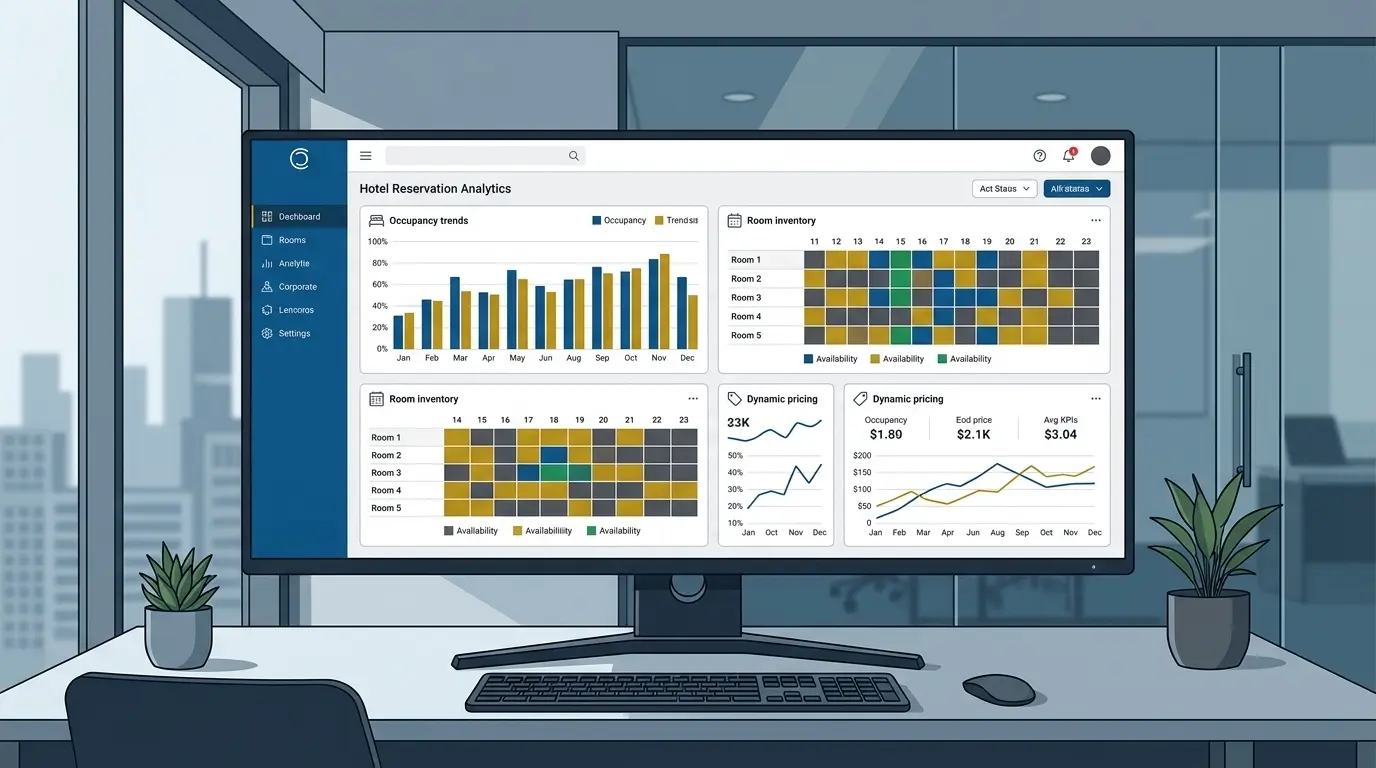
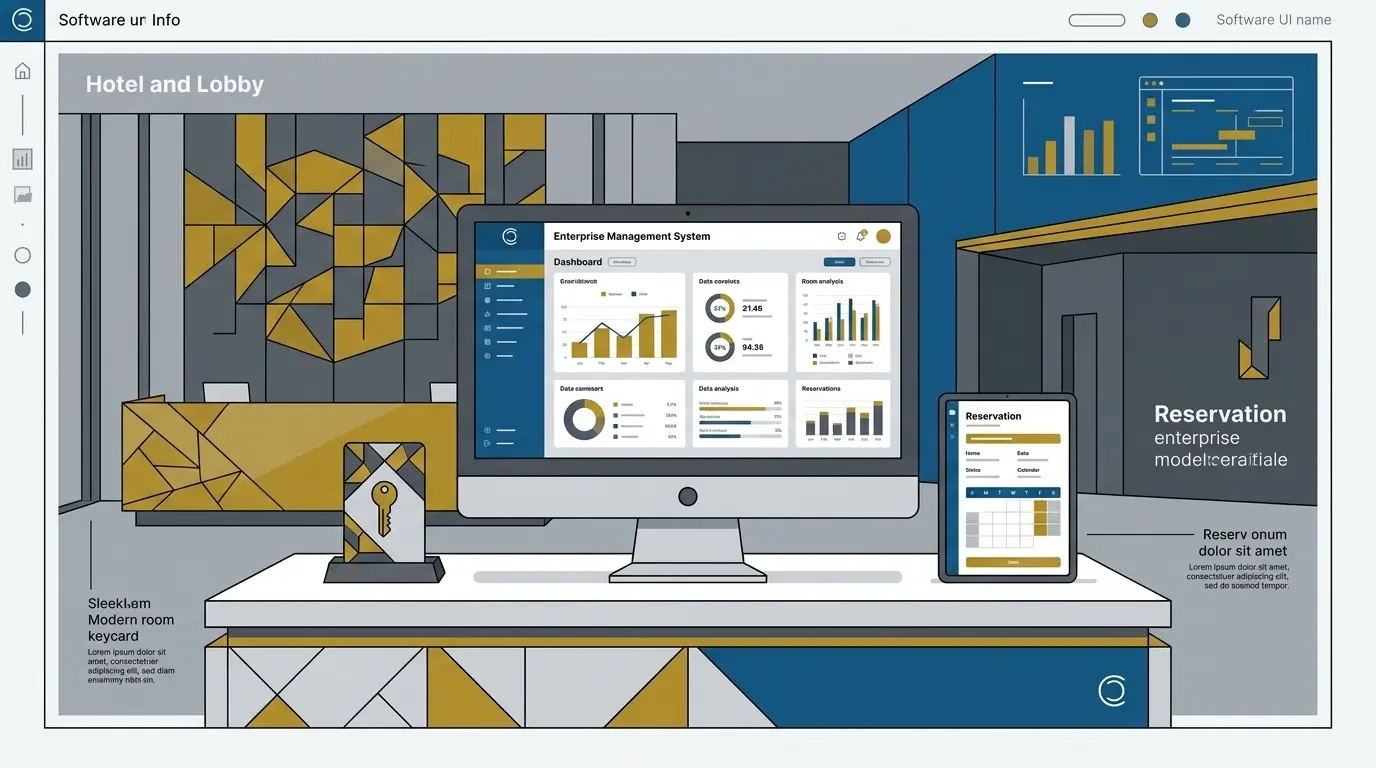
Bespoke hotel management app development engineers a unified data layer that connects guest interactions directly with administrative operations. Custom software synchronizes self-service guest check-ins, automated inventory ledgers, food service requests, and consolidated enterprise resource planning (hotel ERP development) without external middleware.
This architectural foundation establishes complete data ownership for the enterprise. Custom development removes recurring third-party transaction fees and eliminates per-room SaaS overhead. It also ensures sub-second updates across all property touchpoints. Front-desk personnel, operations managers, and housekeeping staff coordinate using a single database, eliminating administrative latency across properties.
Strategic Phases for Deploying Enterprise Hotel Applications
Deploying enterprise hospitality software requires an iterative, phase-based engineering roadmap to prevent service disruptions across active properties:
- Core PMS and Direct Booking Engine Integration: Problem: High distribution commissions paid to Online Travel Agencies (OTAs) erode operating margins.
Engineering Solution: Construct an owned booking engine with direct payment tokenisation linked to real-time inventory databases.
Business Outcome: Eliminates third-party commission leakage while recapturing direct guest transaction margins. - Automated Housekeeping and Facility Dispatch: Problem: Paper logs and verbal updates delay room turnarounds.
Engineering Solution: Build real-time event listeners that generate housekeeping tasks immediately upon guest checkout confirmation.
Business Outcome: Reduces room turnover intervals by up to 35%, increasing early check-in capacity. - Centralised Channel and Rate Management: Problem: Disparate distribution channels create rate disparity and accidental double-bookings.
Engineering Solution: Deploy high-concurrency API integrations that sync availability across all external booking channels within milliseconds.
Business Outcome: Guarantees global rate parity while preventing distribution conflicts. - Role-Based Analytics and Staff Dispatch: Problem: Department managers lack real-time visibility into staff allocation and service response times.
Engineering Solution: Engineer central management dashboards with granular access controls and automated service ticket assignment.
Business Outcome: Provides operational visibility and shortens guest service cycles across departments. Partnering with a dedicated hotel management system development company India provides the technical engineering scale required to deliver these modules on predictable release schedules.
Core Operational Modules of Modern Hotel Applications
Contactless Mobile Check-In and Digital Key Generation
Integrating contactless check-in modules eliminates arrival queues in hotel lobbies. Software platforms communicate directly with electronic door hardware via Bluetooth Low Energy (BLE) and Near-Field Communication (NFC) protocols, issuing encrypted room keys straight to guest smartphones. Guests access their accommodations immediately upon arrival, reducing front-desk staffing pressure.
Automated Real-Time Housekeeping Dispatch
Custom housekeeping applications replace static morning rosters with automated scheduling. Once the system registers a guest checkout, it allocates turnover cleaning to housekeeping staff devices based on floor proximity and room priority. Rooms return to vacant-clean status faster, allowing properties to accommodate early check-in requests.
Direct Booking Engine with Zero Commission Architecture
An owned, mobile-responsive booking engine processes payments natively without external aggregator fees. Properties keep their gross revenue margins instead of surrendering 15% to 25% of every reservation to third-party travel platforms. Integrated upselling features recommend room upgrades, dining options, and late departures during check-in, lifting average transaction revenue.
Enterprise Engineering: Security, Scalability, and Offline Resilience
Role-Based Access Control and Data Governance
Enterprise hotel software enforces strict role-based access control (RBAC) to protect sensitive company and guest information. Payment information is processed via PCI-DSS compliant tokenisation gateways, while Personally Identifiable Information (PII) is encrypted both in transit and at rest. Staff interfaces restrict financial reports and customer records to authorised personnel.
Local Offline-First Synchronization Protocols
Network interruptions can disrupt operations. Enterprise hospitality applications use offline-first data engines with local edge storage. When an internet outage occurs, front-desk staff can continue processing check-ins, validating arrivals, and recording payments locally. The database resolves and syncs records automatically once network connectivity is restored.
High-Throughput Channel Manager Integrations
Direct channel manager integrations use persistent two-way API pipelines to update rates and availability across international distribution platforms. Operating with sub-second synchronization speeds, the system adjusts room inventory across all booking channels the moment an accommodation is reserved, preventing double-bookings during peak demand.
Measurable Financial Returns on Tailored Hospitality Platforms
Reduction of Recurring Third-Party SaaS Overhead
Subscription hospitality software charges expanding properties growing monthly licensing fees. Engineering a proprietary hospitality platform converts ongoing software subscriptions into an owned company asset. Operators eliminate multi-tiered SaaS costs, lowering their three-year total cost of ownership across their property portfolio.
Operational Labour Efficiency and Labor Reallocation
Automated check-ins, automated housekeeping dispatch, and unified digital guest requests eliminate manual administrative entry. Centralising these workflows saves front-desk teams 15 to 20 hours of repetitive data logging every week. Property managers can reallocate staff hours toward hands-on hospitality delivery rather than back-office administrative tasks.
Elevated RevPAR Through Dynamic In-App Upselling
Targeted in-app recommendations lift Revenue Per Available Room (RevPAR). Guest mobile applications use arrival data to present customized ancillary offers, such as reserved parking, premium dining reservations, spa services, and extended checkouts. Automated in-app recommendations deliver higher conversion rates than conventional lobby upselling efforts.
Commercial Comparison: Custom Hotel Applications vs. Generic SaaS Platforms
Hospitality executives evaluate software investments by comparing long-term enterprise value against immediate deployment constraints. The following matrix illustrates the differences between bespoke engineering and off-the-shelf software platforms:
| Evaluation Vector | Custom Hospitality Application | Off-the-Shelf SaaS Tool | Operational Impact | Strategic Business Value |
|---|---|---|---|---|
| Total Cost of Ownership (3-5 Years) | Fixed capital investment; no per-room licensing penalties. | Recurring monthly licensing that scales with room and user volume. | Eliminates subscription growth fees as property inventory expands. | Turns continuous software spending into an owned operational asset. |
| Channel & Hardware API Integrations | Direct API integrations with proprietary locks, IFP panels, and payment gateways. | Restricted to pre-built marketplace connectors with additional sync costs. | Removes hardware middleware failure points across property systems. | Allows custom choice of in-room and front-desk hardware. |
| Data Ownership & Guest Privacy (PII) | Complete enterprise data ownership maintained on dedicated infrastructure. | Guest transaction records stored in multi-tenant vendor databases. | Guarantees direct control over guest contact details and booking trends. | Ensures compliance with global data privacy mandates without vendor lock-in. |
| Workflow Customisation & Scalability | Engineered to match precise multi-department operational structures. | Rigid operational structures requiring workarounds for unique workflows. | Removes manual procedural workarounds for front-desk and service staff. | Maintains uniform service standards across growing property footprints. |
| Direct Booking Commission Margins | 0% booking commission; native transaction settlement. | Fixed per-reservation charges or external merchant routing fees. | Preserves total reservation margin on direct digital bookings. | Reclaims direct customer acquisition channels from digital intermediaries. |
Enterprise Scenarios: Where Custom Hospitality Software Drives Growth
Enterprise hotel software engineering delivers clear operational returns across diverse hospitality business models:
Multi-Property Boutique Hotel Groups: Boutique hospitality brands managing multiple unique locations often deal with disconnected tools across their properties. A consolidated enterprise platform centralizes reservations, housekeeping, and guest accounts into a single database. This architecture eliminates duplicate operational software, allows shared staffing schedules across nearby locations, and ensures guest preference profiles follow patrons across all group properties.
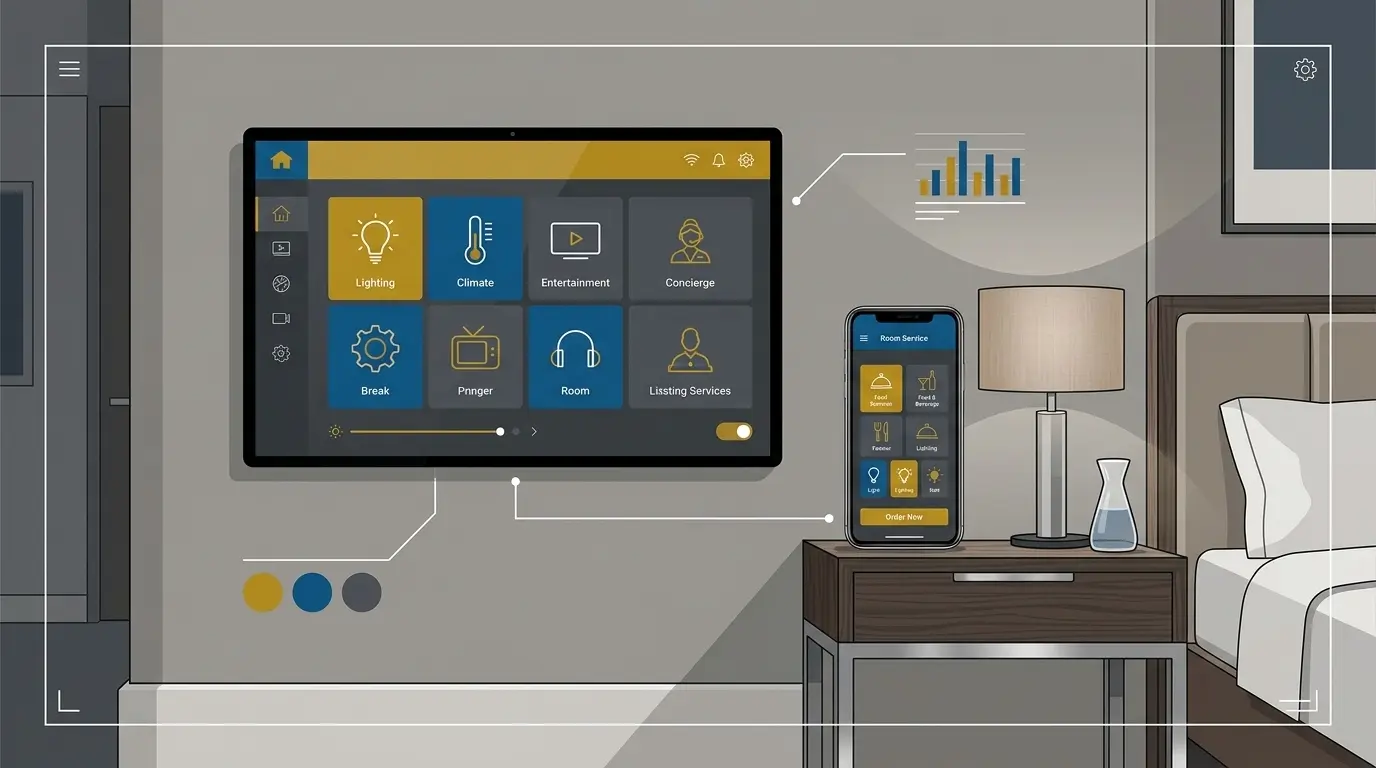
Full-Service Business and Luxury Hotels: Luxury accommodations reduce service friction by integrating bespoke guest applications directly with in-room hardware, including Interactive Flat Panels (IFP) and smart room controllers. Guests use their personal devices or in-room digital panels to adjust room settings, coordinate conference facility bookings, and order room service. This connected setup removes administrative friction, lowers front-desk phone traffic, and increases in-room amenity revenue.
Strategic Evaluation: Auditing Your Hospitality Technology Stack
Decision-makers evaluating hotel management app development must first measure the real cost of operational friction within existing software. Disconnected systems, recurring software seat fees, and channel synchronization lag create ongoing operating costs that undermine hotel operating margins. Conducting an architectural audit of current operations clarifies technical bottlenecks, database latencies, and integration limitations before software development begins.
Reviewing software assets enables hoteliers to construct a strategic roadmap for replacing legacy tools with a unified digital platform. Prioritising custom modules based on operational impact—such as direct booking workflows or automated room dispatch—ensures software investments produce early, measurable efficiency gains.
Conclusion: Building Resilient Digital Infrastructure for Scalable Hospitality
Off-the-shelf software tools restrict hospitality operations through recurring fees, inflexible workflows, and vendor-dependent integrations. Custom hotel management app development provides a scalable alternative, turning disconnected operations into an owned, integrated enterprise platform. Unifying direct reservations, automated housekeeping schedules, hardware controls, and centralized financial analytics allows hoteliers to eliminate recurring subscription overhead, protect operating margins, and elevate guest service standards across their properties.
Let us make the next big thing together. Contact our engineering team for a consultation to modernise your property management infrastructure.