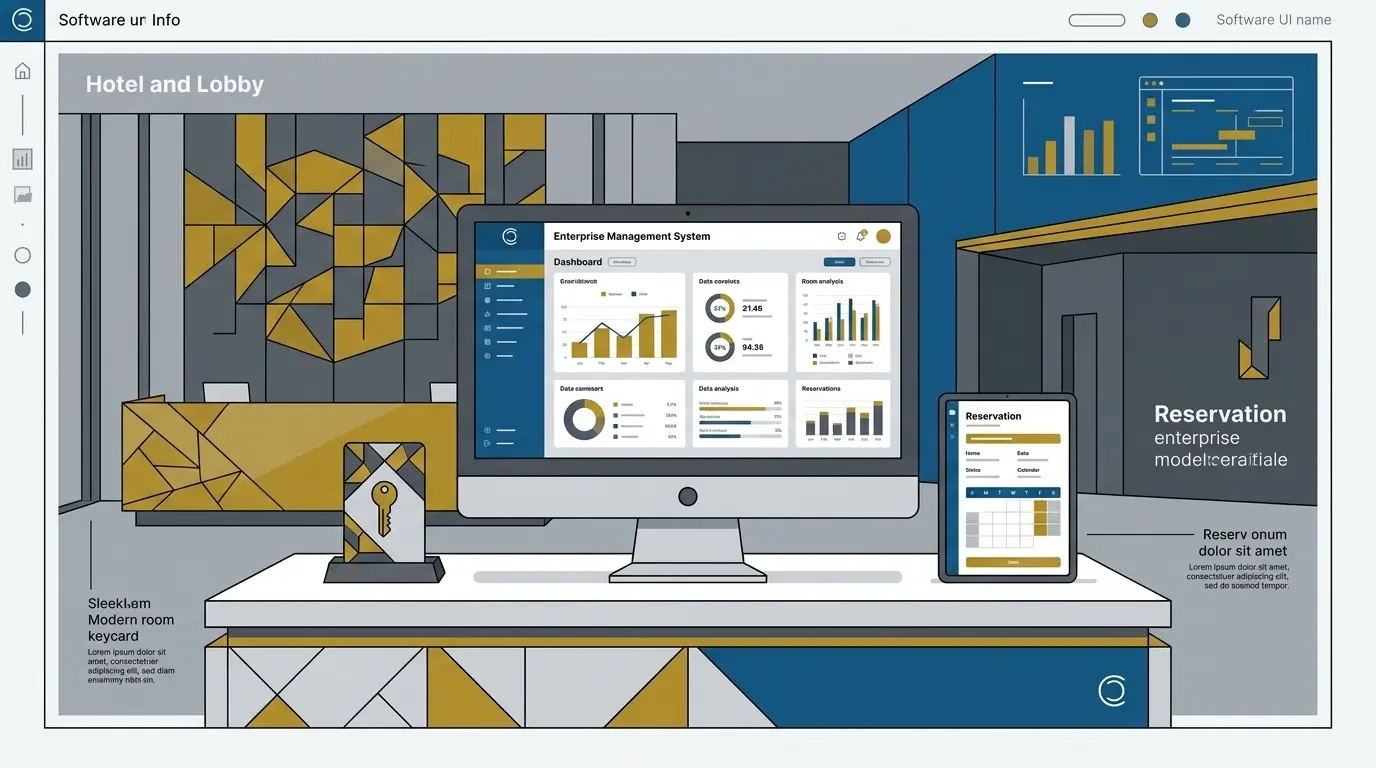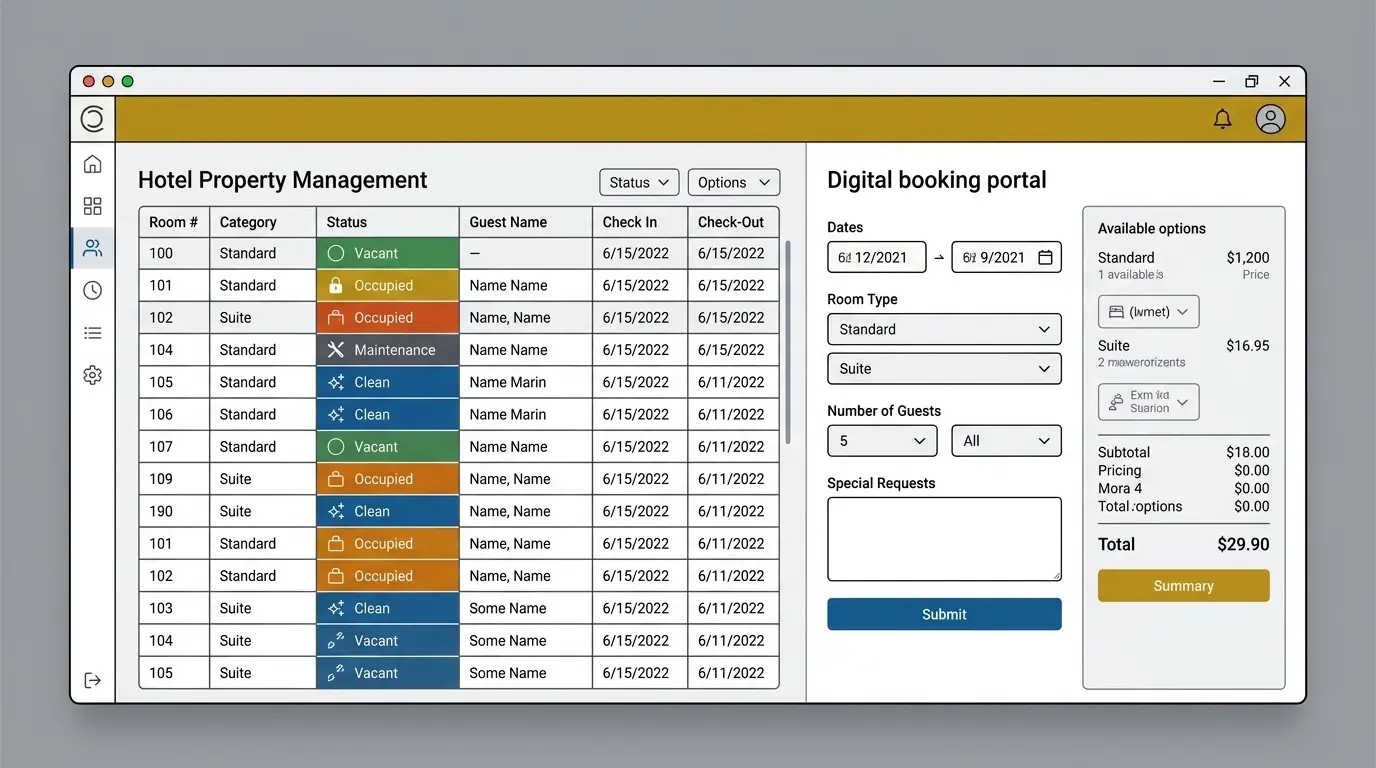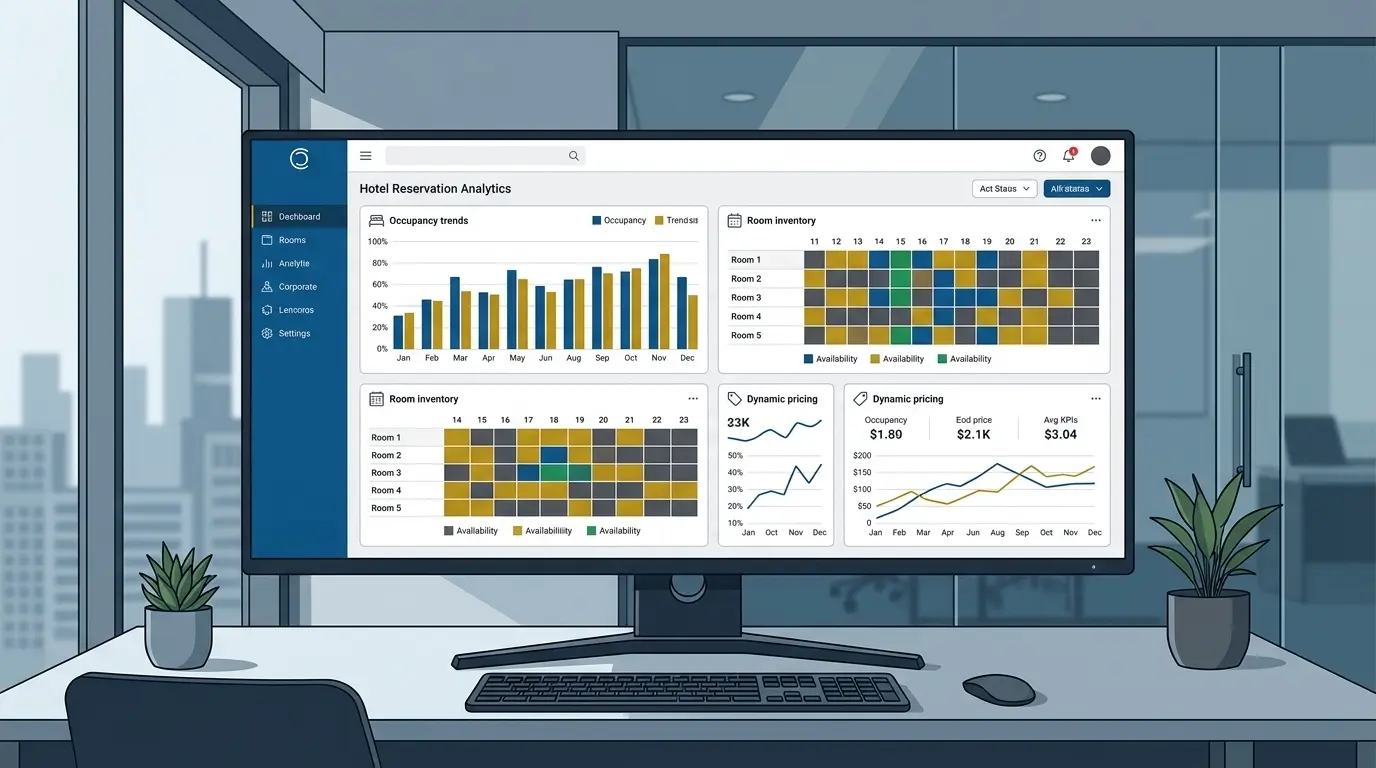

Hotel reservation software development is the engineering of proprietary, enterprise-grade digital engines that process direct guest bookings, synchronize multi-channel inventory in real time, and manage room rates without third-party commission penalties. For mid-market hospitality brands and boutique hotel groups, custom development replaces generic, template-driven tools with an enterprise asset that integrates directly into existing Property Management Systems (PMS) and back-office infrastructure.
The Hidden Costs of Legacy Booking Engines and Commission Drag
Modern hospitality enterprises frequently suffer margin leakage by relying on outdated booking plugins and high-commission Online Travel Agencies (OTAs). Standard OTAs claim between 15% and 25% of top-line guest spend, severely eroding gross operating profit. Beyond direct commission drag, legacy booking infrastructure introduces inventory distribution latency. When systems fail to synchronize inventory across channels within seconds, hotels suffer costly double-bookings or hold back inventory defensively, leaving rooms unoccupied.
Commercial SaaS subscription tools often fail growing hospitality SMEs. These platforms introduce rigid licensing fees, siloed customer databases, and inflexible rate logic that cannot accommodate bespoke corporate accounts or regional tax rules. Without deep integration into the operator’s core enterprise ERP software and front-desk workflows, generic tools create administrative friction that limits long-term guest retention and brand equity.
Bespoke Reservation Architecture: Eliminating Operational Friction
Custom hotel reservation software development establishes a purpose-built technical foundation that eliminates manual constraints. By designing a proprietary direct booking engine, hotel enterprises gain immediate control over real-time synchronization with Central Reservation Systems (CRS) and property-level management stacks. Direct payment gateway integrations ensure transactions settle immediately into merchant accounts without per-booking SaaS platform fees.
A bespoke system treats guest data as an enterprise asset. Operators maintain complete data sovereignty, capturing rich behavioural insights, customized stay preferences, and direct feedback across properties. Building custom software turns the booking flow into an enterprise-owned asset that scales efficiently across multi-property portfolios without inflating operational overhead.
Core Architecture Pillars for Custom Hotel Booking Engines
- Direct Channel Commission Capture: High distribution fees from third-party aggregators erode hotel profitability. Custom direct booking engine development introduces streamlined, single-screen checkouts optimized for mobile guests. This direct funnel typically recovers 30% to 40% of booking revenue otherwise lost to middleman platforms.
- Sub-Second Channel Synchronization: Inventory latency across distribution portals creates double-bookings and administrative panic. High-concurrency two-way channel management APIs push rate changes and room allocations globally in sub-second intervals, ensuring zero booking overlap.
- Automated Dynamic Pricing Rules: Rigid seasonal calendars prevent hotels from capitalizing on localized demand surges. Developing custom algorithmic rate engines allows properties to automatically adjust room rates based on real-time occupancy triggers, competitor pricing data, and local events to maximize RevPAR.
- Unified Multi-Property Guest Profiles: Guest data isolated across fragmented systems degrades the service experience. Integrating a centralized guest data schema with a custom hospitality CRM software solution gives staff immediate visibility into guest history and loyalty status across every property.
Mission-Critical Engineering Modules in Enterprise Reservation Systems
High-Concurrency Availability and Rate Engine
High booking demand requires robust backend infrastructure. Utilizing Redis for in-memory caching paired with event-driven microservices allows the search engine to query thousands of room combinations in milliseconds. This architecture prevents database bottlenecks during seasonal flash promotions, as detailed in our guide on backend development for secure applications.
Bi-Directional Channel Manager Middleware
Connecting proprietary reservation platforms to Global Distribution Systems (GDS) and major OTAs requires dedicated middleware. Direct REST and WebSocket connections exchange booking notifications and inventory allocations instantly. Automated cutoff rules eliminate overbooking risks during peak travel periods.
PCI-DSS Compliant Multi-Currency Payment Infrastructure
Global guests expect localized payment methods, including credit cards, UPI, and digital wallets. Implementing tokenized payment gateways ensures full compliance with PCI-DSS data standards. The payment gateway architecture can route transactions through split-disbursement mechanisms, simplifying multi-property settlement and accounting reconciliation according to global PCI Security Standards.
Data Architecture and Systems Integration Workflows
Seamless Hotel PMS and ERP Synchronization
Direct data pipelines link the reservation interface to core hotel operations. When a guest confirms a reservation, background queues trigger automated workflows within the property management system, immediately reserving housekeeping allocations and generating front-desk check-in tokens. Review our analysis on hotel PMS vs booking engine architecture for workflow patterns.
Centralized Guest Profile and Loyalty Database
Relational database schemas aggregate reservation history, spending patterns, and tailored room preferences into an immutable master folio. Eliminating property-level data silos allows multi-unit operators to recognize high-tier corporate guests automatically, powering hyper-personalized booking incentives and targeted upselling.
Hardware-Software Interfacing with Smart Kiosks and IFPs
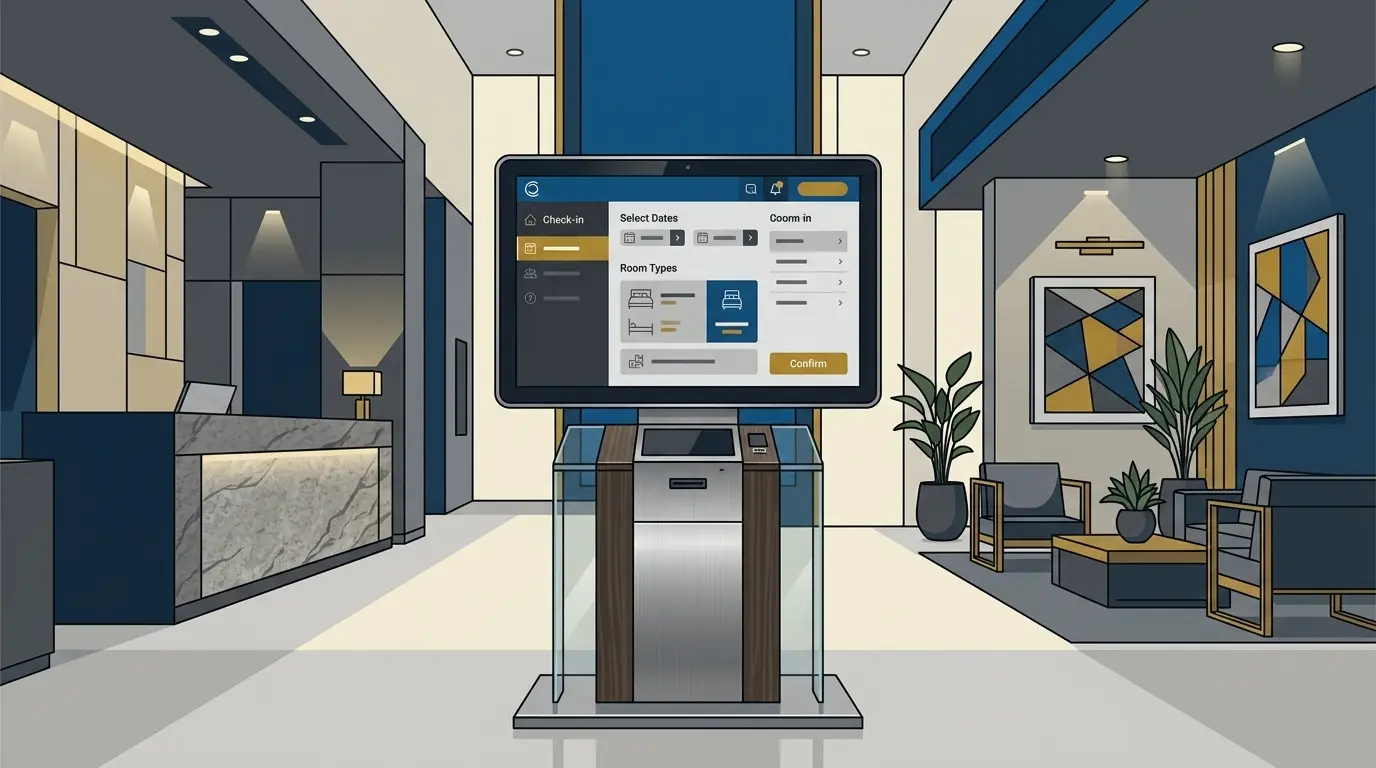
Modern hospitality environments merge digital booking engines with physical lobby hardware. Custom APIs allow interactive flat panels (IFPs) and self-service lobby kiosks to retrieve reservation records instantly, issue digital keys, and process express check-ins. This cuts front-desk wait times and streamlines guest arrivals during peak operational hours.
Enterprise Governance, Security, and Scalability
Role-Based Access Control and Staff Permissions
Enterprise platforms require strict data governance. Granular role-based access control (RBAC) ensures staff members access only the operational modules necessary for their duties. Front-desk agents view stay dates and guest requests, while sensitive financial logs, transaction records, and revenue override tools remain restricted to senior management.
Cloud Infrastructure and Auto-Scaling Configurations
Containerized microservices orchestrated via Kubernetes allow booking portals to scale automatically during unexpected demand surges. Cloud-native architecture provisions additional server instances instantly when marketing campaigns generate high traffic, returning to baseline resources once volume normalizes to minimize infrastructure costs.
Strategic Synergy: Hotel Booking Software Development Company Collaboration
Building specialized hospitality architecture requires deep domain expertise. Partnering with a dedicated hotel booking software development company ensures the software design avoids costly architectural mistakes. Experienced engineering partners implement scalable codebases, secure APIs, and reliable database structures right from day one.
Commercial SaaS Booking Tools vs. Custom Hotel Reservation Software Development
| Evaluation Metric | Off-the-Shelf SaaS Platforms | Custom Enterprise Reservation Software | Operational Impact | Strategic ROI |
|---|---|---|---|---|
| Cost Model & Licensing | Monthly subscription fees plus 1.5% to 3% transaction commissions | One-time capital engineering asset with zero transaction commission fees | Eliminates recurring platform overhead and per-reservation profit deductions | Lowers total cost of ownership as transaction volumes scale |
| Inventory & Channel Control | Standardized third-party channel sync with frequent rate update lag | Sub-second bi-directional synchronization with automated channel cutoffs | Eliminates overbooking liabilities and protects room availability | Increases RevPAR through optimized dynamic inventory allocation |
| Customization & Enterprise Workflows | Restricted to standard templates and rigid booking funnels | Fully tailored workflows for corporate rates, dynamic bundles, and split stays | Removes manual front-desk workarounds for unique booking scenarios | Expands direct enterprise and B2B corporate group bookings |
| Data Ownership & Security | Vendor-hosted shared databases with restricted reporting exports | Full enterprise database ownership with custom private cloud hosting | Secures guest records and operational data within corporate boundaries | Protects proprietary guest intelligence and brand loyalty value |
| Hardware & Third-Party Integration | Limited to standard webhooks and certified marketplace apps | Direct API connectivity with lobby IFP smart boards, kiosks, and custom ERPs | Enables self-service digital check-in and unified front-desk operations | Lowers front-desk labour costs and reduces lobby check-in queues |
Operational Impact Across Diverse Hospitality Environments
Boutique hotel chains operating five to twenty properties face significant administrative strain when managing inventory manually. Unified reservation architecture consolidates regional availability into a master dashboard. This setup eliminates cross-property booking conflicts, enables dynamic cross-selling when a flagship property is fully booked, and unifies marketing metrics across the entire portfolio.
For luxury resorts and integrated leisure destinations, reservation engines must handle more than standard room nights. Custom software coordinates complex guest itineraries, pairing accommodation bookings with dining reservations, spa slots, and recreational activities in a single digital checkout flow. Consolidating ancillary revenue streams into a unified folio increases average spend per guest while eliminating manual scheduling conflicts between property departments.
Business and transit hotels rely on operational speed. Custom reservation architecture integrated with self-service lobby kiosks allows corporate travellers to complete verification and retrieve digital room keys in seconds. Tailored B2B corporate portals simplify invoicing for corporate partners, driving direct company accounts and cutting OTA dependency for mid-week business travel.
Evaluating the Strategic Shift Toward Bespoke Hospitality Systems
Decision-makers evaluating hotel reservation software development typically review booking transaction volumes, SaaS renewal expenses, and direct channel conversion rates. Enterprises exploring this transition should audit annual expenditures on SaaS seat licenses, aggregator commissions, and revenue lost to manual booking errors. Hospitality leaders analyzing build-versus-buy trade-offs find that properties processing substantial direct bookings break even on custom development investments within 14 to 20 months. Owning the underlying software turns an ongoing operational expense into a permanent enterprise asset that appreciates alongside the brand portfolio.
Securing Long-Term Hospitality Growth Through Custom Engineering
Proprietary hotel reservation software development provides modern hospitality enterprises with operational autonomy, complete guest data governance, and commission-free revenue distribution. Transitioning away from restrictive third-party SaaS engines eliminates subscription constraints and establishes an agile digital foundation ready for long-term multi-property expansion. Technology should eliminate business bottlenecks rather than dictate how properties operate. Colladome partners with ambitious hospitality groups, founders, and operational leaders to design resilient, enterprise-grade software architectures tailored to complex commercial goals. Let’s make the next big thing together!