
AI transformation for businesses development is the strategic modernisation of core operating workflows through custom machine learning models, secure data pipelines, and deep enterprise software integration. Rather than treating artificial intelligence as an ad-hoc productivity experiment, structured transformation aligns automated intelligence directly with revenue growth, overhead reduction, and autonomous operational decision-making.
For leadership teams across mid-market enterprises, disconnected manual processes throttle commercial velocity. Fragmented systems create data silos, compound operational drag, and cap operational throughput. Transitioning from legacy inertia to automated intelligence requires an engineering approach that bridges existing databases with deterministic machine learning logic. Through targeted AI development services, mid-market enterprises eliminate procedural friction, accelerate output, and establish sustained operational advantages.
The Operational Constraints of Superficial AI Adoption
Off-the-shelf generative interfaces and generic chatbots rarely resolve core enterprise inefficiencies. Plug-and-play tools lack role-based access control (RBAC), enforce rigid API rate limits, and introduce serious corporate data leakage risks. When employees paste sensitive commercial logic or customer records into public cloud models, organisations forfeit data governance without gaining structural improvements. Disconnected tools merely digitise existing fragmentation without solving operational bottlenecks.
Moreover, generic tools cannot interact with proprietary on-premise systems, customized enterprise resource planning (ERP) platforms, or relational databases. According to research published by McKinsey & Company, while over 70% of organisations test cognitive tools, fewer than 20% achieve enterprise-wide deployment that scales bottom-line EBIT. Without bespoke engineering, enterprise AI adoption challenges persist, stalling digital transformation using AI tools before teams realise measurable commercial value.
Bespoke Engineering: Operationalizing AI Through Custom Architecture
True operational evolution requires treating artificial intelligence as an enterprise infrastructure discipline. Bespoke engineering connects private models directly with your production schema, document stores, and transaction queues. Custom models ingest structured telemetry and unstructured enterprise records behind hardened firewalls, eliminating third-party security vulnerabilities while executing multi-step business process automation with AI.
At Colladome, technical strategists conduct comprehensive diagnostics to identify operational bottlenecks before writing software. Engineering teams design specialized microservices, isolated vector databases, and deterministic model orchestration layers that interface cleanly with legacy environments. By grounding algorithms on institutional data, organisations eliminate manual processing delays, automate high-frequency decisions, and secure direct returns on technological capital.
Strategic Framework for Enterprise AI Transformation
Deploying cognitive workflows requires a systematic, four-stage enterprise AI integration strategy that guarantees security, system interoperability, and measurable margin gains:
- Diagnostic Readiness and Security Audit: Ungoverned data and unquantified security surfaces throttle modern initiatives → Conduct rigorous infrastructure audits, classify proprietary data stores, and define compliance boundaries → Complete architectural roadmap delivering zero data leakage and a verified implementation plan.
- Data Pipeline Integration & RBAC Architecture: Isolated operational silos and disparate SQL/NoSQL stores restrict enterprise utility → Engineer automated ETL data pipelines, vector stores, and strict role-based access control layers → Unified, queryable business intelligence context with zero permission overreach across internal departments.
- Custom Model Deployment & Legacy Synchronization: Off-the-shelf SaaS interfaces fail to execute nuanced enterprise business rules → Fine-tune open-weight LLMs, integrate specialized APIs, and bind neural inference models directly to central databases → Automated operational workflows executing real-time business actions without manual worker intervention.
- Continuous Operational Optimization: Model drift, shifting input distributions, and evolving operational schemas degrade performance → Deploy automated evaluation harnesses, telemetry pipelines, and periodic model retraining cycles → Resilient system performance delivering predictable marginal cost reductions as processing volume scales.
Phase 1: Diagnostic AI Audits and Architectural Readiness
Evaluating Technical Debt and Data Governance
Enterprise modernization begins by auditing underlying legacy codebases, schema structures, and data hygiene. Incomplete records and unstructured operational data degrade algorithmic performance. Systematic code audits identify integration liabilities early, ensuring underlying software architectures reliably support continuous model inference without unplanned production refactoring or platform instability.
Establishing Enterprise Security and RBAC Protocols
Protecting intellectual property requires absolute isolation between training corpora and public network interfaces. Custom security architectures enforce cryptographic authentication, rigorous role-based access control, and comprehensive audit logs. Restricting access privileges at the database layer prevents unauthorised credential escalation, securing enterprise compliance across strictly regulated markets.
Identifying High-Impact Operational Bottlenecks
Targeted AI implementation consulting prioritises processes where repetitive cognitive labor limits transaction throughput. Diagnostic reviews benchmark baseline metrics across manual administrative tasks, inventory reconciliation, and document validation. Pinpointing workflow friction allows engineering teams to deploy targeted machine learning automation that drives measurable operational overhead reduction.
Phase 2: Custom Development and Workflow Synchronization
Connecting Proprietary Databases to Private LLMs
Synchronizing bespoke large language models with secure internal relational databases unlocks actionable business intelligence. Custom retrieval-augmented generation (RAG) architectures extract live operational parameters without risking data exposure. Grounding proprietary models in verified business records eliminates hallucinations, giving decision-makers instant access to dependable, context-aware administrative insights.
Automating Multi-Step Operational Business Logic
Modern commercial operations require complex deterministic execution rather than surface-level text generation. Custom orchestration services parse transaction histories, validate regulatory constraints, and execute transactional updates across operational management platforms. Automating complex procedural logic removes operational latency, accelerating transaction settlement and reducing manual administrative costs.
Ensuring Resilient Infrastructure with Cloud Scalability
Enterprise workloads require fault-tolerant cloud infrastructures capable of managing bursty inference demands. Engineering resilient architectures through containerised microservices ensures continuous operational uptime under heavy load. Resilient backend development safeguards system availability, preventing latency spikes from degrading internal workflows or customer-facing touchpoints during peak utilization windows.
Phase 3: Measuring Operational Value and Sustainable Scaling
Quantifying Cost per Workflow Reduction
Strategic technology investments demand rigorous financial attribution against established baseline metrics. Leadership teams track operational efficiency by monitoring cost reductions across automated invoice processing, customer verification, and scheduling workflows. Tracking marginal processing expenses demonstrates concrete yield improvements, validating custom enterprise software investments to financial stakeholders.
Eliminating Knowledge Worker Repetitive Overhead
Deploying automated intelligence liberates operational teams from low-value data transcription and reconciliation chores. Machine intelligence rapidly extracts, categorises, and validates incoming unstructured documents across internal management consoles. Eliminating administrative drudgery allows specialised staff to focus on complex client engagements and strategic commercial growth.
Establishing Iterative Model Retraining Pipelines
Data distributions evolve alongside changing consumer behaviors and shifting supply chain conditions. Production systems incorporate continuous evaluation pipelines that flag model drift against fresh transactional records. Automated retraining frameworks maintain inference precision over multi-year horizons, protecting long-term enterprise software investments against degradation.
Strategic Evaluation: Off-the-Shelf SaaS Tools vs. Custom AI Transformation
| Evaluation Dimension | Third-Party SaaS Tools | Custom AI Engineering | Operational Risk Factor | Long-Term Enterprise ROI |
|---|---|---|---|---|
| Data Security & Governance | Data routed through multi-tenant clouds; potential retention for public model retraining. | Isolated, single-tenant private infrastructure enforcing strict RBAC protocols. | High compliance risk; potential regulatory penalties and proprietary leaks. | Permanent ownership of secure models, workflows, and proprietary assets. |
| Enterprise Workflow Integration | Shallow integrations limited to basic, pre-configured external platform webhooks. | Native database, ERP, and API synchronization tailored to bespoke operational logic. | Fragmented data silos remain unaddressed, limiting operational efficiency. | Total automated orchestration eliminating manual data entry across systems. |
| Customization & Competitive Edge | Standardized functionality shared uniformly across all market competitors. | Proprietary algorithms trained directly on proprietary institutional operational data. | Absence of differentiation; parity with competitors using identical subscriptions. | Defensible market leadership driven by exclusive algorithmic IP. |
| Scalability & Cost of Ownership | Per-seat monthly licensing escalates exponentially as enterprise headcount expands. | Fixed engineering capital expenditure yielding low-cost marginal compute inference. | Vendor lock-in paired with unpredictable recurrent operational cost inflation. | Substantial operational margin expansion across sustained scaling cycles. |
Sector Applications: AI Transformation in High-Volume Operations
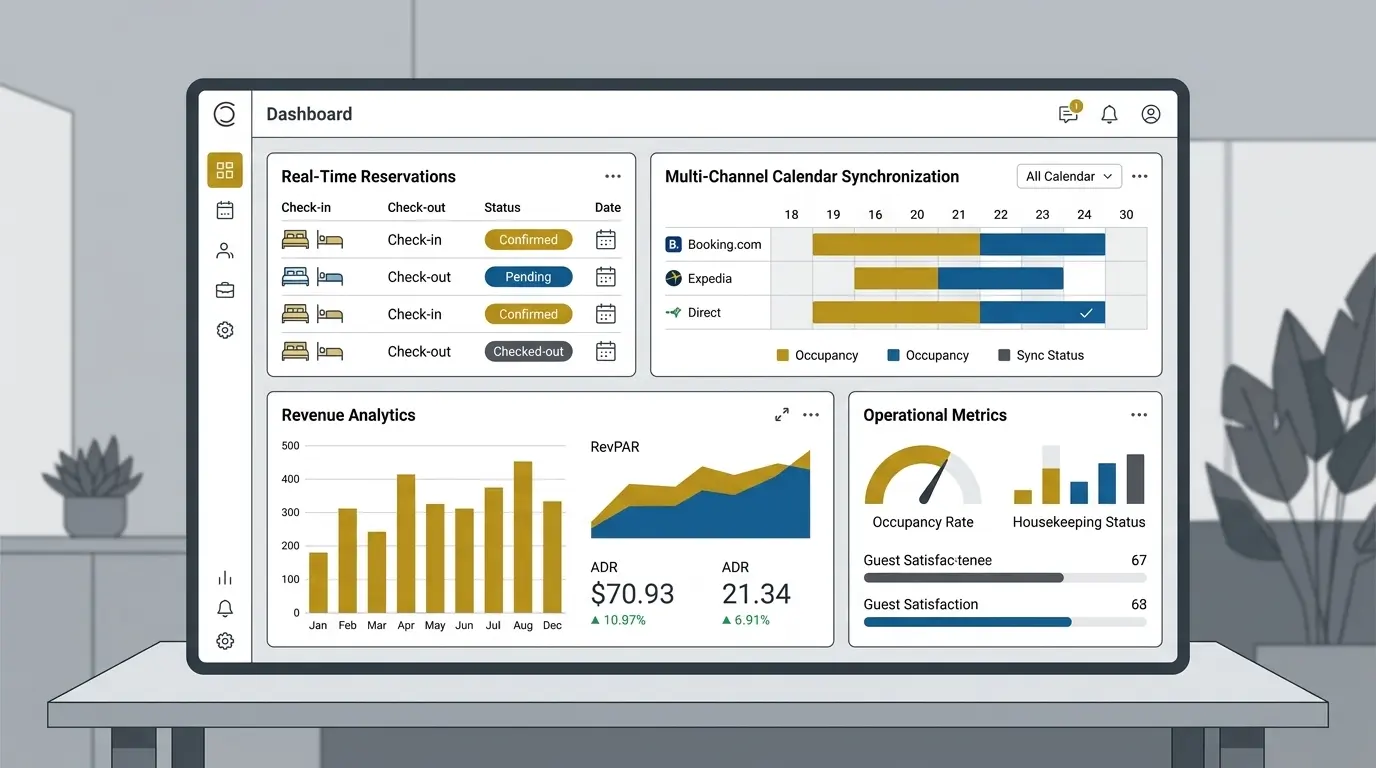
Industrial applications prove the commercial value of bespoke intelligent engineering. Within specialised hospitality networks, integrating predictive occupancy engines with custom hotel management software eliminates manual night-audit constraints. Automated models evaluate regional reservation trends, dynamically reallocate housekeeping staffing, and synchronise inventory levels across multi-property portfolios, lifting operational margins while reducing front-desk labor overhead.
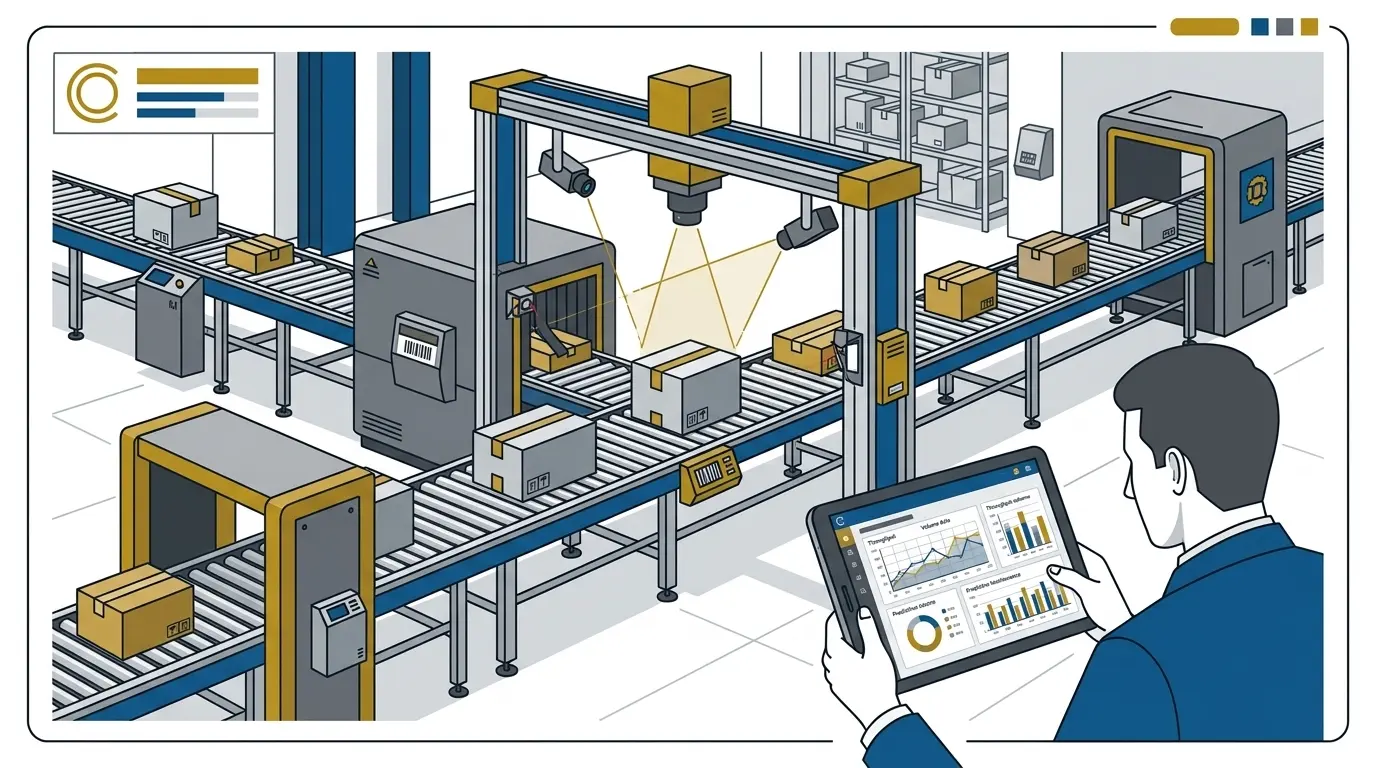
Similarly, in high-throughput manufacturing and logistics environments, computer vision models and predictive telemetry pipelines transform assembly lines. Edge sensors continuously monitor automated machinery, preemptively flagging mechanical fatigue before catastrophic line failures occur. Connecting predictive models to enterprise resource planning frameworks automates replacement part dispatch, eliminating factory downtime and boosting annual output.
Navigating the Shift to Enterprise AI
Organisations assessing their operational readiness face critical architectural choices. Transitioning away from fragmented manual workflows requires evaluating existing data assets, infrastructure technical debt, and system security frameworks. Business growth through artificial intelligence demands eliminating systemic operational constraints rather than layering surface-level digital novelties over fragile foundations.
Decision-makers evaluating custom architecture benefit from partnering with seasoned technical strategists. Navigating infrastructural audits, proprietary data pipeline engineering, and legacy ERP integration requires rigorous engineering discipline. Strategic consulting identifies high-yield automation targets early, derisking enterprise software development while guaranteeing strict regulatory adherence throughout implementation cycles.
Building Resilient Enterprise Systems for the Next Era
Modern commercial expansion demands shifting from disjointed productivity utilities to bespoke enterprise engineering. Executing an intentional AI transformation for businesses development systematically eliminates operational constraints, optimizes knowledge-worker productivity, and safeguards proprietary intelligence within private digital environments. Automated operational systems create durable competitive moats that off-the-shelf software packages cannot replicate.
Organisations modernising their digital architecture require strategic co-creation rather than generic agency retainers. Colladome partners directly with founders, operations leaders, and technology heads to build tailored digital ecosystems. Discover how custom engineering can eliminate operational constraints across your enterprise. Connect with our technical team today to initiate an architectural readiness consultation. Let’s make the next big thing together!