
Mastering Guest Data to Drive RevPAR and Lifetime Value
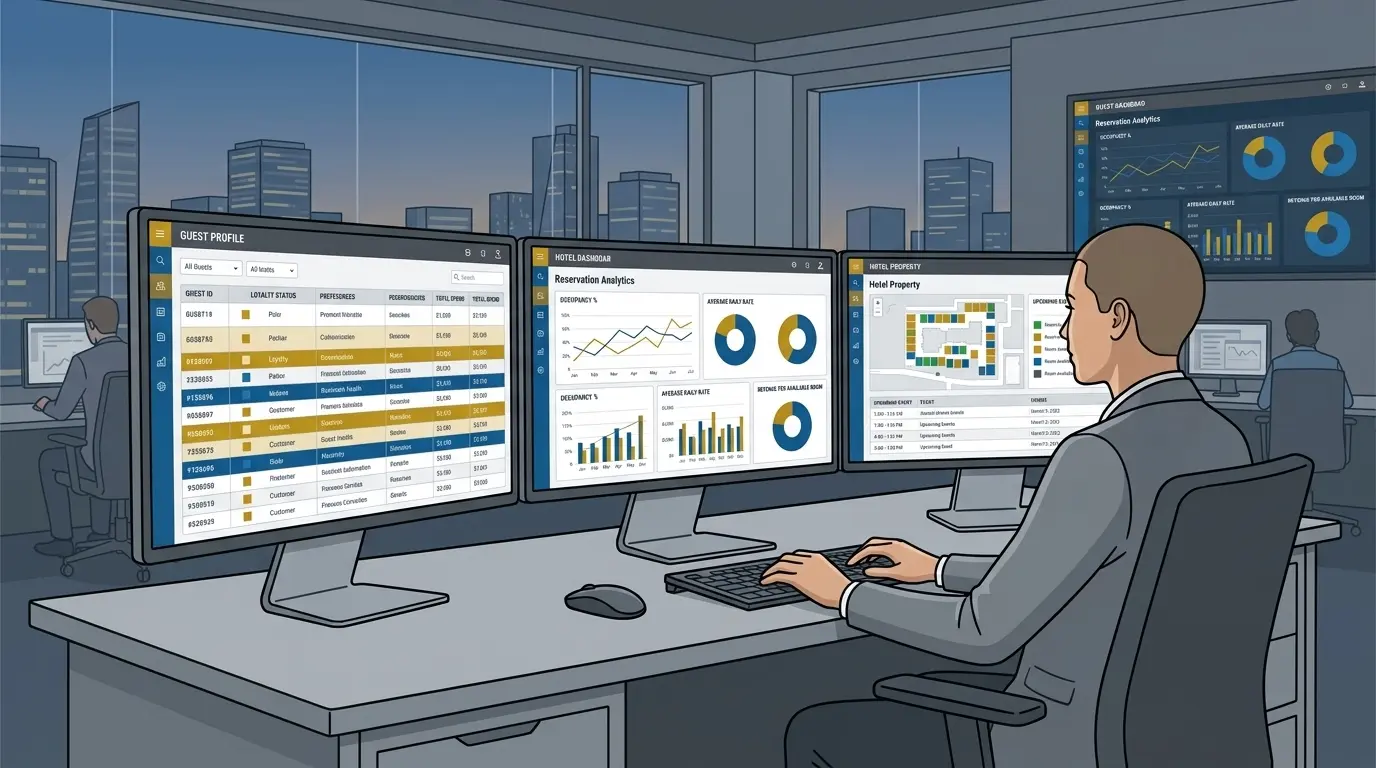
Hotel CRM software development is the engineering of dedicated software architectures designed to aggregate guest data across booking engines, physical front desks, dining venues, and marketing channels into a unified operational profile. By replacing fragmented databases, a custom CRM automates direct guest interactions, accelerates retention workflows, and increases average revenue per available room (RevPAR). Custom hotel CRM software development allows hospitality operators to dismantle reliance on third-party intermediaries and capture end-to-end guest lifetime value.
The Operational Ceiling of Legacy Hospitality Guest Management
Running a modern hotel involves much more than accepting reservations and assigning rooms; custom automation removes the manual operational constraints. Standard packaged software platforms routinely fail expanding hospitality portfolios. Commercial off-the-shelf software models impose rigid database schemas, preventing hoteliers from recording granular guest preferences, bespoke dining requests, or corporate billing nuances. As multi-property groups grow, these disconnected systems fragment guest profiles across isolated property databases, making a coherent guest recognition strategy impossible.
Furthermore, subscription-based tools charge escalating per-seat or per-room fees that severely compress operating margins. These platforms lack direct access to low-level data pipelines, blocking automated re-engagement triggers when high-value guests exit. This architectural disconnect directly increases acquisition expenditure, driving properties back toward Online Travel Agencies (OTAs) that claim 15% to 25% commissions per booking. Relying on generic solutions creates structural revenue ceilings that only dedicated engineering can solve.
Strategic Architecture: How Custom Hotel CRM Development Resolves Data Fragmentation
Purpose-built software engineering replaces brittle third-party connectors with unified, bi-directional data synchronization across every property endpoint. Tailored hospitality CRM solutions establish a single source of truth through three core structural components:
- Centralised Guest Profiles: Relational identity-resolution algorithms merge web visits, historical stays, room preferences, and dining folios into one continuous master record.
- Automated Multi-Touch Journeys: Event-driven messaging pipelines deliver tailored confirmation sequences, pre-arrival concierge preferences, and post-departure feedback forms without front-desk overhead.
- Direct Channel Integration: Direct API handshakes connect reservation databases directly with proprietary web portals, securing guest ownership at point of sale.
Architectural control over this hub delivers lower customer acquisition costs. While the custom enterprise web application governs retention and guest marketing, core room inventories and real-time room status reside securely within synchronized property infrastructure like custom hotel PMS software development.
Five Core Pillars of a Modern Hospitality CRM Engineering Strategy
Deploying resilient guest management infrastructure requires resolving operational challenges with targeted software solutions to generate measurable business returns:
- Fragmented Loyalty Tracking: Problem: Disjointed property systems lose loyalty records across branch locations. Solution: Build a centralized points and tier-tracking engine accessible across all regional properties. Outcome: Repeat visits rise by 22% due to consistent, instantaneous cross-property rewards.
- Manual Up-Sell Allocation: Problem: Reception desks lack the time to manually offer room upgrades or ancillary services during check-in. Solution: Implement automated pre-arrival preference workflows triggered 48 hours prior to check-in. Outcome: Ancillary guest spend increases by 18% through automated dining and wellness add-ons.
- OTA Distribution Dependence: Problem: Third-party platforms monopolize guest contact data, masking true guest identities. Solution: Deploy hyper-personalised re-engagement workflows using tokenised booking histories to re-acquire past guests directly. Outcome: Commission leakage to external agencies falls substantially as direct booking shares expand.
- Disjointed Guest Communications: Problem: Front desk, housekeeping, and concierge teams communicate over disconnected tools, causing service errors. Solution: Establish a unified omnichannel messaging layer supporting automated SMS, WhatsApp, and email routing. Outcome: Guest query resolution speeds improve by 35%, cutting operational strain.
- Inflexible Data Reporting: Problem: Static spreadsheets prevent multi-property portfolio directors from tracking real-time regional performance. Solution: Construct integrated business intelligence pipelines with automated cohort analysis. Outcome: Executive teams gain clear visibility over lifetime spend, corporate accounts, and seasonal retention curves.
Executing this roadmap transforms operational bottlenecks into automated, margin-protective workflows across every hospitality vertical.
Essential Architecture Requirements for Enterprise Hotel CRM
Real-Time Bi-Directional Synchronization
High-volume hotel chains require zero latency between front-of-house interactions and customer databases. Event-driven webhooks and message queues instantly synchronize point-of-sale dining checks, room charges, and profile updates across regional properties without database contention or race conditions.
Enterprise Data Governance and RBAC
Protecting guest personally identifiable information (PII) and corporate credit agreements requires strict Role-Based Access Controls. Modular security layers restrict data access across property managers, front desk clerks, and corporate marketing teams, maintaining complete administrative audit trails.
Scalable Cloud Microservices
Serverless and containerized microservices architectures absorb massive traffic spikes during seasonal flash sales or holiday booking rushes. Independent service deployment ensures messaging automation runs smoothly even while analytical aggregation pipelines process intensive batch data in the background.
Strategic Commercial Drivers of Bespoke Hospitality Software
Reducing High OTA Distribution Commissions
According to benchmarking data from the American Hotel & Lodging Association (AHLA), direct guest acquisition delivers significantly higher operating returns than third-party distribution. Purpose-built CRM engines automate segmented re-booking campaigns, systematically converting expensive intermediary bookings into recurring, high-margin direct reservations.
Maximizing Ancillary Guest Spend
Algorithmic upsell triggers evaluate historical guest activity to recommend personalized services. Automatically presenting curated wine tastings, late check-out privileges, or golf packages prior to arrival reliably drives incremental high-margin revenue across dining and wellness amenities.
Streamlining Multi-Property Group Reporting
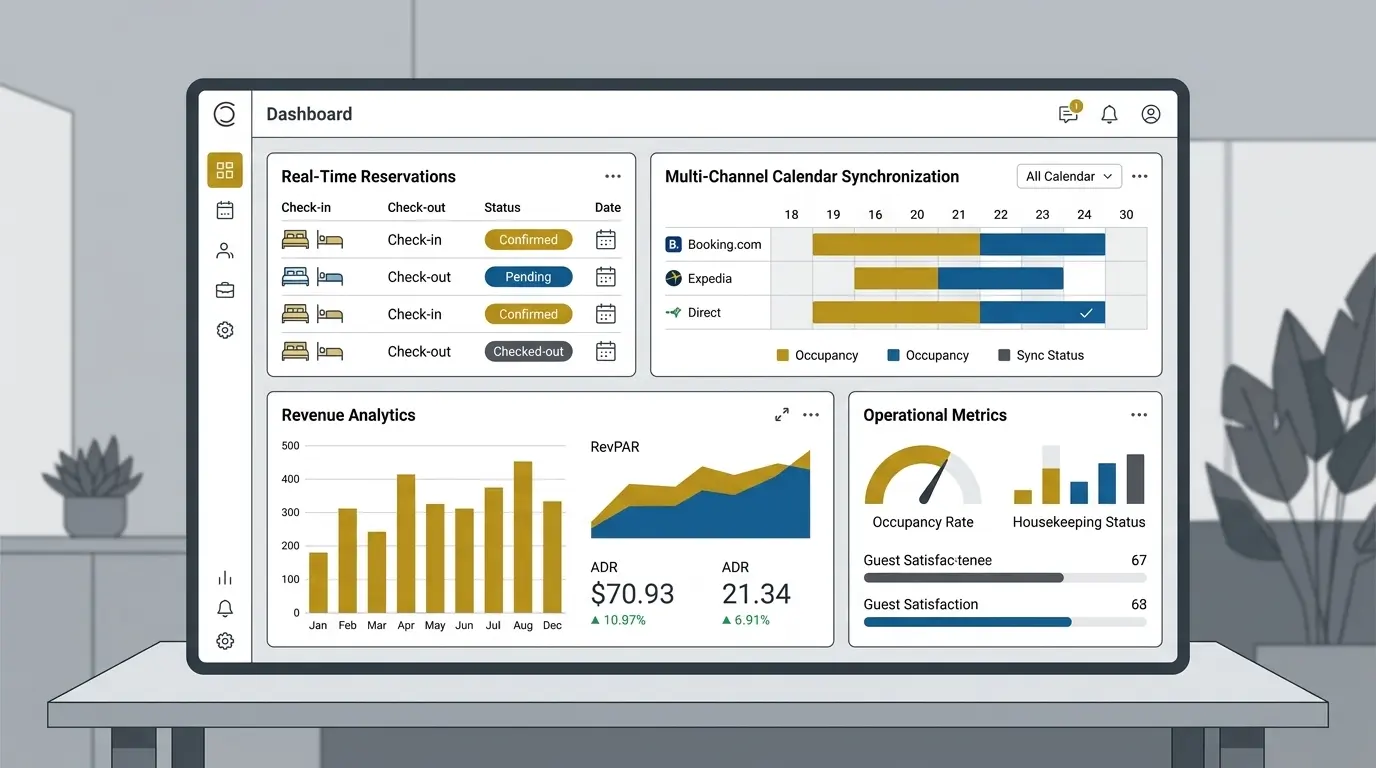
Enterprise operators managing dispersed regional portfolios eliminate manual reporting cycles. Consolidated operational dashboards aggregate occupancy performance, average spend per profile, and corporate contract usage across all properties into a unified analytical view without spreadsheet exports.
Technical Implementation Realities: Databases, APIs, and Hardware
Robust PMS and Channel Manager APIs
Clean operational execution requires resilient RESTful endpoints and bi-directional interfaces. CRM logic must connect seamlessly with external distribution nodes and existing booking software, as highlighted in our guide on hotel PMS vs channel manager mechanics.
Hardware Ecosystem Interoperability
Modern properties bridge software logic with physical assets. Dedicated integration points connect the CRM database with smart digital keycards, on-premise access panels, and interactive whiteboard or flat panel displays located in executive conference rooms and business suites.
High-Performance Database Design
Managing millions of guest events requires hybrid database architecture. Relational models secure ACID-compliant billing records and profile keys, while distributed document stores index unstructured guest preferences, dietary requirements, and past interaction histories for sub-second retrieval during peak front-desk check-in cycles.
Platform Architecture Comparison: Strategic Hospitality Evaluation
Choosing an enterprise guest management path requires evaluating engineering control against recurring license costs, integration depth, and data ownership constraints.
| Evaluation Dimension | Off-The-Shelf Hospitality CRM | Generic Custom Software | Colladome Custom Hotel CRM Development |
|---|---|---|---|
| Core Data Ownership & Portability | Vendor locks data in closed proprietary cloud silos. | Source code owned, but data models lack industry structure. | Complete ownership of databases, source code, and guest pipelines. |
| Multi-Property Scalability | Per-property licenses increase operational overhead as chains expand. | Requires significant architectural refactoring to handle multi-unit complexity. | Zero per-user licensing fees; built for infinite multi-unit horizontal scaling. |
| Interoperability with Hardware/PMS | Constrained to basic marketplace plugins; no custom hardware hooks. | Requires extensive third-party integration sprints from scratch. | Native integration with legacy PMS, payment gateways, and IFP hardware. |
| 3-Year Total Cost of Ownership | High recurring licensing fees that compound with business growth. | High development spend with unpredictable scope overruns. | Predictable development investment delivering positive ROI within 18 months. |
| Tailored Guest Automation Workflows | Limited to generic pre-built email templates and basic automations. | Custom logic requires complex bespoke scripting and ongoing fixes. | Engineered around specific operational guest touchpoints and booking engines. |
Commercial Applications: Operational Use-Cases Across Hospitality Formats
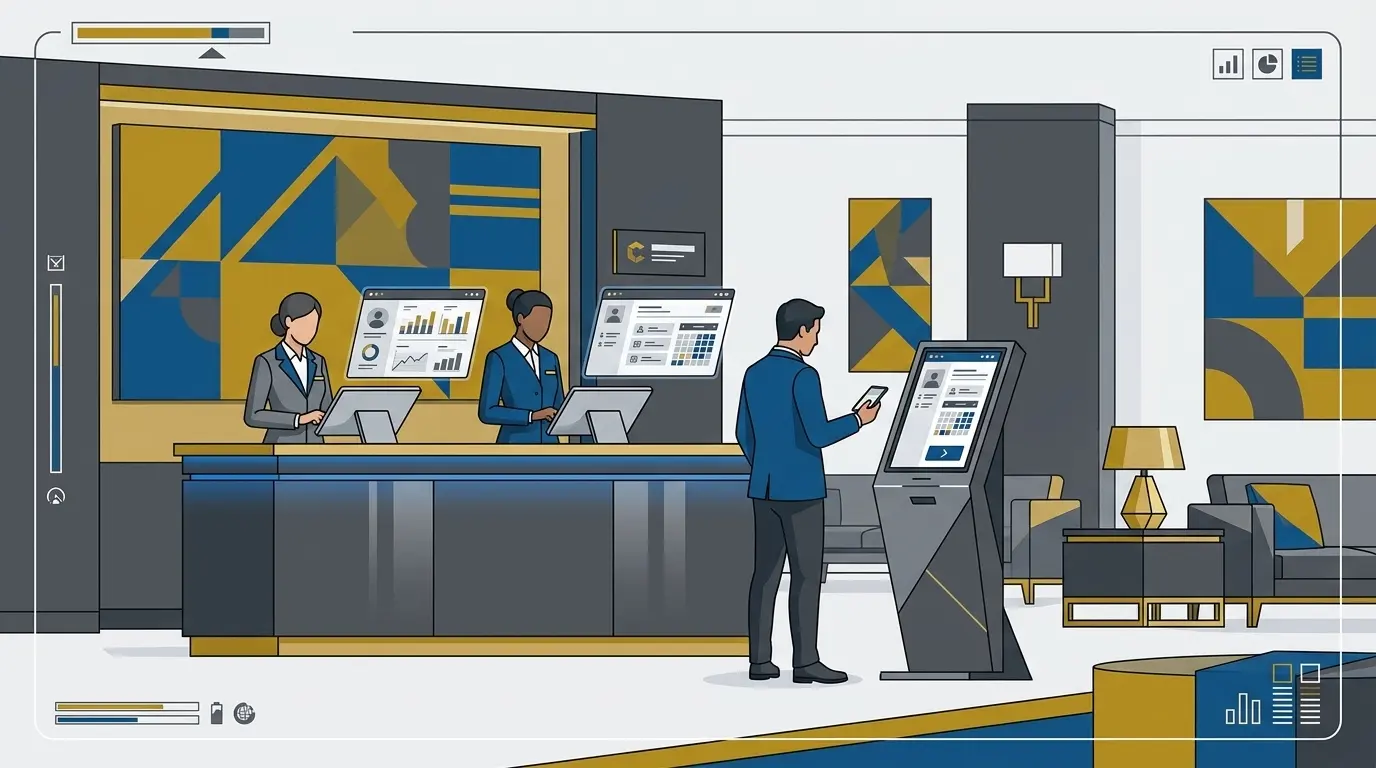
Tailored hotel CRM software development resolves operational bottlenecks across distinct hospitality business models, delivering quantifiable commercial returns:
- Boutique Luxury Chains: Operators construct hyper-curated guest identity vaults tracking distinct preferences—from hypoallergenic bedding choices to preferred vintages. Personalised concierge communications double direct rebooking frequencies and enhance brand reputation.
- Business and Conference Hotels: Custom CRM engineering automates complex corporate accounts, managing group block allocations and room-folio splits. It unifies conference space billing with smart interactive display scheduling across executive boardrooms.
- Multi-Unit Resort Operators: Integrated systems track holistic guest spend across dining outlets, golf courses, wellness facilities, and lodging into one consolidated guest profile, eliminating fragmented billing headaches.
Explore our broader strategic insights on benefits of CRM software development to discover how purpose-built platforms remove structural business constraints.
Evaluating Custom Development Timelines and Technical Feasibility
Determining whether to refactor legacy property tools or build an independent CRM engine requires strategic architectural planning. A greenfield development project generally takes between four and nine months depending on property portfolio scale, external API dependencies, and legacy database structures. Enterprise technology heads must conduct a comprehensive architectural consultation before committing development capital. This assessment identifies core data integration hurdles, audits existing PMS endpoints, and models projected total cost of ownership against ongoing SaaS licensing outlays.
Achieving Sustainable Revenue Independence Through Purpose-Built Hotel Software
Relying on generic customer management systems creates permanent operational ceilings for ambitious hotel operators. Subscription-based platforms restrict database flexibility, enforce escalating licensing costs, and leave hotels dependent on high-commission third-party booking channels. Purpose-built hotel CRM software development eliminates these barriers, granting hospitality brands direct ownership over customer data, automating high-value guest loyalty, and expanding direct booking revenue across every property.
Colladome engineers custom enterprise software designed to overcome operational limits and deliver measurable business advantage. Let’s make the next big thing together. Contact our engineering team for an architectural consultation.