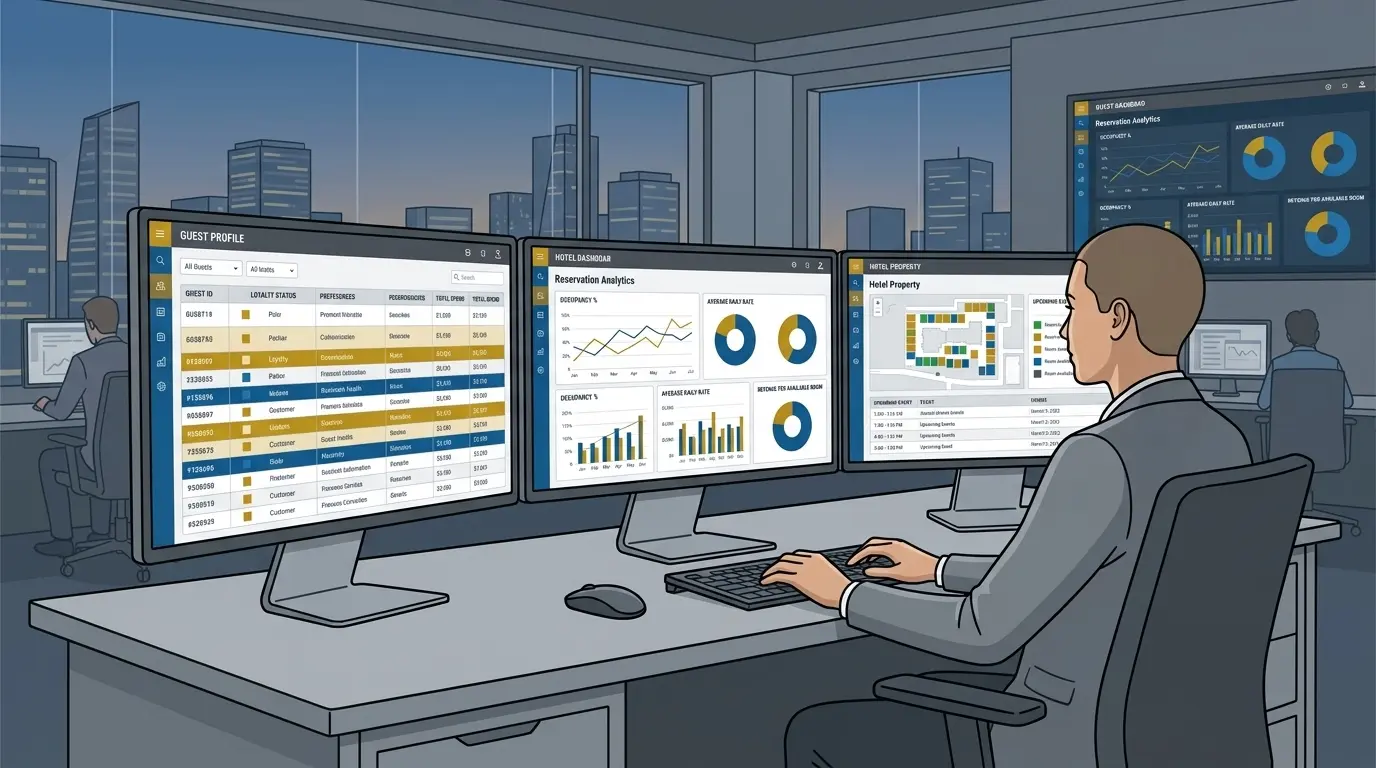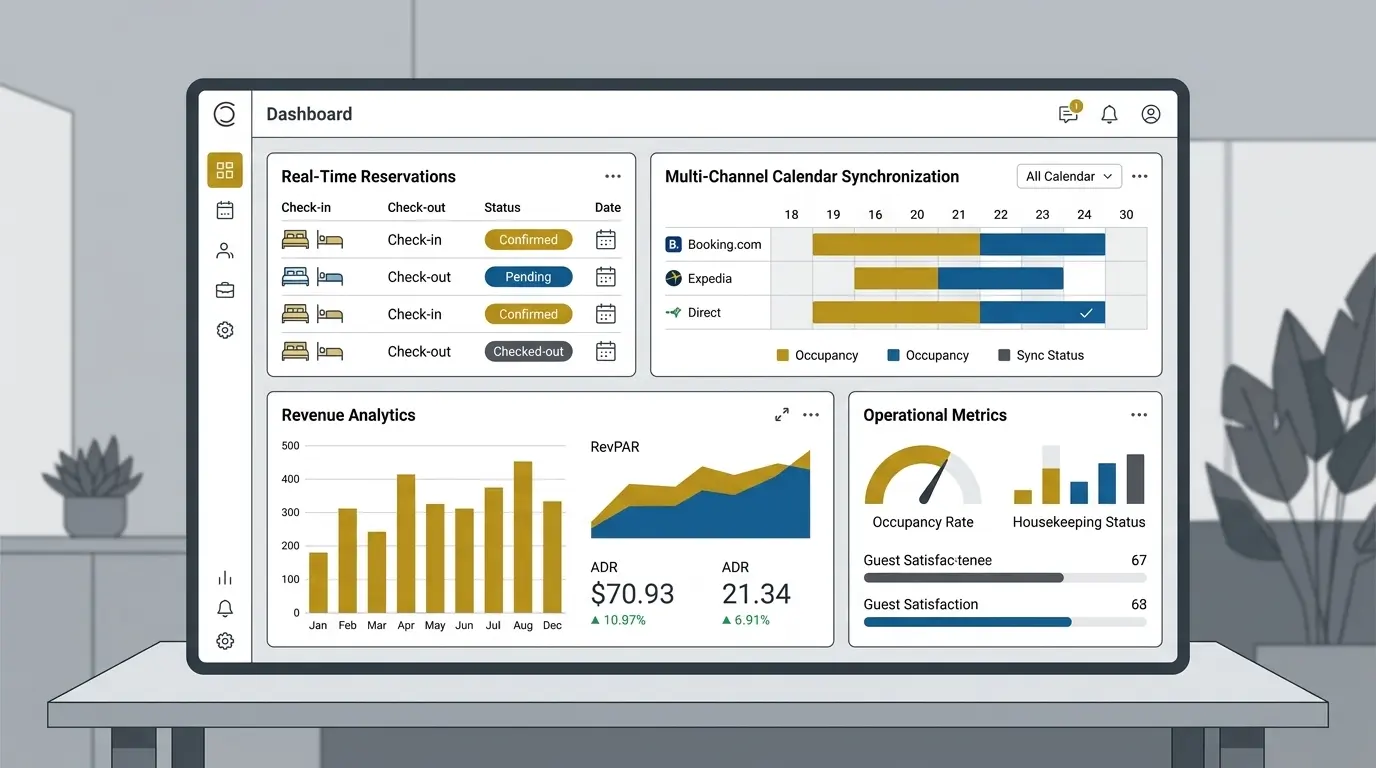

Hotel booking management software development is the engineering of bespoke digital architectures that centralise room inventory, automate reservation lifecycles, and process direct payments across multi-property hospitality networks. By unifying central reservation engines with real-time property management workflows, custom development eliminates manual administrative bottlenecks and bypasses compounding intermediary distribution fees.
The Operational Constraints of Legacy Hospitality Tech Stacks
Boutique hotel chains, heritage properties, and expanding hospitality groups often operate on fragmented digital foundations. Off-the-shelf software and reliance on third-party Online Travel Agencies (OTAs) impose severe operational friction. Commission rates routinely range between 15% and 25% per booking according to hospitality economic reports from the American Hotel & Lodging Association. Over time, these channel deductions erode operating margins and diminish Net Average Daily Rate (Net ADR) across high-demand periods.
Beyond margin dilution, legacy systems introduce significant synchronization latency. Standard aggregators update availability across external channels using batch intervals rather than instantaneous streams. This architectural flaw frequently leads to overbooking and duplicate reservations during peak booking windows. Furthermore, rigid third-party vendors restrict database access, resulting in customer data lock-in. When hoteliers cannot access historical guest expenditure or preference logs directly, long-term guest retention and brand equity suffer.
Architecting Bespoke Hotel Booking Engines for Complete Operational Control
Transitioning toward proprietary hospitality infrastructure requires a transition from rigid vendor tooling to a dedicated custom enterprise web application. Bespoke hotel booking management software development gives business leaders complete ownership of their technical stack, reservation logic, and guest communication funnels. Instead of renting standardised interfaces, operators deploy tailored booking engines that reflect their brand standards and specific business models.
Custom architectures operate directly against centralised relational databases or distributed microservices. This guarantees microsecond-level synchronization across the booking engine, front desk interfaces, and external Global Distribution Systems (GDS). By integrating dedicated ERP software development services, hospitality enterprises streamline cross-departmental operations, link banquet management with room allocations, and capture 100% of transaction margins directly through integrated domestic and international payment gateways.
Core Modules of a Scalable Hotel Management Ecosystem
Engineering a modern hospitality platform requires modular software components designed to address specific operational challenges:
- Multi-Channel Synchronization:
Problem: Inventory discrepancies between direct portals and global OTAs cause costly overbookings and manual front-desk correction cycles.
Solution: Deploy bidirectional XML and RESTful API integrations via robust hotel channel manager software development pipelines.
Outcome: Instantaneous room parity and complete eradication of double-booked rooms across all distribution endpoints. - Direct Booking Engine:
Problem: Intermediary transaction deductions lower RevPAR and disconnect the property from the direct guest journey.
Solution: Develop an optimized, lightning-fast direct booking engine equipped with secure payment tokenization.
Outcome: A measurable 15% to 20% expansion in direct commission-free reservations within the first operational quarter. - Property Management System (PMS) Orchestration:
Problem: Siloed communication between front-desk operators, housekeeping staff, and maintenance leads to extended room turnover delays.
Solution: Engineer centralised PMS modules that feature automated room status routing and real-time operational notifications.
Outcome: A 35% reduction in front-desk check-in turnaround times and heightened operational efficiency. - Guest Profile and Data Governance:
Problem: OTA-managed reservations obscure customer identities, limiting guest loyalty programs and personalised re-marketing opportunities.
Solution: Implement custom data schemas utilizing high-level role-based access control (RBAC) and end-to-end data encryption.
Outcome: Complete sovereignty over customer behavioral data, fostering higher lifetime spend and recurring direct bookings.
Essential Architectural Layers for Modern Booking Platforms
High-Concurrency Reservation Engine
Seasonal promotional campaigns and flash sales trigger dramatic traffic surges. A resilient booking system uses microservices architectures deployed across auto-scaling cloud clusters. By separating search queues from transaction processing pipelines, the reservation engine handles concurrent checkouts without database row-locking failures or service dropouts.
Bidirectional OTA Channel Management
Maintaining rate parity and room counts across dozens of external marketplaces requires continuous two-way API communication. Modern channel managers push availability updates within milliseconds of a confirmed transaction while simultaneously consuming external reservation payloads to adjust local room inventories instantly.
Dynamic Rate and Yield Management Algorithms
Fixed rate sheets inevitably leave revenue on the table. Bespoke booking engines incorporate rule-based automated pricing systems. These programmatic rules continuously evaluate real-time room occupancy, historical booking velocity, regional seasonality, and competitor benchmarks to adjust room pricing programmatically for maximum revenue per available room.
Enterprise Integrations Beyond the Booking Window
Integrated Property Management System (PMS) Workflows
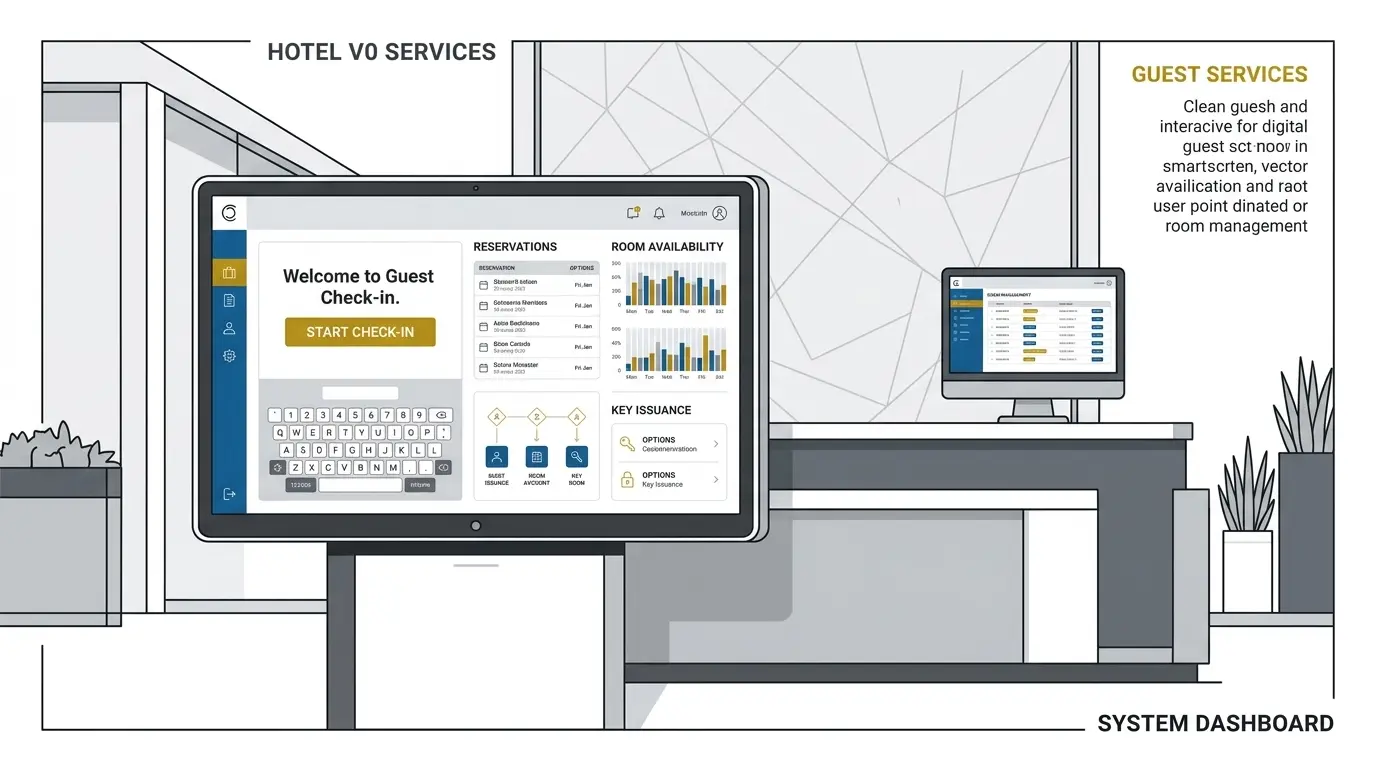
Connecting direct reservations to on-ground front-desk operations requires unified PMS data flows. Seamless system orchestration handles room assignments, schedules automated housekeeping dispatches, and interfaces with modern keyless digital lock APIs to enable digital check-ins directly via mobile devices.
Multi-Currency Financial Settlement & ERP Integration
Enterprise hotel groups require automated, fault-tolerant financial pipelines. Bespoke systems automate split invoicing, calculate localized goods and services taxes (GST/VAT), integrate regional escrow protocols, and synchronize daily transactional ledgers directly into corporate enterprise resource planning software.
Smart Display and In-Room IFP Hardware Compatibility
Modern luxury properties elevate guest experiences by bridging hardware and software. Custom architectures connect reservation systems directly to interactive flat panels (IFP) and in-room smart boards, automating personalised welcome greetings, room automation controls, and interactive concierge menus linked to the central billing engine.
Security, Compliance, and Data Sovereignty
PCI-DSS Tokenization and Transaction Security
Handling financial data demands strict compliance standards. Bespoke reservation systems deploy headless, tokenized payment workflows. By passing encrypted payment tokens directly to verified payment rails, cardholder records remain completely outside local application databases, significantly reducing compliance liabilities.
Role-Based Access Control (RBAC) and Audit Logs
Protecting commercial data assets requires structured operational controls. Bespoke software architectures establish granular role-based permissions across clerks, property supervisors, and corporate executives. Immutable audit logs monitor every rate adjustment, override, and transaction event, preventing internal data misuse.
Data Ownership versus SaaS Platform Lock-In
Relying on commercial multi-tenant SaaS tools leaves enterprise data trapped in proprietary vendor ecosystems. Bespoke database implementations grant hoteliers absolute legal and physical ownership over their guest records, seasonal pricing histories, and transaction trends, creating long-term operational equity.
Evaluating Hospitality Tech: Commercial SaaS vs Custom Booking Engine Development
Choosing between commercial off-the-shelf subscriptions, third-party distribution channels, and proprietary engineering requires careful evaluation of total ownership costs, technical control, and strategic freedom.
| Strategic Factor | Generic Commercial SaaS | Third-Party OTA Dependency | Custom Hotel Booking Management Software |
|---|---|---|---|
| Recurring Cost Model | Monthly subscription plus 2% to 5% add-on processing fees | Variable 15% to 25% commission deducted per reservation | Capitalized enterprise asset with 0% ongoing transaction commissions |
| Data Sovereignty & Guest Profiles | Shared multi-tenant database with restricted export options | Zero direct contact access; client identity masked | 100% proprietary direct database with unrestricted data ownership |
| Feature Flexibility & ERP Integration | Rigid vendor release cycle; generic integration interfaces | Closed marketplace platform; strictly booking-focused | Tailored microservices designed for multi-property operations |
| Brand Experience & Direct Traffic | Standardised checkout forms hosted on external domains | Third-party marketplace controls guest journey completely | Fully branded, white-label direct reservation workflows |
| Hardware Integration | Minimal or zero local hardware communication | No hardware integration capabilities | Direct API connectivity to smart boards, keyless locks, and POS units |
While generic options provide quick setup, proprietary custom engineering eliminates perpetual commission penalties, protects core enterprise data, and delivers an attractive long-term return on capital investment for expanding hotel brands.
Operational Scenarios: Custom Hospitality Engineering in Practice
Deploying tailored booking platforms eliminates core business constraints across diverse operational settings:
Multi-Property Boutique Hotel Group: An expanding portfolio of eight boutique properties previously relied on disjointed desktop PMS installations and disparate OTA connections. By migrating to a unified, bespoke custom hotel management software infrastructure, the operator centralized its group sales desk, unified customer profiles, and reduced OTA commission spend by 18%, substantially lifting group-wide EBITDA.
Luxury Resort with Smart Room Automation: A luxury destination resort required deeper synchronization between guest arrivals and property facilities. Through custom hotel booking management software development, the resort integrated reservations with in-room interactive flat panels (IFP) and local smart room controllers. Arriving guests experienced touchless digital check-ins, automated climate control, and digital dining orders billed directly to their folio without front-desk delays.
Strategic Considerations for Hospitality Decision-Makers
Evaluating an enterprise software transition requires honest technical assessment. Hospitality founders, CXOs, and operations heads must determine whether their current technological infrastructure constitutes a value-generating asset or an ongoing operational tax. Conducting technical feasibility audits, reviewing API integration readiness, and calculating multi-year build-versus-buy trade-offs remain essential operational prerequisites before allocating development capital.
Securing Competitive Hospitality Infrastructure Through Bespoke Engineering
Hospitality leaders who depend entirely on third-party aggregators sacrifice margin control, brand autonomy, and vital customer relationships. Custom hotel booking management software development resolves these operational constraints by delivering real-time inventory precision, reliable high-concurrency performance, and complete data sovereignty.
Strategic software engineering removes operational bottlenecks and aligns directly with ambitious business growth objectives. Connect with Colladome to evaluate your custom PMS, channel integration, and booking engine requirements through an executive technical architecture consultation. Let’s make the next big thing together!