
With thousands of agencies claiming to build great apps, finding the best mobile app development company for your specific project can feel overwhelming. Portfolios look polished, pitches sound confident, and almost everyone claims years of experience. The real difference shows up later, in how the app actually performs, scales, and holds up after launch.
This guide breaks down exactly how to choose a mobile app development company, what separates the genuine top mobile app development companies from the rest, what custom mobile app development actually involves, and how to think through the native vs cross platform app development decision before you even start evaluating partners.
What Makes a Mobile App Development Company “The Best”?
There’s no single agency that’s objectively the best for every business, since the right fit depends heavily on your industry, budget, technical requirements, and long-term goals. What matters more is identifying a company whose strengths align with what your specific project actually needs.
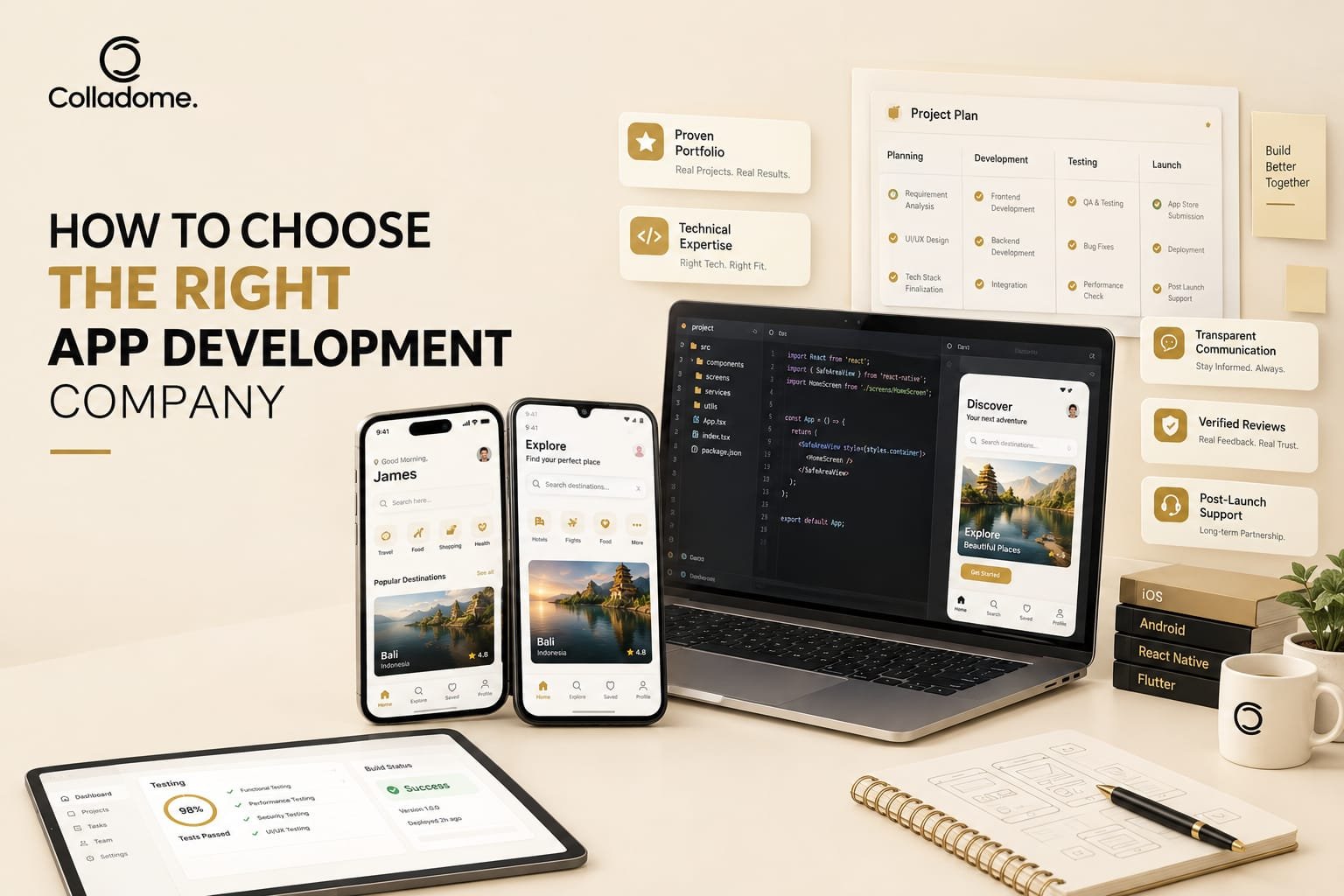
That said, a few qualities consistently separate strong partners from risky ones, regardless of project type. A track record of real, published apps still active in app stores, not just polished mockups or abandoned demo projects. Technical depth across multiple frameworks and platforms, so recommendations are based on project fit rather than whatever the team happens to know best. A clear, structured process covering discovery, design, development, testing, and post-launch support. Transparent pricing and defined milestones, so there are no surprises mid-project. And verified client feedback, ideally from businesses in a similar industry or with a similar project scope.
How to Choose a Mobile App Development Company
Working out how to choose a mobile app development company starts well before you look at a single portfolio. It begins with clarity on your own project first.
Define your app’s core purpose and primary user before reaching out to anyone, since a vague brief tends to attract vague proposals in return. Decide roughly what platform strategy you need, iOS only, Android only, or both, since this affects which companies and technical approaches make sense. Set a realistic budget range based on your actual feature list rather than an arbitrary number, and be upfront about it during initial conversations, since serious agencies scope work more accurately when they understand real constraints.
Once you’re ready to evaluate companies directly, ask about their experience with apps similar to yours in complexity and industry. Ask how they handle the native vs cross platform app development decision, and listen for whether their answer is based on your project’s needs or simply what they’re most comfortable building. Request to see and, where possible, actually use a few of their previous apps rather than just screenshots. Ask specifically about their testing process and what happens if bugs surface after launch. And confirm what post-launch support looks like, since a company that disappears after handoff can leave you stuck when issues inevitably come up.
What Sets Top Mobile App Development Companies Apart
When researching top mobile app development companies, it helps to look past marketing claims and focus on verifiable signals of quality.
| Evaluation Criteria | What to Look For |
| Portfolio depth | Live, published apps across multiple industries, not just mockups |
| Technical range | Experience with native, Flutter, React Native, and backend systems |
| Process transparency | Clear discovery, design, development, and testing stages |
| Post-launch support | Maintenance, updates, and bug-fix commitments after handoff |
| Communication | Regular updates and a defined single point of contact |
| Client reviews | Verified feedback on platforms like Clutch or Google |
Companies that score well across all of these areas, rather than excelling in just one, tend to deliver more consistent results across different types of projects, which is generally a better predictor of a good outcome than any single standout feature in their pitch.
What Is Custom Mobile App Development?
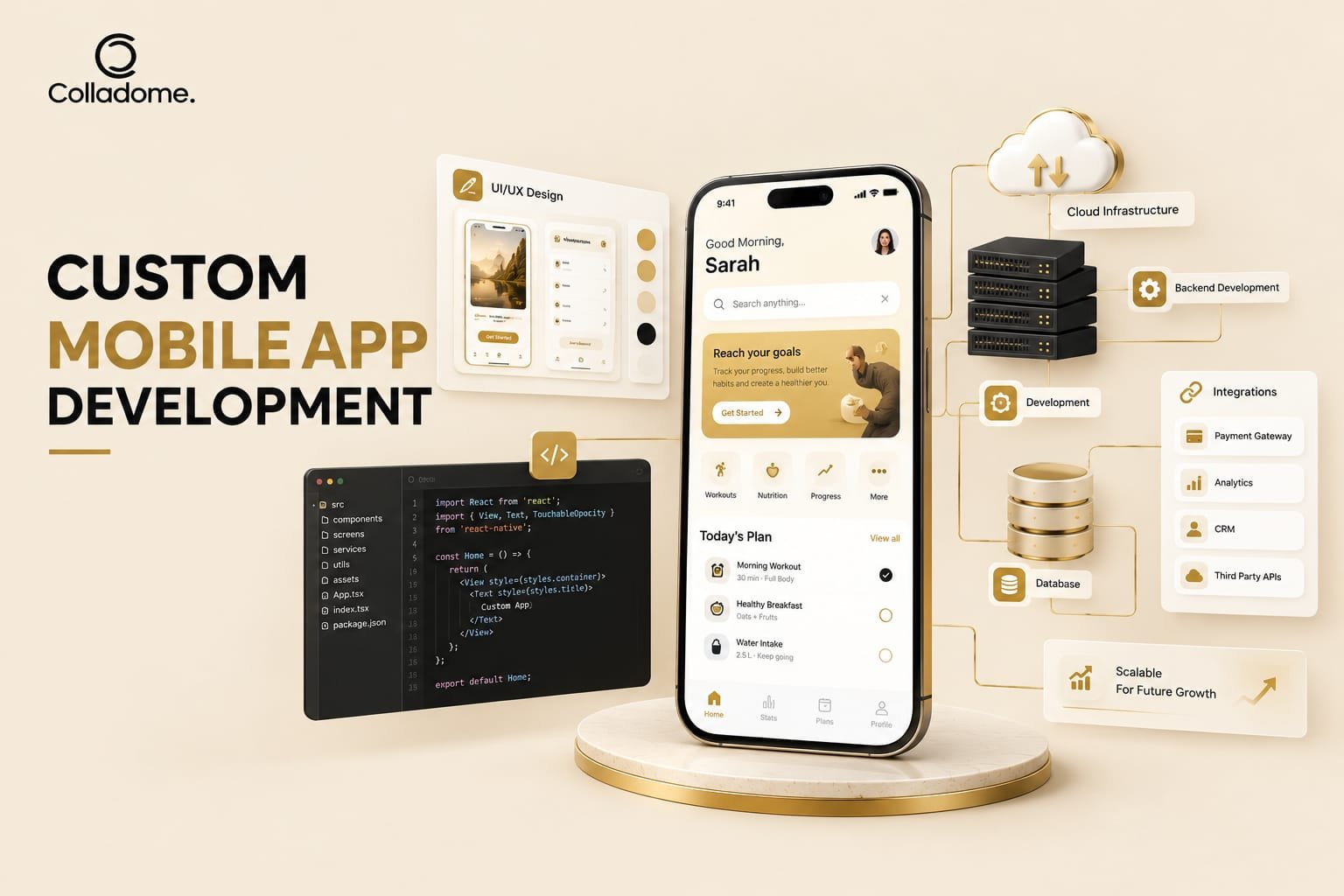
Custom mobile app development refers to building an app from the ground up around a business’s specific requirements, rather than relying on generic templates or low-code builders with limited flexibility.
This approach matters most when a business has needs that off-the-shelf app builders can’t handle well, such as complex backend logic, unique user permission structures, integrations with internal business systems, or performance requirements that generic tools weren’t designed to support. Custom development gives a business full control over functionality, design, and scalability, since the codebase isn’t carrying unused features built for thousands of unrelated use cases.
The trade-off is that custom development generally takes longer and costs more upfront than a template-based or no-code approach. For simple, straightforward apps, that extra investment may not be necessary. Custom mobile app development earns its cost when your requirements genuinely can’t be met by existing tools, or when long-term scalability and a distinct user experience are priorities from day one.
Native vs Cross Platform App Development: Which Is Right for You?
One of the most important early decisions in any app project is native vs cross platform app development, and getting this right shapes both cost and long-term flexibility.
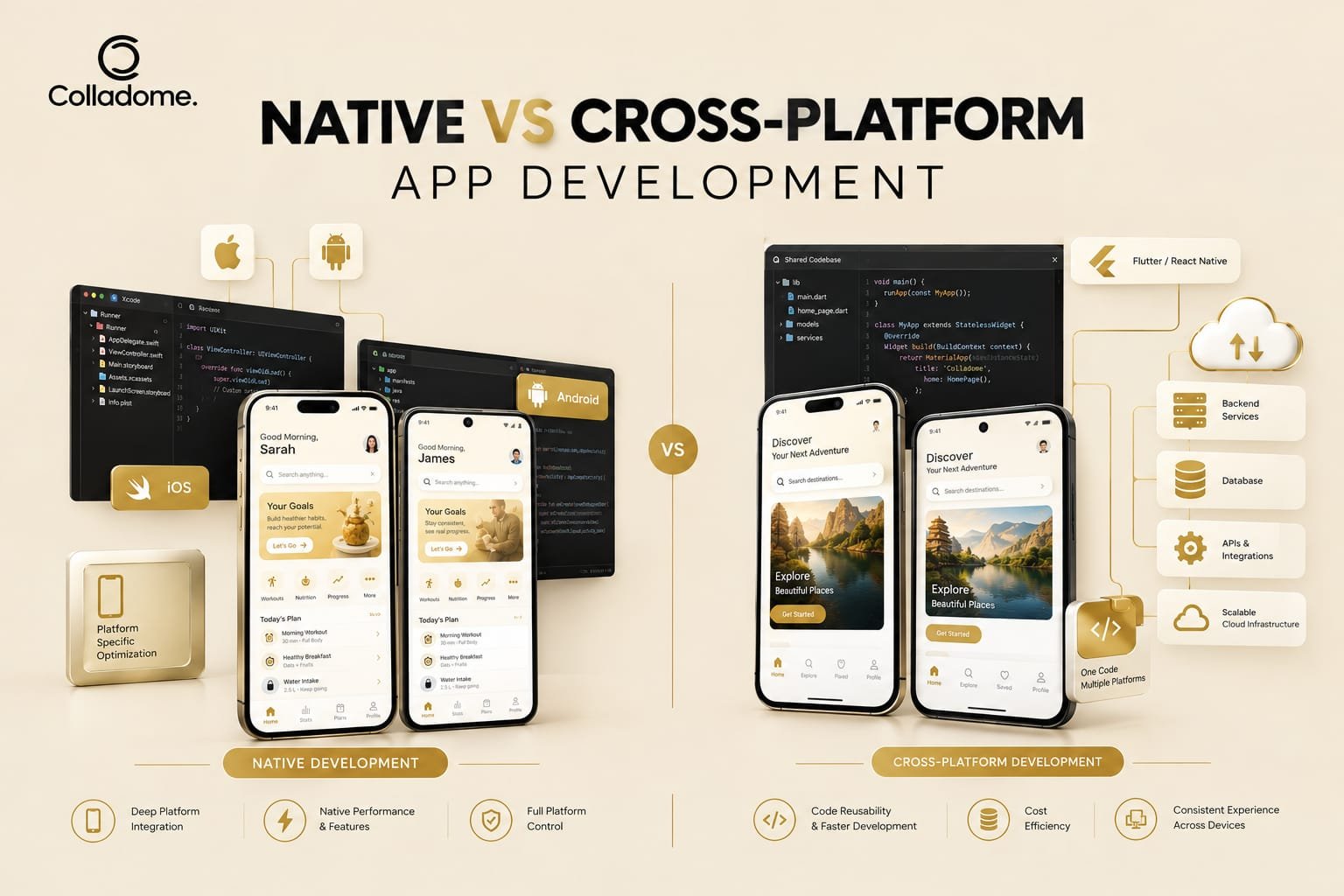
Native development builds a separate app for iOS and Android, each using that platform’s own programming language and tools. This generally delivers the best possible performance and the most seamless access to platform-specific features, but it requires maintaining two separate codebases, which increases both cost and development time.
Cross-platform development, using frameworks like Flutter or React Native, uses a single codebase to build for both iOS and Android at once. This significantly reduces development time and cost, and modern cross-platform frameworks have closed much of the performance gap with native apps for most typical use cases. It tends to make the most sense for businesses that need to launch on both platforms quickly, have a moderate budget, or don’t require extremely specialized native functionality.
Neither approach is universally better. Native development is often worth the extra investment for apps with heavy graphics, complex animations, or deep integration with device-specific features. Cross-platform development is often the smarter choice for most standard business apps, where speed to market and budget efficiency matter more than squeezing out the last few percent of native performance. A good mobile app development company should be able to recommend the right approach based on your project rather than defaulting to whichever one they’re most comfortable building.
Why Post-Launch Support Matters More Than It Seems
Many businesses focus almost entirely on the build phase when evaluating a mobile app development company, and underestimate how much of an app’s long-term success depends on what happens after launch. Operating systems update regularly, and an app that isn’t maintained can start breaking or losing compatibility within a matter of months. New device sizes, screen resolutions, and OS-level permission changes require ongoing attention, not a one-time fix.
Beyond technical maintenance, post-launch support also covers monitoring user feedback and app store reviews, identifying friction points that weren’t obvious during initial testing, and rolling out incremental improvements based on real usage data rather than assumptions made before launch. A company that treats launch as the finish line, rather than the starting point of an ongoing relationship, often leaves businesses scrambling to find a new partner just months after their app goes live, at a time when institutional knowledge about the app’s codebase is hardest to rebuild from scratch.
When comparing proposals, ask specifically what’s included in the months immediately following launch, and for how long, rather than assuming standard “support” covers everything you’ll actually need.
Red Flags to Watch for When Evaluating Agencies
Just as important as knowing what to look for is recognizing warning signs that a company may not deliver what they’re promising. Be cautious of agencies that give a fixed price and timeline before fully understanding your requirements, since accurate scoping requires real discovery. Watch for a portfolio filled only with design mockups rather than live, functioning apps you can actually download and test. Vague answers about their testing process or post-launch support are another warning sign, since these are exactly the areas where corners get cut under time pressure.
Be wary of companies that push a specific technology regardless of your project’s actual needs, since this often reflects what they’re comfortable building rather than what’s genuinely best for you. And pay attention to communication during the sales process itself, since how responsive and clear an agency is before you’ve signed anything is usually a reliable preview of what working with them will actually feel like.
Final Thoughts
Finding the best mobile app development company for your project isn’t about picking the agency with the flashiest portfolio or the lowest quote. It comes down to understanding how to choose a mobile app development company based on your specific needs, recognizing what genuinely separates top mobile app development companies from the rest, and making an informed native vs cross platform app development decision before development even begins.
Whether you’re exploring custom mobile app development, comparing top mobile app development companies, or working through the native vs cross platform app development decision for the first time, the strongest results consistently come from partners who prioritize understanding your business before proposing a technical solution.