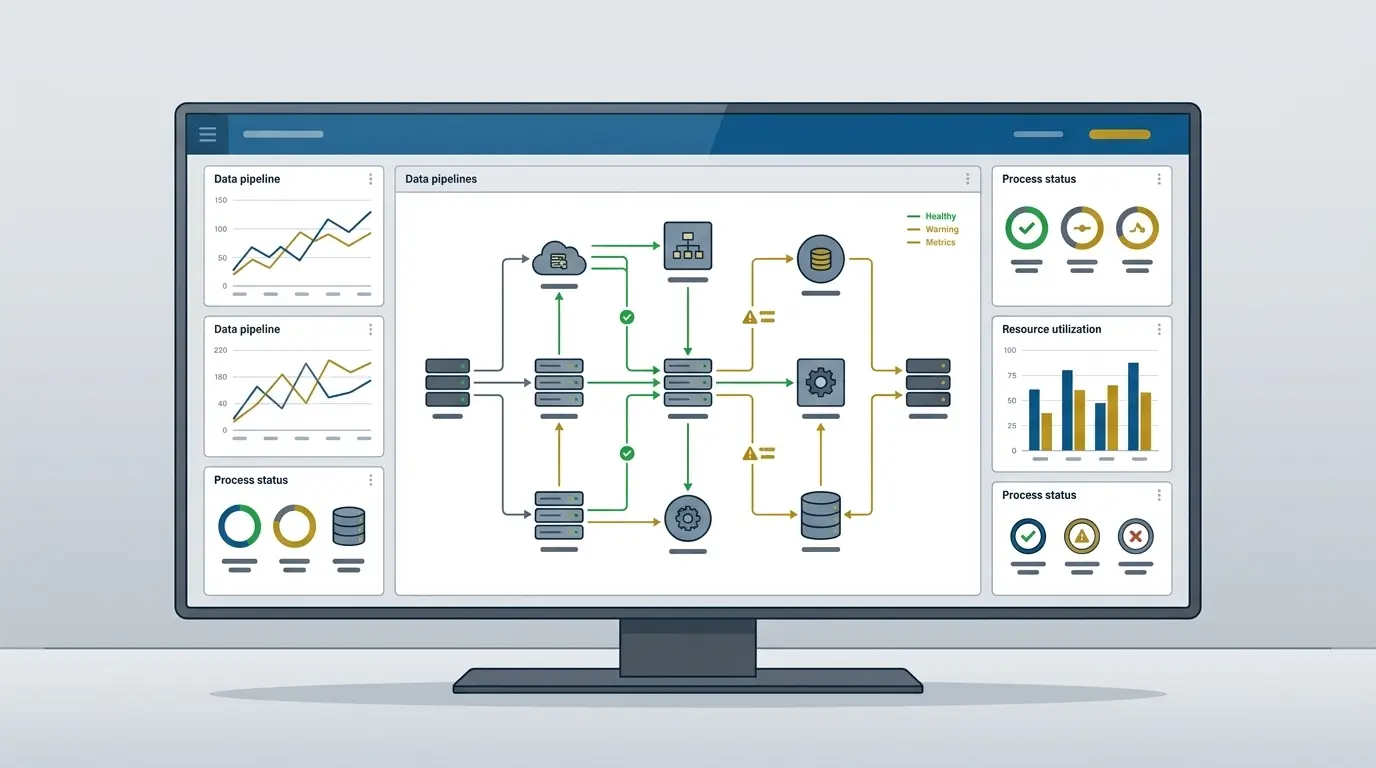

Architectural Divide: Script Execution vs Contextual Intelligence
The operational core of the conversational AI vs chatbot debate centers on how software processes human intent. A traditional chatbot relies on static decision trees, keyword matching, and pre-written scripts. In contrast, conversational AI combines natural language processing (NLP), machine learning, and dynamic system integration to understand context, infer user intent, and execute complex workflows autonomously. For small and medium enterprises (SMEs), choosing between these architectures directly affects customer lifetime value, support overhead, and digital throughput.
The Breaking Point of Rule-Based Architecture
Traditional rule-based chatbots operate through hardcoded logic trees. When a user input matches a specific keyword or button selection, the bot returns a predetermined response. This structural friction creates operational bottlenecks when customer inquiries deviate from linear paths. In sectors like hospitality, manufacturing, and logistics, guest and client needs rarely follow rigid scripts. A customer seeking to amend a reservation while asking about pet policies forces a rule-based engine into a loop of unhelpful fallback messages.
This failure pattern introduces severe business leakage. According to industry research published by Gartner, organizations face mounting customer dissatisfaction and high attrition rates when automated self-service channels fail to resolve complex transactions. Instead of reducing operational overhead, standard chatbots frequently create secondary work: human support teams spend hours handling escalated, frustrated inquiries. Relying on basic automated scripts produces significant operational drag, forcing growing firms to scale customer support headcount in direct proportion to user acquisition.
Conversational AI: Decoupling Scale from Human Overhead
Conversational AI eliminates operational constraints by combining Natural Language Understanding (NLU), dialogue state tracking, and generative language models. Rather than matching exact keywords, the system converts unstructured text into semantic embeddings. This allows the software to extract entities, parse sentiment, and maintain context across multi-turn conversations. When integrated with core enterprise software, such as central reservation systems or operational ERPs, the conversational interface functions as an autonomous operational layer.
By leveraging enterprise AI development services, businesses decouple customer volume growth from operational headcount. The conversational engine manages nuanced interactions 24/7, from processing secure payments to adjusting inventory records. Businesses seeking broader automation can also deploy modular custom AI agents to coordinate complex back-office workflows. Understanding how AI agents work alongside conversational front-ends allows SMEs to build unified digital operations that actively protect margins.
Strategic Evaluation: Problem, Solution, and Measurable Outcomes
Evaluating conversational automation requires analyzing specific business constraints across four critical operational dimensions:
- Intent Recognition and Complex Queries:
Problem: Static scripts fail when users phrase questions using colloquialisms or multi-part inquiries.
Solution: Conversational AI applies semantic vector search and probabilistic intent mapping to resolve non-linear phrasing.
Outcome: Customer support escalation rates drop by up to 40%, preserving internal bandwidth. - Backend Integration and Transactional Execution:
Problem: Disconnected chatbots only provide static FAQ answers, forcing users to call support for transactional changes.
Solution: Modern conversational architectures connect via dynamic APIs directly into custom enterprise web applications and ERP databases.
Outcome: End-to-end self-service resolution for bookings, invoice downloads, and order amendments. - Multi-Channel Scalability:
Problem: Deploying disparate, uncoordinated bots across WhatsApp, mobile apps, and web portals creates siloed customer records.
Solution: A centralized conversational AI core coordinates unified user profiles across all digital channels.
Outcome: Reduced software maintenance overhead and consistent brand engagement across every touchpoint. - Data Utilization and Continuous Learning:
Problem: Standard chatbot scripts trap conversational data in isolated log files without delivering business intelligence.
Solution: Advanced conversational platforms feed transcript analytics and customer sentiment into executive reporting dashboards.
Outcome: Rapid identification of operational bottlenecks, driving continuous service delivery improvements.
Architectural Mechanics and Engineering Underpinnings
Natural Language Understanding and Intent Resolution
Traditional bots employ regular expression pattern matching that fails on basic typos or novel syntax. Modern conversational frameworks utilize deep learning tokenizers and dense vector embeddings. The engine maps spoken or written sentences into high-dimensional vector spaces, recognizing user intent regardless of sentence construction.
State Management and Multi-Turn Contextual Awareness
Static systems treat every interaction as an isolated request, losing context immediately. Conversational AI maintains state management layers that retain historical conversation memory across turns. When a customer shifts focus to ask a clarifying question before returning to a checkout flow, the system retains the primary transaction parameters without resetting.
Enterprise Integration via Dynamic APIs
A conversational system delivers business value only when connected to operational databases. Through secure REST and GraphQL endpoints, conversational AI reads and writes data to hotel property management systems (PMS), supply chain software, and custom CRM platforms in real time, executing database mutations securely without manual intervention.
Operational Costs, TCO, and Maintenance Realities
Upfront Development vs Ongoing Operational Drag
Low-code rule-based bots carry low initial development costs but impose severe recurring labor expenses. Operations teams spend countless hours reviewing failed transcripts, manually adding synonym rules, and resolving escalated tickets. A custom conversational implementation requires higher initial capital expenditure but yields a significantly lower total cost of ownership (TCO) as transaction volume expands.
Training Data, Model Governance, and Continuous Optimization
Maintaining enterprise-grade AI requires deliberate data governance. Engineering teams establish continuous feedback loops using reinforcement learning from human feedback (RLHF) and fine-tuning on domain-specific datasets. This ongoing refinement prevents model hallucination and ensures brand voice compliance without constant manual rule curation.
Enterprise Security, RBAC, and Data Leakage Protection
Deploying AI interfaces within enterprise infrastructure requires strict governance frameworks. Systems must incorporate Role-Based Access Control (RBAC), multi-tenant data isolation, and programmatic masking of Personally Identifiable Information (PII). Structured audit trails ensure compliance with Indian and international data protection standards, safeguarding sensitive corporate information.
Vertical Business Impact: From Overhead to Revenue
Transforming Support Desks into Automated Revenue Engines
Standard chatbots deflect queries passively, while conversational AI identifies purchasing intent during routine interactions. By analyzing contextual dialogue cues, the system recommends personalized upgrades, cross-sells related inventory, and secures digital transactions directly within the chat interface, converting routine service requests into revenue opportunities.
Hospitality and Booking Automation
In modern accommodation management, deploying custom hotel management software integrated with conversational engines eliminates front-desk bottlenecks. The interface manages room selections, processes deposit payments via integrated gateways, and updates housekeeping records automatically, providing frictionless guest service around the clock.
Bridging the Gap to Autonomous AI Agents
Conversational interfaces increasingly act as the visual front-end for specialized autonomous systems. When a user requests an operational audit or inventory restock, the interface delegates discrete execution steps to custom AI agents. These multi-agent workflows automate complex back-office procedures smoothly, decoupling enterprise productivity from administrative labor.
Technical and Strategic Comparison Matrix: Chatbots vs Conversational AI
| Decision Metric | Traditional Rule-Based Chatbot | Enterprise Conversational AI |
|---|---|---|
| Core Technology | Decision trees, regex keyword matching, static scripts | NLP, NLU, large language models, dynamic vector embeddings |
| Context & Memory | Single-turn, isolated responses; resets upon unexpected input | Multi-turn dialogue retention; tracks state across complete sessions |
| Backend Integration | Static webhooks or standalone siloed operation | Bi-directional integration with ERP, PMS, and custom CRM platforms |
| Scalability & Flexibility | Breaks on novel phrasing; requires continuous manual script curation | Adapts semantically to diverse inputs; learns continuously from dialogue |
| Development & Deployment | Fast, template-driven setup with minimal engineering | Custom architectural engineering tailored to proprietary enterprise data |
| Maintenance Overhead | High continuous manual rule updating and high human escalation costs | Low manual curation; programmatic performance optimization |
| Primary Business Outcome | Basic deflection of simple, repetitive FAQ volume | Autonomous transaction execution, reduced headcount constraints, and revenue growth |
While standard chatbots offer a fast setup for simple FAQ deflection, enterprise ROI decisively favors conversational AI. Custom architecture eliminates manual operational constraints, automating complex business logic and executing transactions directly across core enterprise databases.
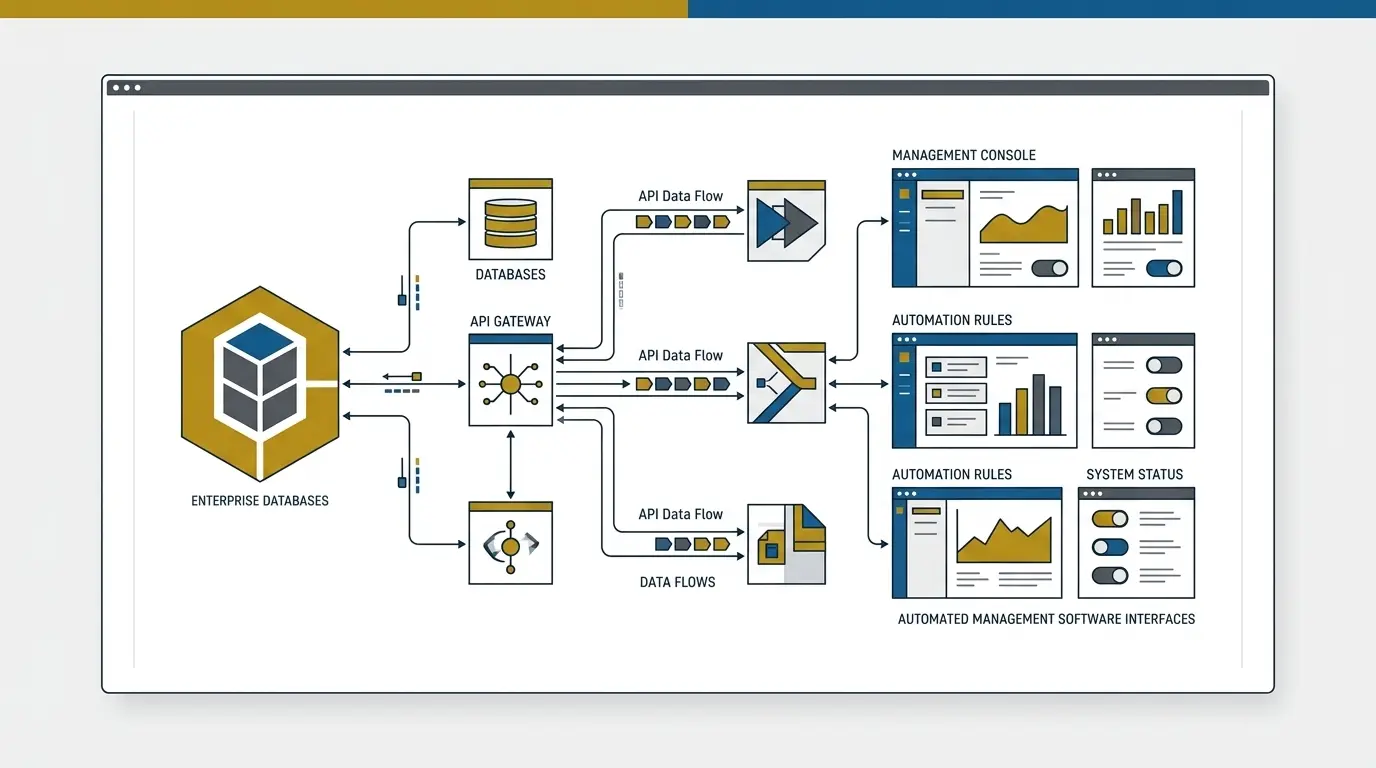
Enterprise Implementations Across Core Industry Sectors
Deploying conversational AI across distinct business verticals illustrates how intelligent automation resolves entrenched operational bottlenecks:
Hospitality and Property Management
Hotels and resort chains face constant front-desk congestion and high telephone inquiry volumes. Conversational AI interfaces directly with the central PMS to check live room availability, confirm reservations, adjust dining bookings, and upsell premium amenities in multiple languages. By deploying specialized hotel front desk software with native conversational capabilities, properties deliver immediate guest satisfaction while maintaining lean administrative staffing.
Logistics and Supply Chain Coordination
Freight and distribution enterprises manage hundreds of routine partner inquiries regarding shipment statuses, port delays, and delivery schedules. Conversational architectures parse complex bill-of-lading numbers, fetch real-time telematics data from transportation management platforms, and coordinate route changes directly with fleet drivers, eliminating repetitive communication cycles.
Enterprise B2B Software and Manufacturing
In high-value B2B operations, conversational systems qualify inbound enterprise leads instantly. The interface assesses client requirements, evaluates annual budget parameters against company qualification criteria, and orchestrates calendar invites for senior solution architects. Furthermore, through tailored ERP software development services, conversational tools let factory supervisors query inventory balances and trigger purchase orders using simple natural language prompts.
Evaluating the Architectural Transition for Your Organization
Moving from a basic chatbot to an enterprise conversational AI platform requires an objective evaluation of your current operational bottlenecks. Businesses experiencing high customer drop-off during self-service flows, rising support payroll, or fragmented internal databases must conduct a thorough architectural audit. Engaging in a technical AI consulting and strategy assessment helps identify where conversational automation delivers immediate capital efficiency, mapping system integrations and data hygiene before engineering commences.
Strategic Conclusion: Moving Beyond Scripted Automation
The choice between conversational AI vs chatbot infrastructure defines an enterprise’s operational trajectory. Traditional chatbots function like digital telephone switchboards, forcing users through rigid paths that frustrate customers and constrain internal bandwidth. Conversational AI provides an autonomous, context-aware operational layer that resolves user inquiries, updates core databases, and unlocks scalable commercial growth without ballooning payroll. Forward-thinking SMEs must replace fragile scripts with intelligent, custom-engineered software designed to scale effortlessly. Let’s make the next big thing together!