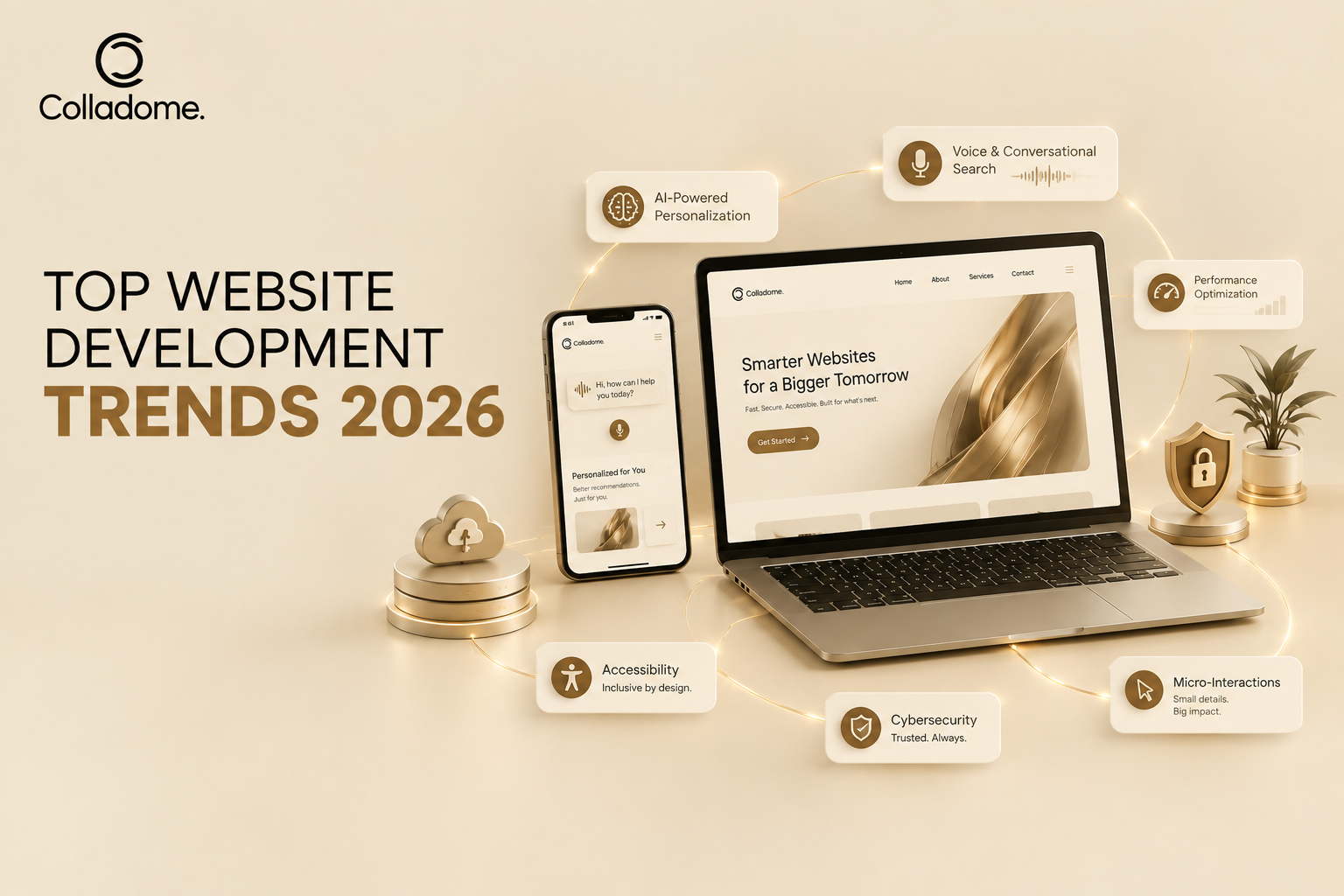

Websites are no longer simple digital brochures. Businesses now expect their websites to deliver fast experiences, support AI-powered features, protect user data, and work smoothly across devices.
As technology continues to evolve, understanding the website development trends 2026 brings can help businesses make better technology decisions. Modern development is increasingly shaped by artificial intelligence, performance optimization, security, accessibility, flexible architectures, and personalized user experiences.
For businesses planning a new website or upgrading an existing platform, these trends can influence everything from technology selection to development cost and long-term maintenance.
What Are the Website Development Trends 2026 Businesses Should Know?
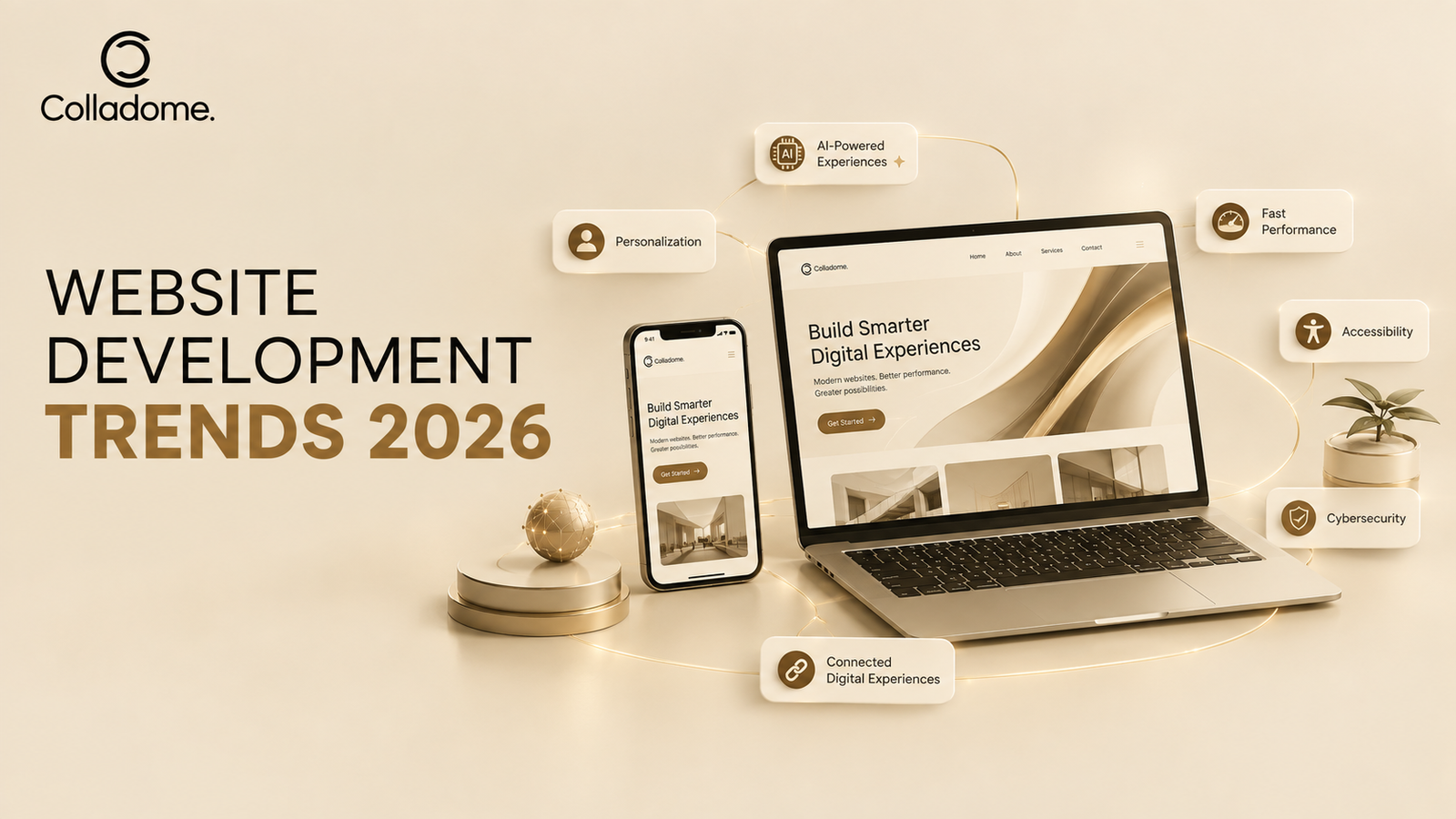
The major website development trends 2026 include AI-assisted development, AI-powered website experiences, faster web architectures, edge computing, stronger cybersecurity, accessibility, personalized experiences, and performance-focused development.
AI is becoming important across the development lifecycle. Developers can use AI tools for code generation, testing, debugging, documentation, and repetitive development tasks. At the same time, businesses are adding AI features directly to websites and web applications.
However, technology alone does not make a website successful. Businesses should choose trends based on their users, business goals, budget, and technical requirements.
1. AI-Assisted Website Development
AI-assisted development is one of the most significant trends shaping modern websites.
Development teams can now use AI tools to generate code, explain existing code, identify errors, create tests, and speed up repetitive tasks. This allows developers to spend more time on architecture, business logic, security, and user experience.
AI does not remove the need for experienced developers. Instead, it can improve development efficiency when teams review and validate AI-generated output carefully.
How AI Can Improve Website Development
AI can support:
- Code generation and refactoring
- Automated testing
- Bug detection
- Documentation
- Accessibility checks
- Content personalization
- Chatbots and virtual assistants
- Recommendation systems
- Data analysis
Businesses should therefore look for development teams that know how to combine AI tools with human technical expertise.
2. AI-Powered Websites and Intelligent User Experiences
AI is also moving from the development process into the website itself.
Modern websites can use AI to understand user behavior and provide more relevant experiences. For example, an e-commerce website can recommend products based on browsing behavior. A service website can use an AI assistant to answer common questions and guide visitors toward relevant services.
AI agents are also becoming more capable of completing tasks rather than simply responding to questions. This shift is influencing how businesses think about digital products and customer interactions.
Examples of AI-Powered Website Features
Businesses can consider:
- AI chat assistants
- Smart search
- Personalized recommendations
- Automated lead qualification
- AI-generated summaries
- Intelligent product discovery
- Predictive analytics
- Automated customer support
The right feature depends on the business problem. Adding AI without a clear purpose can increase complexity without creating meaningful value.
3. Faster Websites and Performance-First Development
Website speed remains a major priority in 2026.
Users expect pages to load quickly and respond smoothly. Slow interactions can increase abandonment and reduce conversions. Therefore, developers are paying greater attention to performance during the development process instead of treating optimization as a final step.
Core Web Vitals and interaction performance continue to influence modern web development decisions. INP, or Interaction to Next Paint, is now an important measure of how quickly a website responds to user interactions.
Ways to Improve Website Performance
Development teams can improve performance through:
- Image optimization
- Efficient JavaScript
- Code splitting
- Caching
- Content delivery networks
- Server-side rendering
- Lightweight page structures
- Optimized database queries
- Efficient API requests
A performance-first approach can create a better experience while supporting long-term scalability.
4. Edge Computing and Faster Content Delivery
Edge computing is another important development trend.
Traditional applications often process requests through centralized servers. Edge architectures move some processing closer to users. This can reduce latency for applications that need fast responses across different geographic locations.
Edge computing can be useful for:
- Global websites
- Real-time applications
- Personalized content
- APIs
- E-commerce platforms
- Media applications
- Interactive web applications
However, businesses should not adopt edge architecture simply because it is trending. Developers should evaluate traffic patterns, application requirements, infrastructure complexity, and expected performance gains first. Recent industry analysis also highlights edge runtimes as a practical option for selected workloads rather than a universal requirement.
5. Server-First and Modern Web Architectures
Modern web development is moving toward architectures that reduce unnecessary client-side processing.
Server-side rendering, server components, and modern full-stack frameworks can help developers deliver content efficiently while limiting the amount of JavaScript sent to the browser.
These approaches can improve:
- Initial page performance
- SEO
- Data loading
- Application scalability
- User experience
The best architecture depends on the project. A content-focused website may need a different approach from a complex SaaS platform or enterprise web application.
6. Accessibility Becomes a Core Development Requirement
Accessibility is no longer something businesses should consider after development.
Websites should work for users with different abilities, devices, and interaction methods. Developers are increasingly considering accessibility during design, development, and testing.
Important areas include:
- Keyboard navigation
- Proper heading structures
- Accessible forms
- Alternative text for images
- Readable typography
- Sufficient contrast
- Screen-reader compatibility
- Clear error messages
Accessibility can also improve usability for the wider audience. A website that is easier to navigate can create a better experience for everyone.
7. Stronger Website Security and Privacy
Cybersecurity has become a fundamental part of website development.
Modern websites often connect with payment systems, customer databases, APIs, analytics platforms, and third-party services. Each integration can introduce potential security risks.
Development teams are therefore giving greater attention to secure authentication, access control, dependency management, data protection, and software supply-chain security. Recent 2026 development analysis identifies security and software supply-chain practices as increasingly important delivery requirements.
Important Website Security Practices
Businesses should consider:
- Secure authentication
- Role-based access control
- Data encryption
- Regular security testing
- Dependency updates
- Secure API design
- Backup and recovery processes
- Security monitoring
- Privacy-conscious data collection
Security should be built into the architecture rather than added shortly before launch.
8. Personalized Website Experiences
Personalization is becoming more practical as websites collect and analyze first-party data.
Instead of presenting exactly the same experience to every visitor, businesses can tailor content based on factors such as previous interactions, customer segments, preferences, or product interests.
For example, an online store can show relevant products to returning customers. A B2B website can display industry-specific content based on visitor segments.
However, personalization should respect user privacy. Businesses need clear data practices and should avoid collecting information without a legitimate purpose.
9. Headless and Composable Website Architecture
Headless architecture separates the frontend presentation layer from the backend content or commerce system.
This approach can give businesses more flexibility when they need to deliver content across websites, mobile applications, kiosks, or other digital channels.
Composable architecture can also allow businesses to select specialized tools for different functions rather than relying on one large platform.
When Should Businesses Consider Headless Development?
Headless development can make sense when a business needs:
- Multiple digital channels
- Flexible frontend experiences
- Custom user interfaces
- Complex integrations
- Scalable content delivery
- Omnichannel content management
It may not be necessary for every small business website. A traditional CMS can remain more practical when simplicity and low maintenance are the main priorities.
10. Better Design Systems and Interactive Experiences
Modern websites are also becoming more consistent and interactive.
Design systems allow teams to create reusable components, typography rules, spacing systems, buttons, forms, and other interface elements. This improves consistency across large websites and applications.
At the same time, modern browser capabilities support smoother transitions and richer interactions. Figma’s 2026 trend analysis highlights a broader movement toward fluid, responsive web experiences that reduce unnecessary loading and interaction friction.
However, animations should support usability rather than distract visitors. Businesses should always balance visual appeal with performance and accessibility.
Website Development Trends 2026: What Should Businesses Prioritize?
Not every business needs every emerging technology. The right priorities depend on the website’s purpose, audience, and growth plans.
| Trend | Business Value | Best Use Case |
|---|---|---|
| AI-assisted development | Faster development and testing | New websites and web applications |
| AI-powered features | Automation and personalization | Customer-facing digital products |
| Performance optimization | Faster experiences and better engagement | All modern websites |
| Edge computing | Lower latency | Global and real-time applications |
| Strong security | Better data and application protection | E-commerce and enterprise websites |
| Accessibility | More inclusive user experiences | Public and customer-facing websites |
| Headless architecture | Greater frontend flexibility | Omnichannel and complex platforms |
| Design systems | Consistency and easier maintenance | Large websites and applications |
The key is to prioritize technologies that solve real business problems.
How a Website Development Agency Can Help
Working with a professional website development agency can help businesses plan technology decisions before development begins.
A reliable agency can evaluate business requirements, recommend a suitable technology stack, create the user experience, develop the website, test its functionality, and provide ongoing maintenance.
A development partner can also help businesses avoid unnecessary technologies. For example, a small corporate website may not need a complex headless architecture or advanced AI infrastructure.
The goal should be to build a website that is useful, scalable, secure, and easy to maintain.
How to Choose the Right Website Development Company Near Me
Searching for a website development company near me can be a useful starting point, but location should not be the only selection factor.
Businesses should evaluate the company’s technical expertise and previous work before making a decision.
Check the Company’s Portfolio
Review previous projects that are similar to your requirements. Look at design quality, functionality, performance, and industry experience.
Evaluate Technical Expertise
Ask whether the company has experience with the technologies required for your project. This may include modern frontend frameworks, backend development, APIs, cloud platforms, AI integrations, or CMS platforms.
Review Communication and Support
Clear communication can make development easier. Ask how the team handles project updates, testing, changes, maintenance, and post-launch support.
Compare the Development Process
A professional company should have a clear process covering discovery, planning, design, development, testing, deployment, and maintenance.
How to Evaluate the Top Website Development Companies
Businesses often search for the top website development companies before selecting a development partner. However, a company ranking highly online does not automatically mean it is the right choice for every project.
Instead, compare companies based on:
- Relevant portfolio
- Technical expertise
- Industry experience
- Client reviews
- Development methodology
- Security practices
- Communication
- Post-launch support
- Project timelines
- Pricing transparency
The best development partner is the one that understands your business requirements and can build a solution that supports your long-term goals.
How Much Does Website Development Cost in 2026?
Website development cost depends on the scope and complexity of the project.
A basic business website may require fewer design components and integrations. A complex web application may require custom workflows, APIs, dashboards, authentication, payment systems, AI features, and advanced security.
Factors That Affect Website Development Cost
The major factors include:
- Number of pages
- Custom UI/UX requirements
- Technology stack
- CMS or headless architecture
- Backend complexity
- Third-party integrations
- AI features
- E-commerce functionality
- Security requirements
- Testing requirements
- Maintenance and support
Businesses should request a detailed estimate instead of selecting a development partner based only on the lowest quote.
A clear estimate should explain what the development package includes and identify potential additional costs.
Common Website Development Mistakes to Avoid
Following the latest trends does not guarantee a successful website.
Businesses should avoid these common mistakes:
1. Choosing Technology Without a Business Reason
Do not select a framework or architecture simply because it is popular. Choose technology that supports your requirements.
2. Ignoring Mobile Users
A website should provide a consistent experience across smartphones, tablets, and desktops.
3. Treating Performance as an Afterthought
Performance should be considered during architecture, design, development, and testing.
4. Adding Too Many Features
Every feature should serve a clear purpose. Unnecessary functionality can increase development time and maintenance requirements.
5. Ignoring Security
Security vulnerabilities can affect customer trust and business operations. Build security into the development process from the beginning.
6. Forgetting Maintenance
A website needs ongoing updates, monitoring, security fixes, and performance improvements after launch.
How to Prepare Your Website for the Future
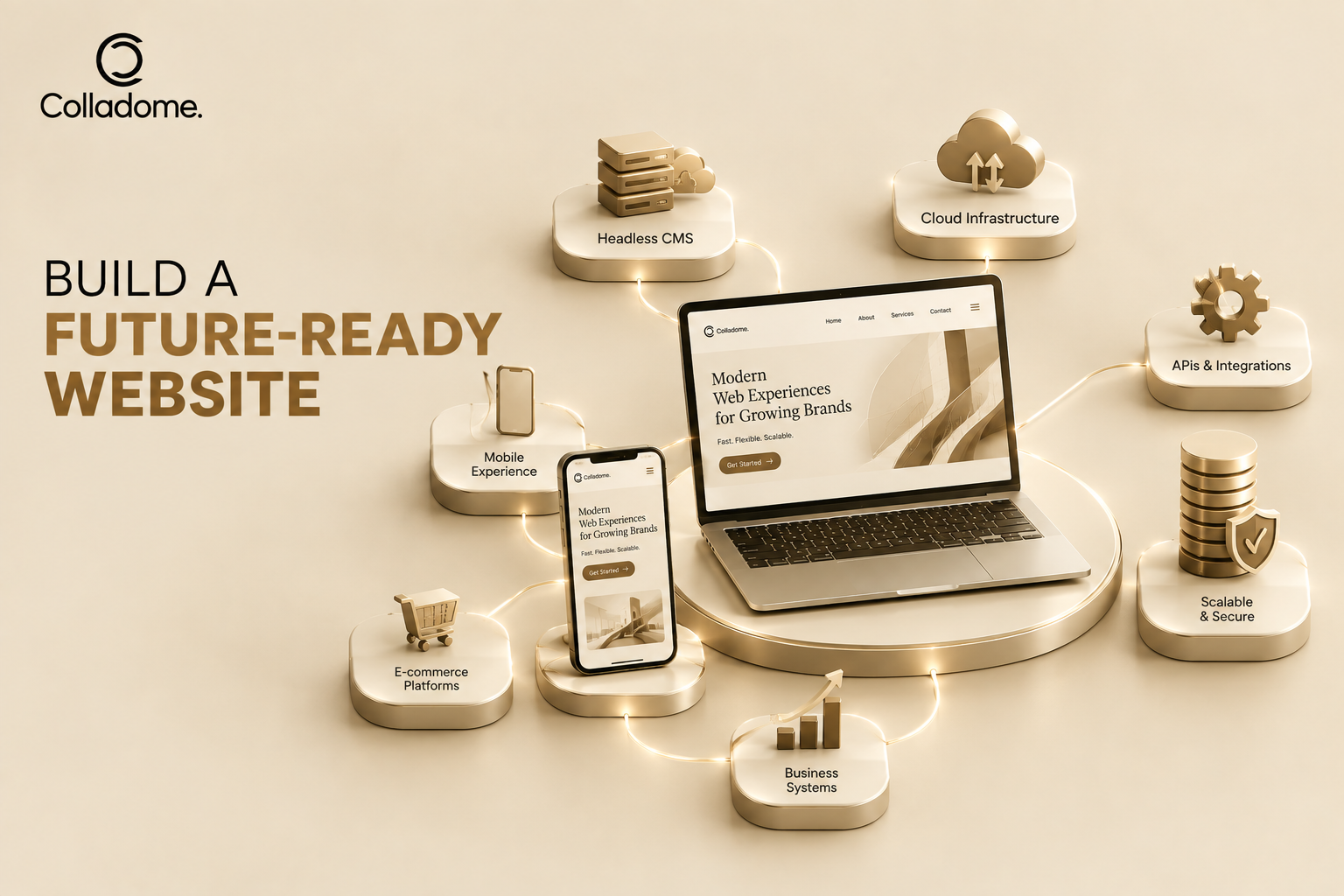
Businesses can make websites more future-ready by focusing on flexible architecture and clean development practices.
Start with clear business requirements. Then select a technology stack that can support expected growth.
It is also useful to keep APIs, integrations, security, performance, and accessibility in mind from the beginning.
Most importantly, avoid building around short-lived hype. A technology should earn its place in your architecture by solving a genuine problem.
Final Thoughts
The website development trends 2026 brings are changing how businesses build and manage digital experiences. AI, performance, security, accessibility, personalization, and flexible architectures are becoming increasingly important.
However, successful website development is not about using every new technology. It is about choosing the right technology for the right business problem.
Whether you are building a new website or upgrading an existing platform, focus on speed, usability, security, scalability, and long-term maintainability.
A reliable website development agency can help you evaluate these requirements and create a website that supports both current business needs and future growth.