
The Fragmentation Barrier: Why Conventional Hospitality Systems Constrain Growth
Hospitality enterprises routinely manage daily operations across disconnected legacy applications. Off-the-shelf software packages separate front desk folios from restaurant points of sale, central reservation channels, and dynamic housekeeping dispatch schedules. This architectural division traps business-critical telemetry within isolated vendor databases, forcing night auditors and operations teams into tedious manual exports to reconcile guest accounts.
The structural consequence of these operational silos is continuous revenue leakage. Channel managers running on asynchronous batch syncs create room availability discrepancies across online travel agencies (OTAs), triggering overbooking penalties and guest dissatisfaction. Delayed housekeeping updates prevent ready rooms from cycling into inventory during peak arrival windows. This constraint represents a structural engineering bottleneck within legacy hospitality architecture rather than an on-site operational staffing deficit.
Custom Enterprise Software: Eliminating Operational Bottlenecks Across the Property Lifecycle
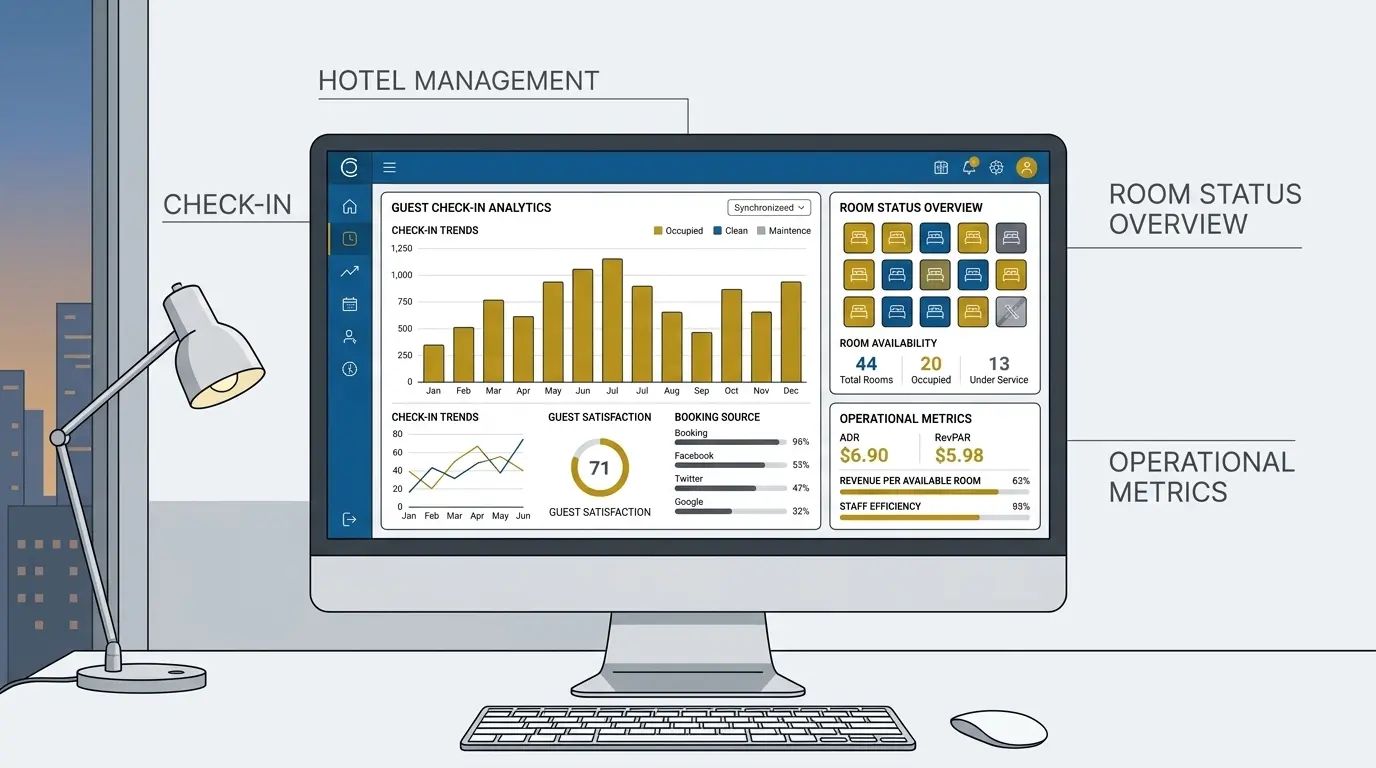
Engineering a bespoke hotel management ERP removes these commercial friction points by consolidating core workflows under a unified hospitality data layer. Rather than forcing property managers to bend operational procedures around rigid software licensing models, purpose-built platforms reflect the precise operational logic of expanding hospitality portfolios.
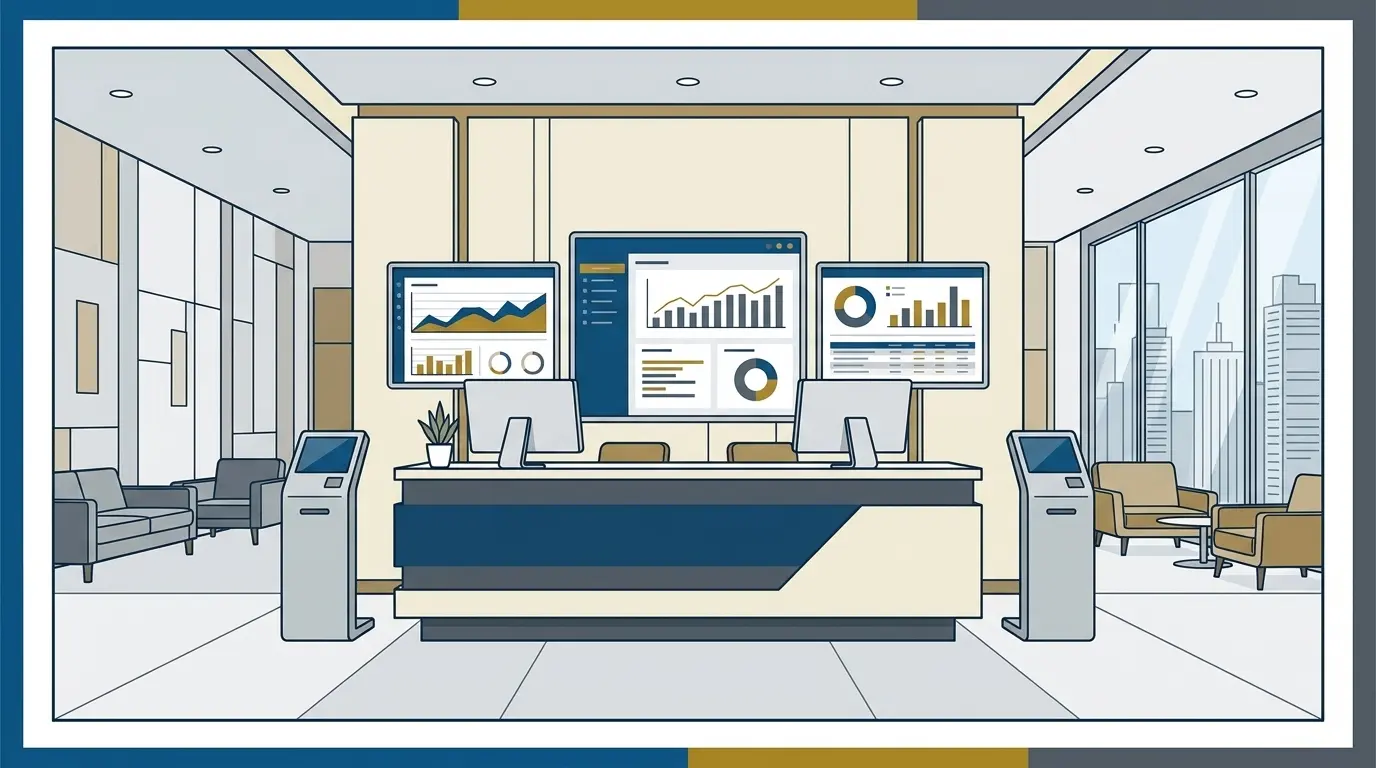
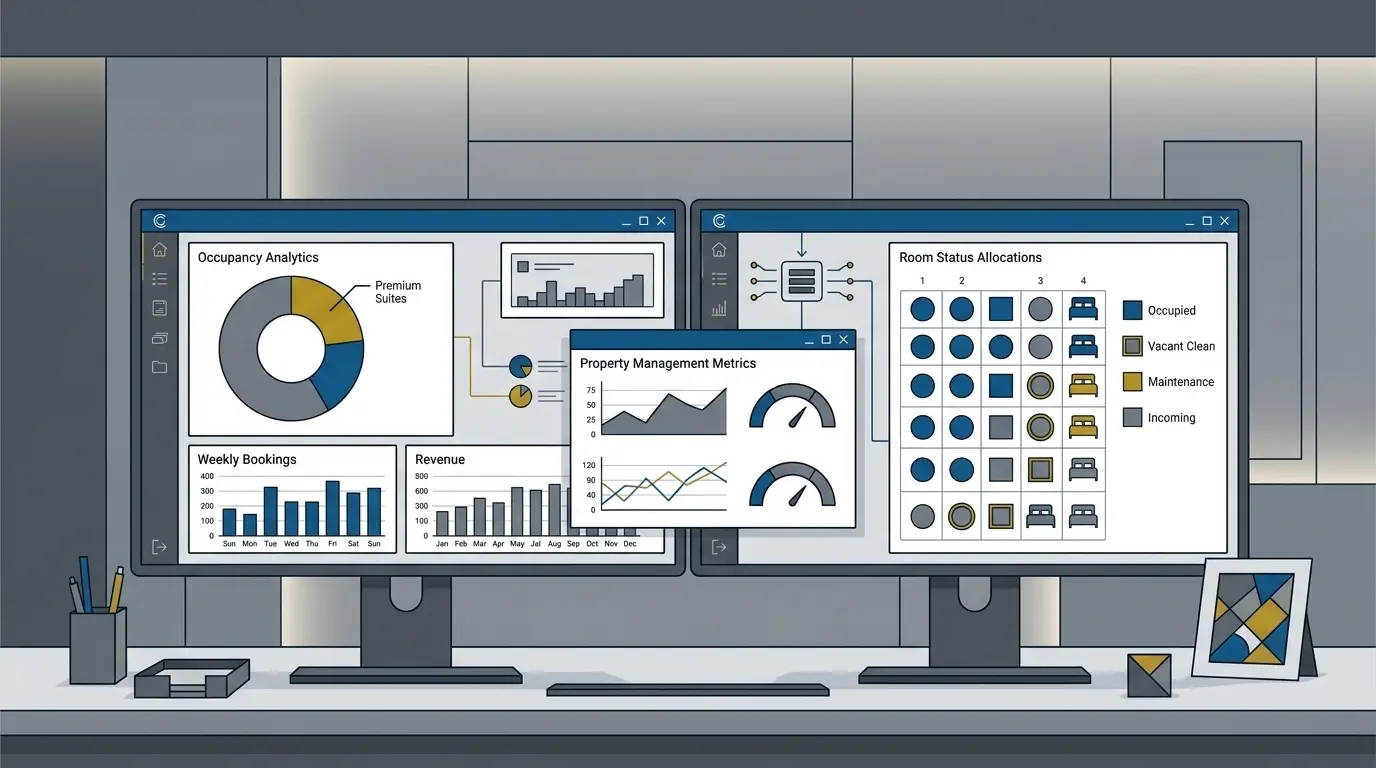
A modern custom enterprise web application unites real-time booking distribution, algorithmic room assignment, guest profile tracking, and preventive maintenance logs. By establishing direct database synchronization across properties, hospitality leaders can monitor portfolio-level performance metrics while maintaining local operational autonomy. Furthermore, purpose-built platforms link directly with proprietary physical infrastructure, including self-service kiosks and interactive digital hardware, turning static operational nodes into dynamic touchpoints.
Strategic Implementation Pillars: Turning Operational Workflows Into Revenue Engines
Enterprise platforms eliminate manual friction across properties by implementing four technical operational pillars:
- Real-Time Channel and Inventory Synchronization: Static batch synchronization causes rate parity failures across OTAs, leading to commission disputes and search visibility penalties. Implementing cloud-native, bidirectional API integrations updates global distribution networks in sub-second intervals, preserving rate parity and driving direct reservations through custom hotel front desk software development architectures.
- Automated Housekeeping and Maintenance Routing: Delayed room status notifications prolong guest check-in queues and depress customer satisfaction scores. Dynamic mobile dispatch algorithms route cleaning crews automatically based on live folio checkout events and room priority queues, shrinking turnaround cycles by up to 35% across peak morning turnovers.
- Unified Guest Profile and POS Ledger Aggregation: Fragmented billing across food, beverage, wellness facilities, and front-desk accounts creates folio disputes during check-out. A unified, event-driven ledger syncs all point-of-sale terminals directly to central guest accounts, eliminating invoice disputes and revealing high-margin cross-sell behaviour.
- Hardware and Smart Display Ecosystem Integration: Corporate conference rooms and lobby displays often rely on standalone media hardware requiring manual oversight. Incorporating direct device drivers for Interactive Flat Panels (IFP) and digital signage into the core platform reduces local IT maintenance costs and speeds up meeting facility turnovers.
Core Architectural Layers in Modern Hotel Operations Software
Building scalable enterprise platforms requires modular technical layers that separate transactional processing, network security, and global inventory distribution into resilient microservices.
Scalable Cloud Database Schema
Microservices architectures utilizing hybrid relational and document databases prevent transactional deadlocks during high-demand booking surges. Decoupling central inventory reads from write operations allows multi-property operators to scale room allocations across regional portfolios without concurrency latency.
Role-Based Access Control and Security Governance
Enterprise data protection enforces strict role-based access control (RBAC) across front-desk clerks, revenue managers, and maintenance personnel. Granular data masking safeguards payment tokens under PCI-DSS compliance frameworks, ensuring night-audit operations run without exposing sensitive guest histories.
Bidirectional OTA and Global Distribution Engine
Bidirectional API gateways integrate global distribution systems (GDS) directly with the internal reservation core. Event-driven webhooks deliver instant availability broadcasts across external booking channels, preventing distribution conflicts and maintaining room rate integrity according to Hospitality Net industry standards.
Engineering Advanced Operational Workflows and Automation
Custom engineering automates standard operational workflows, converting repetitive administrative chores into immediate efficiency gains across property teams.
Predictive Housekeeping Dispatch Algorithms
Checkout triggers initiate predictive cleaning queues ordered by room classifications, arriving guest tiers, and cleaner locations. Automating dynamic schedule updates removes idle downtime for housekeeping teams, ensuring rooms become available for immediate guest arrivals.
Integrated Food, Beverage, and Facility Billing
Direct communication protocols tie restaurant POS systems and spa modules directly into the guest folio engine. Automated transaction clearing guarantees charges sync immediately to the primary room balance, eliminating uncollected bills and checkout delays.
Proactive Maintenance and Asset Management
Automated equipment registries log operating runtimes on critical building systems like HVAC, elevators, and kitchen chillers. The system schedules preventative maintenance tasks automatically before operational breakdowns trigger guest complaints or unexpected repair bills.
Enterprise Integrations: Beyond Standard PMS Capabilities
Modern properties rely on unique software integrations to capture high-margin revenue and drive operational efficiency beyond traditional hospitality systems.
Next-Generation Interactive Flat Panel (IFP) Connectivity
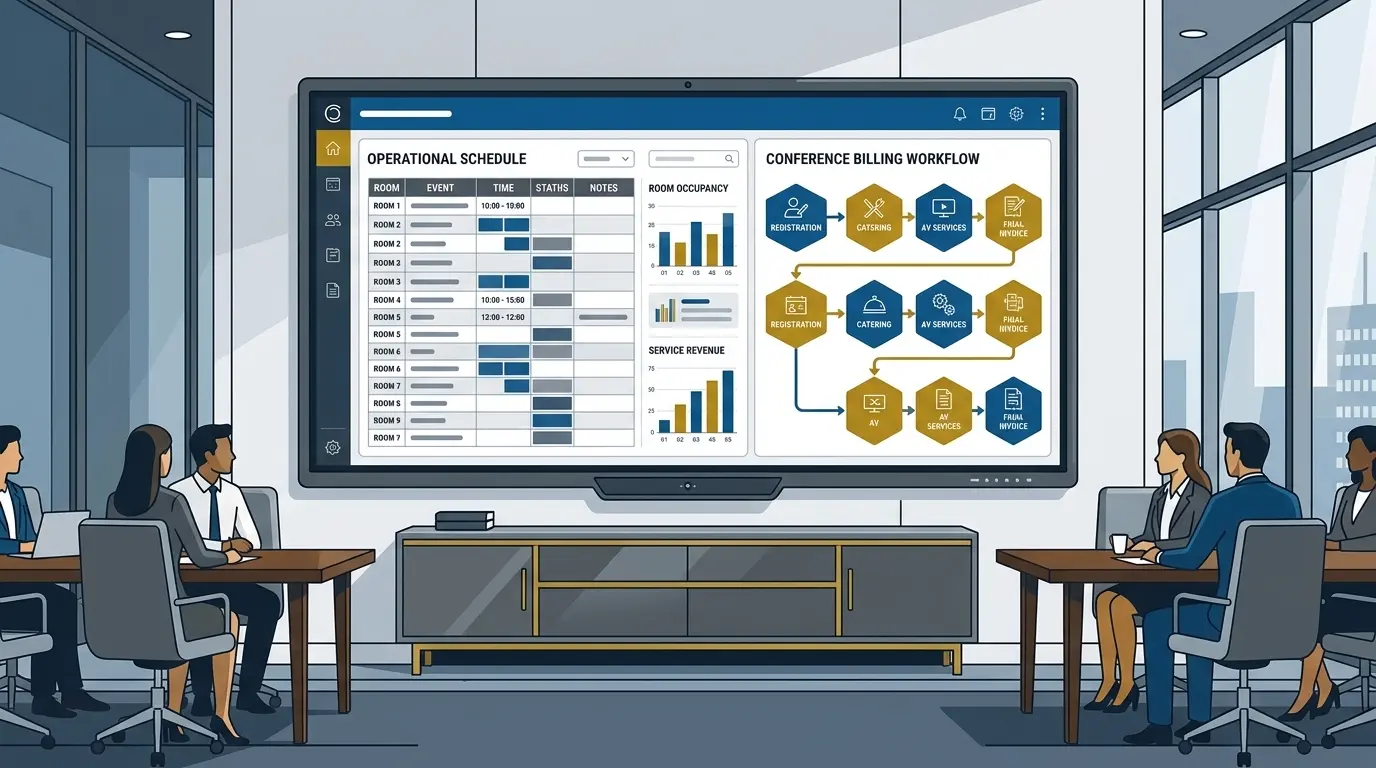
Direct device driver integration ties executive boardrooms and conference facilities to the central property platform. Connecting Interactive Flat Panels (IFP) and digital whiteboards enables automated billing for corporate usage, opening new commercial revenue channels.
Predictive Yield Management and Pricing Automation
Automated pricing algorithms analyze competitor rate changes, reservation velocities, and seasonal booking history in real time. Dynamic pricing rules automatically modify nightly rates, lifting total revenue per available room (RevPAR) during market demand peaks.
Comparative Software Evaluation: Off-The-Shelf vs Custom
Operators exploring off-the-shelf platforms or evaluating Hotelogix alternatives encounter persistent constraints around recurring room licensing costs, rigid user workflows, and restricted custom database access. Custom engineering eliminates ongoing per-room fees, delivering dedicated single-tenant platforms designed to handle complex property portfolios.
Architectural Evaluation: Off-the-Shelf Hotel Software vs. Custom Hotel Operations Management Software Development
| Evaluation Dimension | Generic Off-the-Shelf SaaS (e.g., Hotelogix alternatives) | Custom Enterprise Operations Platform (Colladome Architecture) | Business Impact & Strategic Outcome |
|---|---|---|---|
| Licensing & Cost Structure | Escalating recurring per-room monthly subscription fees | One-time capitalized development expenditure with full platform ownership | Total cost of ownership drops dramatically over a 3-5 year operating horizon |
| Workflow Customization | Standardized, rigid workflows forcing staff to adapt | Tailored architecture engineered to mirror proprietary business processes | Eliminates redundant manual workarounds and speeds up staff onboarding |
| Data Ownership & Architecture | Vendor-hosted multi-tenant database with restricted direct access | Dedicated single-tenant enterprise database with complete SQL/NoSQL schema access | Full business intelligence control and unrestricted BI dashboard integration |
| Hardware & Smart Ecosystem Integration | Limited to generic receipt printers and barcode scanners | Direct low-latency driver support for Smart Boards, IFP collaboration units, and IoT room control | Unlocks premium corporate conference bookings and automated facility management |
| Scalability & Portfolio Expansion | Increased multi-property licensing costs and cross-property reporting delays | Native multi-brand, multi-property clustering from a single codebase | Instant property onboarding with centralized corporate oversight |
Operational Scenarios: Enterprise Applications in Modern Hospitality Environments
Implementing purpose-built hotel operations software transforms daily commercial realities across diverse operational formats:
- Multi-Property Boutique Hotel Groups: Unifying reservation records, room allocations, and team assignments across regional sites removes redundant administrative layers. Centralizing these workflows cuts administrative overhead by more than 22% while securing consistent brand delivery across all locations.
- Business Hotels with Corporate Conference Facilities: Integrating meeting room inventory with Interactive Flat Panel (IFP) software automates digital collaboration billing. Streamlined equipment setup turns meeting amenities into high-margin enterprise services that raise corporate daily delegate rates.
- High-Turnover Urban Flagships: Connecting automated housekeeping dispatching directly with self-service kiosk workflows reduces front-desk queues from twelve minutes down to under ninety seconds, accelerating turnover during high-volume business travel windows.
Evaluating Custom Hospitality Infrastructure for Your Business
Decision-makers evaluating this transition often assess the trade-off between standard software limitations and the capital efficiency of custom enterprise software. Off-the-shelf subscriptions appear accessible initially, but per-key licensing fees rapidly erode operational profit margins as portfolios grow. Businesses exploring hotel operations management software development typically begin by auditing current integration bottlenecks, data silos, and vendor constraints. Performing a structured technical feasibility review helps determine whether modernized proprietary architecture delivers the required operational autonomy and long-term operating margin protection.
Architecting Long-Term Competitive Advantage in Hospitality Operations
Hotel operations management software development represents a strategic path for hospitality businesses looking to replace fragmented vendor systems with unified, scalable enterprise infrastructure. Eliminating integration delays, automating housekeeping dispatches, and standardizing cross-property data protects profit margins and ensures lasting operational control. As digital expectations increase, owning your core enterprise technology creates enduring operating resilience across properties. Colladome partners with hotel founders and technology executives to design, build, and deploy specialized hospitality architectures engineered for profitable scaling. Let’s make the next big thing together!