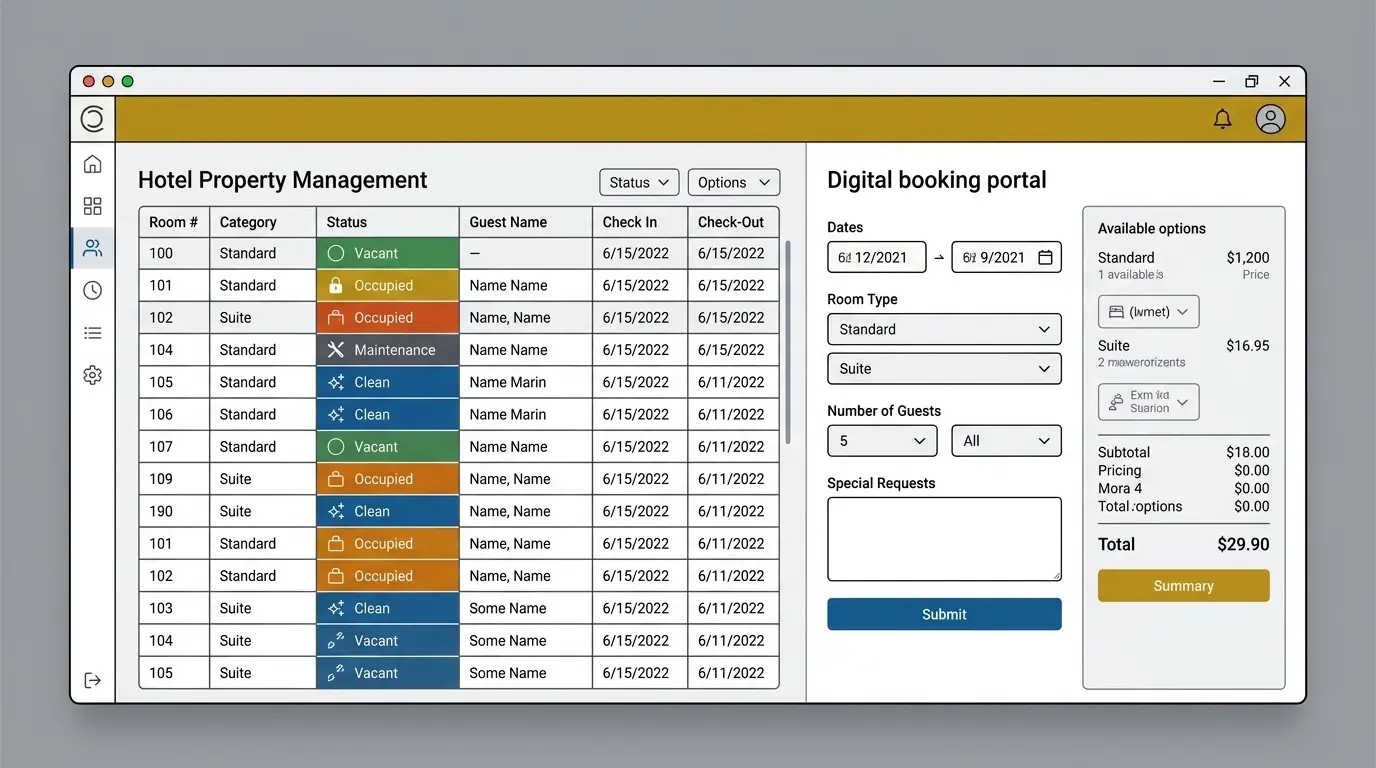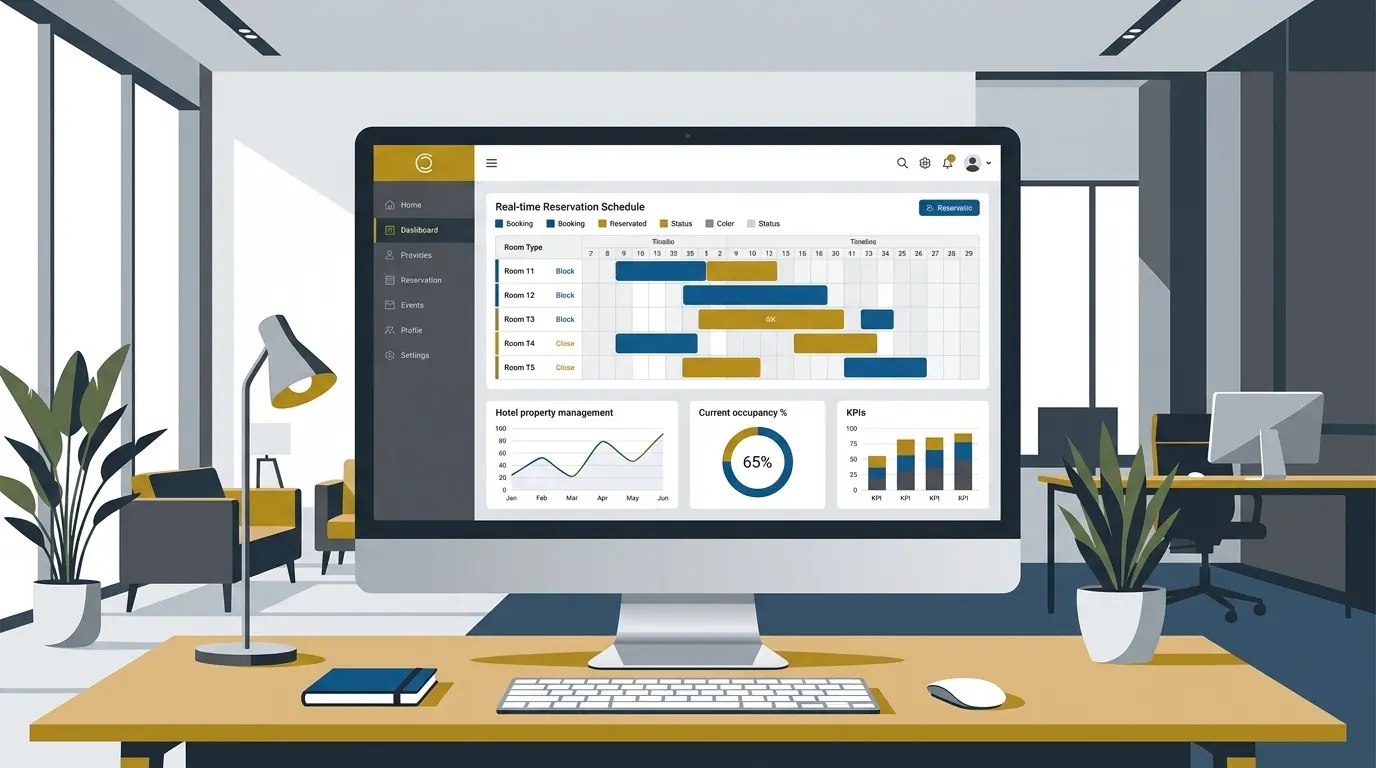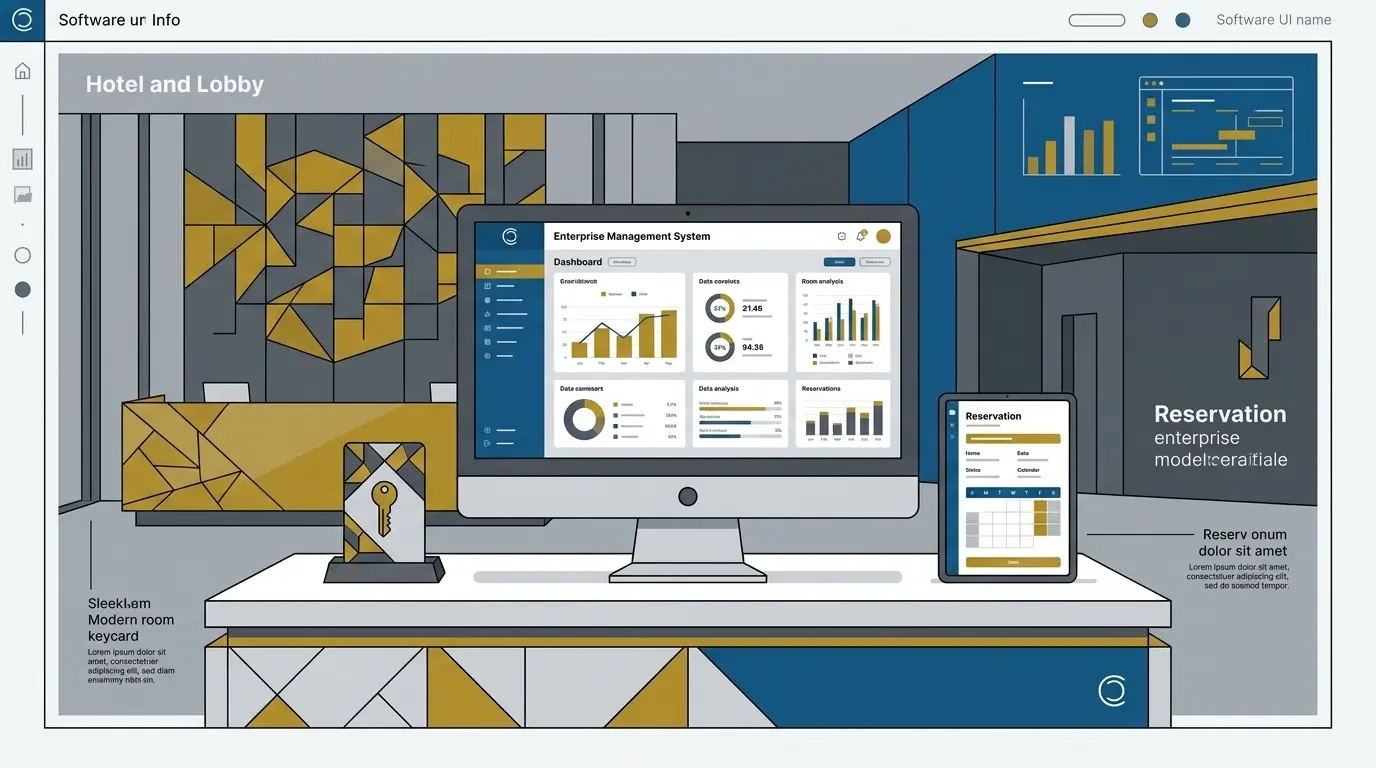

Hotel property management software development is the engineering of bespoke digital platforms that centralise hospitality operations, including real-time reservations, front-desk workflows, inventory distribution, housekeeping, and guest folios, into a unified enterprise architecture. Unlike rigid commercial tools, custom development provides independent hotels, boutique chains, and enterprise resorts complete ownership over proprietary workflows, third-party distribution pipelines, and guest data governance.
The Operational Limitations of Rigid Hotel Management Platforms
Standard subscription hospitality software forces expanding operators into severe operational bottlenecks. Off-the-shelf software tools rely on standardised operational assumptions that rarely fit multi-property operations or boutique hotel workflows. Hoteliers face steep per-room licensing overheads that scale with capacity rather than value, while rigid data pipelines create severe vendor lock-in. These operational constraints prevent operators from tailoring direct-booking guest journeys or automating specialised operational workflows.
Furthermore, generic platforms struggle to connect with custom on-premise hardware, specialized point-of-sale systems, and bespoke enterprise modules. When front-desk, revenue, and housekeeping modules cannot exchange data fluidly, personnel must manually reconcile records across fragmented screens. This structural friction causes double bookings, billing errors, and significant revenue leakage. Investing in a custom enterprise web application eliminates these administrative constraints by mapping directly to existing operational workflows.
Eliminating Bottlenecks Through Custom PMS Architecture
Bespoke hotel property management software development dismantles legacy operational silos by replacing disconnected third-party tools with an integrated system architecture. Custom engineering unifies the centralized reservation engine, dynamic pricing rules, staff coordination, and housekeeping dispatches into an interconnected database schema. This level of technical cohesion ensures that any booking modification automatically synchronises across public distribution networks, staff mobile interfaces, and back-office accounting folios in sub-second intervals.
When engineering hospitality platforms, technical leaders must evaluate infrastructure hosting models to balance operational reliability with data sovereignty. Operators evaluating architectural trade-offs should consult our strategic comparison of cloud based vs on premise hotel management software to determine the ideal balance of local hardware latency and scalable distributed cloud services for growing SMEs.
Core Pillars of Modern Hotel Property Management Software Development
Custom software engineering resolves structural operational challenges by deploying targeted functional modules designed around real business outcomes:
- Multi-Property Inventory and Channel Distribution: Traditional operations experience frequent overbooking and rate parity delays across multiple OTAs. Tailored development builds dedicated bidirectional API connectors that synchronise room availability and dynamic rate adjustments globally in real time, directly boosting net revenue per available room (RevPAR).
- Automated Front Desk and Guest Experience: Manual front-desk registrations generate long lobby queues and drive up staffing overhead. Custom digital check-in modules integrate directly with contactless web portals, smart locks, and mobile key infrastructure, lowering front-desk labour overhead and expediting guest arrival cycles. Operators can explore our dedicated insights on hotel front desk software development for complete technical details.
- Integrated Housekeeping and Task Routing: Outdated phone trees and paper checklists delay room readiness and disrupt arriving guests. Automated housekeeping engines dynamically route cleaning priorities based on real-time check-outs and queue statuses, cutting room turnover cycles by 30%.
- Unified Financial Accounting and Folio Automation: Disconnected billing across dining facilities, wellness spas, and event banquets creates invoice disputes and financial write-offs. A unified ledger pipeline links every guest transaction straight into a central folio, preventing revenue leakage and automating audits.
Core Modules Required in Bespoke Hotel Management Systems
Centralized Reservation and Real-Time Availability Engine
The reservation engine functions as the operational core of the platform. It handles high volumes of concurrent booking requests using transactional database locks to prevent accidental double-bookings across distribution endpoints. The module tracks room inventory states dynamically, adjusting availability immediately whether a booking originates from an OTA, a phone reservation, or an internal sales team.
Automated Front-Desk and Mobile Guest Check-in
Modern check-in workflows bypass physical front desks through secure self-service applications. Guests complete digital registration forms, upload mandatory identity verifications, and receive room assignments directly on mobile devices. Custom integration with electronic keycard encoders and smart door locks ensures physical entry permissions generate instantly without requiring manual staff intervention.
Dynamic Housekeeping and Maintenance Dispatch
Housekeeping operations require active automation rather than reactive scheduling. The custom module provides housekeeping teams with mobile dashboards showing real-time room occupancies, maintenance priority tickets, and linen inspection statuses. Housekeeping supervisors update room availability immediately upon inspection, instantly releasing pristine rooms back into available inventory.
Enterprise Integration Standards and API Infrastructure
High-Frequency Channel Manager API Integration
A resilient channel manager connection relies on scalable REST and WebSocket architectures to distribute room inventories across global distribution systems (GDS) and online travel agents. For a deeper analysis of integration architectures, review our analysis on hotel PMS vs channel manager solutions. The system maintains two-way XML/JSON communication pipes to reconcile incoming reservations, rate changes, and cancellations with zero manual latency.
Point of Sale (POS) and Ancillary Revenue Synchronization
Maximising guest spend requires unified billing pathways between accommodation systems and ancillary property services. Custom engineering establishes direct communication between dining terminals, spas, retail kiosks, and conference facilities. Every incidental charge posts straight to the active guest folio with cryptographically verified room assignments, eliminating end-of-stay reconciliation discrepancies.
Secure Payment Gateway and Fiscal Compliance Pipelines
Financial infrastructure requires strict adherence to international security protocols. Payment engines incorporate PCI-DSS tokenized payment gateways, multi-currency processing capabilities, and automated regional tax generation. For Indian hospitality operators, the architecture embeds direct Indian GST-compliant e-invoicing workflows, simplifying tax reporting across complex corporate stay arrangements as detailed by the Goods and Services Tax Network.
Data Governance, Security, and Scalability Engineering
Role-Based Access Control and Staff Permissions
Enterprise platforms protect commercial integrity by enforcing strict role-based access control (RBAC). Front-desk staff, night auditors, housekeeping leads, and general managers interact with role-specific views containing only the data points necessary for their tasks. System permissions isolate financial reports and guest payment credentials from unauthorised operational staff, maintaining comprehensive internal governance.
Enterprise Data Security and Guest Privacy Protection
Hospitality databases hold sensitive personal data, corporate travel records, and billing profiles. Tailored hotel property management software development implements end-to-end encryption for data in transit and at rest. Detailed audit logs record every database query, ensuring alignment with strict regulatory standards including India’s Digital Personal Data Protection Act (DPDP) and GDPR requirements.
Scalable Cloud Infrastructure for High-Traffic Peaks
Hospitality platforms face heavy traffic surges during festival seasons, promotional campaigns, and international event bookings. Microservices-based architectures hosted on modern cloud providers leverage elastic container orchestration and distributed caching layers like Redis. This engineering layout ensures booking engines maintain rapid page responses and steady transaction processing during intense peak booking volumes.
Commercial Evaluation: Custom Hotel PMS Development vs. Off-The-Shelf SaaS Platforms
| Evaluation Criteria | Off-the-Shelf SaaS Solutions | Custom Hotel PMS Development |
|---|---|---|
| Long-Term Cost Structure | Recurring per-room, per-month subscription fees that expand continuously as property capacity grows. | Owned intellectual property resulting from a single development capital outlay, eliminating perpetual licence fees. |
| Feature Adaptability | Rigid, standardized feature sets governed by external vendor roadmaps without tailored operational modifications. | 100% tailored to unique property workflows, operational nuances, and proprietary booking procedures. |
| Third-Party & Hardware Integrations | Restricted to approved vendor marketplaces, often requiring extra monthly integration surcharges. | Direct API connectivity with arbitrary point-of-sale systems, keycard encoders, and interactive hardware. |
| Data Ownership & Governance | Vendor-controlled shared databases with severe export limitations and restricted historical data access. | Absolute proprietary data ownership with internal direct control over guest behavioural metrics and audit logs. |
| Scalability & Brand Customization | Multi-tenant constraints that limit custom branding and multi-brand regional enterprise adaptations. | Unbounded scaling across multiple properties, distinct sub-brands, and international operational portfolios. |
| Operational Workflow Alignment | Staff must alter operational habits to match the pre-built assumptions of the software platform. | Software architecture models around existing enterprise processes to eliminate daily administrative friction. |
Enterprise Implementation Scenarios for Custom Hotel Software
Multi-Property Boutique Hotel Chains: Boutique groups operating across regional hubs often struggle with fragmented booking databases and inconsistent guest records. Engineering a multi-property PMS unifies inventory distribution, centralises staff rosters, and aggregates procurement schedules across all properties. Cross-property guest profile synchronisation enables personalised VIP handling, while consolidated purchasing reduces group administrative costs and drives direct re-bookings across the portfolio.
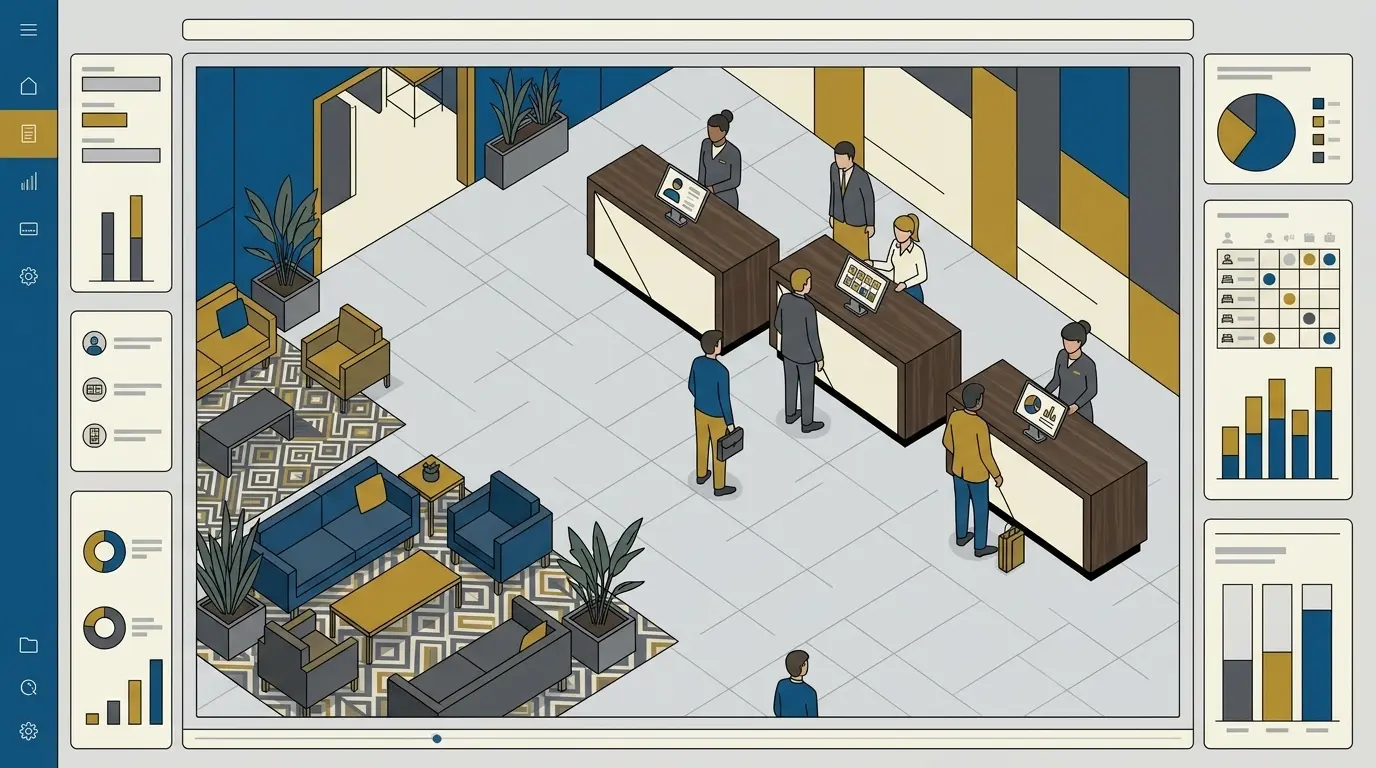
High-Capacity Business and Resort Properties: Large properties managing dynamic meeting facilities, diverse dining venues, and recreational services encounter continuous administrative friction during guest check-outs. Deploying an integrated platform connects banquet scheduling, interactive restaurant menus, and automated housekeeping dispatches into a single database schema. This level of technical alignment accelerates check-out reconciliation, avoids billing disputes, and maximizes asset utilisation across conference centres and resort amenities.
Strategic Considerations for Hospitality Technology Leaders
Hospitality decision-makers evaluating hotel property management software development must approach this transition as an operational asset rather than an everyday IT procurement cost. Custom software engineering removes long-standing business constraints, allowing hoteliers to take full ownership of their distribution strategies and operational workflows. Founders, operations directors, and technology heads planning their digital modernization should begin by carrying out comprehensive operational workflow audits before writing code. Pinpointing operational inefficiencies, integration bottlenecks, and revenue leakage points ensures that your custom software investment drives lasting business performance and measurable operational efficiency.
Building Modern Hospitality Infrastructure for Long-Term Growth
Standard subscription management tools impose structural friction, continuous licence fees, and rigid data restrictions on expanding hotel brands. Conversely, bespoke hotel property management software development delivers genuine operational agility, dependable API integration, and complete technical sovereignty over mission-critical business data. Engineering a proprietary platform transforms day-to-day hospitality software into a strategic enterprise asset that expands sustainably alongside your portfolio.
Let’s make the next big thing together! Connect with our engineering specialists at Colladome to schedule your technical architecture consultation and explore how tailored enterprise systems can modernize your hospitality enterprise.